Slate roofing tiles
CN → USProduct Images
AI Analysis
🏛️ Slate Roofing Tiles (Natural Stone Roofing Materials)
🌐 HS Code Reference & Customs Clearance Guide | 2026 Latest Tariff Analysis | Professional Compliance Strategy
📌 I. Product Definition & Classification: What Exactly is "Slate"?
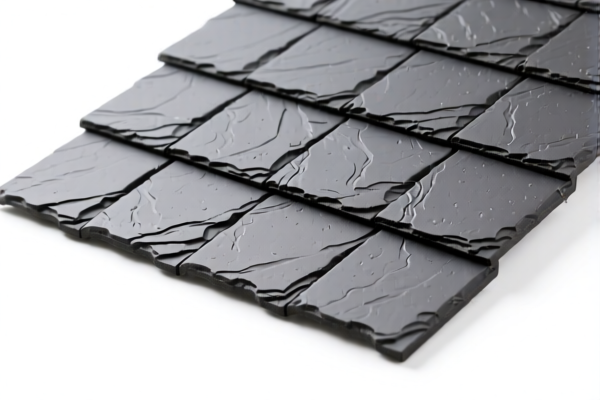
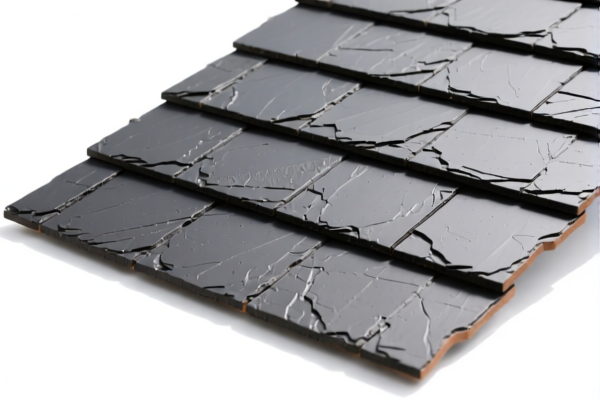
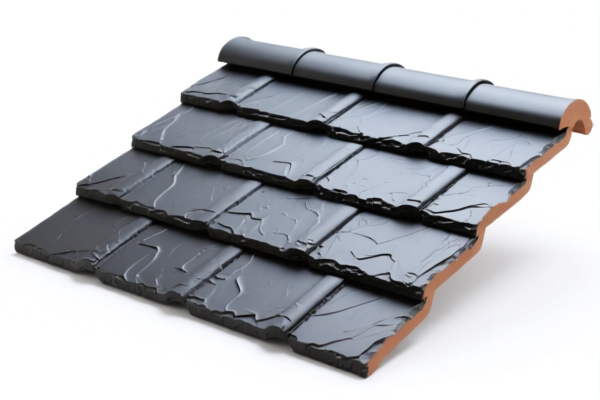
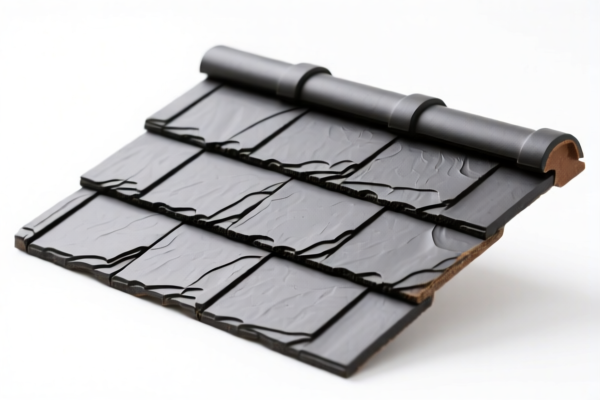
Slate roofing tiles are thin, durable plates made from natural slate stone, a fine-grained, foliated, metamorphic rock derived from an original shale-type sedimentary rock composed of clay or volcanic ash through low-grade regional metamorphism.
In international trade, they are strictly distinguished from: * Synthetic Slate: Plastic, rubber, or recycled material imitating slate → Not Chapter 68. * Clay Roofing Tiles: Ceramic/baked clay → Chapter 69. * Cement Roofing Tiles: Fiber cement → Chapter 68 (but different subheading).
⚠️ Key Distinction Point:
- If the material is natural stone (specifically slate) shaped/finished for roofing → Chapter 68
- If it is synthetic or clay → Different Chapter
- Raw blocks vs. Finished tiles: Both fall under Chapter 68 but may have different duty rates based on processing level.
📦 II. HS Code Classification Details (2026 Latest Tariff Concordance)
| HS Code | Product Description | Application Scenario | Material Type |
|---|---|---|---|
6802.21.00.00 |
Worked monumental or building stone of a kind used for cladding or surfacing; natural slate, whether or not roughly trimmed | Finished Slate Roofing Tiles, polished or brushed slate shingles | ✅ Natural Slate |
6802.23.00.00 |
Other worked monumental or building stone; natural slate, whether or not roughly trimmed | Raw Slate Blocks/Slabs (not yet cut to tile dimensions) | ✅ Natural Slate |
6802.91.00.00 |
Other worked monumental or building stone; natural slate, whether or not roughly trimmed | Slate Accessories (e.g., slate dust, small slate fragments for landscaping) | ✅ Natural Slate |
6903.20.00.00 |
Ceramic roofing tiles and flagging tiles | Clay/Ceramic Roofing Tiles (Not Slate) | ❌ Clay/Ceramic |
6810.11.00.00 |
Cement, concrete or artificial stone articles for flagging or paving, whether or not interlocking; other | Cement/Fiber Cement Roofing Tiles (Imitation Slate) | ❌ Cement/Composite |
🔍 Critical Reminder:
- Only natural stone slate qualifies for 6802.
- Cement-based "slate-style" tiles are misclassified often; they must go to 6810.
- Ceramic/Clay tiles (even if gray like slate) belong to 6903.
- Synthetic/Plastic slate belongs to 3918 or 3926.
💰 III. 2026 Latest Tariff Rate Breakdown (Including Surcharges, Policy Add-ons)
✅ Applicable Country: United States (US)
✅ Country of Origin: China (CN)
✅ Effective Date: November 10, 2025 onwards (including subsequent imports)
🎯 1. 6802.21.00.00 —— Worked Natural Slate (Finished Roofing Tiles)
| Item | Content |
|---|---|
| Base Tariff Rate | 0% (ad valorem) |
| USITC Surcharge | +0% (No 301 Tariff for this specific subheading under Footnote 9903.88.01 exclusion list in some contexts, but verify latest USITC ruling) |
| IEEPA Surcharge | +10% (Targeted China/HK products, effective Nov 10, 2025) |
| Total Tariff Rate | 10% |
| Tax Calculation | CIF Value × 10% |
| De Minimis Exemption Available? | ❌ No (deny_de_minimis applies to most stone products from China under new IEEPA rules) |
| Legal Basis Path | IEEPA:9903.01.25 → USITC:6802.21.00.00 |
📌 Explanation:
- Unlike electronics or steel, worked natural stone has a lower 301 tariff profile, but the IEEPA 10% surcharge still applies to Chinese-origin slate.
- Total cost impact: 10% of CIF value. This is significantly lower than metal or tech products.
- Verification Needed: Some specific slate products may be excluded from 301 duties, but the IEEPA 10% remains. Always check the latest USITC exclusion list.
🎯 2. 6802.23.00.00 —— Unworked/Rough Slate (Raw Blocks)
| Item | Content |
|---|---|
| Base Tariff Rate | 0% |
| USITC Surcharge | +0% (Generally exempt from 301) |
| IEEPA Surcharge | +10% |
| Total Tariff Rate | 10% |
| Tax Calculation | CIF Value × 10% |
| De Minimis Exemption Available? | ❌ No |
| Legal Basis Path | IEEPA:9903.01.25 → USITC:6802.23.00.00 |
📌 Note:
- Raw slate blocks incur the same 10% IEEPA rate.
- If shipped from a third country (e.g., Vietnam, India, Brazil) that performed substantial transformation, IEEPA may not apply, and the rate could drop to 0%.
🛠️ IV. Customs Clearance Practical Advice (Real-World Pitfall Avoidance Guide)
✅ 1. Required Documentation Checklist (No Exceptions)
| Document | Mandatory? | Description |
|---|---|---|
| ✅ Product Specification Sheet | ✔️ | Must specify: Material (Natural Slate), Thickness, Dimensions, Finish (Brushed/Honed), Color |
| ✅ Material Proof | ✔️ | Geologist certificate or mill test report proving Natural Stone origin |
| ✅ Commercial Invoice | ✔️ | Clearly state: "Natural Slate Roofing Tiles, HS 6802.21.00.00" |
| ✅ Packing List | ✔️ | Detail weight, dimensions, number of slabs/tiles |
| ✅ Origin Certificate (CO) | ✔️ | Crucial to prove if China-origin (triggers 10%) or Non-China (may be 0%) |
| ✅ Photos of Product | ✔️ | Show texture, edges, and any labeling |
✅ 2. Declaration Tips (Key Mnemonic)
🔥 "Natural Stone Only, IEEPA 10%, Avoid Clay, Check Origin!"
| Scenario | Correct Declaration | Incorrect Practice |
|---|---|---|
| Natural Slate Tiles | 6802.21.00.00 + "Natural Slate" |
Mislabel as "Ceramic" → 3.4% (but fraud risk) |
| Cement Imitation Slate | 6810.11.00.00 |
Mislabel as "Natural Slate" → 10% + Penalty |
| Clay/Brick Tiles | 6903.20.00.00 |
Mislabel as "Slate" → Customs Hold |
| Origin: India/Vietnam | Declare Non-China Origin | Falsely claim China origin → Lose preferential rate |
📌 Critical Warning:
- If your slate is imported from China, the 10% IEEPA tariff is unavoidable.
- If sourced from India, Brazil, or Spain, the rate is typically 0% (no IEEPA).
- Do not mix shipments of Chinese and non-Chinese slate in one BL without clear segregation, as customs may audit the entire container.
✅ 3. Special Cases Handling
| Scenario | Handling Advice |
|---|---|
| Mixed Shipments | If a container has both slate and other goods, ensure slate is clearly identified on invoice/packing list to avoid general rate application. |
| Slate Dust/Offcuts | Declared under 6802.91.00.00, still subject to 10% IEEPA if China-origin. |
| Customs Valuation | Ensure CIF value includes freight & insurance. Slate is heavy; freight costs significantly impact duty base. |
| FDA/ASTM Standards | While no FDA clearance needed, ASTM C1197 (standard specification for slate roofing) may be requested for quality assurance in US market. |
🌍 V. Global Market Comparison (2026 Latest)
| Country/Region | Recommended HS Code | Tariff (China Origin) | Certification Requirements | Notes |
|---|---|---|---|---|
| 🇺🇸 USA | 6802.21.00.00 |
10% (IEEPA) | None specific, but ASTM preferred | 10% is low compared to steel/electronics |
| 🇨🇳 China | 6802.21.00.00 |
0% | None | Export-friendly |
| 🇪🇺 EU | 6802.21.00.00 |
0% (Most Favored Nation) | CE Marking (Construction Products Regulation) | No IEEPA-like surcharge in EU |
| 🇬🇧 UK | 6802.21.00.00 |
0% | UKCA Marking | Post-Brexit rules apply |
| 🇦🇺 Australia | 6802.21.00.00 |
5% | None | Standard MFN rate |
📌 Conclusion:
- USA is the only major market imposing a 10% IEEPA surcharge on Chinese slate.
- EU/UK/AU have no such surcharge, making them more cost-effective if supply chain can be rerouted or if non-Chinese slate is used.
- Tariff Engineering: Sourcing from India or Brazil can save 10% per shipment in the US market.
📌 VI. Common Mistakes & Pitfall Guide (Lessons Learned)
❌ Mistake 1: Labeling Cement Imitation Slate as Natural Slate
👉 Consequence: If caught, penalty + back taxes (10% vs 0-3.4% for cement). Customs can easily distinguish by weight and density.
❌ Mistake 2: Assuming All Slate is 0% Duty
👉 Consequence: China-origin slate now carries 10% IEEPA. Ignoring this leads to unexpected costs.
❌ Mistake 3: Missing Origin Documentation
👉 Consequence: If CO is missing, customs may apply highest possible duty or treat as unknown origin, leading to delays.
❌ Mistake 4: Confusing Slate with Shale
👉 Shale is unmetamorphosed; Slate is metamorphosed. Only Slate qualifies for 6802.21. Shale may be classified differently.
✅ Correct Practice:
"Natural Slate Roofing Tiles, 12x8 inches, Brushed Finish, Origin: China, HS 6802.21.00.00, CIF Value $50,000"
🎯 VII. Conclusion: Smart Sourcing, Lower Duties!
🎯 Remember the Mnemonic:
🔹 "Natural Slate, HS 6802, IEEPA 10%, Check Origin, Avoid Cement!"
🔹 "China Slate 10%, India/EU Slate 0%, Sourcing Strategy Saves Money!"
📌 Pro Tip:
If your slate is shipped from India, Brazil, or Spain, you can legally avoid the 10% IEEPA tariff. Consider sourcing from these countries if price competitiveness is key.
For Chinese slate, factor in the 10% additional cost in your pricing model.
📣 Immediate Action:
📞 Verify Country of Origin with supplier
📄 Request Geologist Certificate to prove natural stone
🚀 Calculate Total Landed Cost including 10% IEEPA if China-origin
✨ Professional Customs Compliance Starts with Accurate Classification!
💼 Every 10% Saved in Tariff is Pure Profit!
Customer Reviews
About HS Code Classification
The Harmonized System (HS) is an internationally standardized nomenclature developed by the World Customs Organization (WCO) to classify traded products. Over 200 countries use the HS system as the basis for customs tariffs, trade statistics, and import/export regulations.
Each HS code follows a hierarchical structure:
- Chapter (2 digits) — Broad category of goods (e.g., Chapter 84: Machinery and Mechanical Appliances)
- Heading (4 digits) — More specific grouping within the chapter
- Subheading (6 digits) — Internationally standardized breakdown, used by all WCO member countries
- National subdivisions (8-10 digits) — Country-specific extensions for further classification, such as US HTSUS 10-digit codes
Correct HS code classification is essential for smooth customs clearance, accurate duty payment, and compliance with trade regulations. Misclassification can lead to customs delays, overpayment of duties, or penalties.
When importing from CN to US, the applicable tariff rates may include:
- Most-Favored-Nation (MFN) rate — The standard duty rate applied to WTO members
- General rate — Applied to countries without trade agreements
- Trade remedy duties — Additional tariffs such as Section 301 (anti-dumping), Section 232 (national security), or countervailing duties
The information provided on this page is for reference purposes only. For official classification, please consult with your local customs authority or a licensed customs broker.