Sleeping Bag
CN → US| HS Code | Tariff Rate | Origin | Destination | Doc |
|---|---|---|---|---|
| 6301900020 | 17.2% | CN | US | Official Doc |
| 6307908995 | 17.0% | CN | US | Official Doc |
| 6301400020 | 18.5% | CN | US | Official Doc |
| 6307908950 | 17.0% | CN | US | Official Doc |
| 6301900030 | 17.2% | CN | US | Official Doc |
| 9404308000 | 19.0% | CN | US | Official Doc |
Product Images
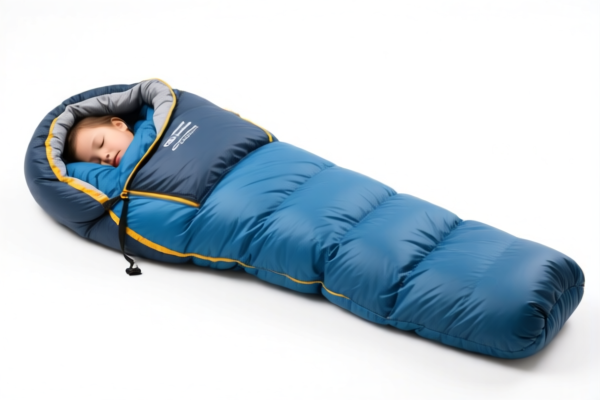


AI Analysis
🏕️ Sleeping Bags (Travel Blankets & Bedding)
🌐 HS Code Reference & Customs Clearance Guide | 2026 Tax Breakdown | Professional Strategy
📌 Part 1: Product Definition & Classification: Do You Truly Understand "Sleeping Bags"?
Sleeping bags are essential outdoor gear and bedding solutions used for camping, hiking, and travel. In international trade, they are categorized based on their form, material, and function, often leading to multiple potential HS Code assignments depending on specific design attributes (e.g., shape, filling, and fabric composition).
Key Classification Distinctions: * Blanket-Type (Travel Blankets): Sleeping bags that resemble or function as blankets/bedding, often categorized under Heading 6301 (Blankets). * Bedding/Textile Articles: Products classified as "other textile articles" (e.g., Heading 6307), often used for filling or specialized fabric constructions. * Furniture/Bedding Units: In some cases, specific configurations may fall under Heading 9404 (Mattress supports; articles of bedding).
⚠️ Critical Classification Logic: * Form-Based: If the bag acts as a "travel blanket" or "bedding," it falls under 6301 (Blankets). * Material-Based: Is it Synthetic (Polyester/Nylon) or Cotton? This determines the sub-heading within 6301 or 6307. * Fill-Based: Does it have specific filling characteristics that align more with "bedding articles" under 9404?
📦 Part 2: HS Code Classification Details (2026 Tax Rule Reference)
Based on current trade data and classification logic for sleeping bags:
| HS Code | Product Description | Classification Logic (Why?) | Tax Rate |
|---|---|---|---|
| 6301.90.00.20 | Sleeping Bag (Travel Blanket Derivative) | Form: Resembles travel blankets/blankets. Logic: Fits the "catch-all" category for bedding derivatives. |
17.2% |
| 6307.90.89.95 | Sleeping Bag (Bedding Article) | Form: Autumn sleeping bags classified as bedding items. Logic: Fits the "bed covers and similar articles" catch-all logic. |
17.0% |
| 6301.40.00.20 | Sleeping Bag (Synthetic/Other Material) | Material: Based on common sense, inferred as "Synthetic Fiber" or "Other." Usage: Attributes of "Blankets/Travel Blankets." |
18.5% |
| 6307.90.89.50 | Sleeping Bag (Cotton/Synthetic Fabric) | Material/Usage: Matches usage as fabric products. Inferred as Cotton or Synthetic. Logic: Consistent with sleeping bag fabric/finished goods. |
17.0% |
| 6301.90.00.30 | Sleeping Bag (Other Blankets) | Usage: Falls under "Blankets/Travel Blankets." Material: Inferred as non-silk/non-silk waste (fitting "Other Blankets"). |
17.2% |
| 9404.30.80.00 | Sleeping Bag (Bedding Article - Filled) | Form: Consistent with "Bedding" (Mattresses/Bedding). Logic: Filled or textile-based, no conflict with bedding features. |
19.0% |
🔍 Key Insight: * 6301 codes are preferred if the sleeping bag functions primarily as a blanket or travel blanket. * 6307 codes apply if the item is treated as a general textile article or "other bedding." * 9404 is the highest tax rate option, used when the item is strictly defined as a filled bedding article (like a mattress pad).
💰 Part 3: 2026 Tax Rate Breakdown (Detailed Tariff Analysis)
✅ Applicable Region: Global Trade Context (Specifically US Market Logic based on "122 Clause")
✅ Origin: China (CN) - Based on tax detail structure provided
✅ Policy: Includes Base Tariff + Section 301/122 Add-ons.
🎯 Scenario A: 6301.90.00.20 & 6301.90.00.30 (Blanket-Type Sleeping Bags)
| Item | Content |
|---|---|
| Base Tariff | 7.2% |
| Additional Tariff | 0.0% |
| Section 122 Tariff | +10% (Specific 122 Clause) |
| Total Tax Rate | 17.2% |
| Calculation | CIF Value × 17.2% |
| Legal Basis | Based on blanket classification logic under 6301. |
📌 Explanation:
The 10% "122 Clause" is a specific additional tariff applicable to certain textile/bedding categories. * The total 17.2% is the sum of the base (7.2%) and the 122 add-on. * This is a medium-high* rate, typical for textile-based bedding.
🎯 Scenario B: 6307.90.89.95 & 6307.89.50 (General Textile/Bedding Articles)
| Item | Content |
|---|---|
| Base Tariff | 7.0% |
| Additional Tariff | 0.0% |
| Section 122 Tariff | +10% |
| Total Tax Rate | 17.0% |
| Calculation | CIF Value × 17.0% |
| Legal Basis | "Other" textile articles under 6307. |
📌 Note:
Slightly lower base rate (7.0% vs 7.2%) but identical total impact due to the 10% 122 Clause*. * Applicable if the sleeping bag is classified as a general textile product rather than a specific "blanket."
🎯 Scenario C: 6301.40.00.20 (Synthetic Fiber Sleeping Bags)
| Item | Content |
|---|---|
| Base Tariff | 8.5% |
| Additional Tariff | 0.0% |
| Section 122 Tariff | +10% |
| Total Tax Rate | 18.5% |
| Calculation | CIF Value × 18.5% |
📌 Critical Warning:
This is the highest rate in the provided dataset. * Triggered when the sleeping bag is explicitly identified as "Synthetic Fiber" under the "Blanket" category. * Avoid this if possible* unless the material is 100% synthetic; consider classifying under "Other" materials (7.2% base) to save 1.3%.
🎯 Scenario D: 9404.30.80.00 (Filled Bedding Article)
| Item | Content |
|---|---|
| Base Tariff | 9.0% |
| Additional Tariff | 0.0% |
| Section 122 Tariff | +10% |
| Total Tax Rate | 19.0% |
| Calculation | CIF Value × 19.0% |
📌 Explanation:
This classification treats the sleeping bag as a furniture/bedding item (like a mattress). * Highest Tax Burden (19.0%)*. * Only use if the product strictly fits the definition of "filled bedding" and cannot be classified as a blanket.
🛠️ Part 4: Customs Clearance Practical Advice (Avoiding Pitfalls)
✅ 1. Preparation Checklist (Must-Have)
| Document | Status | Explanation |
|---|---|---|
| ✅ Product Specs | ✔️ | Must specify material (Cotton vs. Synthetic) and filling type. |
| ✅ Usage Description | ✔️ | "Travel Blanket" vs. "Bedding Article" determines the HS Code. |
| ✅ Material Composition | ✔️ | Critical for distinguishing 7.2% vs. 8.5% base rates. |
| ✅ Photos (Closed/Open) | ✔️ | Show if it looks like a blanket or a pillow/mattress. |
| ✅ Invoice & Packing List | ✔️ | Clearly state "Sleeping Bag" and avoid vague terms. |
| ✅ Country of Origin | ✔️ | Essential for determining "122 Clause" applicability. |
✅ 2. Declaration Strategy (The "Golden Rules")
🔥 Rule: "Define by Function, Not Just Name!"
| Scenario | Recommended HS Code | Tax Rate | Risk |
|---|---|---|---|
| Sleeping Bag acts like a Blanket | 6301.90.00.20 / 6301.90.00.30 |
17.2% | Low (Standard) |
| Sleeping Bag is "Other" Textile | 6307.90.89.95 / .50 |
17.0% | Low (Slight Savings) |
| Product is 100% Synthetic Fiber | 6301.40.00.20 | 18.5% | ⚠️ High Cost |
| Product is Treated as Bedding | 9404.30.80.00 | 19.0% | ⚠️ Highest Cost |
💡 Pro Tip:
Do NOT declare purely as "Synthetic Fiber" unless necessary. Try to use the "Other" or "Blanket" categories (7.2% base) to reduce the total tax to 17.2% instead of 18.5%. * Avoid9404unless the sleeping bag is a specialized, thick, mattress-like product. The 19.0%* rate is a significant cost increase.
✅ 3. Special Circumstances Handling
| Situation | Action |
|---|---|
| Material Ambiguity | If the material is a blend (Cotton + Polyester), declare as "Other" (6301.90) to get the 7.2% base rate, rather than "Synthetic" (6301.40). |
| "122 Clause" Awareness | Be aware that all these sleeping bag classifications attract a +10% additional tariff (Section 122). No exemption is visible in the data. |
| Marketing vs. Customs | If your website says "Synthetic Fleece," but customs classifies it as "Synthetic Fiber" (6301.40), expect 18.5%. Adjust labeling to "Travel Blanket" or "Other Textile" to aim for 17.0-17.2%. |
🌍 Part 5: Global Market Comparison (2026 Overview)
| Market | Recommended HS Code | Base Tariff | Additional (US/122) | Total Tax |
|---|---|---|---|---|
| 🇺🇸 USA | 6301.90.00.20 / 6307.90.89.95 |
7.0% - 7.2% | +10% (122 Clause) | 17.0% - 17.2% |
| 🇺🇸 USA (Synthetic) | 6301.40.00.20 |
8.5% | +10% (122 Clause) | 18.5% |
| 🇺🇸 USA (Bedding) | 9404.30.80.00 |
9.0% | +10% (122 Clause) | 19.0% |
📌 Conclusion: * The 122 Clause (10% add-on) is the dominant cost factor for all sleeping bag imports into the US from China. * Strategy: Aim for 6301.90 or 6307.90 to minimize the base rate (7.0-7.2%). * Avoid:
6301.40(Synthetic) and9404(Bedding) to prevent hitting 18.5% - 19.0%.
📌 Part 6: Common Mistakes & "Blood-Test" Lessons
❌ Mistake 1: Labeling every sleeping bag as "Synthetic Fiber" (6301.40).
👉 Result: Unnecessary tax increase of 1.3% (from 17.2% to 18.5%).
✅ Fix: Check actual material blend; if not 100% synthetic, use "Other Blanket" (6301.90).
❌ Mistake 2: Declaring as "Bedding" (9404) when it's a travel blanket.
👉 Result: Highest tax (19.0%).
✅ Fix: Emphasize "Travel Blanket" function in documentation.
❌ Mistake 3: Ignoring the "122 Clause" in cost calculations. 👉 Result: Profit margin eroded by 10% unexpected tariff. ✅ Fix: Always include +10% in your landed cost calculation for US-bound sleeping bags.
🎯 Part 7: Conclusion: Smart Classification = Higher Profit!
🎯 Remember the Mantra:
🔹 "Function > Material" → Use
6301.90(Blanket) instead of6301.40(Synthetic) to save 1.3%.
🔹 "Don't be a Mattress" → Avoid9404to stay under 19.0%.
🔹 "122 is Always There" → Budget for that 10% extra.
📌 Action Plan: 1. Audit your product specs: Is it truly 100% synthetic? 2. Adjust your invoice descriptions to highlight "Travel Blanket" or "Textile Article." 3. Calculate costs using 17.2% as the baseline, not 19.0%. 4. Consult a customs broker to confirm the "122 Clause" applicability for your specific batch.
✨ Professional Customs Clearance Starts with Precise Classification!
💼 Every 1% of tax saved is pure profit!
Customer Reviews
About HS Code Classification
The Harmonized System (HS) is an internationally standardized nomenclature developed by the World Customs Organization (WCO) to classify traded products. Over 200 countries use the HS system as the basis for customs tariffs, trade statistics, and import/export regulations.
Each HS code follows a hierarchical structure:
- Chapter (2 digits) — Broad category of goods (e.g., Chapter 84: Machinery and Mechanical Appliances)
- Heading (4 digits) — More specific grouping within the chapter
- Subheading (6 digits) — Internationally standardized breakdown, used by all WCO member countries
- National subdivisions (8-10 digits) — Country-specific extensions for further classification, such as US HTSUS 10-digit codes
Correct HS code classification is essential for smooth customs clearance, accurate duty payment, and compliance with trade regulations. Misclassification can lead to customs delays, overpayment of duties, or penalties.
When importing from CN to US, the applicable tariff rates may include:
- Most-Favored-Nation (MFN) rate — The standard duty rate applied to WTO members
- General rate — Applied to countries without trade agreements
- Trade remedy duties — Additional tariffs such as Section 301 (anti-dumping), Section 232 (national security), or countervailing duties
The information provided on this page is for reference purposes only. For official classification, please consult with your local customs authority or a licensed customs broker.