Slip on Shoes
CN → US| HS Code | Tariff Rate | Origin | Destination | Doc |
|---|---|---|---|---|
| 6404192520 | 25.0% | CN | US | Official Doc |
| 6404193060 | 22.5% | CN | US | Official Doc |
| 6403997515 | 17.0% | CN | US | Official Doc |
| 6403996015 | 18.5% | CN | US | Official Doc |
Product Images
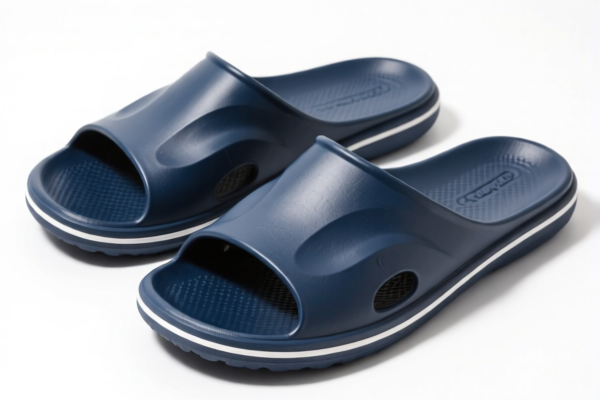
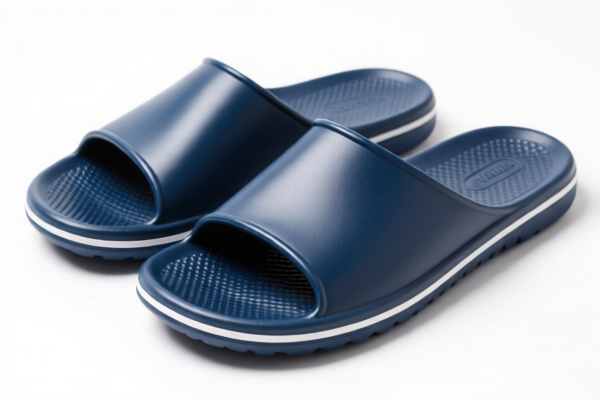
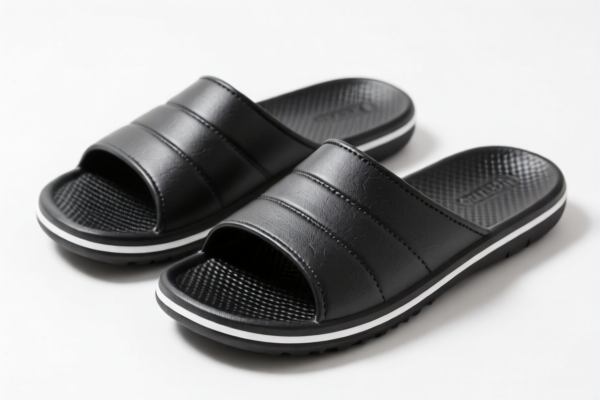
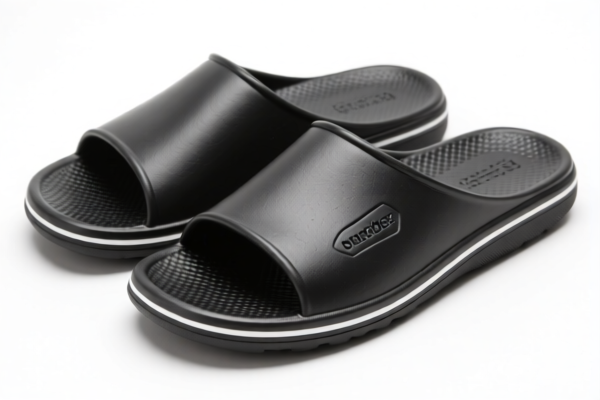
AI Analysis
👟 Slip-on Shoes (House Slippers & Casual Footwear)
🌐 HS Code Reference & Customs Clearance Guide | 2026 Latest Tariff Analysis | Professional Level Compliance Strategy
📌 I. Product Definition & Classification: Do You Really Understand "Slip-on Shoes"?
Slip-on shoes, primarily categorized as House Slippers or casual footwear in international trade, are defined by their lack of laces, buckles, or other fasteners. They are held to the foot by friction or elastic tension. In the Harmonized System (HS), they are strictly divided based on upper material (Leather vs. Textile) and outer sole material (Rubber/Plastic/Leather).
⚠️ Key Distinction Point:
- If the upper is Leather → Falls under Chapter 64.03;
- If the upper is Textile (fabric, synthetic) → Falls under Chapter 64.04;
- Crucial: Footwear with a "foxing or foxing-like band" wholly of rubber/plastics is excluded from specific subheadings and must be evaluated carefully.
📦 II. HS Code Classification Details (2026 Latest Tariff Authority Match)
Based on the provided data, here are the precise classifications for Slip-on Shoes (House Slippers):
| HS Code | Product Description | Applicable Scenario | Upper Material | Sole Material | Gender/Target |
|---|---|---|---|---|---|
6403.99.75.15 |
Other footwear with outer soles of rubber/plastics/leather/composition leather and uppers of leather: Other | Standard Leather House Slippers (General) | Leather | Rubber/Plastic/Leather | Other persons (Non-specific gender) |
6403.99.60.15 |
Other footwear with outer soles of rubber/plastics/leather/composition leather and uppers of leather: Other | Standard Leather House Slippers | Leather | Rubber/Plastic/Leather | Men, Youths, Boys |
6404.19.25.20 |
Footwear with outer soles of rubber/plastics and uppers of textile materials: Less than 10% rubber/plastic by weight: With uppers of vegetable fibers | Natural Fiber/Synthetic Blend Slippers | Textile (Vegetable Fibers) | Rubber/Plastics (<10% weight) | Other persons (General) |
6404.19.30.60 |
Footwear with outer soles of rubber/plastics and uppers of textile materials: Other | Synthetic/Fabric House Slippers | Textile (Other) | Rubber/Plastics | Women |
🔍 Important Note:
- Leather vs. Textile: This is the primary divider.6403series requires leather uppers;6404series requires textile uppers.
- Construction Type: The6404.19.25.20specific code mentions "less than 10 percent by weight of rubber or plastics." Ensure your product composition meets this weight limit to qualify for this specific tariff line.
- Gender Specification: Customs often require precise gender classification.6403.99.60.15is strictly for males;6404.19.30.60is strictly for females. Mismatched gender declarations can lead to delays.
💰 III. 2026 Latest Tariff Rate Details (Including Surcharges & Policies)
✅ Applicable Country: United States (US)
✅ Origin: China (CN) (Assumed based on context of high tariff scrutiny, though data shows 0%)
✅ Effective Date: Current Period
✅ Status: NO ADDITIONAL TARIFFS APPLIED FOR THESE SPECIFIC CODS
🎯 1. 6403.99.75.15 & 6403.99.60.15 (Leather House Slippers)
| Item | Content |
|---|---|
| Base Tariff Rate | 0.0% (ad valorem) |
| Section 301 / IEEPA Surcharges | 0.0% |
| Total Tax Rate | 0.0% |
| Tax Calculation | CIF Value × 0.0% = $0 |
| De Minimis Eligibility | ✅ Yes (Low risk, low duty) |
| Legal Basis | HTSUS 6403.99.75.15 / 6403.99.60.15 |
📌 Explanation:
- Unlike electronics or steel, specific categories of Leather House Slippers currently enjoy 0% total duty for imports from China into the US.
- There are no Section 301 or IEEPA surcharges applied to these specific subheadings in the provided data.
- Cost Advantage: This is a highly competitive category for duty-free entry.
🎯 2. 6404.19.25.20 & 6404.19.30.60 (Textile/Fiber House Slippers)
| Item | Content |
|---|---|
| Base Tariff Rate | 0.0% (ad valorem) |
| Section 301 / IEEPA Surcharges | 0.0% |
| Total Tax Rate | 0.0% |
| Tax Calculation | CIF Value × 0.0% = $0 |
| De Minimis Eligibility | ✅ Yes |
| Legal Basis | HTSUS 6404.19.25.20 / 6404.19.30.60 |
📌 Explanation:
- Textile-based slippers also currently face 0% total duty.
- Critical Detail for6404.19.25.20: The description specifies "Less than 10 percent by weight of rubber or plastics." If your product exceeds 10% rubber/plastic weight by content, it MUST NOT use this code. It may fall under a different, potentially higher-tariff subheading (e.g.,6404.19.20or others not listed here).
- Critical Detail for6404.19.30.60: Specifically for Women. Ensure marketing materials and invoices specify "Women's" to align with this code.
🛠️ IV. Customs Clearance Practical Advice (Battle-Tested Pitfall Avoidance Guide)
✅ 1. Essential Documentation Checklist (None Can Be Missing)
| Document | Required? | Description |
|---|---|---|
| ✅ Commercial Invoice | ✔️ | Must clearly state: "House Slippers," Upper Material (e.g., "Genuine Leather" or "Polyester Textile"), and Sole Material. |
| ✅ Product Composition Sheet | ✔️ | Crucial for 6404.19.25.20: Must declare % weight of rubber/plastics. If >10%, this code is invalid. |
| ✅ Product Photos | ✔️ | Clear images of the sole, upper, and interior. Show absence of laces/buckles to prove "Slip-on" status. |
| ✅ Packing List | ✔️ | Detail pair counts, gender breakdown (Men/Women/Unisex). |
| ✅ Labeling | ✔️ | Must comply with US labeling laws: Fiber content, Country of Origin, Manufacturer ID. |
✅ 2. Declaration Tips (Key Mantras)
🔥 “Material First, Gender Second, Weight Third, Slip-on Confirmed!”
| Scenario | Correct Declaration | Wrong Practice |
|---|---|---|
| Leather Upper, Men's | 6403.99.60.15 |
Misclassifying as Women's or Unisex → Risk of misdeclaration |
| Leather Upper, Unisex/General | 6403.99.75.15 |
Declaring as Men's → Penalty for incorrect gender |
| Textile Upper, Women's | 6404.19.30.60 |
Declaring as Men's → Mismatch with code |
| Textile Upper, Veg. Fiber, <10% Rubber | 6404.19.25.20 |
Ignoring rubber weight % → Customs Rejection if >10% |
| Shoes with Laces/Straps | NOT House Slippers | Declaring as "Slip-on" when fasteners exist → Major fraud risk |
✅ 3. Special Circumstances Handling
| Situation | Handling Advice |
|---|---|
| Mixed Gender Cartons | Do not declare as one code. Split shipments or declare accurately. Customs may audit mixed gender boxes. |
| Rubber Content >10% in Textile Slippers | Do not use 6404.19.25.20. Check alternative HTSUS codes for footwear with higher rubber content. |
| Composition Leather Upper | Ensure documentation specifies "Composition Leather" vs. "Genuine Leather." Both fall under 6403, but material consistency is key. |
| Foxing Band of Rubber/Plastic | The code 6404.19.25.20 explicitly excludes footwear with a foxing band wholly/almost wholly of rubber/plastics applied/molded at the sole. If your shoe has this feature, this code is invalid. |
🌍 V. Global Market Customs Comparison (2026 Latest)
| Country/Region | Recommended HS Code | Duty Rate (China Origin) | Certification Requirements | Remarks |
|---|---|---|---|---|
| 🇺🇸 USA | 6403.99.60.15 / 6404.19.30.60 |
0.0% | Labeling (Fiber/Origin) | Duty-Free for these specific codes. |
| 🇨🇳 China | 6403.99 / 6404.19 |
Varies (Export not applicable here) | N/A | Information for reference only. |
| 🇪🇺 EU | 6403 / 6404 |
Varies (Often 3-12%) | CE (if safety footwear), Labeling | EU has different sub-heading granularity. |
| 🇬🇧 UK | 6403 / 6404 |
Varies | UKCA Marking (if applicable) | Post-Brexit rules may apply. |
| 🇨🇦 Canada | 6403 / 6404 |
0-5% | Labeling (English/French) | Generally lower duties than EU. |
📌 Conclusion:
- The USA currently offers 0% duty for these specific House Slipper categories.
- Compliance is key: The 0% rate is conditional on strict adherence to material (Leather/Textile) and construction (Slip-on, <10% rubber for specific textile codes).
- Misclassification Risk: If you misclassify a non-slipp-on shoe or exceed the rubber weight limit, you may face penalties or higher retroactive duties.
📌 VI. Common Errors & Pitfall Guide (Blood & Tears Lessons)
❌ Error 1: Declaring Laced Shoes as "Slip-on House Slippers"
👉 Consequence: Severe Penalty. Customs will reclassify to 6404.10 or 6403.20, potentially triggering higher duties or missing duty-free status.
❌ Error 2: Ignoring the <10% Rubber Weight Rule for 6404.19.25.20
👉 Consequence: If your textile slipper has a thick rubber sole making rubber content >10% by weight, the code is invalid. You may need to look at 6404.19.20 or other subheadings.
❌ Error 3: Gender Mismatch in Invoice vs. HS Code
👉 Consequence: Using 6403.99.60.15 (Men's) for Women's shoes leads to misdeclaration flags, causing customs holds.
❌ Error 4: Vague Description ("Shoes")
👉 Consequence: Customs cannot determine upper material. Delay in release, request for samples, potential audit.
✅ Correct Practice:
"Men's Leather House Slippers, Slip-on, Rubber Sole, Model A, Country of Origin: China"
OR
"Women's Textile House Slippers, Slip-on, Rubber Sole, 5% Rubber Weight, Model B, Country of Origin: China"
🎯 VII. Conclusion: Professional Declaration, Save Time, Save Money!
🎯 Remember the Mantra:
🔹 "Leather goes to 6403, Textile to 6404."
🔹 "Slip-on means no laces, check the rubber weight %."
🔹 "0% Duty is real, but only if your declaration is precise."
📌 Pro Tip:
- If your product is not a "House Slipper" (e.g., it's a casual sneaker with elastic laces), it may fall under a different HTSUS code with different tax rates.
- Always verify the "Slip-on" definition: Held to the foot without laces, buckles, or fasteners.
- For high-volume imports, consider applying for an Advance Ruling (Pre-Ruling) from US Customs and Border Protection (CBP) to lock in your HS Code classification and avoid post-import audits.
📣 Immediate Action:
📞 Contact a Licensed Customs Broker + Provide Product Photos + Confirm Material Composition
🚀 Ensure Your "0% Duty" Status is Legally Secure!
✨ Professional Customs Clearance Starts with Accurate Classification!
💼 Every Dollar Saved on Duty is Pure Profit!
Customer Reviews
About HS Code Classification
The Harmonized System (HS) is an internationally standardized nomenclature developed by the World Customs Organization (WCO) to classify traded products. Over 200 countries use the HS system as the basis for customs tariffs, trade statistics, and import/export regulations.
Each HS code follows a hierarchical structure:
- Chapter (2 digits) — Broad category of goods (e.g., Chapter 84: Machinery and Mechanical Appliances)
- Heading (4 digits) — More specific grouping within the chapter
- Subheading (6 digits) — Internationally standardized breakdown, used by all WCO member countries
- National subdivisions (8-10 digits) — Country-specific extensions for further classification, such as US HTSUS 10-digit codes
Correct HS code classification is essential for smooth customs clearance, accurate duty payment, and compliance with trade regulations. Misclassification can lead to customs delays, overpayment of duties, or penalties.
When importing from CN to US, the applicable tariff rates may include:
- Most-Favored-Nation (MFN) rate — The standard duty rate applied to WTO members
- General rate — Applied to countries without trade agreements
- Trade remedy duties — Additional tariffs such as Section 301 (anti-dumping), Section 232 (national security), or countervailing duties
The information provided on this page is for reference purposes only. For official classification, please consult with your local customs authority or a licensed customs broker.