Slope Ruler Caliper
CN → US| HS Code | Tariff Rate | Origin | Destination | Doc |
|---|---|---|---|---|
| 9017308000 | 38.9% | CN | US | Official Doc |
| 9017208040 | 39.6% | CN | US | Official Doc |
| 8205598000 | 38.7% | CN | US | Official Doc |
| 8205595560 | 40.3% | CN | US | Official Doc |
| 9017308000 | 38.9% | CN | US | Official Doc |
Product Images
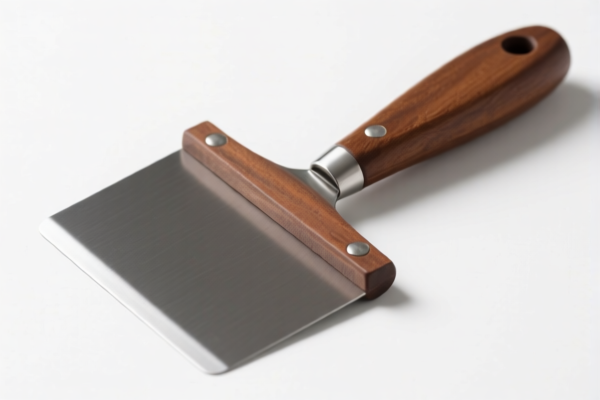
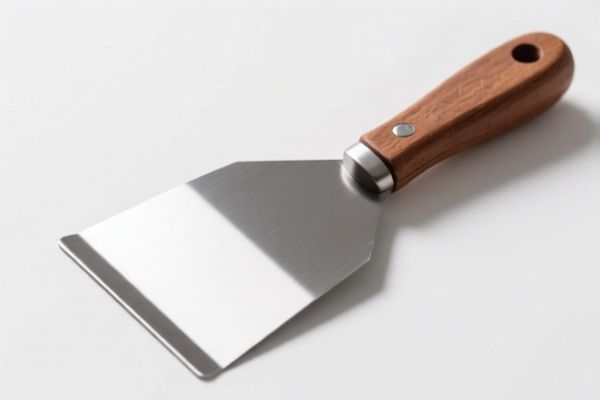
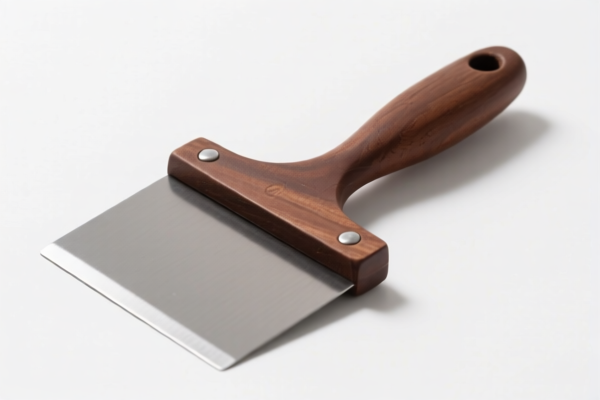
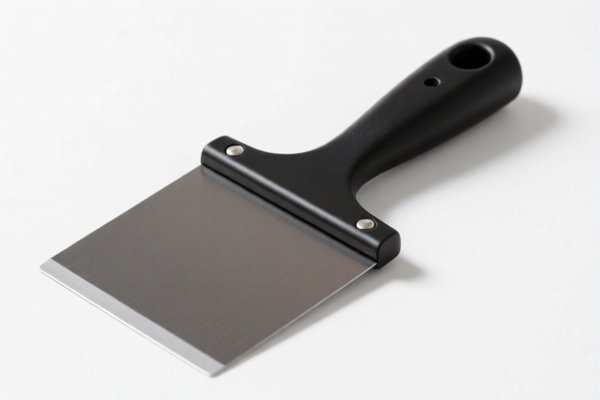
AI Analysis
📐 Slope Ruler Caliper (Angle Measuring Tool)
🌐 HS Code Reference & Customs Clearance Guide | 2026 Latest Tariff Analysis | Professional Clearance Strategy
📌 1. Product Definition & Classification: What is a "Slope Ruler Caliper"?
A Slope Ruler Caliper (also known as an Angled Vernier Caliper or Bevel Protractor Caliper) is a precision instrument used for measuring angles, slopes, and taper. It combines the functionality of a standard caliper (for linear measurement) with an angle-measuring mechanism (for angular measurement).
In international trade, classification depends heavily on its primary function and physical form: * Category A: Precision Measuring Instrument: If it is designed specifically for high-precision calibration, testing, or technical engineering, it falls under Chapter 90 (Instruments and Apparatus). * Category B: Hand Tool: If it is a general-purpose tool used in carpentry, construction, or basic maintenance without complex calibration features, it may fall under Chapter 82 (Tools).
⚠️ Critical Distinction Point: * If the tool is marketed as a precision instrument for technical/industrial use →归入 9017 (Medical, surgical, dental... or Other instruments for measuring or checking). * If the tool is marketed as a general hand tool (e.g., for woodworkers) →归入 8205 (Hand tools).
📦 2. HS Code Classification Details (2026 Latest Tariff Alignment)
Based on the provided data, there are four potential HS Codes for import into the US (from China). The tax burden varies slightly depending on the specific interpretation of "Tool" vs. "Instrument."
| HS Code | Product Description Summary | Applicable Scenario | Total Tax Rate (China Origin) |
|---|---|---|---|
9017.30.80.00 |
Slope Ruler Caliper: Classified as a length/angle measuring tool, caliper-type. Fits Chapter 90 definition of measuring instruments. | Technical calipers, precision angle gauges, industrial inspection tools. | 38.9% |
9017.20.80.40 |
Slope Measuring Tool: Classified under "Drawing, marking-out, or mathematical calculating instruments." | Tools used for drafting, surveying, or technical marking. | 39.6% |
8205.59.80.00 |
Slope Cutter/Tool: Classified as a "Hand Tool" (no material/conflict with hand tool category). | General carpentry, construction, non-precision slope checking. | 38.7% |
8205.59.55.60 |
Other Hand Tools: Inferred metal material, used for measuring/sloping. | General-purpose metal slope tools, basic trade tools. | 40.3% |
🔍 Key Analysis: * Most Likely Classification:
9017.30.80.00is often the preferred classification for Calipers because calipers are explicitly defined as measuring instruments in Chapter 90. * Risk Area: Customs may classify it as a "Hand Tool" (8205) if the product lacks precision calibration markings or is marketed as a simple carpenter's tool. This changes the summary but not necessarily the tax rate structure significantly, though the base duty differs.
💰 3. 2026 Latest Tariff Rate Breakdown (Including Section 301 & IEEPA)
✅ Applicable Country: United States (US)
✅ Origin: China (CN)
✅ Effective Date: 2025/2026 Current Framework
All HS Codes below are subject to the following layered tariffs: 1. Base Duty: Varies by HS Code (3.7% – 5.3%) 2. Section 301 Additional Duty: 25.0% (Standard for Chapter 90/82 from China) 3. Section 122 / IEEPA Additional Duty: 10.0% (Specific China-related surcharge)
🎯 1. 9017.30.80.00 —— Precision Angle/Length Measuring Tool
| Item | Content |
|---|---|
| Base Duty | 3.9% |
| Section 301 Duty | +25.0% |
| IEEPA / 122 Clause Duty | +10.0% |
| Total Effective Tax Rate | 38.9% |
| Calculation Basis | CIF Value × 38.9% |
| De Minimis Exemption | ❌ Not Eligible (Deny de minimis for Section 301 goods) |
| Legal Path | USITC:9017.30.80.00 → Footnote:301 → IEEPA:China10 |
📌 Explanation:
This is a "measuring instrument" (Caliper). Chapter 90 items from China face 25% Section 301 tariffs. * The 10% IEEPA surcharge is applied on top. * Total: 38.9%*. High cost impact.
🎯 2. 9017.20.80.40 —— Drafting/Marking/Measuring Instrument
| Item | Content |
|---|---|
| Base Duty | 4.6% |
| Section 301 Duty | +25.0% |
| IEEPA / 122 Clause Duty | +10.0% |
| Total Effective Tax Rate | 39.6% |
| Calculation Basis | CIF Value × 39.6% |
| De Minimis Exemption | ❌ Not Eligible |
| Legal Path | USITC:9017.20.80.40 → Footnote:301 → IEEPA:China10 |
📌 Note:
* Slightly higher total tax than9017.30due to a higher base duty (4.6% vs 3.9%). * Used if the tool is considered more for "marking/drawing" than general measurement.
🎯 3. 8205.59.80.00 —— Other Hand Tools (Slope Tool)
| Item | Content |
|---|---|
| Base Duty | 3.7% |
| Section 301 Duty | +25.0% |
| IEEPA / 122 Clause Duty | +10.0% |
| Total Effective Tax Rate | 38.7% |
| Calculation Basis | CIF Value × 38.7% |
| De Minimis Exemption | ❌ Not Eligible |
| Legal Path | USITC:8205.59.80.00 → Footnote:301 → IEEPA:China10 |
📌 Note:
This classification treats the item as a "Hand Tool" (Chapter 82). * Lowest Total Tax (38.7%), but requires justification that it is a general hand tool, not a precision instrument*. * Risk: If customs audits and finds it’s a precision caliper, they may reclassify to9017, leading to penalties or back taxes.
🎯 4. 8205.59.55.60 —— Other Hand Tools (Metal)
| Item | Content |
|---|---|
| Base Duty | 5.3% |
| Section 301 Duty | +25.0% |
| IEEPA / 122 Clause Duty | +10.0% |
| Total Effective Tax Rate | 40.3% |
| Calculation Basis | CIF Value × 40.3% |
| De Minimis Exemption | ❌ Not Eligible |
| Legal Path | USITC:8205.59.55.60 → Footnote:301 → IEEPA:China10 |
📌 Note:
* Highest tax rate among options. * Specific subheading for certain metal hand tools. Generally less favorable than8205.59.80.00.
🛠️ 4. Customs Clearance Practical Advice (Pitfall Avoidance Guide)
✅ 1. Documentation Checklist (Mandatory)
| Document | Required | Description |
|---|---|---|
| ✅ Product Spec Sheet | ✔️ | Must clarify: Is it a precision instrument (calibrated) or a general hand tool? |
| ✅ Product Photos | ✔️ | Clear shots of scales, markings, and material (e.g., stainless steel vs. aluminum). |
| ✅ Commercial Invoice | ✔️ | Description must match HS Code logic (e.g., "Precision Angle Caliper" vs. "Woodworking Slope Tool"). |
| ✅ Packing List | ✔️ | Standard packaging details. |
| ✅ Certificate of Origin | ✔️ | Essential for proving Chinese origin to apply Section 301/IEEPA correctly. |
| ✅ Test/Calibration Report | (Optional but Recommended) | If claiming 9017 (Precision), provide proof of accuracy/calibration. |
✅ 2. Declaration Strategy (Key Mnemonic)
🔥 "Precision = 9017 (Caliper), General = 8205 (Tool). Name Matters!"
| Scenario | Recommended HS Code | Reason |
|---|---|---|
| Industrial/Technical Use | 9017.30.80.00 |
Calipers are instruments. Most accurate for "Slope Ruler Caliper." |
| Construction/Carpentry Use | 8205.59.80.00 |
If marketed as a simple tool for rough measurements. |
| Drafting/Surveying Use | 9017.20.80.40 |
If used primarily for marking/plotting angles. |
⚠️ Warning:
Do NOT use "De Minimis" (Section 321) for shipments from China. All these HS Codes are subject to Section 301 and IEEPA tariffs, so package value < $800 will still be taxed. * Misclassification Risk*: Declaring a precision caliper as a "hand tool" (8205) to save 0.2% might trigger an audit. If the product has fine graduations (e.g., 5-minute or 15-minute precision), it is likely an instrument (9017).
✅ 3. Special Considerations
| Situation | Advice |
|---|---|
| Material Matters | If the tool is made of non-metal (e.g., plastic), 8205 may be invalid (Chapter 82 is for metal tools). Check material. |
| Calibration | If the tool comes with a calibration certificate, it strongly supports 9017 classification. |
| Brand & Marketing | If sold on Amazon as "Pro Precision Caliper," expect 9017. If sold as "Builder’s Angle Finder," 8205 might be defensible. |
🌍 5. Global Market Comparison (2026 Update)
| Country/Region | Recommended HS Code | Approx. Duty (China Origin) | Notes |
|---|---|---|---|
| 🇺🇸 USA | 9017.30.80.00 |
38.9% | High tariffs due to 301+IEEPA. |
| 🇨🇳 China (Import) | 9017.30.80.00 |
~5-8% | Lower base duty, no Section 301. |
| 🇪🇺 EU | 9017.30.80.00 |
~2-4% | No Section 301. Standard EU duty for measuring instruments. |
| 🇬🇧 UK | 9017.30.80.00 |
~4-6% | Post-Brexit standard duty. |
📌 Conclusion:
The US market is the most expensive due to political tariffs (301 + IEEPA). * Total Cost Impact: Nearly 40% of the CIF value will be paid in duties. * Strategy*: Consider pricing strategies to absorb this cost, or explore supply chain adjustments (e.g., final assembly in a non-China country) if possible.
📌 6. Common Errors & Pitfalls (Blood & Tears Lessons)
❌ Error 1: Assuming "De Minimis" ($800 exemption) applies.
👉 Result: Package seized or taxed at 38.9% anyway because of Section 301/IEEPA.
❌ Error 2: Misidentifying "Caliper" as "Hand Tool" without justification.
👉 Result: Customs audit, reclassification to 9017, potential penalties for undervaluation of duty risk.
❌ Error 3: Ignoring the 10% IEEPA Surcharge.
👉 Result: Underestimating landed cost by 10%, killing profit margins.
✅ Correct Practice:
"Precision Tool = 9017.30.80.00. Tax = 38.9%. Declare accurately. No De Minimis."
🎯 7. Conclusion: Professional Clearance, Cost Efficiency!
🎯 Remember Mnemonic:
🔹 "Caliper is Instrument (9017), Hand Tool is Carpenter (8205). Tax is ~39%, No De Minimis!"
🔹 "Check Material, Check Precision, Check Origin. Avoid Audit!"
📌 Tip:
If you are importing large volumes, consider applying for a Customs Ruling (Advance Ruling) to definitively classify the product before shipment. This provides legal certainty for the HS Code and tax rate.
📣 Immediate Action:
📞 Contact a licensed customs broker.
📄 Provide product specs and photos.
🚀 Calculate landed cost at 38.9% to ensure profitability.
✨ Professional Customs Clearance Starts with Accurate Classification!
💼 Every Percentage Point Counts in Global Trade!
Customer Reviews
About HS Code Classification
The Harmonized System (HS) is an internationally standardized nomenclature developed by the World Customs Organization (WCO) to classify traded products. Over 200 countries use the HS system as the basis for customs tariffs, trade statistics, and import/export regulations.
Each HS code follows a hierarchical structure:
- Chapter (2 digits) — Broad category of goods (e.g., Chapter 84: Machinery and Mechanical Appliances)
- Heading (4 digits) — More specific grouping within the chapter
- Subheading (6 digits) — Internationally standardized breakdown, used by all WCO member countries
- National subdivisions (8-10 digits) — Country-specific extensions for further classification, such as US HTSUS 10-digit codes
Correct HS code classification is essential for smooth customs clearance, accurate duty payment, and compliance with trade regulations. Misclassification can lead to customs delays, overpayment of duties, or penalties.
When importing from CN to US, the applicable tariff rates may include:
- Most-Favored-Nation (MFN) rate — The standard duty rate applied to WTO members
- General rate — Applied to countries without trade agreements
- Trade remedy duties — Additional tariffs such as Section 301 (anti-dumping), Section 232 (national security), or countervailing duties
The information provided on this page is for reference purposes only. For official classification, please consult with your local customs authority or a licensed customs broker.