Small Bearing
CN → US| HS Code | Tariff Rate | Origin | Destination | Doc |
|---|---|---|---|---|
| 8482105012 | 44.0% | CN | US | Official Doc |
| 8482105068 | 44.0% | CN | US | Official Doc |
| 8482105004 | 44.0% | CN | US | Official Doc |
| 7326190080 | 87.9% | CN | US | Official Doc |
| 7326908688 | 87.9% | CN | US | Official Doc |
Product Images
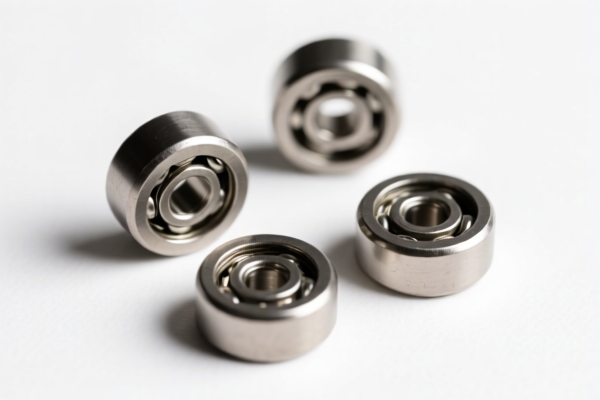
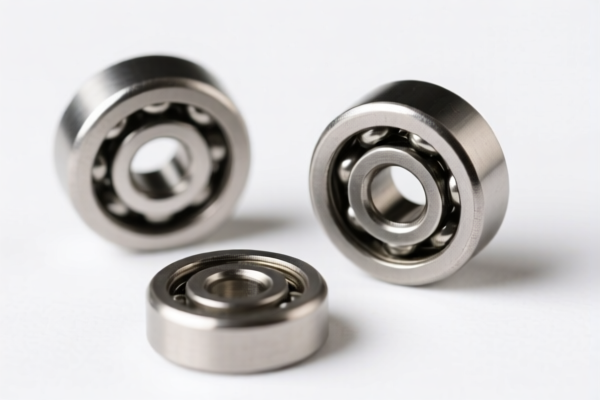
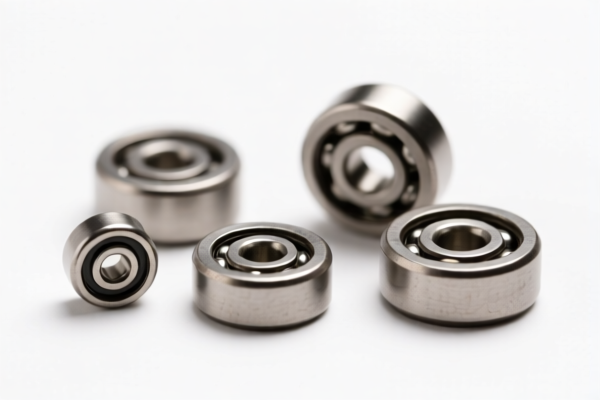
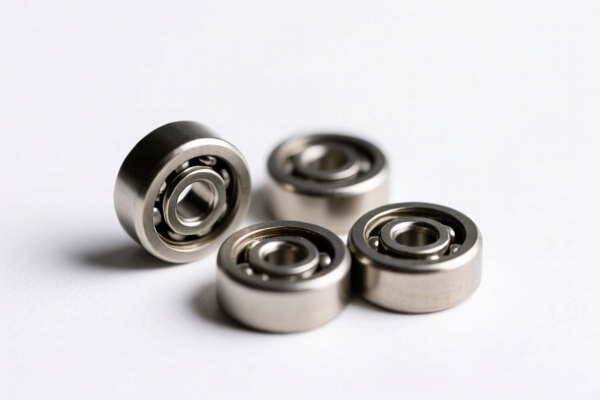
AI Analysis
🔩 Small Bearings (Industrial Components)
🌐 HS Code Reference & Customs Clearance Guide | 2026 Latest Tariff Analysis | Professional Clearance Strategy
📌 I. Product Definition & Classification: Do You Truly Understand "Small Bearings"?
Bearings are fundamental mechanical components that reduce friction between moving parts. In international trade, they are broadly categorized based on their structure and material. For "Small Bearings," the classification heavily depends on whether they are classified as specific mechanical bearings (usually steel/iron alloyed) or general metal parts.
Ball Bearings (8482 Series): Specifically designed rolling bearings, often made of high-grade steel, with precise internal structures (rings, balls, cages). General Metal/Steel Parts (7326 Series): If the bearing is inferred to be a general iron or steel制品 (articles) without specific bearing characteristics or if classified under a "catch-all" for metal parts.
⚠️ Key Distinction Point:
- If the item is a standard Ball Bearing with defined engineering specifications → It falls under Chapter 84 (Machinery Parts), specifically 8482.10.
- If the item is inferred as a General Steel/Iron Article (e.g., generic metal sleeves, non-standard parts) → It falls under Chapter 73 (Articles of Iron or Steel), specifically 7326.19 or 7326.90.
📦 II. HS Code Classification Details (Based on Provided Data)
Based on the provided <DATA>, here are the five possible HS Code classifications for "Small Bearings," along with the reasoning provided in the source:
| HS Code | Product Description | Source Reasoning (Why this Code?) | Total Tax Rate |
|---|---|---|---|
8482.10.50.12 |
Ball Bearing (General/Catch-all) | Summary states: "Bearing classified as ball bearing, type unspecified, defaults to Other/Catch-all category." | 44.0% |
8482.10.50.68 |
Ball Bearing (Unspecified Specs) | Summary states: "Bearing classified as ball bearing, specific specs not clarified, judged under 'Other' catch-all principle." | 44.0% |
8482.10.50.04 |
Ball Bearing (Spare Part) | Summary states: "Bearing classified as ball bearing, considered a spare part, no obvious material/state conflict." | 44.0% |
7326.19.00.80 |
Steel/Iron Product (Other) | Summary states: "Bearing inferred to be metal (steel) material, fits other steel product spare part requirements." | 87.9% |
7326.90.86.88 |
Iron/Steel Article (Other) | Summary states: "Bearing based on shaft spare part characteristics, inferred as other category of iron/steel articles." | 87.9% |
🔍 Critical Note:
- Chapter 84 (8482.10...): Higher base tariff (9.0%) but lower additional surcharges, resulting in 44.0% total.
- Chapter 73 (7326...): Lower base tariff (2.9%) but significantly higher additional surcharges (including 50% for steel/aluminum/copper products), resulting in 87.9% total.
- Risk: Choosing Chapter 73 for a standard bearing could lead to misclassification penalties if customs verifies it is indeed a mechanical bearing. However, if the "bearing" is a generic metal part, Chapter 73 might be the only option, despite the high tax.
💰 III. 2026 Latest Tariff Rate Breakdown (Including Surcharges)
✅ Applicable Country: United States (US)
✅ Country of Origin: China (CN)
✅ Effective Time: 2025 November 10 onwards (for subsequent imports)
🎯 1. 8482.10.50.12 / 8482.10.50.68 / 8482.10.50.04
Category: Ball Bearings (Chapter 84)
| Item | Content |
|---|---|
| Base Tariff | 9.0% |
| Section 301 Surcharge (Additional Duty) | +25.0% |
| Section 122 Surcharge | +10.0% |
| Total Tax Rate | 44.0% |
| Tax Calculation | CIF Value × 44.0% |
| De Minimis Exemption Eligibility | ❌ Not Eligible (High value threshold or specific exclusion applies) |
| Legal Basis Path | Base Rate → USITC Footnote 301 → Section 122 Authority |
📌 Explanation:
- Base Rate (9.0%): The standard MFN (Most Favored Nation) rate for bearings.
- Section 301 (25%): The major Trump-era/Biden-era tariff on Chinese mechanical parts.
- Section 122 (10%): An additional surcharge applied to certain imports.
- Total 44%: This is a high-duty category for standard bearings.
🎯 2. 7326.19.00.80 / 7326.90.86.88
Category: Other Articles of Iron or Steel (Chapter 73)
| Item | Content |
|---|---|
| Base Tariff | 2.9% |
| Section 301 Surcharge (Additional Duty) | +25.0% |
| Section 122 Surcharge | +10.0% |
| Steel/Aluminum/Copper Additional Surcharge | +50.0% |
| Total Tax Rate | 87.9% |
| Tax Calculation | CIF Value × 87.9% |
| De Minimis Exemption Eligibility | ❌ Not Eligible |
| Legal Basis Path | Base Rate → USITC Footnote 301 → Section 122 Authority → Steel/Aluminum/Copper Penalty |
📌 Warning:
- Why so high? Even though the base rate is low (2.9%), the 50% surcharge for steel products (likely under Section 232 or similar domestic security measures) drives the total to nearly 88%.
- Risk: Classifying a standard bearing as "other steel article" to avoid higher Section 301 rates is dangerous because the Steel Surcharge makes it even more expensive.
- Conflict: The data suggests a conflict between "Bearing" (Ch 84) and "Steel Article" (Ch 73). Customs will likely challenge Ch 73 for a clear bearing.
🛠️ IV. Customs Clearance Practical Advice (Field Pitfall Avoidance Guide)
✅ 1. Required Documentation Checklist (Non-negotiable)
| Document | Must Provide | Description |
|---|---|---|
| ✅ Product Specification Sheet | ✔️ | Must detail: Type (Ball/Roller), Material (Steel/AI), Dimensions, Load Rating. |
| ✅ Material Certification | ✔️ | Proof of material composition (e.g., AISI 52100 Steel) to justify Chapter 84 vs. 73. |
| ✅ Product Photos (Labeled) | ✔️ | Clear images showing inner/outer rings, balls, and cage structure. |
| ✅ Commercial Invoice | ✔️ | Clearly state "Small Ball Bearing" or "Precision Bearing Component". Avoid vague terms like "Metal Part". |
| ✅ Certificate of Origin (CO) | ✔️ | Essential for verifying Country of Origin (China) to apply correct surcharges. |
| ✅ Packing List | ✔️ | Ensure HS Code matches the item description exactly. |
✅ 2. Declaration Tips (Key Mnemonics)
🔥 "Bearings are Mechanical, Not General Steel. Misclassification Means 88% Tax!"
| Situation | Correct Declaration | Wrong Action |
|---|---|---|
| Standard Precision Bearing | 8482.10.50.xx (e.g., .12, .68, .04) |
Declaring as 7326... → 87.9% Tax! |
| Generic Metal Sleeve/Insert | 7326.90.86.88 |
Declaring as Bearing → Risk of Misclassification Penalty |
| Bearing + Lubricant Kit | Declare as Bearing + Lubricant separately | Packing together may change classification |
| Partially Assembled Bearing | 8482.10.50.xx |
Declaring as "Raw Steel" → Higher Duty & Scrutiny |
✅ 3. Special Case Handling
| Situation | Handling Advice |
|---|---|
| High-Precision/AC Bearing | Ensure documentation highlights "Precision" to support Ch 84 classification. |
| Custom-Made Non-Standard Bearing | Provide engineering drawings. If it doesn't fit standard bearing definitions, Ch 73 might be argued, but expect 87.9% tax. |
| OEM Parts for Machinery | Link to the final machinery (e.g., "For Motor X"). Still classify as Bearing. |
| Steel Content Verification | If claiming Ch 73, you must prove it is not a bearing per Harmonized System Explanatory Notes. |
🌍 V. Global Market Clearance Comparison (2026 Latest)
| Country/Region | Recommended HS Code | Tariff Rate (China Origin) | Certification/Notes |
|---|---|---|---|
| 🇺🇸 United States | 8482.10.50.12 etc. |
44.0% (Ch 84) 87.9% (Ch 73) |
High scrutiny on Steel Surcharge. |
| 🇨🇳 China | 8482.10.50.xx |
8.0% - 10.0% | Import duties apply. |
| 🇪🇺 European Union | 8482.10.80 |
4.0% | No Section 301/122 surcharges. |
| 🇨🇦 Canada | 8482.10.50 |
0% - 10% | CUSMA may apply if originating. |
| 🇬🇧 United Kingdom | 8482.10.50 |
0% - 10% | Post-Brexit tariffs vary. |
📌 Conclusion:
- The United States imposes the highest effective tariff due to the combination of Base + Section 301 + Section 122 + Steel Surcharges.
- Chapter 84 (44%) is significantly cheaper than Chapter 73 (87.9%) for bearings in the US market.
- Misclassifying a bearing as a general steel part is a bad financial decision due to the 50% steel surcharge.
📌 VI. Common Errors & Pitfall Guide (Lessons from Blood and Tears)
❌ Error 1: Declaring a Standard Ball Bearing as "Other Steel Articles" (7326.90.86.88)
👉 Consequence: Tax jumps from 44% to 87.9%. You pay double for no reason.
❌ Error 2: Using vague terms like "Metal Part" or "Iron Fitting" on Invoice
👉 Consequence: Customs inspection → Seizure → Penalties + Delay.
❌ Error 3: Ignoring Section 122 and Steel Surcharges in Cost Calculation
👉 Consequence: Profit margin wiped out. 87.9% tax can destroy low-margin goods.
❌ Error 4: Assuming all bearings are "Bearings" (Ch 84) without checking Material
👉 Consequence: If it's a non-standard, generic metal sleeve, it must be Ch 73, but you will pay 87.9%.
✅ Correct Practice:
"Small Ball Bearing, Precision, Steel, 608 ZZ, Model XYZ, Made in China"
→ Declare under8482.10.50.12or similar.
→ Pay 44%.
→ Avoid the 87.9% trap.
🎯 VII. Conclusion: Professional Declaration Saves Money!
🎯 Remember the Mnemonic:
🔹 "Bearings go to 84, Steel Articles to 73.
44% is cheap, 88% is a mess.
Don't guess the code, check the spec!
Misclassification costs double, every step."
📌 Tips:
- If your "bearing" is actually a general metal bushing or generic steel part, be prepared for 87.9% tax and ensure your documentation supports this classification.
- For standard bearings, always aim for Chapter 84 to save ~44% in taxes.
- Consider Advance Ruling (Pre-classification) with US Customs if you are unsure between Ch 84 and Ch 73.
📣 Immediate Action:
📞 Contact a licensed customs broker.
📄 Provide detailed product specs (Material, Dimensions, Use).
🚀 Declare correctly, clear smoothly, maximize profit!
✨ Professional Clearance Starts with Accurate Classification!
💼 Every dollar of tax saved is pure profit!
Customer Reviews
About HS Code Classification
The Harmonized System (HS) is an internationally standardized nomenclature developed by the World Customs Organization (WCO) to classify traded products. Over 200 countries use the HS system as the basis for customs tariffs, trade statistics, and import/export regulations.
Each HS code follows a hierarchical structure:
- Chapter (2 digits) — Broad category of goods (e.g., Chapter 84: Machinery and Mechanical Appliances)
- Heading (4 digits) — More specific grouping within the chapter
- Subheading (6 digits) — Internationally standardized breakdown, used by all WCO member countries
- National subdivisions (8-10 digits) — Country-specific extensions for further classification, such as US HTSUS 10-digit codes
Correct HS code classification is essential for smooth customs clearance, accurate duty payment, and compliance with trade regulations. Misclassification can lead to customs delays, overpayment of duties, or penalties.
When importing from CN to US, the applicable tariff rates may include:
- Most-Favored-Nation (MFN) rate — The standard duty rate applied to WTO members
- General rate — Applied to countries without trade agreements
- Trade remedy duties — Additional tariffs such as Section 301 (anti-dumping), Section 232 (national security), or countervailing duties
The information provided on this page is for reference purposes only. For official classification, please consult with your local customs authority or a licensed customs broker.