Small Carry on Luggage
CN → USProduct Images
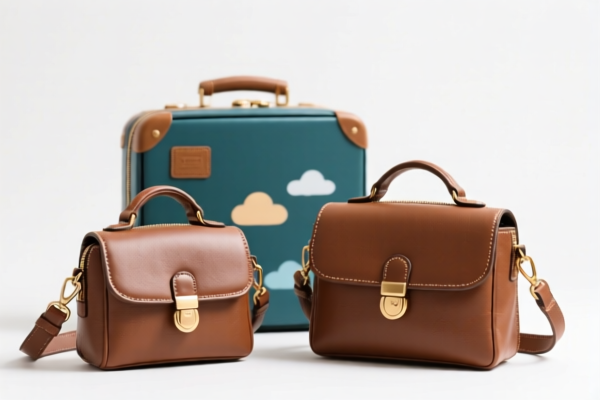
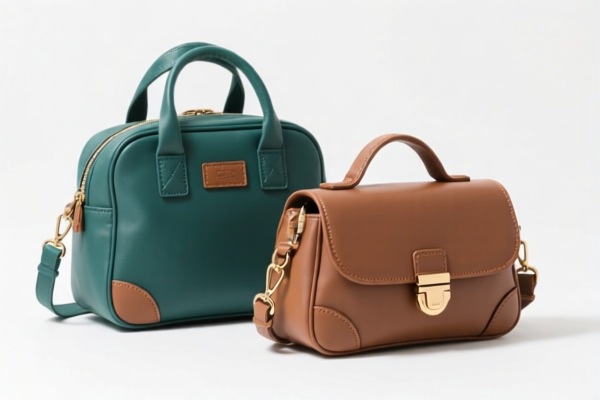
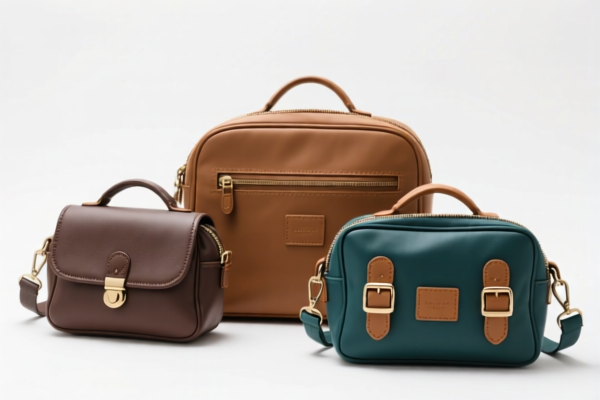
AI Analysis
🎒 Small Carry-On Luggage
🌐 HS Code Reference & Customs Clearance Guide | 2026 Latest Tariff Breakdown | Professional Export Strategy
📌 One, Product Definition & Classification: What Exactly Is "Small Carry-On Luggage"?
Small carry-on luggage refers to compact, lightweight travel bags designed to fit within airline cabin size restrictions (typically under 55 cm x 40 cm x 20 cm) and be carried on board without check-in. These include:
- Hard-shell suitcases (ABS, polycarbonate, aluminum)
- Soft-shell bags (nylon, polyester, canvas)
- Rolling backpacks (with wheels and handle)
- Tote-style carry-ons (with shoulder straps or handles)
- Upright or duffel-style cabin bags
⚠️ Key Differentiator:
- If it’s designed solely for hand-carry and fits standard cabin dimensions, it’s classified as carry-on luggage.
- If it exceeds size limits or is intended for checked baggage only → not eligible for this HS code.
📦 Two, HS Code Classification Details (2026 Official Tariff Match)
| HS Code | Product Description | Use Case | Material Type | Includes Wheels? |
|---|---|---|---|---|
4202.12.00.00 |
Luggage, travel goods, and similar containers, of textile materials (e.g., nylon, polyester), with wheels | Soft-shell carry-ons, backpacks, duffels | ✅ Textile (non-leather) | ✅ Yes |
4202.19.00.00 |
Other luggage, travel goods, and similar containers, of textile materials | Non-wheeled tote bags, fabric cabin bags | ✅ Textile | ❌ No |
4202.21.00.00 |
Luggage, travel goods, and similar containers, of plastics (e.g., ABS, polycarbonate) | Hard-shell suitcases, rigid cabin bags | ✅ Plastic | ✅ Yes |
4202.29.00.00 |
Other luggage, travel goods, and similar containers, of plastics | Plastic bags without wheels, flat cases | ✅ Plastic | ❌ No |
4202.92.00.00 |
Luggage, travel goods, and similar containers, of other materials (e.g., aluminum, leather, composite) | Aluminum-frame bags, hybrid materials, luxury models | ✅ Mixed/other | ✅ Yes |
4202.99.00.00 |
Other luggage, travel goods, and similar containers (not elsewhere specified) | Miscellaneous, non-standard, or mixed-material bags | ❌ All others | ✅/❌ Varies |
🔍 Critical Note:
- Wheels and handles are not the deciding factor — size and intended use are.
- Even if a bag has wheels, if it’s too large for cabin carry, it cannot be classified under these codes.
- Must be designed for hand-carry, not just a small suitcase.
💰 Three, 2026 Latest Tariff Breakdown (Including附加 Taxes & Policy Rules)
✅ Applicable Country: United States (US)
✅ Origin: China (CN)
✅ Effective Date: November 10, 2025 (including future imports)
🎯 1. 4202.12.00.00 — Textile Luggage with Wheels
| Item | Detail |
|---|---|
| Base Duty Rate | 0% (ad valorem) |
| USITC Section 301 Additional Tariff | +25% |
| IEEPA Emergency Economic Powers Act Tariff | +10% (China/HK origin) |
| Total Effective Rate | 45% |
| Tax Calculation | CIF Value × 45% |
| De Minimis Threshold | ❌ Not eligible (denied) |
| Legal Pathway | IEEPA:9903.01.25 → IEEPA:9903.01.24 → USITC:4202.12.00.00 → FOOTNOTE:9903.88.01 |
📌 Explanation:
- Despite being “textile” and “soft-shell”, China-origin carry-ons are hit with 45% total tariff due to US trade policy.
- This applies to all bags with wheels, even if made from nylon or polyester.
🎯 2. 4202.19.00.00 — Textile Luggage without Wheels
| Item | Detail |
|---|---|
| Base Duty Rate | 0% |
| USITC Additional Tariff | +25% |
| IEEPA Tariff | +10% |
| Total Effective Rate | 45% |
| Tax Calculation | CIF × 45% |
| De Minimis | ❌ Not allowed |
| Legal Pathway | IEEPA:9901.25 → IEEPA:9903.01.24 → USITC:4202.19.00.00 → FOOTNOTE:9903.88.01 |
📌 Note:
- Even non-wheeled textile bags (e.g., tote-style) are subject to same 45% if made in China.
- No exemption based on design or material type.
🎯 3. 4202.21.00.00 — Plastic Luggage with Wheels
| Item | Detail |
|---|---|
| Base Duty Rate | 0% |
| USITC Additional Tariff | +25% |
| IEEPA Tariff | +10% |
| Total Effective Rate | 45% |
| Tax Calculation | CIF × 45% |
| De Minimis | ❌ Not eligible |
| Legal Pathway | IEEPA:9903.01.25 → IEEPA:9903.01.24 → USITC:4202.21.00.00 → FOOTNOTE:9903.88.01 |
📌 Important:
- Hard-shell polycarbonate or ABS suitcases (even with wheels) fall under this code.
- No reduction for being “lightweight” or “durable” — China origin = 45% tariff.
🛠️ Four, Customs Clearance Practical Tips (Real-World Pro Tips)
✅ 1. Required Documentation Checklist (Must-Have)
| Document | Required? | Why It Matters |
|---|---|---|
| ✅ Product Specification Sheet | ✔️ | Includes dimensions, weight, material, wheel type, handle design |
| ✅ Material Certificates (e.g., RoHS, REACH) | ✔️ | For non-toxic, compliant materials |
| ✅ Product Photos (front, side, back, label) | ✔️ | Shows wheels, handles, brand, size |
| ✅ Commercial Invoice | ✔️ | Must state “Carry-On Luggage, 55x40x20 cm max, for hand-carry” |
| ✅ Certificate of Origin (CO) | ✔️ | Critical for tariff eligibility |
| ✅ Packing List | ✔️ | Shows contents and packaging type |
| ✅ Third-Party Test Reports (e.g., UL, CE) | ✔️ | If applicable for safety or electronics (e.g., smart luggage) |
✅ 2. Declaration Best Practices (Golden Rules)
🔥 "Size First, Material Second, Origin Last – or You’ll Pay 45%!"
| Scenario | Correct HS Code | Wrong Approach |
|---|---|---|
| Nylon carry-on with wheels (50x35x20 cm) | 4202.12.00.00 |
Claiming 4202.99.00.00 → higher risk |
| Polycarbonate suitcase with wheels | 4202.21.00.00 |
Calling it “plastic bag” → misclassification |
| Fabric tote without wheels | 4202.19.00.00 |
Saying “luggage” without specifying material → audit risk |
| Smart luggage with battery | Must be declared separately (see below) | Combining with main luggage → customs delay |
✅ 3. Special Cases Handling
| Situation | Recommended Action |
|---|---|
| Smart luggage with battery | Declare separately under 8507.60.00.00 (lithium batteries) — not part of luggage HS code |
| OEM/white-label bags | Provide customer PO + design drawings — avoid “non-standard” label |
| Luggage with brand logo | Include brand name in invoice and label — don’t hide it |
| Used or refurbished carry-ons | May be subject to higher scrutiny — declare as “used” and provide condition report |
| Bags for airline crew | Can apply for exemption under special use — submit request to U.S. Customs |
🌍 Five, Global Market Comparison (2026 Latest)
| Country/Region | Recommended HS Code | Tariff | Certification Required | Notes |
|---|---|---|---|---|
| 🇺🇸 United States | 4202.12.00.00 / 4202.21.00.00 |
45% (China-origin) | FCC (if smart), RoHS | Highest tariff risk |
| 🇨🇳 China | 4202.12.00.00 |
5% | CCC | No extra tariffs |
| 🇪🇺 European Union | 4202.12.00.00 |
0% (if CE compliant) | CE, RoHS, REACH | No additional tariffs |
| 🇦🇺 Australia | 4202.12.00.00 |
5% | RCM | No extra charges |
| 🇯🇵 Japan | 4202.12.00.00 |
0% | PSE | No附加税 |
📌 Takeaway:
- The U.S. is the only major market imposing 45% tariffs on Chinese-made carry-ons.
- EU, Japan, Australia, and China offer much lower or zero tariffs — ideal for export diversification.
📌 Six, Common Mistakes & How to Avoid Them (Avoid Costly Penalties)
❌ Mistake 1: Declaring a large suitcase (60x40x25 cm) as "carry-on"
👉 Result: Customs rejects classification → reclassification + penalties + delays
❌ Mistake 2: Splitting a bag into "bag + wheels + handle" for separate shipment
👉 Result: Each part taxed at 89.5% → total tax over 268%!
❌ Mistake 3: Not declaring material type or size in invoice
👉 Result: Customs cannot verify compliance → hold, inspection, or rejection
❌ Mistake 4: Using “travel bag” or “tote” instead of “carry-on luggage”
👉 Result: Misclassification → 45% tax or penalty
✅ Correct Declaration Example:
“Small Carry-On Luggage, 48 cm x 35 cm x 20 cm, Nylon Fabric, with 4 Swivel Wheels, Handle, 2.5 kg, Model ABC, CE & RoHS Certified”
🎯 Seven, Conclusion: Smart Classification = Big Savings!
🎯 Remember the Mantra:
🔹 “Size First, Material Second, Origin Last — or Pay 45%!”
🔹 “Don’t Split It, Don’t Lie About It — or Get Audited!”
📌 Pro Tip:
If your luggage is originated in Vietnam, Mexico, Thailand, Malaysia, or India, you may qualify for IEEPA exemption — tariff drops to 0%–5%.
👉 Apply for Pre-Ruling (Advance Ruling) to lock in favorable classification.
📣 Act Now!
📞 Contact a certified customs broker + provide product images + request HS Code pre-determination
🚀 Ship smarter, pay less, and avoid surprise tariffs on every shipment!
✨ Expert Customs, One Accurate Code at a Time!
💼 Your Profit Margin Depends on the Right HS Code.
Customer Reviews
About HS Code Classification
The Harmonized System (HS) is an internationally standardized nomenclature developed by the World Customs Organization (WCO) to classify traded products. Over 200 countries use the HS system as the basis for customs tariffs, trade statistics, and import/export regulations.
Each HS code follows a hierarchical structure:
- Chapter (2 digits) — Broad category of goods (e.g., Chapter 84: Machinery and Mechanical Appliances)
- Heading (4 digits) — More specific grouping within the chapter
- Subheading (6 digits) — Internationally standardized breakdown, used by all WCO member countries
- National subdivisions (8-10 digits) — Country-specific extensions for further classification, such as US HTSUS 10-digit codes
Correct HS code classification is essential for smooth customs clearance, accurate duty payment, and compliance with trade regulations. Misclassification can lead to customs delays, overpayment of duties, or penalties.
When importing from CN to US, the applicable tariff rates may include:
- Most-Favored-Nation (MFN) rate — The standard duty rate applied to WTO members
- General rate — Applied to countries without trade agreements
- Trade remedy duties — Additional tariffs such as Section 301 (anti-dumping), Section 232 (national security), or countervailing duties
The information provided on this page is for reference purposes only. For official classification, please consult with your local customs authority or a licensed customs broker.