Small Diameter Plastic Pipe Fittings
CN → US| HS Code | Tariff Rate | Origin | Destination | Doc |
|---|---|---|---|---|
| 3917290090 | 38.1% | CN | US | Official Doc |
| 3926909987 | 22.8% | CN | US | Official Doc |
| 3926909989 | 22.8% | CN | US | Official Doc |
| 3917290050 | 38.1% | CN | US | Official Doc |
| 3916903000 | 41.5% | CN | US | Official Doc |
Product Images
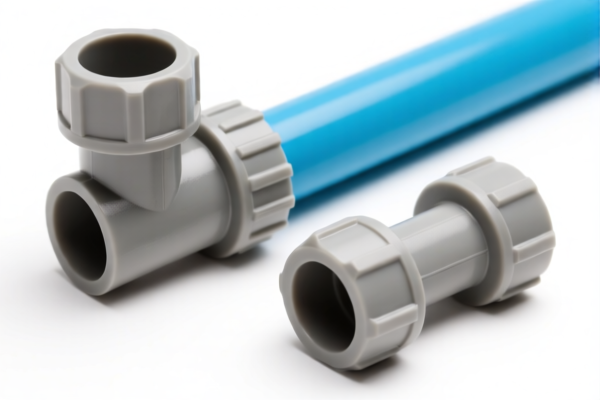
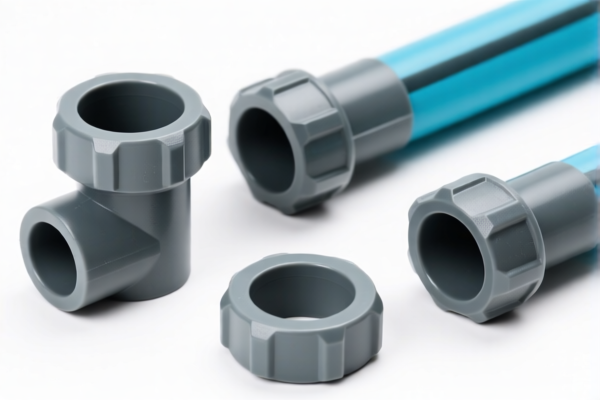
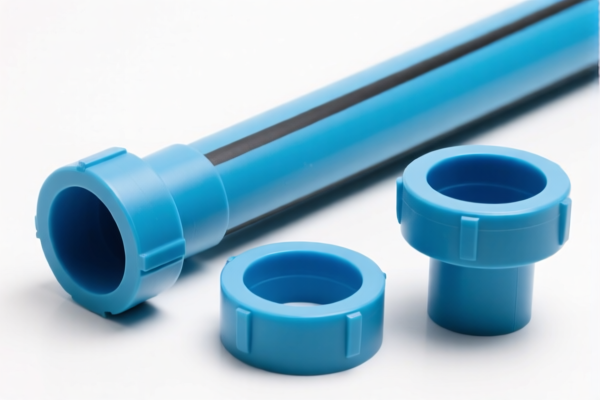
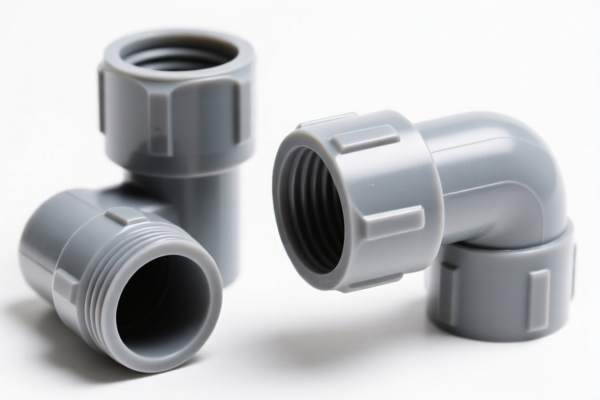
AI Analysis
🔧 Small Diameter Plastic Pipe Fittings (Industrial Tubing & Connectors)
🌐 HS Code Reference & Customs Clearance Guide | 2026 Latest Tariff Analysis | Professional Compliance Strategy
📌 One, Product Definition & Classification: Do You Really Understand "Plastic Fittings"?
In international trade, "small diameter plastic pipe fittings" are critical components for fluid transport in industrial, medical, and residential systems. They are generally classified based on their material composition, physical form (rigid vs. flexible), and specific function.
To ensure accurate customs clearance and optimal tax treatment, it is crucial to distinguish between: * Rigid Tubing/Conduits: Hard plastic pipes used for structural or protected line routing. * General Plastic Articles: Fittings that do not fit specific tubing categories (often considered "other" plastic goods).
⚠️ Key Distinction Point:
- If the item is a rigid tube/pipe with a specific length (e.g., <200mm) or used for conduit purposes → It falls under Chapter 39.17 (Plastics Tubing/Pipe).
- If the item is a fitting, connector, or general plastic part without specific tubing characteristics → It often falls under Chapter 39.26 (Other Plastic Articles).
📦 Two, HS Code Classification Details (2026 Latest Tariff Authority Comparison)
| HS Code | Product Description | Applicable Scenario | Tax Logic |
|---|---|---|---|
3917.29.00.90 |
Small diameter plastic tubes, rigid form, generic plastic material | Rigid plastic pipes, industrial tubing, conduit systems | ✅ Rigid Tubing Logic: Fits "Other tubes/pipes" category |
3926.90.99.87 |
Small diameter plastic pipe fittings, general plastic articles | Generic plastic connectors, no specific "tubing" conflict | ✅ General Article Logic: Catch-all category for plastic parts |
3926.90.99.89 |
Small diameter plastic pipe fittings, plastic material sub-category | Plastic manufacturing components, no material conflict | ✅ Plastic Sub-category Logic: Fits "Other plastic articles" |
3917.29.00.50 |
Small diameter plastic tubes, rigid, length <200mm | Short rigid pipes, specific length-defined tubing | ✅ Rigid Tubing (Short) Logic: Fits "Rigid" definition strictly |
3916.90.30.00 |
Plastic rods, sticks, profiles (variations of short tubes) | Plastic profiles, bar-like forms, structural plastic variants | ✅ Profile/Rod Logic: Classified as "Other" plastic forms |
🔍 Key Reminder:
- Items classified as Tubing/Pipe (3917) generally carry higher additional tariffs due to specific trade policies.
- Items classified as General Plastic Articles (3926) may have slightly lower base rates but still attract significant add-ons.
- Avoid Misclassification: Do not declare a "fitting" (connector) as "tubing" unless it is explicitly a short section of pipe. Conversely, do not declare a "pipe" as a "general part" to avoid penalties for inaccurate declaration.
💰 Three, 2026 Latest Tariff Rate Breakdown (Including Additional Duties & Policies)
✅ Applicable Country: United States (US)
✅ Country of Origin: China (CN)
✅ Effective Time: From November 10, 2025 (including subsequent imports)
🎯 1. 3917.29.00.90 — Plastic Tubes/Pipes (Rigid, General)
| Item | Content |
|---|---|
| Base Tariff | 3.1% (ad valorem) |
| Section 301 Additional Tariff | +25.0% |
| Section 122 Tariff (IEEPA) | +10.0% |
| Total Tariff Rate | 38.1% |
| Tax Calculation | CIF Value × 38.1% |
| De Minimis Exemption? | ❌ NO (deny_de_minimis) |
| Legal Basis Path | USITC:3917.29.00.90 → FOOTNOTE:301 → IEEPA:122 |
📌 Explanation:
- The 3.1% base rate applies to plastic tubing.
- The 25% is the standard Section 301 tariff on Chinese plastic products.
- The 10% is the additional Section 122 tariff targeting specific Chinese imports.
- Total: 38.1%. This is a high-cost category. Correct classification is vital to avoid overpayment or audit risks.
🎯 2. 3926.90.99.87 — Other Plastic Articles (General Fittings)
| Item | Content |
|---|---|
| Base Tariff | 5.3% |
| Section 301 Additional Tariff | +7.5% |
| Section 122 Tariff (IEEPA) | +10.0% |
| Total Tariff Rate | 22.8% |
| Tax Calculation | CIF Value × 22.8% |
| De Minimis Exemption? | ❌ NO (deny_de_minimis) |
| Legal Basis Path | USITC:3926.90.99.87 → FOOTNOTE:301 → IEEPA:122 |
📌 Note:
- The 5.3% base rate is for "Other plastic articles."
- The 7.5% Section 301 rate is lower than for tubing (3917) for this specific subheading.
- The 10% Section 122 applies uniformly.
- Total: 22.8%. This offers significant savings (15.3% less) compared to3917.29.00.90. However, accuracy is key—misdeclaring a tube as a "general article" is fraud.
🎯 3. 3926.90.99.89 — Other Plastic Articles (Material Sub-category)
| Item | Content |
|---|---|
| Base Tariff | 5.3% |
| Section 301 Additional Tariff | +7.5% |
| Section 122 Tariff (IEEPA) | +10.0% |
| Total Tariff Rate | 22.8% |
| Tax Calculation | CIF Value × 22.8% |
| De Minimis Exemption? | ❌ NO (deny_de_minimis) |
| Legal Basis Path | USITC:3926.90.99.89 → FOOTNOTE:301 → IEEPA:122 |
📌 Note:
- Identical tax structure to3926.90.99.87.
- Use this code when the product is clearly a "plastic article" but doesn't fit the specific description of.87.
- Total: 22.8%.
🎯 4. 3917.29.00.50 — Plastic Tubes/Rigid, <200mm
| Item | Content |
|---|---|
| Base Tariff | 3.1% |
| Section 301 Additional Tariff | +25.0% |
| Section 122 Tariff (IEEPA) | +10.0% |
| Total Tariff Rate | 38.1% |
| Tax Calculation | CIF Value × 38.1% |
| De Minimis Exemption? | ❌ NO (deny_de_minimis) |
| Legal Basis Path | USITC:3917.29.00.50 → FOOTNOTE:301 → IEEPA:122 |
📌 Note:
- This code specifically targets short rigid tubes.
- If your "fitting" is actually a short section of pipe (<200mm), it MUST be declared here.
- Total: 38.1%. High risk of audit if misclassified as general plastic.
🎯 5. 3916.90.30.00 — Plastic Rods/Sticks/Profiles
| Item | Content |
|---|---|
| Base Tariff | 6.5% |
| Section 301 Additional Tariff | +25.0% |
| Section 122 Tariff (IEEPA) | +10.0% |
| Total Tariff Rate | 41.5% |
| Tax Calculation | CIF Value × 41.5% |
| De Minimis Exemption? | ❌ NO (deny_de_minimis) |
| Legal Basis Path | USITC:3916.90.30.00 → FOOTNOTE:301 → IEEPA:122 |
📌 Note:
- This is the highest tax rate (41.5%) in the dataset.
- Applies only to profiles, rods, sticks (e.g., plastic bars used as structural elements).
- Do not use for standard pipe fittings or tubes. Misclassification here can lead to significant overpayment or penalties.
🛠️ Four, Customs Clearance Practical Advice (Battle-Tested Pitfall Guide)
✅ 1. Required Documentation Checklist (Non-Negotiable)
| Document | Required | Notes |
|---|---|---|
| ✅ Product Specification Sheet | ✔️ | Must detail material (e.g., PVC, PE, PP), diameter, wall thickness, rigidity. |
| ✅ Product Photos | ✔️ | Clear images showing the item as a "tube," "fitting," or "rod." |
| ✅ Commercial Invoice | ✔️ | Description must match HS Code logic (e.g., "Rigid Plastic Tube" vs. "Plastic Connector"). |
| ✅ Certificate of Origin (CO) | ✔️ | Essential for verifying Chinese origin for Section 301/122 applicability. |
| ✅ Packing List | ✔️ | Detail contents to avoid mixed-category confusion. |
| ✅ Technical Drawing | ✔️ | Helpful for distinguishing between "tube" and "profile." |
✅ 2. Declaration Strategy (Key Mantra)
🔥 "Form Dictates Code, Rigid is Tubing, General is Article, Profiles are Highest!"
| Scenario | Correct Declaration | Incorrect Practice |
|---|---|---|
| Short rigid pipe (<200mm) | 3917.29.00.50 (38.1%) |
Declaring as "Fitting" → Audit Risk |
| Standard rigid tube | 3917.29.00.90 (38.1%) |
Declaring as "General Plastic" → Penalty |
| Generic plastic connector | 3926.90.99.87 (22.8%) |
Declaring as "Tube" → Overpayment |
| Plastic rod/profile | 3916.90.30.00 (41.5%) |
Declaring as "Tube" → Complexity |
✅ 3. Special Situations Handling
| Situation | Handling Advice |
|---|---|
| Mixed Shipment (Tubes + Fittings) | Declare separately. Do not lump under one code. |
| OEM Custom Fittings | Provide design specs to prove "fitting" nature vs. "tube" nature. |
| Medical Plastic Tubing | Ensure it meets specific medical standards; still subject to same HS logic unless exempted. |
| High-Value Precious Materials | If plastic is mixed with metal (e.g., reinforced hose), classification changes entirely (Chapter 39 vs. 73/84). |
🌍 Five, Global Market Comparison (2026 Latest)
| Country/Region | Recommended HS Code | Tariff (China Origin) | Certification Required | Notes |
|---|---|---|---|---|
| 🇺🇸 USA | 3926.90.99.87 |
22.8% | None Specific | Best Rate for general fittings |
| 🇺🇸 USA | 3917.29.00.90 |
38.1% | None Specific | High Rate for tubing |
| 🇨🇳 China | 3926.90.99.87 |
~5-6% | RoHS (if applicable) | Low import duty for domestic trade |
| 🇪🇺 EU | 3926.90.99 |
0-6.5% | REACH, RoHS | No Section 301/122 equivalents |
| 🇬🇧 UK | 3926.90.99 |
0-6.5% | UKCA, RoHS | Post-Brexit rules apply |
📌 Conclusion:
- The USA imposes the highest effective duty due to Section 301 and Section 122.
- Strategic Classification: If your product is a "fitting" and not a "tube," insist on3926classification to save 15.3% in duties.
- Documentation is Key: Proof of "fitting" vs. "tube" status is your strongest defense against audits.
📌 Six, Common Mistakes & Pitfalls (Blood-Tested Lessons)
❌ Mistake 1: Declaring all plastic pipe components as 3917 (Tubing)
👉 Consequence: You pay 38.1% instead of 22.8% → 15.3% Overpayment!
❌ Mistake 2: Declaring rigid rods/profiles as 3926 (General)
👉 Consequence: Customs may reclassify to 3916 (41.5%) → Underpayment & Penalties!
❌ Mistake 3: Ignoring Section 122 Tariff
👉 Consequence: Missing the 10% layer → Unexpected Bill at Customs!
❌ Mistake 4: Using vague terms like "Plastic Part"
👉 Consequence: High risk of audit, delay, or forced reclassification by CBP.
✅ Correct Practice:
"Rigid PVC Plastic Tube, 10mm Diameter, Length 150mm, Model: PVC-T-10" →
3917.29.00.50
"Plastic Pipe Connector, 10mm, Polypropylene, Model: PP-C-10" →3926.90.99.87
🎯 Seven, Conclusion: Professional Declaration, Cost Optimization, Efficient Clearance!
🎯 Remember the Mantra:
🔹 "Rigid Tube = 3917 (38.1%),
🔹 "General Fitting = 3926 (22.8%),
🔹 "Profile/Rod = 3916 (41.5%)!"
🔹 "Section 122 is Always 10%, Section 301 Varies!"
📌 Pro Tip:
If your plastic fittings are made from recycled materials or have specific chemical resistance, provide detailed MSDS/SDS and material composition reports to justify your HS Code choice.
Consider applying for an Advance Ruling from U.S. Customs and Border Protection (CBP) if your shipment volume is high.
📣 Immediate Action:
📞 Contact a licensed customs broker + Provide Product Photos + Request HS Code Advance Ruling
🚀 Ensure your plastic fittings clear customs smoothly, minimize duty costs, and maximize profit!
✨ Professional Customs Clearance Starts with Precise Classification!
💼 Every Percent of Duty Saved is Pure Profit!
Customer Reviews
About HS Code Classification
The Harmonized System (HS) is an internationally standardized nomenclature developed by the World Customs Organization (WCO) to classify traded products. Over 200 countries use the HS system as the basis for customs tariffs, trade statistics, and import/export regulations.
Each HS code follows a hierarchical structure:
- Chapter (2 digits) — Broad category of goods (e.g., Chapter 84: Machinery and Mechanical Appliances)
- Heading (4 digits) — More specific grouping within the chapter
- Subheading (6 digits) — Internationally standardized breakdown, used by all WCO member countries
- National subdivisions (8-10 digits) — Country-specific extensions for further classification, such as US HTSUS 10-digit codes
Correct HS code classification is essential for smooth customs clearance, accurate duty payment, and compliance with trade regulations. Misclassification can lead to customs delays, overpayment of duties, or penalties.
When importing from CN to US, the applicable tariff rates may include:
- Most-Favored-Nation (MFN) rate — The standard duty rate applied to WTO members
- General rate — Applied to countries without trade agreements
- Trade remedy duties — Additional tariffs such as Section 301 (anti-dumping), Section 232 (national security), or countervailing duties
The information provided on this page is for reference purposes only. For official classification, please consult with your local customs authority or a licensed customs broker.