Small Envelope
CN → US| HS Code | Tariff Rate | Origin | Destination | Doc |
|---|---|---|---|---|
| 4817100000 | 35.0% | CN | US | Official Doc |
| 481720200000 | 0.0% | CN | US | Official Doc |
Product Images



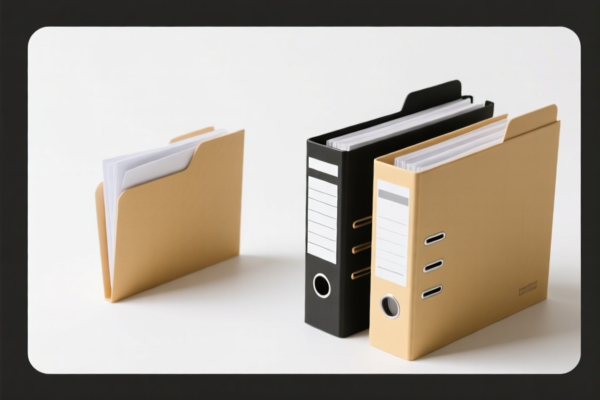
AI Analysis
📩 Small Envelopes (Paper Stationery)
🌐 HS Code Reference & Customs Clearance Guide | 2026 Latest Tariff Analysis | Professional Logistics Strategy
📌 I. Product Definition & Classification: Do You Know "Small Envelopes"?
"Small Envelopes" generally fall under the broad category of Paper Stationery. In international trade, the classification depends heavily on the structure (is it a simple envelope or a complex writing compendium?) and the surface treatment (is it a blank postcard or a prepared letter sheet?).
For standard commercial "Small Envelopes," the primary classification is 4817.10.
For specialized items like "Letter Cards" or "Postcards" with specific preparations (e.g., gummed borders, perforations), the classification shifts to 4817.20.
⚠️ Key Distinction Point:
- Simple Envelopes: Plain paper/paperboard envelopes, even if small → 4817.10.00.00
- Specialty Paper Goods: Letter cards, postcards, or sheets with gummed/perforated borders prepared for use as combination sheets → 4817.20.20.00.00
📦 II. HS Code Classification Details (2026 Latest Tariff Authority Comparison)
Based on the provided data <DATA>, here are the two potential HS Codes for "Small Envelopes" and related paper stationery:
| HS Code | Product Description | Applicable Scenario | Tax Status |
|---|---|---|---|
4817.10.00.00 |
Envelopes, letter cards, plain postcards and correspondence cards, of paper or paperboard... : Envelopes | Standard commercial envelopes (small, large, windowed), blank postcards, correspondence cards | ✅ Available Tax: 25.0% |
4817.20.20.00.00 |
... : Letter cards, plain postcards and correspondence cards: Sheets of writing paper, with border gummed or perforated... | Specialty stationery: Sheets prepared as combination sheets/envelopes, gummed borders, perforated letter cards | ❌ Error Tax: Failed to Retrieve |
🔍 Important Note:
- If your "Small Envelope" is a standard envelope (even if made of special paper), use 4817.10.00.00.
- If the item is technically a "Letter Card" (a stiff sheet folded or prepared with gummed edges for mailing without a separate envelope) or a "Sheet with gummed/perforated borders" intended to become an envelope, use 4817.20.20.00.00.
- Do not mix categories: A simple plain envelope is NOT a "gummed sheet" unless it has pre-applied adhesive borders.
💰 III. 2026 Latest Tariff Rate Details (Detailed Breakdown)
✅ Applicable Country: United States (US)
✅ Origin: China (CN)
✅ Data Source: Provided<DATA>
🎯 1. 4817.10.00.00 —— Standard Envelopes
| Item | Content |
|---|---|
| Product | Envelopes, of paper or paperboard |
| Base Tariff | 0.0% |
| Additional Tariff (Section 301 / 25%) | 25.0% |
| Total Tax Rate | 25.0% |
| Tax Detail | "基础关税: 0.0%, 加征关税: 25.0%" |
| Total Tax Calculation | CIF Value × 25.0% |
| Data Source | <DATA> Entry 1 |
📌 Explanation:
- Base Tariff (0%): Paper envelopes are generally low-tariff items in standard international trade.
- Additional Tariff (25%): Due to trade tensions (likely Section 301 tariffs on Chinese goods), a 25% surcharge applies.
- Total Liability: You must pay 25% of the CIF value as customs duty.
🎯 2. 4817.20.20.00.00 —— Specialty Letter Cards/Prepared Sheets
| Item | Content |
|---|---|
| Product | Letter cards, plain postcards, correspondence cards (gummed/perforated sheets) |
| Base Tariff | Information Unavailable |
| Additional Tariff | Information Unavailable |
| Total Tax Rate | Error |
| Tax Detail | "Failed to retrieve tax information" |
| Total Tax Calculation | Error |
| Data Source | <DATA> Entry 2 |
📌 Warning:
- The tax information for this specific subheading failed to retrieve in the provided data.
- Risk: If you classify a small envelope here incorrectly, you may face customs delays, audits, or inaccurate duty calculations.
- Recommendation: Only use this code if the product is explicitly a "Letter Card" or "Gummed Sheet", NOT a standard envelope.
🛠️ IV. Customs Clearance Practical Advice (Real-World Pitfall Guide)
✅ 1. Preparation Checklist (Must-Haves)
| Document | Required? | Description |
|---|---|---|
| ✅ Product Specifications | ✔️ | Material (paper/cardboard), dimensions, weight, whether windowed. |
| ✅ Product Photos | ✔️ | Clear images showing the inside, outside, and any adhesive/gummed areas. |
| ✅ Commercial Invoice | ✔️ | Clearly state "Paper Envelopes" or "Stationery Envelopes," NOT "Gift Packaging" or "Cardboard Boxes." |
| ✅ Packing List | ✔️ | Detail quantity and packaging method. |
| ✅ Origin Certificate | ❓ | If claiming preferential tariffs (not applicable here as 25% tariff applies), provide CO. |
✅ 2. Declaration Tips (Key Mnemonics)
🔥 "Simple Envelope = 4817.10; Gummed Sheet = 4817.20"
| Scenario | Correct HS Code | Wrong Action | Consequence |
|---|---|---|---|
| Standard small paper envelope | 4817.10.00.00 |
Misclassify as "Cardboard Box" (4804/4805) | Overpay tax or delay |
| Envelope with transparent window | 4817.10.00.00 |
Misclassify as "Plastic" | Wrong category |
| Stiff card folded like an envelope with gummed edge | 4817.20.20.00.00 |
Misclassify as 4817.10 |
Potential tax dispute (if tax rates differ) |
| "Small Envelope" made of fabric | ❌ Not in Data | Assume Paper HS | Wrong classification |
✅ 3. Special Cases Handling
| Case | Handling Suggestion |
|---|---|
| Mixed Shipment | If shipping both standard envelopes and letter cards, declare separately to ensure accurate tax calculation. |
| Custom Printed Envelopes | Still 4817.10.00.00 if they are simple envelopes. Printing does not change the HS code. |
| Tax Data Error for 4817.20 | If you must ship 4817.20.20.00.00, consult a customs broker immediately to verify the current 25% tariff applies, as the data says "Error." |
🌍 V. Global Market Comparison (2026 Latest)
| Country/Region | Recommended HS Code | Estimated Duty (China Origin) | Notes |
|---|---|---|---|
| 🇺🇸 USA | 4817.10.00.00 |
25.0% | 0% Base + 25% Surcharge |
| 🇨🇳 China | 4817.10.00.00 |
Low/Moderate | Check latest Chinese import duties |
| 🇪🇺 EU | 4817.10.00 |
~2.5% | No 25% surcharge (usually) |
| 🇬🇧 UK | 4817.10.00 |
~2.5% | Post-Brexit tariffs vary |
| 🇦🇺 Australia | 4817.10.00 |
5% | No US-style 301 tariffs |
📌 Conclusion:
- The 25% additional tariff is specific to US-China trade.
- For other markets, the duty is typically much lower (2-5%).
- Ensure your shipping route is clear of US transshipment if you want to avoid these tariffs (though "Made in China" will still be flagged).
📌 VI. Common Mistakes & Pitfalls (Blood & Tears Lessons)
❌ Mistake 1: Calling "Envelopes" "Packaging Boxes"
👉 Consequence: Wrong HS Code, potential inspection, delayed clearance.
❌ Mistake 2: Ignoring the "Gummed/Perforated" detail
👉 Consequence: If it’s a letter card, it belongs in 4817.20, not 4817.10. Misclassification can lead to tax discrepancies.
❌ Mistake 3: Assuming "Small" means "Gift"
👉 Consequence: No "Gift" exemption for commercial stationery. Tariffs apply based on HS Code.
❌ Mistake 4: Relying on 4817.20 tax data without verification
👉 Consequence: The data shows "Error." Do not estimate duties for this code based on the provided text.
✅ Correct Practice:
"Paper Envelopes, Small Size, Brown Kraft, 500pcs, for Office Stationery"
🎯 VII. Conclusion: Precision Classification, Cost Control!
🎯 Remember Mnemonic:
🔹 "Standard Envelope = 4817.10 (25% Tax)"
🔹 "Letter Card/Gummed Sheet = 4817.20 (Check Tax Status)"
🔹 "Small Size Does Not Mean Low Duty!"
📌 Tips:
- If you are exporting to the US, the 25% additional tariff is a significant cost. Calculate this into your pricing.
- If possible, use standard envelopes (4817.10.00.00) to avoid the tax data uncertainty of 4817.20.
- Always provide clear product photos to customs brokers to confirm whether the item is a "simple envelope" or a "prepared letter card."
📣 Immediate Action:
📞 Confirm with your supplier: Is it a simple envelope or a gummed letter card?
🚀 Use4817.10.00.00for standard envelopes to ensure clear tax liability (25%).
✨ Professional Clearance Starts with Accurate Classification!
💼 Don't Let "Small" Envelopes Cause "Big" Problems!
Customer Reviews
About HS Code Classification
The Harmonized System (HS) is an internationally standardized nomenclature developed by the World Customs Organization (WCO) to classify traded products. Over 200 countries use the HS system as the basis for customs tariffs, trade statistics, and import/export regulations.
Each HS code follows a hierarchical structure:
- Chapter (2 digits) — Broad category of goods (e.g., Chapter 84: Machinery and Mechanical Appliances)
- Heading (4 digits) — More specific grouping within the chapter
- Subheading (6 digits) — Internationally standardized breakdown, used by all WCO member countries
- National subdivisions (8-10 digits) — Country-specific extensions for further classification, such as US HTSUS 10-digit codes
Correct HS code classification is essential for smooth customs clearance, accurate duty payment, and compliance with trade regulations. Misclassification can lead to customs delays, overpayment of duties, or penalties.
When importing from CN to US, the applicable tariff rates may include:
- Most-Favored-Nation (MFN) rate — The standard duty rate applied to WTO members
- General rate — Applied to countries without trade agreements
- Trade remedy duties — Additional tariffs such as Section 301 (anti-dumping), Section 232 (national security), or countervailing duties
The information provided on this page is for reference purposes only. For official classification, please consult with your local customs authority or a licensed customs broker.