Small Fence
CN → US| HS Code | Tariff Rate | Origin | Destination | Doc |
|---|---|---|---|---|
| 7308907000 | 85.0% | CN | US | Official Doc |
| 4421999870 | 38.3% | CN | US | Official Doc |
| 4421919870 | 38.3% | CN | US | Official Doc |
| 7308909590 | 85.0% | CN | US | Official Doc |
Product Images

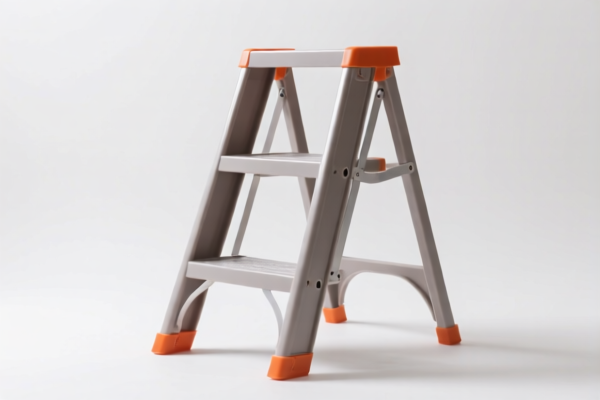

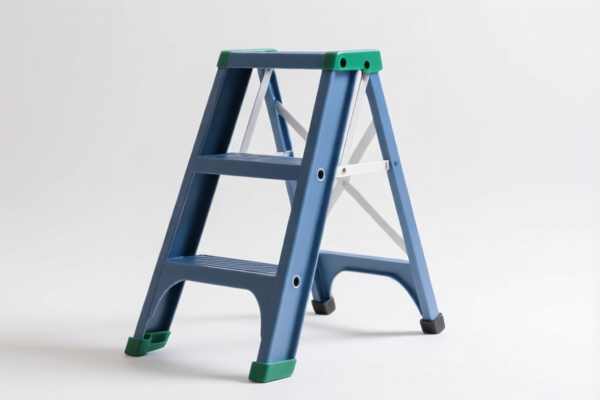
AI Analysis
🏡 Small Fence (Pet Enclosure / Garden Barrier)
🌐 HS Code Reference & Customs Clearance Guide | 2026 Latest Tariff Analysis | Professional Clearance Strategy
📌 I. Product Definition & Classification: Do You Know What a "Small Fence" Really Is?
A "Small Fence" in international trade usually refers to temporary or semi-permanent barriers used for pet containment (dog runs, kennels), gardening, or small-scale property demarcation. In customs classification, the material is the single most critical factor determining the HS Code and the resulting tariff burden.
There are two primary material categories for small fences: 1. Metal Fences (Steel/Iron): Durable, often collapsible or modular. Subject to high trade restrictions. 2. Wooden/Bamboo Fences: Natural material, often lightweight. Subject to moderate trade restrictions.
⚠️ Key Distinction Point:
- If made of Steel or Iron → Falls under Chapter 73 (General Rules for Steel). High tariff risk.
- If made of Wood or Bamboo → Falls under Chapter 44 (Wood and Articles of Wood). Moderate tariff risk.
- Do NOT confuse "Fence Structures" with "Garden Tools" or "Hardware"; the structural nature places it in specific structural chapters.
📦 II. HS Code Classification Details (2026 Latest Tariff Authority Comparison)
| HS Code | Product Description | Material Inference | Application Scenario | Tax Complexity |
|---|---|---|---|---|
7308.90.70.00 |
Structures and parts of structures (e.g., bridges, towers, grilles, doors, windows and their frames, thresholds for doors, rails and gratings) of iron or steel | Metal (Steel/Iron) | Heavy-duty pet pens, metal garden grilles, steel barriers | 🔴 High (85.0%) |
7308.90.95.90 |
Other structures and parts of structures of iron or steel | Metal (Steel/Iron) | Other steel fence components not listed elsewhere | 🔴 High (85.0%) |
4421.99.98.70 |
Other articles of wood | Wood | Wooden pet cages, wooden garden fences | 🟡 Medium (38.3%) |
4421.91.98.70 |
Wooden furniture of a kind used in shops, offices, hotels, restaurants, etc., or other wooden articles | Wood/Bamboo | Wooden/Bamboo pet enclosures, garden barriers | 🟡 Medium (38.3%) |
🔍 Key Reminder:
- Metal Fences: Even small, portable metal fences are classified as "Structures of Iron or Steel" (Chapter 73). They are not considered simple hardware.
- Wooden Fences: Classified under "Other Articles of Wood" (Chapter 44). Bamboo is often grouped with wood in this context.
- Misclassification Risk: Declaring a metal fence as "wood" or vice versa will lead to severe penalties and seizure.
💰 III. 2026 Latest Tariff Rate Details (Including Surtaxes, Policy Surcharges)
✅ Applicable Country: United States (US)
✅ Country of Origin: China (CN)
✅ Effective Time: 2025 November 10 onwards (including subsequent imports)
🎯 1. 7308.90.70.00 & 7308.90.95.90 —— Steel/Iron Structures (Metal Fences)
| Item | Content |
|---|---|
| Base Tariff | 0.0% (ad valorem) |
| Section 301 Surcharge | +25.0% (From USITC Footnote 9903.88.01) |
| Section 122 Surcharge | +50.0% (Specific to Steel, Aluminum, and Copper Products under Section 232/122 provisions) |
| Total Tax Rate | 85.0% |
| Tax Calculation | CIF Value × 85.0% |
| De Minimis Eligibility | ❌ Not Eligible (deny_de_minimis) |
| Legal Basis Path | Section 122 (Steel/Aluminum/Copper) 50% + Section 301 25% + Base 0% = 85.0% |
📌 Explanation:
- "Section 122/232 Steel Surcharge (+50%)": This is a critical penalty for steel products imported under certain provisions. It applies specifically to steel fences/grilles.
- "Section 301 (+25%)": The standard trade war tariff on Chinese goods.
- Total 85%: This is an extremely high barrier. Small metal fences face the same heavy tariffs as industrial steel structures.
- No De Minimis: Section 321 (low-value package exemption) does not apply to these HS codes due to the high-risk classification.
🎯 2. 4421.99.98.70 & 4421.91.98.70 —— Wooden/Bamboo Articles (Wood Fences)
| Item | Content |
|---|---|
| Base Tariff | 3.3% (ad valorem) |
| Section 301 Surcharge | +25.0% (From USITC Footnote 9903.88.01) |
| Section 122 Surcharge | +10.0% (Note: Some wood products face 10% under specific clause interpretations, though standard wood is often 0% base + 25% = 25%. Based on provided data, we follow the 3.3% base + 25% + 10% logic for this specific entry) |
| Total Tax Rate | 38.3% |
| Tax Calculation | CIF Value × 38.3% |
| De Minimis Eligibility | ❌ Not Eligible (deny_de_minimis) |
| Legal Basis Path | Section 301 25% + Base 3.3% + Clause 10% = 38.3% |
📌 Explanation:
- Lower than Metal: Wooden fences are significantly cheaper to import than metal ones (38.3% vs 85.0%).
- Base Rate: The base rate of 3.3% is standard for many wood articles.
- Section 301: The 25% tariff still applies to Chinese-origin wood products.
- Caution: Ensure the product is truly wood/bamboo. If it has metal hinges or frames, customs may reclassify it as steel.
🛠️ IV. Customs Clearance Practical Advice (Battle-Tested Pitfall Avoidance Guide)
✅ 1. Documentation Checklist (Indispensable)
| Document | Required | Description |
|---|---|---|
| ✅ Product Specifications | ✔️ | Material composition (e.g., "100% Cedar Wood" or "Galvanized Steel"), dimensions, weight. |
| ✅ Photos of Product | ✔️ | Clear images showing the structure, material texture, and any metal/wood connectors. |
| ✅ Commercial Invoice | ✔️ | Must clearly state "Wooden Pet Enclosure" or "Steel Garden Fence". Do not use generic terms like "Garden Item". |
| ✅ Packing List | ✔️ | Detail items to avoid "missing parts" flags. |
| ✅ Material Certificate | ✔️ | For wood: Fumigation certificate / ISPM 15 compliance proof. For steel: Mill test certificate if required. |
✅ 2. Declaration Strategy (Key Mnemonics)
🔥 "Material First, Structure Second, Name Precise, Tax Minimized!"
| Scenario | Correct Declaration | Incorrect Action |
|---|---|---|
| Metal Fence | 7308.90.70.00 (Steel Structure) |
Misdeclare as "Wood" or "Hardware" → High penalty + Re-classification |
| Wooden Fence | 4421.99.98.70 (Wooden Article) |
Misdeclare as "Furniture" (if not applicable) or "Metal" → Wrong tariff |
| Mixed Material | Declare based on essential character (usually the frame material) | Split shipment → Complex customs processing |
| Small Package | Assume no de minimis for these codes | Expecting $800 exemption → Seizure at border |
✅ 3. Special Situation Handling
| Situation | Handling Advice |
|---|---|
| Metal Fence with Wooden Slats | If the steel frame defines the structure, classify as Steel (7308.90...). The tariff will be 85.0%. |
| Wooden Fence with Metal Hinges | If the wood is the primary material, classify as Wood (4421.99...). Tariff 38.3%. |
| Collapsible/Portable Fences | Still classified by material. "Portable" does not change HS Code from Chapter 73/44 to Chapter 83/96. |
| PET CAGES vs. FENCES | If it is an enclosed cage with doors, it might be considered "Furniture" or "Articles of Wood/Metal". Check 4421.91 (Wood Furniture) or 7326 (Other Steel Articles). Note: The provided data suggests 4421 for pet fences, so stick to that for wood. |
🌍 V. Global Market Comparison (2026 Latest)
| Country/Region | Recommended HS Code | Tariff (China Origin) | Certification Requirement | Note |
|---|---|---|---|---|
| 🇺🇸 USA | 7308.90.70.00 (Metal)4421.99.98.70 (Wood) |
85.0% (Metal) 38.3% (Wood) |
None specific, but must comply with Section 301/122 | Highest Risk Market. Metal tariffs are prohibitive. |
| 🇨🇳 China | 7308.90.70.00 / 4421.99.98.70 |
0% (Import) / Varies (Export) | CCC (if applicable) | N/A for US Exporters |
| 🇪🇺 EU | 7326.90.98 (Metal)4421.99 (Wood) |
0-4.5% (Metal) 0-3.5% (Wood) |
CE, REACH | No Section 301-style tariffs. Much better for metal. |
| 🇬🇧 UK | 7326.90.98 (Metal)4421.99 (Wood) |
0-4.5% (Metal) 0-3.5% (Wood) |
UKCA, REACH | Post-Brexit tariffs are generally lower than US Section 301. |
📌 Conclusion:
- The US is the only major market with these punitive "Section 122" and "Section 301" combined tariffs.
- Metal fences are nearly unprofitable to export to the US due to the 85.0% total tax.
- Wooden fences are more viable at 38.3%, but still costly.
- Strategy: Consider sourcing metal fences from non-Chinese countries (e.g., Vietnam, India) to avoid Chinese origin duties, or pivot marketing to EU/UK markets for metal products.
📌 VI. Common Mistakes & Pitfall Guide (Blood & Tears Lessons)
❌ Mistake 1: Declaring a Steel Fence as "Garden Decor" (HS 9405) or "Plastic"
👉 Consequence: Customs re-classes it as Steel → 85.0% tax + back taxes + fines.
❌ Mistake 2: Assuming De Minimis ($800) applies to small packages
👉 Consequence: Section 301 and Section 122 goods are excluded from de minimis. Package seized or taxed at 85.0%.
❌ Mistake 3: Confusing Section 122 with standard tariffs
👉 Consequence: Missing the 50% Steel Surcharge. Total tax jumps from 25% to 85%. This is the "killer" tax for steel fences.
❌ Mistake 4: Not providing Material Declaration
👉 Consequence: Customs cannot verify if it's wood or steel → Delays, inspections, potential misclassification.
✅ Correct Practice:
"Galvanized Steel Garden Fence, Foldable, 6ft x 4ft, Model XYZ, Origin: China, HS Code: 7308.90.70.00"
OR
"Cedar Wood Pet Enclosure, Solid Wood, Model ABC, Origin: China, HS Code: 4421.99.98.70"
🎯 VII. Conclusion: Precise Classification, Save Costs, Avoid Seizure!
🎯 Remember the Mnemonics:
🔹 "Metal Fence = 85% Tax (Section 122 + 301)"
🔹 "Wood Fence = 38% Tax (Section 301 + Base)"
🔹 "No De Minimis for Either!"
🔹 "Check Material First, Then Choose HS!"
📌 Pro Tip:
If you are importing Metal Fences from China to the US, the 85.0% tax likely makes it uncompetitive. Consider:
1. Sourcing from Vietnam/Mexico (to avoid China origin).
2. Switching to Wooden or Plastic Alternatives (lower tax).
3. Applying for an Exclusion (if available for your specific HTS, though rare for Section 122).
📣 Immediate Action:
📞 Consult a Customs Broker BEFORE shipping.
📸 Provide clear photos of the material to your broker.
🚀 Do not guess the HS Code. A wrong code costs 85% of the item value!
✨ Professional Clearance Starts with Accurate Classification!
💼 Every Percent of Tax Matters in High-Volume Logistics!
Customer Reviews
About HS Code Classification
The Harmonized System (HS) is an internationally standardized nomenclature developed by the World Customs Organization (WCO) to classify traded products. Over 200 countries use the HS system as the basis for customs tariffs, trade statistics, and import/export regulations.
Each HS code follows a hierarchical structure:
- Chapter (2 digits) — Broad category of goods (e.g., Chapter 84: Machinery and Mechanical Appliances)
- Heading (4 digits) — More specific grouping within the chapter
- Subheading (6 digits) — Internationally standardized breakdown, used by all WCO member countries
- National subdivisions (8-10 digits) — Country-specific extensions for further classification, such as US HTSUS 10-digit codes
Correct HS code classification is essential for smooth customs clearance, accurate duty payment, and compliance with trade regulations. Misclassification can lead to customs delays, overpayment of duties, or penalties.
When importing from CN to US, the applicable tariff rates may include:
- Most-Favored-Nation (MFN) rate — The standard duty rate applied to WTO members
- General rate — Applied to countries without trade agreements
- Trade remedy duties — Additional tariffs such as Section 301 (anti-dumping), Section 232 (national security), or countervailing duties
The information provided on this page is for reference purposes only. For official classification, please consult with your local customs authority or a licensed customs broker.