Small Mining Inflatable Tire
CN → US| HS Code | Tariff Rate | Origin | Destination | Doc |
|---|---|---|---|---|
| 4012909000 | 37.7% | CN | US | Official Doc |
| 4012198000 | 20.9% | CN | US | Official Doc |
| 4011201025 | 39.0% | CN | US | Official Doc |
| 4011205050 | 38.4% | CN | US | Official Doc |
| 4011201025 | 39.0% | CN | US | Official Doc |
Product Images
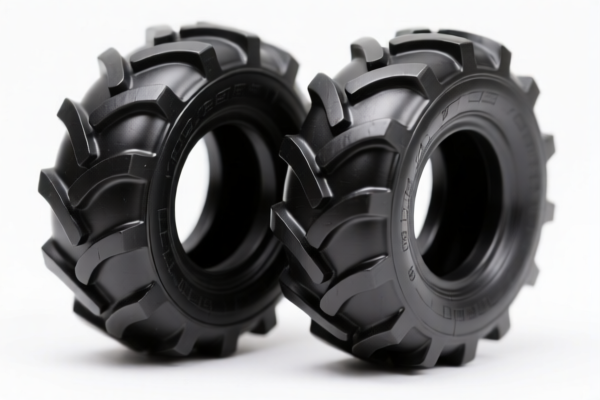
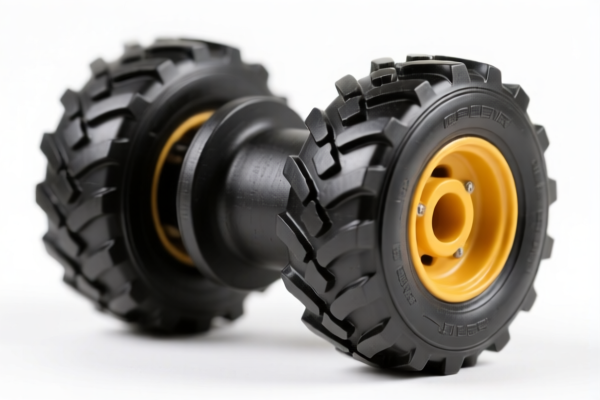
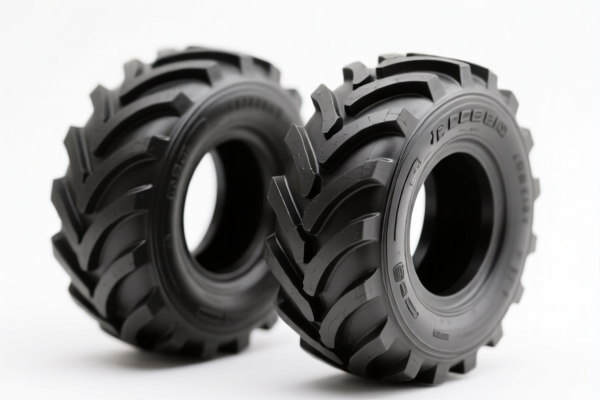
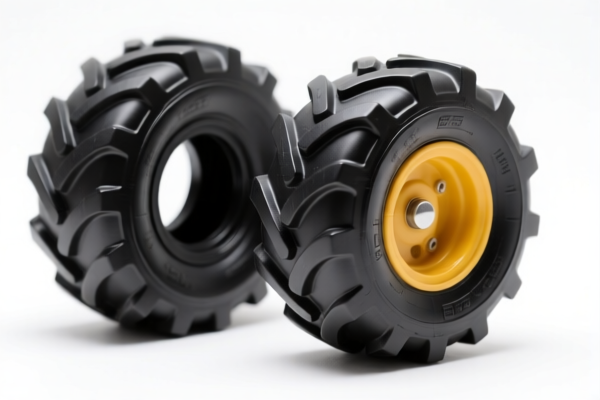
AI Analysis
🚜 Small Mining Inflatable Tires: The Heavy-Duty Workhorses of Industrial Sites
🌐 HS Code Reference & Customs Clearance Guide | 2026 Latest Tariff Analysis | Professional Clearance Strategy
📌 I. Product Definition & Classification: What Exactly Is a "Small Mining Tire"?
Small mining inflatable tires are specialized pneumatic tires designed for off-highway use in mining, quarrying, and heavy industrial environments. Unlike standard road tires, these are engineered for high load capacity, puncture resistance, and extreme durability under harsh conditions.
In international trade, they fall under Chapter 40 (Rubber and Articles Thereof), specifically Heading 4011 (New Pneumatic Tires). However, precise classification depends on whether the tire is new or retreaded/refurbished, and its specific subtype (e.g., solid vs. pneumatic, though the query specifies "inflatable").
⚠️ Key Distinction:
- "Non-road": If the tire is designed for vehicles that do not operate on public highways (e.g., loaders, underground mining trucks, tractors), it falls under 4011.
- "Retreaded/Used": If the tire has been refabricated or is used, it falls under 4012.
- Material: All must be rubber-based.
📦 II. HS Code Classification Details (2026 Official Tariff Reference)
Based on your product input ("Small Mining Inflatable Tire"), here are the precise HS codes, summaries, and tax rates provided in the data:
| HS Code | Product Description | Match Status | Total Tax Rate | Tax Breakdown |
|---|---|---|---|---|
4012.90.90.00 |
Non-road inflatable tires, rubber material | ✅ Matched | 37.7% | Base: 2.7% + Section 301: 25.0% + Section 122: 10% |
4012.19.80.00 |
Retreaded or used inflatable tires, rubber material | ✅ Matched | 20.9% | Base: 3.4% + Section 301: 7.5% + Section 122: 10% |
4011.20.10.25 |
Non-road inflatable tires, rubber material | ✅ Exact Match | 39.0% | Base: 4.0% + Section 301: 25.0% + Section 122: 10% |
4011.20.50.50 |
Non-road inflatable tires, rubber material | ✅ Exact Match | 38.4% | Base: 3.4% + Section 301: 25.0% + Section 122: 10% |
🔍 Critical Note:
- Codes4011.20.10.25and4011.20.50.50are marked as "Exact Match" for new non-road inflatable tires. The slight difference in tax (39.0% vs 38.4%) comes from the base tariff (4.0% vs 3.4%).
- Code4012.19.80.00applies if the tire is retreaded or used, which significantly lowers the total tax burden (20.9%).
- Code4012.90.90.00is a broader "Other" category for non-road tires, with a higher base tariff than the specific 4011 codes.
💰 III. 2026 Latest Tariff Rate Breakdown (Including Surtaxes & Policy Surcharges)
✅ Applicable Country: United States (US)
✅ Country of Origin: China (CN) (Assumed based on Section 122 and 301 context)
✅ Effective Date: Current regulations apply
🎯 1. 4011.20.10.25 & 4011.20.50.50 —— New Non-Road Inflatable Tires (Exact Match)
These are the primary candidates for new small mining tires.
| Item | Content |
|---|---|
| Base Tariff | 3.4% – 4.0% (depending on sub-subcategory) |
| Section 301 Surtax | +25.0% (Applied to goods from China under US Trade Act) |
| Section 122 Surtax | +10.0% (Applied under International Emergency Economic Powers Act - IEEPA) |
| Total Tax Rate | 38.4% – 39.0% |
| Calculation | CIF Value × Total Rate |
| De Minimis Eligibility | ❌ Not Eligible (High tariff codes exclude small packages) |
| Legal Basis | USITC:4011.20.10.25 → Section 301 → IEEPA:9903.01.25 |
📌 Explanation:
- The 25% Section 301 duty is the largest component, targeting Chinese-manufactured rubber products.
- The 10% Section 122 duty is an additional national security surcharge.
- Total effective rate ~39% means for every $10,000 CIF value, you pay ~$3,900 in duties. This is very high and must be factored into pricing strategies.
🎯 2. 4012.19.80.00 —— Retreaded or Used Inflatable Tires
If your "small mining tire" is retreaded (a common practice in mining to reduce costs), the tax burden is significantly lower.
| Item | Content |
|---|---|
| Base Tariff | 3.4% |
| Section 301 Surtax | +7.5% (Reduced rate for certain used/retreaded goods) |
| Section 122 Surtax | +10.0% |
| Total Tax Rate | 20.9% |
| Calculation | CIF Value × 20.9% |
| De Minimis Eligibility | ❌ Not Eligible |
| Legal Basis | USITC:4012.19.80.00 → Section 301 → IEEPA:9903.01.24 |
📌 Strategy Insight:
- Retreaded tires save ~18% in total duty compared to new tires.
- Ensure proper labeling: "Retreaded Pneumatic Tire" must be clearly stated on commercial invoices.
🎯 3. 4012.90.90.00 —— Other Non-Road Inflatable Tires (General Category)
| Item | Content |
|---|---|
| Base Tariff | 2.7% |
| Section 301 Surtax | +25.0% |
| Section 122 Surtax | +10.0% |
| Total Tax Rate | 37.7% |
| Legal Basis | USITC:4012.90.90.00 → Section 301 → IEEPA:9903.01.25 |
⚠️ Warning: This code is a catch-all. If your tire fits the specific
4011.20.xcodes, using4012.90.90.00may lead to misclassification penalties. Always prefer the exact match (4011.20) if the tire is new.
🛠️ IV. Customs Clearance Practical Advice (Pitfall Avoidance Guide)
✅ 1. Documentation Checklist (Non-Negotiable)
| Document | Required | Explanation |
|---|---|---|
| ✅ Commercial Invoice | ✔️ | Must state: "New/Retreaded Pneumatic Tire for Mining Equipment," HS Code, Country of Origin, CIF Value. |
| ✅ Packing List | ✔️ | Detail weight, dimensions, and quantity. Separate packing for retreaded vs. new tires if applicable. |
| ✅ Product Specification Sheet | ✔️ | Include: Size (e.g., 13.00R24), Load Index, Ply Rating, Tread Pattern, Intended Use (e.g., "Underground Mining Loader"). |
| ✅ Certificate of Origin (CO) | ✔️ | Crucial for verifying Chinese origin. If from a non-China source, 301/122 duties may not apply. |
| ✅ Retread Certificate | ✔️ | If using 4012.19.80.00, provide proof that the tire was retreaded (e.g., manufacturer statement). |
✅ 2. Classification Strategy (Key Mnemonic)
🔥 "New is 4011, Retread is 4012; Exact Match Saves Money, Wrong Code Costs Thousands!"
| Scenario | Correct HS Code | Total Tax | Why? |
|---|---|---|---|
| New mining tire, specific subtype | 4011.20.10.25 or 4011.20.50.50 |
39.0% / 38.4% | "Exact Match" for new non-road pneumatic tires. |
| New mining tire, generic/unclear | 4012.90.90.00 |
37.7% | Broader category, slightly lower base tariff but risky. |
| Retreaded/Used mining tire | 4012.19.80.00 |
20.9% | Lowest duty rate, but requires proof of retreading. |
✅ 3. Special Cases & Risk Management
| Situation | Handling Advice |
|---|---|
| OEM Mining Equipment Tires | Provide original equipment manufacturer (OEM) certificates. Show that the tire is designed for specific vehicles (e.g., JMC, Komatsu). |
| Mixed Shipments (New + Retreaded) | Separate HS Codes in declaration. Do not bundle new and retreaded tires under one HS code. |
| Tire Size Ambiguity | "Small" is subjective. Provide exact dimensions (e.g., 6.00-16, 10.00-20). Customs may reclassify if dimensions suggest road use (which has different duties). |
| Origin Diversification | If tires are made in Vietnam, Thailand, or Mexico, they may be exempt from Section 301 (25%) and Section 122 (10%). Check local free trade agreements. |
🌍 V. Global Market Comparison (2026)
| Country/Region | Recommended HS Code | Tariff (China Origin) | Certification | Remarks |
|---|---|---|---|---|
| 🇺🇸 USA | 4011.20.10.25 |
39.0% | None specific, but DOT/SGS may be requested | Highest duty burden due to 301 & 122. |
| 🇨🇳 China | 4011.20.10.25 |
5% | CCC (if applicable) | Lower domestic tariff. |
| 🇪🇺 EU | 4011.20.10.00 |
4% | ECE R108/R109 (if applicable) | No Section 122/301 surcharges. |
| 🇦🇺 Australia | 4011.20.10.00 |
5% | ADR Compliance | Moderate duties. |
📌 Conclusion:
- The US market is the most expensive for Chinese-made mining tires due to layered surtaxes.
- Retreaded tires (4012.19.80.00) offer a ~18% duty savings in the US. Consider establishing retreading operations if volume is high.
📌 VI. Common Mistakes & Pitfall Avoidance (Lessons Learned)
❌ Mistake 1: Misclassifying new tires as "Parts of Vehicles" (e.g., 8708)
👉 Consequence: Tires are never considered parts; they are separate items. Misclassification leads to penalties + back taxes.
❌ Mistake 2: Failing to specify "Retreaded" on invoices for used tires
👉 Consequence: Customs may assess the higher 39% new tire rate instead of 20.9%.
❌ Mistake 3: Using generic terms like "Rubber Tire" without specifying "Non-Road" or "Mining"
👉 Consequence: Customs may assume road use, applying different duties and safety standards (DOT).
❌ Mistake 4: Ignoring Section 122 (10%) surcharge
👉 Consequence: Underpricing imports. The 10% is mandatory for Chinese goods, regardless of other exemptions.
✅ Correct Practice:
"Mining Pneumatic Tire, Size 10.00R20, New, Non-Road Use, HS Code 4011.20.10.25, Origin: China, CIF $50,000"
🎯 VII. Conclusion: Precision in Classification, Profit in Clearance
🎯 Remember the Key Takeaways:
🔹 New Tires: Aim for
4011.20.xcodes. Expect ~39% total duty.
🔹 Retreaded Tires: Use4012.19.80.00. Save ~18% in duty.
🔹 Documents: Always specify "Non-Road" and "Mining Application" to avoid misclassification.
🔹 Origin: If possible, source from non-China countries to escape 301/122 surcharges.
📌 Pro Tip:
If you are importing large volumes, consider applying for a Section 301 Exclusion if your specific tire model qualifies. This can reduce the 25% surtax. Check the USTR Exclusion List regularly.
📣 Immediate Action:
📞 Consult with a licensed customs broker.
📄 Prepare accurate technical specifications.
🚀 Minimize duty costs through precise HS Code selection!
✨ Professional Clearance Starts with Accurate Classification!
💼 Every Percent in Duty is a Percent in Profit Lost or Gained!
Customer Reviews
About HS Code Classification
The Harmonized System (HS) is an internationally standardized nomenclature developed by the World Customs Organization (WCO) to classify traded products. Over 200 countries use the HS system as the basis for customs tariffs, trade statistics, and import/export regulations.
Each HS code follows a hierarchical structure:
- Chapter (2 digits) — Broad category of goods (e.g., Chapter 84: Machinery and Mechanical Appliances)
- Heading (4 digits) — More specific grouping within the chapter
- Subheading (6 digits) — Internationally standardized breakdown, used by all WCO member countries
- National subdivisions (8-10 digits) — Country-specific extensions for further classification, such as US HTSUS 10-digit codes
Correct HS code classification is essential for smooth customs clearance, accurate duty payment, and compliance with trade regulations. Misclassification can lead to customs delays, overpayment of duties, or penalties.
When importing from CN to US, the applicable tariff rates may include:
- Most-Favored-Nation (MFN) rate — The standard duty rate applied to WTO members
- General rate — Applied to countries without trade agreements
- Trade remedy duties — Additional tariffs such as Section 301 (anti-dumping), Section 232 (national security), or countervailing duties
The information provided on this page is for reference purposes only. For official classification, please consult with your local customs authority or a licensed customs broker.