Small Moon Jewelry Tray
CN → US| HS Code | Tariff Rate | Origin | Destination | Doc |
|---|---|---|---|---|
| 3924104000 | 13.4% | CN | US | Official Doc |
| 3924905650 | 20.9% | CN | US | Official Doc |
| 6913905000 | 23.5% | CN | US | Official Doc |
| 6913903000 | 17.5% | CN | US | Official Doc |
| 7323999080 | 88.4% | CN | US | Official Doc |
| 7323999030 | 88.4% | CN | US | Official Doc |
Product Images


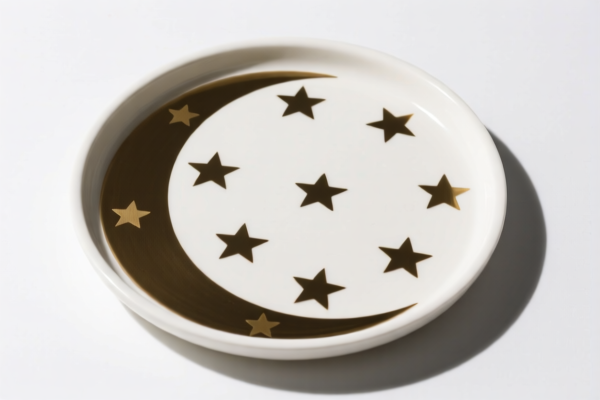
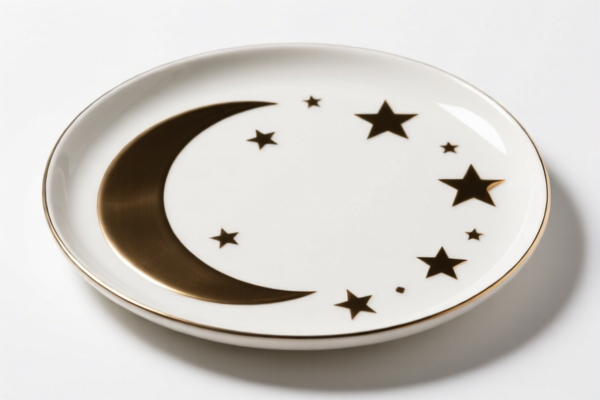
AI Analysis
🌙 Small Moon Jewelry Tray (Ceramic & Plastic Variants)
🌐 HS Code Reference & Customs Clearance Guide | 2026 Latest Tariff Analysis | Professional Level Compliance Strategy
📌 I. Product Definition & Classification: Do You Really Understand the "Jewelry Tray"?
A "Small Moon Jewelry Tray" is typically a decorative storage item used for rings, earrings, necklaces, etc. Its classification depends entirely on the material and function. In international trade, it is generally divided into two main categories:
1. Ceramic Articles (Ornamental/Household): Made of earthenware, porcelain, or stoneware. Often used as decorative centerpieces or functional storage.
2. Plastic Household Articles: Made of polymer materials. Functional and lightweight, often mass-produced.
3. Iron/Steel Articles: Made of metal. Rare for "jewelry trays" but possible if industrial or rustic in style.
⚠️ Key Distinction Points:
- If it is ceramic with a reddish body, lustrous glaze, and mottled/streaked brown-to-black color (often resembling moonstone or oxidized metal) → 6913.90.30.00
- If it is ceramic but does not meet the specific color/glaze criteria of above → 6913.90.50.00
- If it is plastic and used for tableware/kitchenware (less common for jewelry, but possible if marketed as multi-purpose) → 3924.10.40.00
- If it is plastic for other household uses (including jewelry storage) → 3924.90.56.50
- If it is iron/steel table/kitchenware → 7323.99.90.30 (Food contact) or 7323.99.90.80 (Non-food contact)
📦 II. HS Code Classification Details (2026 Latest Tariff Authority Comparison)
| HS Code | Product Description | Applicable Scenario | Material |
|---|---|---|---|
6913.90.30.00 |
Statuettes/ornamental ceramic articles: Of earthenware, reddish body, lustrous glaze, mottled/streaked brown-to-black with metallic oxide/salt | Decorative ceramic trays with specific aesthetic (e.g., "moonstone" look, oxidized effect) | Ceramic (Earthenware) |
6913.90.50.00 |
Statuettes/ornamental ceramic articles: Other | General decorative ceramic jewelry trays without specific glaze/color requirements | Ceramic |
3924.10.40.00 |
Tableware/kitchenware of plastics: Tableware and kitchenware: Other | If marketed as multi-purpose (e.g., serving small snacks + jewelry), though risky for jewelry | Plastic |
3924.90.56.50 |
Tableware/kitchenware/household articles of plastics: Other: Other | Standard plastic jewelry trays, vanity trays, organizers | Plastic |
7323.99.90.30 |
Table/kitchen articles of iron/steel: Kitchen/tableware suitable for food/drink contact | Metal trays intended for food service (unlikely for jewelry, but possible if dual-use) | Iron/Steel |
7323.99.90.80 |
Table/kitchen articles of iron/steel: Other: Other | Non-food contact metal trays, industrial or decorative metal organizers | Iron/Steel |
🔍 Key Reminder:
- Ceramic trays are usually classified under 6913 (Statuettes and other ornamental ceramic articles) if they are primarily decorative.
- Plastic trays are classified under 3924 only if they fall under "tableware, kitchenware, or other household articles." Jewelry trays are often considered "other household articles."
- Metal trays are classified under 7323 only if they are table/kitchenware. Purely decorative metal jewelry stands might fall under 7326 (Other articles of iron/steel), but the provided data only includes 7323 codes. If your metal tray is not for table/kitchen use, the provided 7323 codes may NOT be correct. However, based on the provided data, we must use them if it fits the description.
💰 III. 2026 Latest Tariff Rate Details (Including Additional Taxes, Policy Add-ons)
✅ Applicable Country: United States (US)
✅ Origin: China (CN)
✅ Effective Date: 2025年11月10日起 (and subsequent imports)
🎯 1. 6913.90.30.00 — Ornamental Ceramic Articles (Specific Glaze/Color)
| Item | Content |
|---|---|
| Base Tariff | 0.0% |
| Section 301 Additional Tariff | +7.5% |
| Total Tariff | 7.5% |
| Tax Calculation | CIF Value × 7.5% |
| De Minimis Eligibility | ❌ No (Section 301 goods are generally subject to full duties) |
| Legal Basis | HTSUS 6913.90.30.00 + Section 301 Footnote |
📌 Explanation:
- This is the most favorable tariff among ceramic options.
- The specific glaze/color requirement must be met (reddish body, lustrous glaze, mottled/brown-to-black).
- Risk: If customs determines the tray does not meet the "reddish body/lustrous glaze" criteria, it may be reclassified to6913.90.50.00, increasing the tariff to 13.5%.
🎯 2. 6913.90.50.00 — Ornamental Ceramic Articles (Other)
| Item | Content |
|---|---|
| Base Tariff | 6.0% |
| Section 301 Additional Tariff | +7.5% |
| Total Tariff | 13.5% |
| Tax Calculation | CIF Value × 13.5% |
| De Minimis Eligibility | ❌ No |
| Legal Basis | HTSUS 6913.90.50.00 + Section 301 Footnote |
📌 Note:
- This is the default tariff for most ceramic ornamental items.
- If your "Moon Jewelry Tray" is made of porcelain, stoneware, or does not have the specific "reddish body/lustrous glaze" look, this code applies.
- Cost Impact: $135 additional tax per $1,000 CIF value compared to6913.90.30.00.
🎯 3. 3924.90.56.50 — Plastic Household Articles (Other)
| Item | Content |
|---|---|
| Base Tariff | 3.4% |
| Section 301 Additional Tariff | +7.5% |
| Total Tariff | 10.9% |
| Tax Calculation | CIF Value × 10.9% |
| De Minimis Eligibility | ❌ No |
| Legal Basis | HTSUS 3924.90.56.50 + Section 301 Footnote |
📌 Note:
- Plastic jewelry trays are common and cheaper to produce.
- However, if the tray is marketed as "tableware" (e.g., for serving snacks), it might fall under3924.10.40.00(3.4% total). But for jewelry storage,3924.90.56.50is more accurate.
- Risk: Misclassification as tableware to save 7.5% is high risk.
🎯 4. 7323.99.90.30 — Iron/Steel Tableware (Food Contact)
| Item | Content |
|---|---|
| Base Tariff | 3.4% |
| Section 301 Additional Tariff | +50% (Steel/Aluminum/Copper Section 301) |
| Total Tariff | 78.4% |
| Tax Calculation | CIF Value × 78.4% |
| De Minimis Eligibility | ❌ No |
| Legal Basis | HTSUS 7323.99.90.30 + Section 301 Footnote (Steel/Aluminum/Copper) |
📌 Critical Warning:
- This is an extremely high tariff!
- Only applies if the tray is made of iron/steel and is considered tableware (even if primarily for jewelry, if it resembles a plate/bowl, it may be classified here).
- Recommendation: Avoid metal trays unless necessary. The 78.4% tariff is prohibitive.
🎯 5. 7323.99.90.80 — Iron/Steel Articles (Other)
| Item | Content |
|---|---|
| Base Tariff | 3.4% |
| Section 301 Additional Tariff | +50% (Steel/Aluminum/Copper Section 301) |
| Total Tariff | 78.4% |
| Tax Calculation | CIF Value × 78.4% |
| De Minimis Eligibility | ❌ No |
| Legal Basis | HTSUS 7323.99.90.80 + Section 301 Footnote (Steel/Aluminum/Copper) |
📌 Note:
- Same high tariff as above.
- Avoid unless you have a very specific, low-margin product.
🛠️ IV. Customs Clearance Practical Advice (Combat-Tested Pitfall Guide)
✅ 1. Required Documentation Checklist (None Can Be Omitted)
| Document | Must Provide | Description |
|---|---|---|
| ✅ Product Specifications | ✔️ | Material (Ceramic/Plastic/Metal), Dimensions, Weight, Usage (Jewelry Storage) |
| ✅ Material Composition | ✔️ | Detailed breakdown (e.g., "Earthenware with glaze" or "ABS Plastic") |
| ✅ Product Photos | ✔️ | Clear images of the tray, including any packaging, labels, and distinctive features (glaze, color) |
| ✅ Commercial Invoice | ✔️ | Accurate description: "Ceramic Jewelry Tray, Decorative, Model XYZ" |
| ✅ Packing List | ✔️ | Quantity, Net/Gross Weight, Dimensions |
| ✅ Certifications | ✔️ | FDA (if plastic claims food contact), CPSIA (if for children), Prop 65 (if applicable) |
✅ 2. Declaration Tips (Key Mantra)
🔥 "Material First, Use Second, Description Precise, Tariff Minimized!"
| Scenario | Correct Declaration | Wrong Practice |
|---|---|---|
| Ceramic Tray with Special Glaze | 6913.90.30.00 |
Misdeclaring as 6913.90.50.00 → Higher tariff |
| Ceramic Tray (Generic) | 6913.90.50.00 |
Claiming special glaze without proof → Audit risk |
| Plastic Tray | 3924.90.56.50 |
Declaring as 3924.10.40.00 (Tableware) → Risk of penalty |
| Metal Tray | Avoid | Declaring metal tray → 78.4% tariff |
📌 Key Advice:
- For Ceramic Trays: If you want the 7.5% tariff, ensure the product description clearly states "Earthenware, reddish body, lustrous glaze, mottled brown-to-black." Provide photos as proof.
- For Plastic Trays: Use3924.90.56.50. Do not claim "tableware" unless it is actually used for serving food.
- For Metal Trays: Strongly advise against importing from China due to the 78.4% tariff. Consider sourcing from Vietnam or India if metal is essential.
✅ 3. Special Case Handling
| Scenario | Handling Advice |
|---|---|
| OEM Custom Design | Provide design drawings and material certificates to justify HS Code. |
| "Moon" Theme | The theme (moon shape) does not change the HS Code. Material and function do. |
| Set with Box | Declare the tray as the principal item. The box is part of the packing. |
| Mixed Materials | If the tray has ceramic body and metal base, classification may be complex. Seek advance ruling. |
🌍 V. Global Market Comparison (2026 Latest)
| Country/Region | Recommended HS Code | Tariff | Certification | Notes |
|---|---|---|---|---|
| 🇺🇸 USA | 6913.90.30.00 / 6913.90.50.00 |
7.5% / 13.5% | No special cert | High risk of reclassification |
| 🇨🇳 China | 6913.90.30.00 |
Low | N/A | Export to China is rare for this product |
| 🇪🇺 EU | 6913.90.30.00 |
0-4.5% | CE (if applicable) | Lower tariffs than USA |
| 🇬🇧 UK | 6913.90.30.00 |
0-4.5% | UKCA | Post-Brexit rules apply |
| 🇦🇺 Australia | 6913.90.30.00 |
5% | N/A | No additional tariffs |
📌 Conclusion:
- USA is the most expensive market due to Section 301 tariffs.
- EU and UK offer better tariff rates for ceramic goods.
- Plastic goods have similar tariffs in USA (10.9%) vs. EU (0-2.5%).
📌 VI. Common Errors & Pitfall Guide (Lessons Learned)
❌ Error 1: Declaring a ceramic tray as "plastic" to save tariff
👉 Consequence: Customs inspection reveals ceramic material → Penalty + 13.5% tariff + Back taxes
❌ Error 2: Claiming "special glaze" for 6913.90.30.00 without evidence
👉 Consequence: Customs rejects the claim → Reclassified to 6913.90.50.00 (13.5%)
❌ Error 3: Using "Tableware" for plastic jewelry trays
👉 Consequence: Customs deems it "Other Household Articles" → Reclassified to 3924.90.56.50 (10.9%)
❌ Error 4: Importing metal trays without calculating 78.4% tariff
👉 Consequence: Profitability destroyed by high duties.
✅ Correct Practice:
"Ceramic Jewelry Tray, Moon Shape, Decorative, Glazed Earthenware, Brown/Black Mottled Finish, Model XYZ"
🎯 VII. Conclusion: Precise Classification, Save Costs, Smooth Clearance!
🎯 Remember the Mantra:
🔹 "Ceramic First, Glaze Check, Plastic Second, Metal Avoid!"
🔹 "HS Code Decides Tax, 7.5% vs 13.5% Matters, 78.4% is a Trap!"
📌 Pro Tip:
- If your ceramic tray does not meet the specific glaze/color criteria for 6913.90.30.00, accept the 13.5% tariff for 6913.90.50.00. Do not risk misdeclaration.
- For plastic trays, ensure the description says "Household Article" not "Tableware" to avoid scrutiny.
- Consider sourcing metal trays from non-China countries if you must import them, to avoid the 78.4% Section 301 tariff.
📣 Immediate Action:
📞 Consult a licensed customs broker + Provide product photos + Request Advance Ruling from CBP if unsure.
🚀 Let your jewelry trays clear smoothly, efficiently, and profitably!
✨ Professional Clearance Starts with Accurate Classification!
💼 Every cent of tax you save is profit kept!
Customer Reviews
About HS Code Classification
The Harmonized System (HS) is an internationally standardized nomenclature developed by the World Customs Organization (WCO) to classify traded products. Over 200 countries use the HS system as the basis for customs tariffs, trade statistics, and import/export regulations.
Each HS code follows a hierarchical structure:
- Chapter (2 digits) — Broad category of goods (e.g., Chapter 84: Machinery and Mechanical Appliances)
- Heading (4 digits) — More specific grouping within the chapter
- Subheading (6 digits) — Internationally standardized breakdown, used by all WCO member countries
- National subdivisions (8-10 digits) — Country-specific extensions for further classification, such as US HTSUS 10-digit codes
Correct HS code classification is essential for smooth customs clearance, accurate duty payment, and compliance with trade regulations. Misclassification can lead to customs delays, overpayment of duties, or penalties.
When importing from CN to US, the applicable tariff rates may include:
- Most-Favored-Nation (MFN) rate — The standard duty rate applied to WTO members
- General rate — Applied to countries without trade agreements
- Trade remedy duties — Additional tariffs such as Section 301 (anti-dumping), Section 232 (national security), or countervailing duties
The information provided on this page is for reference purposes only. For official classification, please consult with your local customs authority or a licensed customs broker.