Small Size Writing Paper
CN → US| HS Code | Tariff Rate | Origin | Destination | Doc |
|---|---|---|---|---|
| 4820102010 | 35.0% | CN | US | Official Doc |
| 4820102060 | 35.0% | CN | US | Official Doc |
Product Images
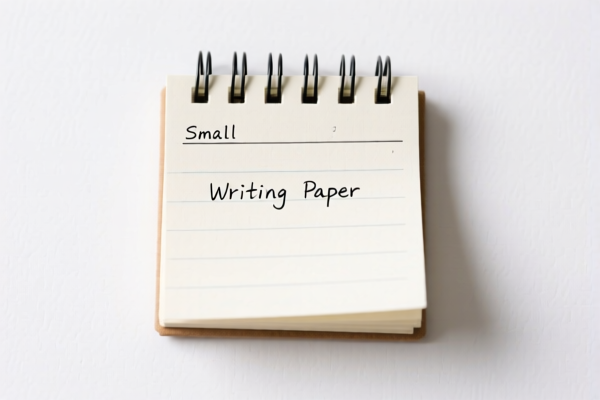
AI Analysis
📝 Small Size Writing Paper: The Ultimate Guide to HS Code & 2026 Tax Strategy
🌐 HS Code Reference & Customs Clearance Guide | 2026 Latest Tariff Analysis | Professional Clearance Strategy 📌 I. Product Definition: What is "Small Size Writing Paper"?
In international trade, "Small Size Writing Paper" falls under the broad category of Stationery Articles of Paper or Paperboard. It is not classified as simple raw paper sheets (Chapter 4801-4804), but rather as manufactured stationery items intended for writing, recording, or business use.
Key characteristics typically include: * Product Types: Diaries, notebooks, address books, memorandum pads, letter pads, and similar bound or assembled articles. * Material: Paper or paperboard. * Form: Usually bound, stitched, or mechanically fastened; or in the case of pads, perforated sheets. * Size: "Small size" usually refers to personal dimensions (e.g., A5, B6, pocket size) as opposed to standard A4 office copy paper.
⚠️ Critical Distinction:
- If the item is bound (diaries, notebooks, address books) or consists of perforated pads (memo pads, letter pads), it falls under HS Code 4820.
- If it is just loose sheets of blank paper without binding or perforation, it might fall under different codes (e.g., 4802). However, the provided<DATA>specifically targets 4820 items (registers, diaries, pads).
📦 II. HS Code Classification Details (2026 Latest Tariff Authority)
Based on the provided <DATA>, "Small Size Writing Paper" products like diaries, notebooks, and pads are classified into two specific sub-categories under 4820.10.20:
| HS Code | Product Description | Applicable Scenarios | Binding Type |
|---|---|---|---|
| 4820.10.20.10 | Diaries, notebooks and address books, bound; memorandum pads, letter pads and similar articles: Diaries and address books | Personal diaries, school notebooks, address books, structured planners. | ✅ Bound/Stitched |
| 4820.10.20.60 | Diaries, notebooks and address books, bound; memorandum pads, letter pads and similar articles: Other | Loose-leaf notebooks, unstructured memo pads, letter pads, miscellaneous stationery not fitting the "Diary/Address Book" definition. | ✅ Bound or Pad |
🔍 Key Classification Point:
- 4820.10.20.10: Strictly for Diaries and Address Books (and bound notebooks often grouped here).
- 4820.10.20.60: Covers Memo Pads, Letter Pads, and other stationery items that are not specifically "Diaries" or "Address Books".
- Note: Both categories are subject to the same tax rate in the provided data, but correct classification is crucial for customs compliance.
💰 III. 2026 Latest Tariff Rate Details (Including Surcharges)
✅ Applicable Country: China (Exporting to markets requiring HS 4820 classification, typically US/EU/Global)
✅ Origin: China (CN)
✅ Tariff Structure: Based on the provided<DATA>
🎯 1. 4820.10.20.10 — Diaries, Notebooks, Address Books
| Item | Content |
|---|---|
| Base Tariff | 0.0% (Ad Valorem) |
| Additional Tariff (US) | 25.0% (Section 301 / USITC Surcharge) |
| Total Tax Rate | 25.0% |
| Tax Calculation | CIF Value × 25% |
| Legal Basis | USITC Footnote associated with 4820.10.20 |
📌 Explanation:
- While the base MFN (Most Favored Nation) tariff for stationery is often 0%, US imports from China are subject to a 25% additional tariff under Section 301 of the Trade Act.
- This applies to both 4820.10.20.10 and 4820.10.20.60.
🎯 2. 4820.10.20.60 — Other Stationery (Memo Pads, Letter Pads)
| Item | Content |
|---|---|
| Base Tariff | 0.0% (Ad Valorem) |
| Additional Tariff (US) | 25.0% (Section 301 / USITC Surcharge) |
| Total Tax Rate | 25.0% |
| Tax Calculation | CIF Value × 25% |
| Legal Basis | USITC Footnote associated with 4820.10.20 |
📌 Explanation:
- Same tax structure as above.
- No de minimis exemption for commercial shipments.
- No special exemption for "small size" or personal use items in commercial bulk imports.
🛠️ IV. Customs Clearance Practical Advice (Real-World Pitfall Guide)
✅ 1. Required Documentation Checklist (Non-Negotiable)
| Document | Mandatory? | Notes |
|---|---|---|
| ✅ Product Specification Sheet | ✔️ | Must specify material (paper type), binding method (spiral, glued, stitched), and intended use (diary vs. memo pad). |
| ✅ Commercial Invoice | ✔️ | Clearly state "Diaries/Notebooks" or "Memo Pads" – do not use vague terms like "Paper Items". |
| ✅ Packing List | ✔️ | Include net/gross weight, quantity per carton. |
| ✅ HS Code Pre-Ruling (Optional) | ✔️ | Highly recommended to confirm 4820.10.20.10 vs. 60 if unsure. |
| ✅ Origin Certificate | ✔️ | If exporting from China, standard CO may be required for origin verification. |
✅ 2. Declaration Tips (Key Mantras)
🔥 "Bind it right, name it tight, avoid the 25% fight!"
| Scenario | Correct Declaration | Wrong Practice |
|---|---|---|
| Bound Notebook/Diary | 4820.10.20.10 |
Calling it "Paper Pad" → Risk of reclassification & delay. |
| Memo Pad/Letter Pad | 4820.10.20.60 |
Calling it "Notebook" → May be questioned if not bound. |
| Loose Paper Sheets | NOT 4820 | Declaring loose A4 paper as "Diary" → Customs Fraud Risk. |
| Plastic-Combined Item | Check Chapter 39/48 | If cover is plastic-heavy, may not be 4820. |
✅ 3. Special Considerations
| Situation | Handling Advice |
|---|---|
| OEM/Private Label | Provide brand authorization if applicable; ensure packaging matches invoice description. |
| Small Size/Pocket Diaries | No special tariff benefit; still subject to 25% US surcharge. |
| Gift Items | Commercial invoice must reflect actual transaction value, not "Gift" value, to avoid undervaluation penalties. |
| Recycled Paper | May require additional environmental compliance docs in EU/US (e.g., FSC certification). |
🌍 V. Global Market Comparison (2026 Overview)
| Market | HS Code | Base Tariff | Additional Tax (China Origin) | Total Effective Rate | Notes |
|---|---|---|---|---|---|
| 🇺🇸 USA | 4820.10.20.10/60 |
0% | +25% | 25% | Section 301 Tariff applies. |
| 🇨🇳 China (Import) | 4820.10.20.10/60 |
~5-8% | 0% | ~5-8% | Lower base tariff for imports into China. |
| 🇪🇺 EU | 4820.10.20 |
0% | 0% | 0% | No additional surcharges; standard MFN applies. |
| 🇬🇧 UK | 4820.10.20 |
0% | 0% | 0% | Post-Brexit UK applies standard duties. |
| 🇯🇵 Japan | 4820.10.20 |
0% | 0% | 0% | Generally tariff-free. |
📌 Conclusion:
- USA is the only major market in this data with a 25% surcharge.
- EU, UK, Japan, and others enjoy 0% tariff, making them more competitive for high-volume stationery exports.
- Strategy: If targeting the US, price in the 25% cost. If targeting EU/Asia, focus on volume and design.
📌 VI. Common Mistakes & Pitfalls (Lessons Learned)
❌ Mistake 1: Declaring "Notebooks" as "Paper Sheets" (4802.99)
👉 Consequence: Incorrect classification, potential fine, or delay. HS 4802 is for unbound paper; HS 4820 is for bound/stationery items.
❌ Mistake 2: Ignoring the 25% US Surcharge
👉 Consequence: Underpayment of duties, leading to back taxes + interest + penalties upon US Customs review.
❌ Mistake 3: Vague Description ("Stationery Items")
👉 Consequence: Customs may request additional info, causing delays. Be specific: "Bound Diary, A5 Size, 100 Pages".
❌ Mistake 4: Confusing "Memo Pad" with "Notebook"
👉 Consequence: While tax rate is same, misclassification can lead to statistical errors and compliance flags. Use 4820.10.20.60 for pads, 4820.10.20.10 for diaries.
✅ Correct Practice:
"Diary, Bound, Paper Cover, 120 Pages, A5 Size, Model XYZ"
OR
"Memo Pad, Perforated Sheets, 50 Sheets, 4x6 inches, Model ABC"
🎯 VII. Conclusion: Precision in Stationery Trade
🎯 Remember:
🔹 "Bind it right, name it tight."
🔹 "US gets 25%, EU gets 0%."
🔹 "Don't confuse pads with loose paper."
📌 Pro Tip:
If you are exporting to the US, ensure your supplier provides accurate production costs and packing details to justify the declared value. For EU/UK markets, emphasize Eco-friendly materials (FSC-certified paper) to appeal to green procurement policies.
📣 Immediate Action:
📞 Consult a licensed customs broker for pre-clearance verification.
📄 Use precise product descriptions in your commercial invoice.
💼 Your stationery brand’s success depends on accurate HS classification!
✨ Professional clearance starts with precise classification!
💼 Every cent saved is a cent earned!
Customer Reviews
About HS Code Classification
The Harmonized System (HS) is an internationally standardized nomenclature developed by the World Customs Organization (WCO) to classify traded products. Over 200 countries use the HS system as the basis for customs tariffs, trade statistics, and import/export regulations.
Each HS code follows a hierarchical structure:
- Chapter (2 digits) — Broad category of goods (e.g., Chapter 84: Machinery and Mechanical Appliances)
- Heading (4 digits) — More specific grouping within the chapter
- Subheading (6 digits) — Internationally standardized breakdown, used by all WCO member countries
- National subdivisions (8-10 digits) — Country-specific extensions for further classification, such as US HTSUS 10-digit codes
Correct HS code classification is essential for smooth customs clearance, accurate duty payment, and compliance with trade regulations. Misclassification can lead to customs delays, overpayment of duties, or penalties.
When importing from CN to US, the applicable tariff rates may include:
- Most-Favored-Nation (MFN) rate — The standard duty rate applied to WTO members
- General rate — Applied to countries without trade agreements
- Trade remedy duties — Additional tariffs such as Section 301 (anti-dumping), Section 232 (national security), or countervailing duties
The information provided on this page is for reference purposes only. For official classification, please consult with your local customs authority or a licensed customs broker.