Small Spring
CN → US| HS Code | Tariff Rate | Origin | Destination | Doc |
|---|---|---|---|---|
| 9114903400 | 24.8% | CN | US | Official Doc |
| 7320106015 | 88.2% | CN | US | Official Doc |
| 7320201000 | 70.7% | CN | US | Official Doc |
| 9114903800 | 21.7% | CN | US | Official Doc |
Product Images
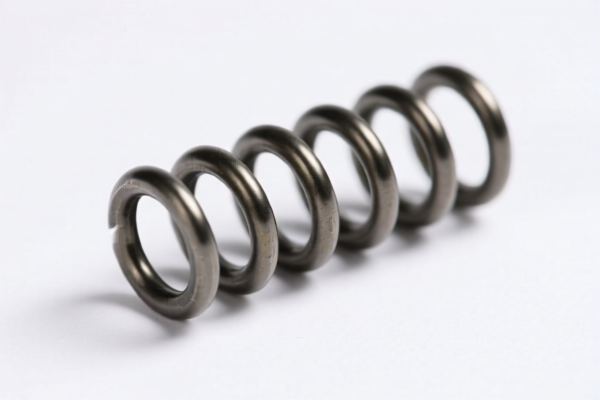
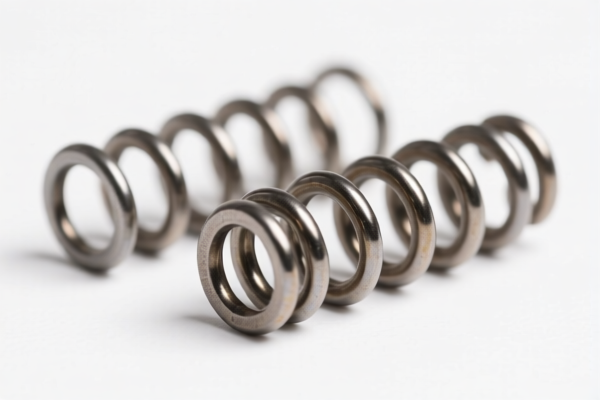
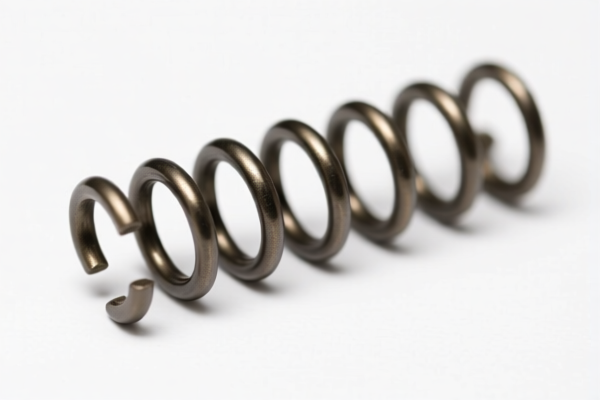
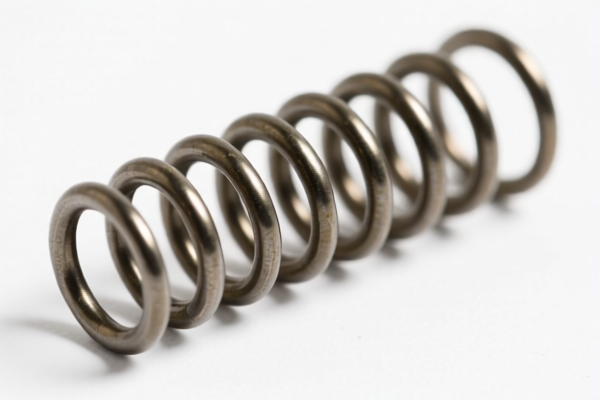
AI Analysis
🌀 Small Spring (Industrial & Mechanical Springs)
🌐 HS Code Reference & Customs Clearance Guide | 2026 Latest Tariff Analysis | Professional Clearance Strategy
📌 I. Product Definition & Classification: What Exactly is a "Small Spring"?
In international trade, the term "Small Spring" is ambiguous and highly dangerous for customs classification. It generally refers to mechanical coils used for energy storage, tension, or pressure. However, the HS Code depends entirely on the material and application.
There are two main categories in the provided data: 1. Watch/Clock Springs (Non-ferrous/Precision): Classified under Chapter 91 (Clocks/Timepieces). These include balance springs (hairsprings) and general precision springs. 2. Metal Springs (Ferrous/Industrial): Classified under Chapter 73 (Articles of Iron or Steel). These are general industrial springs.
⚠️ Critical Distinction Point:
- If the spring is for watches, clocks, or precision instruments (e.g., balance springs, thin precision coils) → Look at 9114.
- If the spring is for machinery, vehicles, or general construction made of Iron or Steel → Look at 7320.
- Misclassification Alert: Declaring an iron spring as a "watch spring" (9114) to avoid tariffs will result in severe penalties. The material and use case are key.
📦 II. HS Code Classification Details (Based on Provided Data)
| HS Code | Product Description | Material | Total Tax Rate | Key Characteristics |
|---|---|---|---|---|
9114.90.34.00 |
Springs (including hairsprings) | Not specified (Lik non-ferrous/precision) | 24.8% | General precision springs, likely non-iron/steel or specific exemptions. |
7320.10.60.15 |
Springs and springs-plates, of iron or steel | Iron/Steel | 88.2% | High tariff due to Section 301 (50%) on steel/aluminum/copper products. |
7320.20.10.00 |
Springs and springs-plates, of iron or steel | Iron/Steel | 70.7% | Different subtype of steel springs; subject to Section 301 (50%). |
9114.90.38.00 |
Springs (including balance hairsprings) | Not specified (Lik non-ferrous/precision) | 21.7% | Specific to balance hairsprings or precision timing components. |
🔍 Important Note:
- Codes starting with 9114 are generally for timepiece components. The tariffs here are lower because they may not fall under the same heavy "Steel/Aluminum/Copper" Section 301 surcharges, or they are classified differently.
- Codes starting with 7320 are for Iron/Steel springs. These carry a massive 50% additional tariff (Section 301) on top of standard duties.
💰 III. 2026 Latest Tariff Rate Breakdown (Including Surcharges)
✅ Applicable Country: United States (US)
✅ Origin: China (CN)
✅ Effective Time: Current policy (including Section 301 and Section 232/122 clauses)
🎯 1. 9114.90.34.00 — Springs (including hairsprings)
General Precision Springs
| Item | Detail |
|---|---|
| Base Duty | 7.3% |
| Additional Duty (Section 301) | 7.5% |
| Section 122 Duty | 10% |
| Total Tax Rate | 24.8% |
| Tax Calculation | CIF Value × 24.8% |
| De Minimis Exemption | ❌ No (Usually < $800 is exempt, but industrial parts often scrutinized; check specific CBP rulings). Note: The prompt implies full taxation. |
📌 Explanation:
- This code applies to springs that are not primarily classified as heavy industrial iron/steel products subject to the highest steel tariffs.
- The 10% Section 122 duty is a specific surcharge applied to certain Chinese imports.
- Total Burden: ~25% is significant but manageable compared to steel products.
🎯 2. 7320.10.60.15 — Iron or Steel Springs (Type 1)
High-Pressure or Specific Shape Steel Springs
| Item | Detail |
|---|---|
| Base Duty | 3.2% |
| Additional Duty (Section 301) | 25.0% (Standard China Rate) |
| Section 122 Duty | 10% |
| Steel/Aluminum/Copper Surtax | +50% |
| Total Tax Rate | 88.2% |
| Tax Calculation | CIF Value × 88.2% |
📌 Explanation:
- This is a disastrous tariff rate.
- The 50% surtax is applied specifically to steel, aluminum, and copper products under recent trade actions (likely related to Section 232 or specific bilateral agreements).
- Total Burden: Nearly 90%. Do NOT import steel springs under this code without extreme cost analysis or alternative sourcing.
🎯 3. 7320.20.10.00 — Iron or Steel Springs (Type 2)
Leaf Springs or Other Steel Spring Types
| Item | Detail |
|---|---|
| Base Duty | 3.2% |
| Additional Duty (Section 301) | 7.5% |
| Section 122 Duty | 10% |
| Steel/Aluminum/Copper Surtax | +50% |
| Total Tax Rate | 70.7% |
| Tax Calculation | CIF Value × 70.7% |
📌 Explanation:
- Similar to the above, the 50% steel surtax is the dominant factor.
- The Section 301 additional duty here is only 7.5% (compared to 25% in the previous code), which makes the total slightly lower (70.7% vs 88.2%), but still very high.
- Key Driver: The 50% Steel Surtax applies to both 7320 codes.
🎯 4. 9114.90.38.00 — Springs (including balance hairsprings)
Precision Watch/Clock Components
| Item | Detail |
|---|---|
| Base Duty | 4.2% |
| Additional Duty (Section 301) | 7.5% |
| Section 122 Duty | 10% |
| Total Tax Rate | 21.7% |
| Tax Calculation | CIF Value × 21.7% |
| De Minimis Exemption | ❌ No |
📌 Explanation:
- This is the lowest cost option if the product is a precision spring (e.g., for watches, instruments).
- It avoids the 50% Steel Surtax because it is not classified as general industrial steel.
- Crucial: You must prove it is a "balance hairspring" or precision instrument component to use this code.
🛠️ IV. Customs Clearance Practical Advice (Real-World Pitfall Guide)
✅ 1. Documentation Checklist (Non-negotiable)
| Document | Required | Explanation |
|---|---|---|
| ✅ Product Specification Sheet | ✔️ | Must specify Material (Iron, Steel, Brass, Stainless, etc.) and Application (Watch, Car, Machine). |
| ✅ Material Certificate | ✔️ | Proves the metal composition. Essential to distinguish between 9114 (non-steel/precision) and 7320 (steel). |
| ✅ Product Photos | ✔️ | High-res images showing scale, coiling, and ends. Helps CBP verify if it's a "balance spring" (tiny) vs. "industrial spring" (large). |
| ✅ Commercial Invoice | ✔️ | Clearly state "Spring, Material: [X], Use: [Y]". Do not just write "Small Spring". |
| ✅ Packing List | ✔️ | Itemize weights and dimensions. |
✅ 2. Declaration Strategy (Key Mantra)
🔥 “Material Defines Code, Steel Means Surtax, Precision Saves Cash!”
| Scenario | Correct HS Code | Risk if Incorrect |
|---|---|---|
| Watch/Instrument Spring (Non-ferrous or Precision) | 9114.90.34.00 or 9114.90.38.00 |
Underpayment: If declared as 7320, you pay 70%+. If declared as 9114 but is Steel, you pay 50% retroactively + penalty. |
| General Industrial Steel Spring | 7320.10.60.15 or 7320.20.10.00 |
Overpayment: If you declare a standard steel spring as 9114, CBP will reclassify it, apply the 50% steel surtax, and fine you. |
| Mixed Shipment | Split by Material | Mixing steel and non-steel in one line item causes confusion and delay. |
✅ 3. Special Handling Cases
| Situation | Advice |
|---|---|
| Stainless Steel Springs | Often still classified under 7320 if they are structural/industrial. Check if they qualify for specific exemptions, but expect the 50% Surtax unless proven non-structural. |
| Balance Hairsprings | Must be clearly identified as components for watches/clocks. Use 9114.90.38.00. Avoid 7320. |
| OEM/Custom Parts | Provide CAD drawings and material specs. If the design is for a specific machine, declare the end-use. |
| Small Quantities | Even for samples, ensure HS Code accuracy. CBP scrutinizes high-tariff categories heavily. |
🌍 V. Global Market Comparison (2026 Outlook)
| Country/Region | Recommended HS Code | Estimated Tariff | Note |
|---|---|---|---|
| 🇺🇸 USA | 9114 or 7320 |
21.7% - 88.2% | Highest Risk. Steel surtax (50%) is the killer. |
| 🇨🇳 China | 7320/9114 | Low (0-5%) | No additional surtaxes. |
| 🇪🇺 EU | 7320/9114 | Low (0-2%) | No Section 301/122 equivalents. |
| 🇯🇵 Japan | 7320/9114 | Low (0-5%) | No additional surtaxes. |
📌 Conclusion:
The USA is the only major market imposing these punitive tariffs.
- If you are exporting to the US, avoid Classifying Industrial Steel Springs as9114.
- If your product is a precision watch spring, ensure documentation proves it is NOT a general industrial steel spring to secure the ~22% rate instead of ~88%.
📌 VI. Common Errors & Pitfalls (Lessons from the Field)
❌ Error 1: Declaring Steel Industrial Springs as 9114.90.34.00
👉 Result: CBP detects steel composition → Reclassifies to 7320 → Applies 50% Steel Surtax → Back taxes + Penalty.
👉 Cost Increase: From 24.8% to 88.2%.
❌ Error 2: Declaring Watch Balance Springs as 7320.10.60.15
👉 Result: You pay 88.2% unnecessarily.
👉 Savings Opportunity: Correct classification to 9114.90.38.00 saves ~66% in duties.
❌ Error 3: Vague Description: "Spring"
👉 Result: CBP uses the "worst-case scenario" classification → Likely 7320 with highest steel tax.
👉 Solution: Always specify "Material" and "Application".
✅ Correct Practice:
"Balance Hairspring, Precision Instrument Component, Non-Ferrous, For Watches, Model XYZ"
vs.
"Compression Spring, Carbon Steel, Industrial Application, 100pcs"
🎯 VII. Conclusion: Precision Classification Saves Money!
🎯 Remember the Mantra:
🔹 "Precision Springs (9114) = ~22% Tax"
🔹 "Steel Springs (7320) = ~71-88% Tax"
🔹 "Material is King, Use is Queen!"
📌 Pro Tip:
If your "Small Spring" is made of Steel but intended for a non-structural, precision use, consult a customs broker immediately to see if 9114 is still applicable based on technical specifications (thickness, tensile strength, application). Do not assume "Small" means "Non-Steel".
📣 Immediate Action:
📞 Verify Material Composition → 📄 Update HS Code → 🚀 Optimize Tariff Liability
✨ Accurate Classification Starts with Details!
💼 Don't let an extra 50% tariff eat your profit!
Customer Reviews
About HS Code Classification
The Harmonized System (HS) is an internationally standardized nomenclature developed by the World Customs Organization (WCO) to classify traded products. Over 200 countries use the HS system as the basis for customs tariffs, trade statistics, and import/export regulations.
Each HS code follows a hierarchical structure:
- Chapter (2 digits) — Broad category of goods (e.g., Chapter 84: Machinery and Mechanical Appliances)
- Heading (4 digits) — More specific grouping within the chapter
- Subheading (6 digits) — Internationally standardized breakdown, used by all WCO member countries
- National subdivisions (8-10 digits) — Country-specific extensions for further classification, such as US HTSUS 10-digit codes
Correct HS code classification is essential for smooth customs clearance, accurate duty payment, and compliance with trade regulations. Misclassification can lead to customs delays, overpayment of duties, or penalties.
When importing from CN to US, the applicable tariff rates may include:
- Most-Favored-Nation (MFN) rate — The standard duty rate applied to WTO members
- General rate — Applied to countries without trade agreements
- Trade remedy duties — Additional tariffs such as Section 301 (anti-dumping), Section 232 (national security), or countervailing duties
The information provided on this page is for reference purposes only. For official classification, please consult with your local customs authority or a licensed customs broker.