Small Stool
CN → US| HS Code | Tariff Rate | Origin | Destination | Doc |
|---|---|---|---|---|
| 9403608093 | 35.0% | CN | US | Official Doc |
| 4421919880 | 38.3% | CN | US | Official Doc |
| 9401698011 | 35.0% | CN | US | Official Doc |
| 4421999880 | 38.3% | CN | US | Official Doc |
| 9401696031 | 35.0% | CN | US | Official Doc |
Product Images
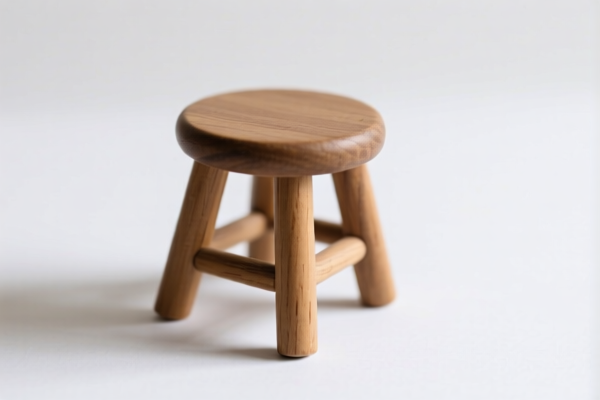
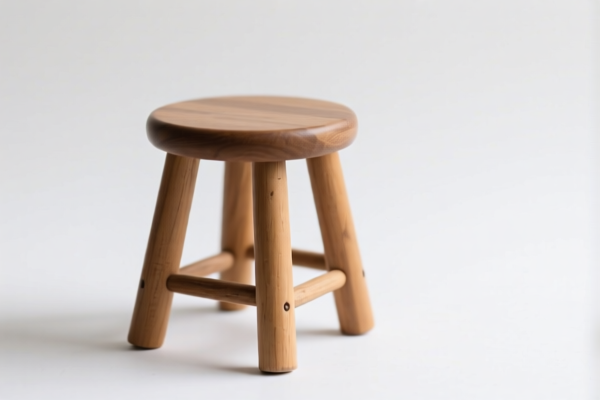
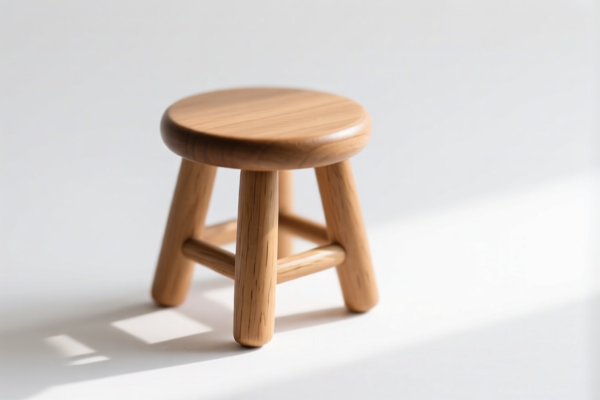
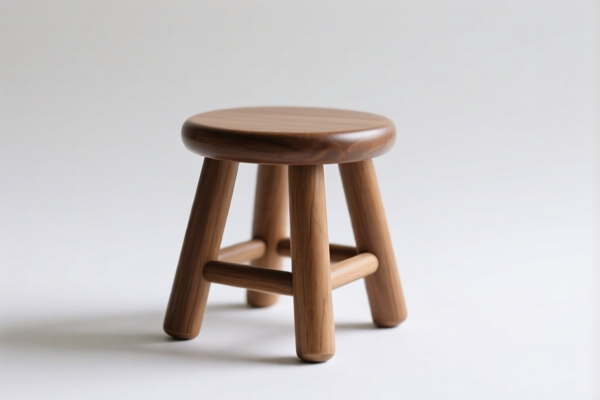
AI Analysis
🪑 Small Stool (Wooden/Composite)
🌐 HS Code Reference & Customs Clearance Guide | 2026 Latest Tariff Analysis | Professional Strategy for US Imports
📌 I. Product Definition & Classification: What exactly is a "Small Stool"?
In international trade, the term "Small Stool" is often too vague. For customs purposes, it is primarily classified under Chapter 94 (Furniture) if it is made of wood or has a wooden frame, or Chapter 44 if it is a pure wooden artifact without furniture-specific utility. The key determinant is the material composition and structure.
1. Wooden Furniture (9403 Series)
Includes stools with wooden frames, regardless of whether the seat is upholstered or solid wood. These are considered "furniture."
2. Wooden Artifacts/General Wood Products (4421 Series)
Includes stools made entirely of wood (e.g., bamboo, solid wood logs, or processed wood items) that do not fit the specific definition of "furniture" in Chapter 94, or general wooden items like footrests, small wooden seats, or decorative wooden blocks.
⚠️ Key Distinction Point:
- If the item has a wooden frame and is designed for sitting → Likely 9403.60 or 9401.69.
- If the item is a solid wood piece (e.g., a log stool, wooden step, or non-upholstered wooden seat) and not clearly "furniture" → Likely 4421.91 or 4421.99.
- Material Matters: This analysis assumes the product is wooden or has wooden parts, as all provided HS codes are wood-related. If the stool is metal, plastic, or glass, these codes do not apply.
📦 II. HS Code Classification Details (2026 Tariff Reference)
| HS Code | Product Description | Applicable Scenario | Material Structure |
|---|---|---|---|
9403.60.80.93 |
Other wooden furniture | General wooden stools, side tables, nightstands, or any wooden furniture not specified elsewhere | ✅ Wooden Frame/Body |
4421.91.98.80 |
Other wooden or bamboo articles | Small wooden stools, footrests, wooden blocks, or bamboo seats not classified as furniture | ✅ Solid Wood/Bamboo |
9401.69.80.11 |
Other seats with wooden frame | Upholstered or padded seats with a wooden frame; specifically "seats" rather than general furniture | ✅ Wooden Frame + Upholstery |
4421.99.98.80 |
Other wooden articles | Miscellaneous wooden items, including small wooden seats or artifacts not covered by 4421.91 | ✅ Solid Wood/Composite |
9401.69.60.31 |
Other wooden-framed seats | Specific sub-category for seats with wooden frames, often distinguished by cushioning or specific design | ✅ Wooden Frame |
🔍 Critical Reminder:
- Furniture vs. Article: If the stool is a standalone piece of furniture (like a dining stool or living room accent stool), it usually falls under 9403.60.80.93 ("Other wooden furniture").
- Seats with Frames: If the stool is specifically a "seat" with a wooden frame (especially if upholstered), it may fall under 9401.69. The slight difference between9401.69.80.11and9401.69.60.31often relates to specific sub-classifications within the US HTSUS (e.g., cushioned vs. non-cushioned, or specific dimensions).
- Non-Furniture Wood Items: If the "stool" is a simple wooden block, a footrest, or a rustic log stool not designed as standard furniture, it may be classified under 4421 ("Other wooden articles").
💰 III. 2026 Latest Tariff Rate Breakdown (Including Additional Duties)
✅ Applicable Country: United States (US)
✅ Origin: China (CN)
✅ Effective Date: 2025 November 10 onwards (including subsequent imports)
🎯 1. 9403.60.80.93 — Other Wooden Furniture
| Item | Content |
|---|---|
| Basic Tariff | 0.0% (ad valorem) |
| Section 301 Additional Tariff | +25.0% (USITC Footnote) |
| Section 122 Tariff | +10.0% (Specific to certain goods) |
| Total Tax Rate | 35.0% |
| Tax Calculation | CIF Value × 35% |
| De Minimis Exemption | ❌ Not Eligible (High value goods) |
| Legal Basis | Section 301: 25% + Section 122: 10% |
📌 Explanation:
- 0% Base: Wooden furniture generally has a low base tariff.
- 35% Total: The combination of 25% (Section 301, targeting Chinese manufactured goods) and 10% (Section 122, targeting specific import categories) results in a 35% total duty rate.
- Impact: This is a high tariff level. Importers must factor this into their landed cost calculations.
🎯 2. 4421.91.98.80 — Other Wooden or Bamboo Articles
| Item | Content |
|---|---|
| Basic Tariff | 3.3% (ad valorem) |
| Section 301 Additional Tariff | +25.0% |
| Section 122 Tariff | +10.0% |
| Total Tax Rate | 38.3% |
| Tax Calculation | CIF Value × 38.3% |
| De Minimis Exemption | ❌ Not Eligible |
| Legal Basis | Section 301: 25% + Section 122: 10% |
📌 Explanation:
- 3.3% Base: Some wooden articles have a small base duty.
- 38.3% Total: Even with a low base, the 25% + 10% additional tariffs push the total to 38.3%.
- Impact: This is the highest tariff among the provided codes. Misclassifying a "wooden furniture" item as a "wooden article" to avoid higher duties is risky; however, in this dataset, the "article" classification actually has a higher total rate due to the base tariff.
🎯 3. 9401.69.80.11 & 9401.69.60.31 — Other Seats with Wooden Frame
| Item | Content |
|---|---|
| Basic Tariff | 0.0% (ad valorem) |
| Section 301 Additional Tariff | +25.0% |
| Section 122 Tariff | +10.0% |
| Total Tax Rate | 35.0% |
| Tax Calculation | CIF Value × 35% |
| De Minimis Exemption | ❌ Not Eligible |
| Legal Basis | Section 301: 25% + Section 122: 10% |
📌 Explanation:
- 0% Base: Seats with wooden frames generally have no base duty.
- 35% Total: Same as general wooden furniture.
- Impact: Identical cost structure to9403.60.80.93. The distinction is purely regulatory/classificatory.
🎯 4. 4421.99.98.80 — Other Wooden Articles
| Item | Content |
|---|---|
| Basic Tariff | 3.3% (ad valorem) |
| Section 301 Additional Tariff | +25.0% |
| Section 122 Tariff | +10.0% |
| Total Tax Rate | 38.3% |
| Tax Calculation | CIF Value × 38.3% |
| De Minimis Exemption | ❌ Not Eligible |
| Legal Basis | Section 301: 25% + Section 122: 10% |
📌 Explanation:
- 3.3% Base: Similar to4421.91.
- 38.3% Total: Same high tariff as other "wooden articles."
- Impact: Avoid this classification if the product can be legally classified under Chapter 94 (Furniture), as the rate is higher.
🛠️ IV. Customs Clearance Practical Advice (Avoid Pitfalls)
✅ 1. Preparation Checklist (Mandatory Documents)
| Document | Required | Notes |
|---|---|---|
| ✅ Product Specification Sheet | ✔️ | Must detail: Dimensions, Material (100% Wood? Wood Frame + Fabric?), Weight, HS Code. |
| ✅ Photos | ✔️ | Clear photos of the stool from all angles, including labels and joints. |
| ✅ Commercial Invoice | ✔️ | Must clearly state: "Wooden Stool, Made in China, Material: [Specify]." |
| ✅ Packing List | ✔️ | Detail carton size, gross weight, net weight. |
| ✅ Material Declaration | ✔️ | Explicitly state if it contains any wood packaging (ISPM 15 compliant if applicable). |
| ✅ Certificate of Origin | ✔️ | Essential for proving Chinese origin (to apply correct tariffs). |
✅ 2. Classification Strategy (Key Logic)
🔥 "Check the Frame, Check the Material, Check the Function!"
| Scenario | Recommended HS Code | Total Tariff | Reasoning |
|---|---|---|---|
| Standard Wooden Stool (Dining, Side, Garden) | 9403.60.80.93 |
35.0% | Classified as "Other Wooden Furniture." Most common for commercial stools. |
| Upholstered Wooden Stool | 9401.69.80.11 |
35.0% | Classified as "Seat with Wooden Frame." If the seat is padded/fabric. |
| Simple Wooden Footrest / Log Stool | 4421.91.98.80 |
38.3% | Classified as "Other Wooden Article." If not clearly "furniture." |
| Miscellaneous Wooden Seat | 4421.99.98.80 |
38.3% | Catch-all for wooden items not elsewhere specified. |
| Other Wooden-Framed Seat | 9401.69.60.31 |
35.0% | Specific sub-category for seats. |
📌 Note: There is a 3.3% difference in total duty between "Furniture/Seats" (35%) and "Other Wooden Articles" (38.3%).
- Strategy: If the product is clearly a seat or furniture, classify under 9403 or 9401 (35%) rather than 4421 (38.3%) to save costs, provided the description justifies it.
- Risk: Misclassifying a "furniture" item as an "article" to save money can lead to penalties if customs disagrees. However, in this dataset, the "article" classification is more expensive, so there is less incentive to misclassify.
✅ 3. Special Considerations
| Situation | Advice |
|---|---|
| Mixed Materials | If the stool has metal legs or plastic seats, it may NOT fall under these wooden codes. It could be classified under Chapter 73 (Metal) or 39 (Plastic). Ensure the product is >50% wood or primarily wood-based. |
| Kit Assembly | If the stool is sold as a kit (disassembled), it is still classified as the finished product (Furniture/Seat). Do not split the shipment to avoid higher duties on individual components. |
| Wood Packaging | If the stool is shipped on wooden pallets, ensure they are ISPM 15 compliant (heat-treated/marked) to avoid rejection or fumigation costs. |
| Section 122 Specificity | Section 122 tariffs can be complex. Ensure your customs broker verifies that the specific HTSUS sub-code is indeed subject to the 10% Section 122 duty in the current year. |
🌍 V. Global Market Comparison (2026)
| Country/Region | Recommended HS Code | Approx. Tariff (China Origin) | Notes |
|---|---|---|---|
| 🇺🇸 USA | 9403.60.80.93 |
35.0% | High duties due to Section 301 & 122. |
| 🇨🇳 China | 9403.60.80.93 |
5% - 10% | Standard import tariff. |
| 🇪🇺 EU | 9403.30.90 |
0% - 2.7% | Generally low duties for wooden furniture. |
| 🇬🇧 UK | 9403.30.90 |
0% - 2.7% | Post-Brexit tariffs similar to EU. |
| 🇯🇵 Japan | 9403.30.90 |
0% - 3.2% | FTA benefits may apply. |
📌 Conclusion:
The USA is significantly more expensive due to trade restrictions.
For US imports, the 35% duty is a hard cost. For other markets, wooden stools remain competitive.
📌 VI. Common Mistakes & Pitfalls
❌ Mistake 1: Classifying a metal-legged stool under 9403.60.80.93.
👉 Consequence: Incorrect classification → Fines, delays, and potential reclassification to Chapter 73 (Metal Furniture).
❌ Mistake 2: Ignoring Section 122.
👉 Consequence: Underpayment of duties. If Section 122 applies to your specific product type, failing to pay the 10% will result in back duties + interest.
❌ Mistake 3: Using vague descriptions like "Wooden Stool."
👉 Consequence: Customs may suspect under-valuation or misclassification. Use precise descriptions: "Solid Oak Wood Dining Stool, 18" Height, Seat Diameter 14", Made in China."
❌ Mistake 4: Assuming "De Minimis" ($800) applies.
👉 Consequence: It does not apply. Section 301 and 122 tariffs waive the de minimis exemption for Chinese goods. Even shipments under $800 are subject to duty.
🎯 VII. Summary & Actionable Advice
🎯 Key Takeaway:
- Most Wooden Stools going to the US will incur a 35% duty rate (9403.60.80.93 or 9401.69.xxxxxx).
- Some Wooden Articles may incur a 38.3% duty rate (4421.91.98.80 or 4421.99.98.80).
- No Exemptions: Do not rely on de minimis rules for Chinese-origin wooden stools.
✅ Best Practice:
1. Confirm Material: Ensure the product is primarily wood.
2. Use Precise Description: "Wooden Stool, Frame: Wood, Seat: Wood/Fabric."
3. Calculate Landed Cost: Include 35% duty + freight + insurance + handling.
4. Verify Section 122: Confirm with your broker that the specific sub-code is subject to the 10% Section 122 tariff.
📞 Pro Tip:
If you are importing large volumes, consider applying for an HTSUS Exclusion (if available) or exploring third-country assembly (e.g., Vietnam, Mexico) to mitigate Section 301 and 122 tariffs, provided there is substantial transformation.
✨ Accurate Classification = Accurate Costing = Profit Protection!
💼 Don't let hidden tariffs eat your margin!
Customer Reviews
About HS Code Classification
The Harmonized System (HS) is an internationally standardized nomenclature developed by the World Customs Organization (WCO) to classify traded products. Over 200 countries use the HS system as the basis for customs tariffs, trade statistics, and import/export regulations.
Each HS code follows a hierarchical structure:
- Chapter (2 digits) — Broad category of goods (e.g., Chapter 84: Machinery and Mechanical Appliances)
- Heading (4 digits) — More specific grouping within the chapter
- Subheading (6 digits) — Internationally standardized breakdown, used by all WCO member countries
- National subdivisions (8-10 digits) — Country-specific extensions for further classification, such as US HTSUS 10-digit codes
Correct HS code classification is essential for smooth customs clearance, accurate duty payment, and compliance with trade regulations. Misclassification can lead to customs delays, overpayment of duties, or penalties.
When importing from CN to US, the applicable tariff rates may include:
- Most-Favored-Nation (MFN) rate — The standard duty rate applied to WTO members
- General rate — Applied to countries without trade agreements
- Trade remedy duties — Additional tariffs such as Section 301 (anti-dumping), Section 232 (national security), or countervailing duties
The information provided on this page is for reference purposes only. For official classification, please consult with your local customs authority or a licensed customs broker.