Smart Door Lock
CN → US| HS Code | Tariff Rate | Origin | Destination | Doc |
|---|---|---|---|---|
| 8301406030 | 23.2% | CN | US | Official Doc |
| 8301108000 | 22.3% | CN | US | Official Doc |
| 8301106080 | 23.6% | CN | US | Official Doc |
Product Images
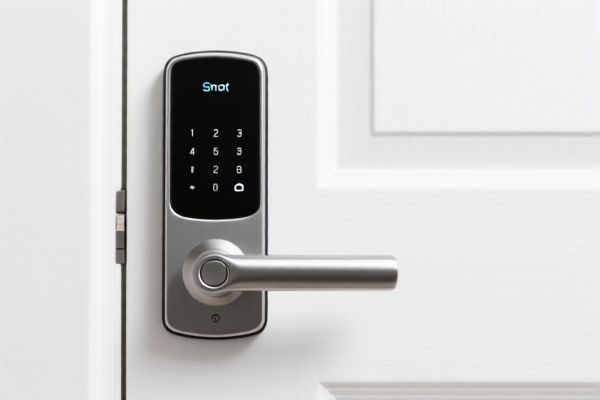
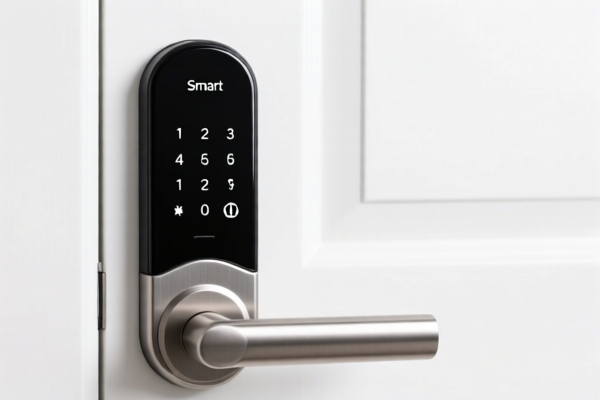
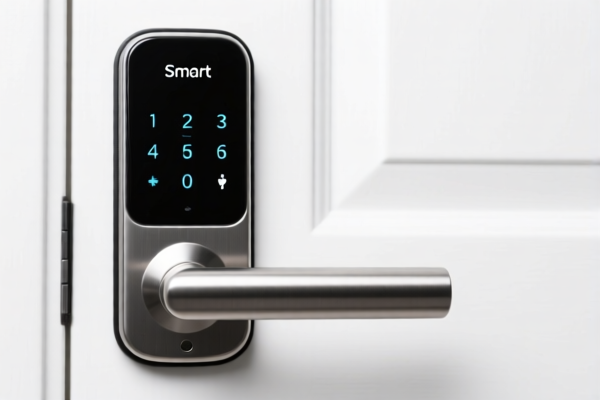
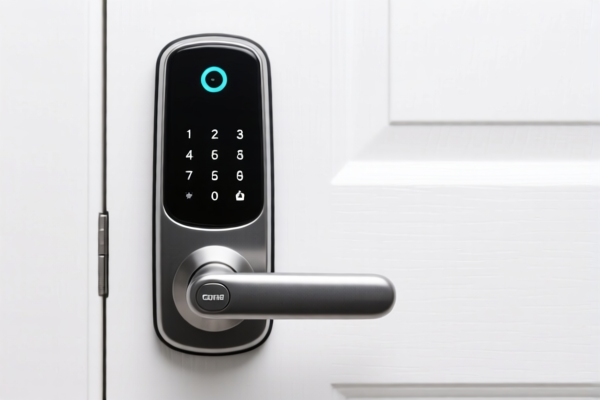
AI Analysis
🔐 Smart Door Locks (Intelligent Locking Systems)
🌐 HS Code Reference & Customs Clearance Guide | 2026 Latest Tariff Analysis | Professional Entry Strategy
📌 1. Product Definition & Classification: Do You Really Understand "Smart Door Locks"?
Smart door locks are modern security devices that integrate electronic controls (such as fingerprints, passwords, RFID, or mobile apps) with traditional mechanical locking mechanisms. In international trade, they are generally classified under Chapter 83: Miscellaneous Articles of Base Metal, specifically under heading 8301: Locks (including combined locks) and clasps, and base metal mountings and fittings suitable for doors, staircases, windows, bodies, trunks, chests, caskets or other containers.
⚠️ Key Classification Point:
- If the lock is primarily a smart fingerprint or electronic lock, it falls under 8301.40 ("Other locks").
- If it is a smart time lock (often used for rentals or shared spaces), it may fall under 8301.10 ("Padlocks") or 8301.40, depending on form and function.
- Material: The core mechanism is typically base metal (iron, steel, zinc alloy), even if plastic or electronic components are present.
📦 2. HS Code Classification Details (2026 Latest Tariff Authority)
Based on the provided data, here are the specific HS Codes for different types of smart locks:
| HS Code | Product Description | Application Scenario | Key Features |
|---|---|---|---|
8301.40.60.30 |
Smart Fingerprint Lock | Indoor/Outdoor residential or commercial doors | Metal body, fingerprint sensor, electronic module, base metal classification |
8301.10.80.00 |
Smart Time Lock | Rental properties, shared facilities | Padlock form factor, metal, time-based release mechanism |
8301.10.60.80 |
Smart Time Lock | General use, other padlocks | Base metal padlock, no material conflict, time-controlled |
🔍 Important Note:
- All three codes fall under Base Metal Locks (HS 8301).
- The distinction between8301.40(Other locks) and8301.10(Padlocks) is based on form and function. Fingerprint locks for doors are typically8301.40, while compact time locks are often8301.10.
💰 3. 2026 Latest Tariff Rate Breakdown (Including Surtaxes & Policy Add-ons)
✅ Applicable Country: United States (US)
✅ Country of Origin: China (CN)
✅ Effective Date: From November 10, 2025 (and subsequent imports)
🎯 1. 8301.40.60.30 – Smart Fingerprint Lock
| Item | Details |
|---|---|
| Base Tariff | 5.7% |
| Additional Tariff (Section 301) | +7.5% |
| Section 122 Tariff | +10% |
| Total Tax Rate | 23.2% |
| Tax Calculation | CIF Value × 23.2% |
| De Minimis Exemption | ❌ Not Applicable (High risk of audit) |
| Legal Basis Path | Section 301: 8301.40.60.30 → Section 122: 8301.40.60.30 |
📌 Explanation:
- Base Tariff (5.7%): Standard MFN rate for base metal locks.
- Section 301 Surtax (7.5%): US trade remedy on Chinese goods.
- Section 122 Tariff (10%): Additional national security-related tariff.
- Total: 23.2%. This is a moderate-to-high tariff rate for hardware.
🎯 2. 8301.10.80.00 – Smart Time Lock (Padlock Form)
| Item | Details |
|---|---|
| Base Tariff | 4.8% |
| Additional Tariff (Section 301) | +7.5% |
| Section 122 Tariff | +10% |
| Total Tax Rate | 22.3% |
| Tax Calculation | CIF Value × 22.3% |
| De Minimis Exemption | ❌ Not Applicable |
| Legal Basis Path | Section 301: 8301.10.80.00 → Section 122: 8301.10.80.00 |
📌 Note:
- Slightly lower base tariff than fingerprint locks due to padlock classification.
- Same surtax structure applies.
🎯 3. 8301.10.60.80 – Smart Time Lock (General Padlock)
| Item | Details |
|---|---|
| Base Tariff | 6.1% |
| Additional Tariff (Section 301) | +7.5% |
| Section 122 Tariff | +10% |
| Total Tax Rate | 23.6% |
| Tax Calculation | CIF Value × 23.6% |
| De Minimis Exemption | ❌ Not Applicable |
| Legal Basis Path | Section 301: 8301.10.60.80 → Section 122: 8301.10.60.80 |
📌 Note:
- Highest base tariff among the three due to "other padlock" classification.
- Still subject to the same 17.5% in surtaxes.
🛠️ 4. Customs Clearance Practical Advice (Pitfall Avoidance Guide)
✅ 1. Required Documentation Checklist (Must-Have)
| Document | Required? | Explanation |
|---|---|---|
| ✅ Product Specification Sheet | ✔️ | Must include locking mechanism type (fingerprint, time, key), material, dimensions, power source (battery type). |
| ✅ Product Photos (with Label) | ✔️ | Clear images of the lock, keypads, sensors, and brand/model number. |
| ✅ Commercial Invoice | ✔️ | Must specify "Smart Lock" or "Electronic Lock," not just "Lock." |
| ✅ Packing List | ✔️ | List all components (lock body, batteries, keys, manuals). |
| ✅ Certificate of Origin (CO) | ✔️ | If applicable, for potential duty reduction (though unlikely for US-China). |
| ✅ FCC/CE Certification | ✔️ | If the lock has wireless capabilities (Bluetooth/Wi-Fi), FCC is mandatory for US import. |
✅ 2. Declaration Tips (Key Mantras)
🔥 “Be Specific, Avoid Generic, Declare Electronics Clearly!”
| Scenario | Correct Declaration | Incorrect Declaration |
|---|---|---|
| Fingerprint Door Lock | 8301.40.60.30 - "Smart Fingerprint Lock for Doors, Metal Body" |
"Door Lock" (Too vague) |
| Time-Release Padlock | 8301.10.80.00 - "Smart Time Lock, Padlock Type" |
"Padlock" (May trigger higher scrutiny) |
| Lock with Batteries | Declare battery type (Li-ion/Alkaline) clearly. | Omit battery info → Customs hold. |
| Complete Kit (Lock + Mount) | Declare as one unit under 8301.40.60.30. |
Split into "Lock" and "Hardware" → Higher combined tax. |
✅ 3. Special Cases Handling
| Case | Handling Advice |
|---|---|
| OEM Smart Locks | Provide customer order + design specs. Avoid generic descriptions. |
| Locks with Wireless (Wi-Fi/Bluetooth) | Must have FCC ID. No FCC ID → Entry refused. |
| Locks with High-Capacity Batteries | Must comply with DOT/Hazmat regulations for air freight. |
| Hybrid Locks (Key + Electronic) | Still classified under 8301.40.60.30 if electronic control is primary. |
🌍 5. Global Market Comparison (2026 Latest)
| Country/Region | Recommended HS Code | Tariff Rate | Certification Requirements | Notes |
|---|---|---|---|---|
| 🇺🇸 USA | 8301.40.60.30 |
23.2% | FCC + UL/ETL | High surtaxes apply. |
| 🇨🇳 China | 8301.40.60.30 |
5% (Import) | CCC (if applicable) | Low duty for domestic sales. |
| 🇪🇺 EU | 8301.40.60.30 |
0-2.5% | CE + RoHS | No surtaxes. |
| 🇬🇧 UK | 8301.40.60.30 |
0-2.5% | UKCA + RoHS | Post-Brexit rules apply. |
| 🇦🇺 Australia | 8301.40.60.30 |
5% | RCM + RCM | Standard duty. |
📌 Conclusion:
- USA has the highest cost due to Section 301 and Section 122 tariffs.
- EU and UK are more favorable with no surtaxes.
- FCC certification is critical for US market entry.
📌 6. Common Errors & Pitfall Guide (Lessons Learned)
❌ Mistake 1: Declaring as "Metal Lock" (HS 8301.90)
👉 Consequence: Incorrect classification → Audit, penalties, and potential reclassification to 8301.40 with higher scrutiny.
❌ Mistake 2: Omitting "Smart" or "Electronic" from description
👉 Consequence: Customs may classify as traditional mechanical lock, leading to incorrect duty assessment and delays.
❌ Mistake 3: Not declaring FCC if wireless features exist
👉 Consequence: Entry refused by CBP. No FCC ID = No entry.
❌ Mistake 4: Splitting lock and batteries into separate shipments
👉 Consequence: Increased shipping costs and potential hazmat fees for batteries.
✅ Correct Practice:
“Smart Fingerprint Door Lock, Model XYZ, Metal Body, FCC Certified, Includes Batteries, HS 8301.40.60.30”
🎯 7. Conclusion: Professional Declaration, Lower Costs, Smoother Clearance
🎯 Remember the Mantra:
🔹 “Be Specific: Fingerprint, Time, or Electronic.”
🔹 “Declare FCC if Wireless.”
🔹 “Total Tax is ~23% for US, plan accordingly.”🔹 “HS Code determines duty, Description determines speed, FCC determines entry.”
📌 Pro Tip:
- If your smart locks are originating from Vietnam, Mexico, or Thailand, you may qualify for USMCA or GSP benefits, reducing duties significantly.
- Consider applying for an Advance Ruling from CBP to confirm classification before shipping.
📣 Take Action Now:
📞 Consult a Licensed Customs Broker + Provide Product Specs + Apply for FCC + File for Advance Ruling
🚀 Ensure Your Smart Locks Clear Smoothly, Minimize Costs, and Accelerate Time-to-Market!
✨ Professional Clearance Starts with Accurate Classification!
💼 Every Percent of Duty Matters!
Customer Reviews
About HS Code Classification
The Harmonized System (HS) is an internationally standardized nomenclature developed by the World Customs Organization (WCO) to classify traded products. Over 200 countries use the HS system as the basis for customs tariffs, trade statistics, and import/export regulations.
Each HS code follows a hierarchical structure:
- Chapter (2 digits) — Broad category of goods (e.g., Chapter 84: Machinery and Mechanical Appliances)
- Heading (4 digits) — More specific grouping within the chapter
- Subheading (6 digits) — Internationally standardized breakdown, used by all WCO member countries
- National subdivisions (8-10 digits) — Country-specific extensions for further classification, such as US HTSUS 10-digit codes
Correct HS code classification is essential for smooth customs clearance, accurate duty payment, and compliance with trade regulations. Misclassification can lead to customs delays, overpayment of duties, or penalties.
When importing from CN to US, the applicable tariff rates may include:
- Most-Favored-Nation (MFN) rate — The standard duty rate applied to WTO members
- General rate — Applied to countries without trade agreements
- Trade remedy duties — Additional tariffs such as Section 301 (anti-dumping), Section 232 (national security), or countervailing duties
The information provided on this page is for reference purposes only. For official classification, please consult with your local customs authority or a licensed customs broker.