Smart Light String
CN → US| HS Code | Tariff Rate | Origin | Destination | Doc |
|---|---|---|---|---|
| 9405310040 | 43.0% | CN | US | Official Doc |
| 9505104020 | 10.0% | CN | US | Official Doc |
| 9505105020 | 10.0% | CN | US | Official Doc |
| 8544429090 | 87.6% | CN | US | Official Doc |
| 8544493080 | 40.3% | CN | US | Official Doc |
| 9405390040 | 43.0% | CN | US | Official Doc |
Product Images
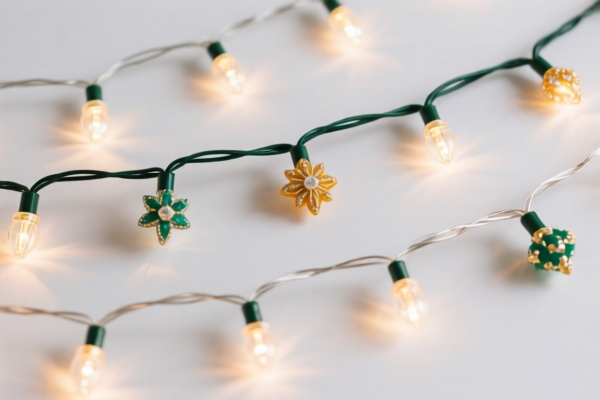
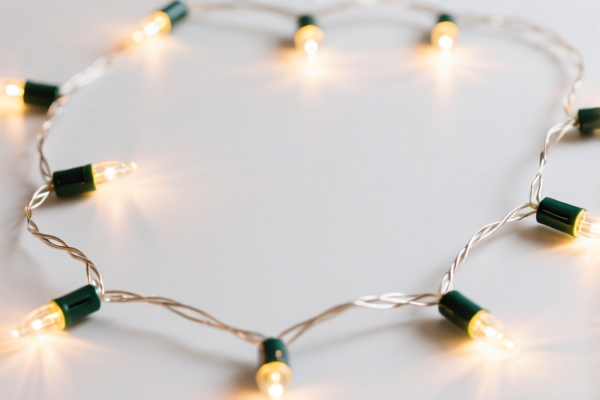
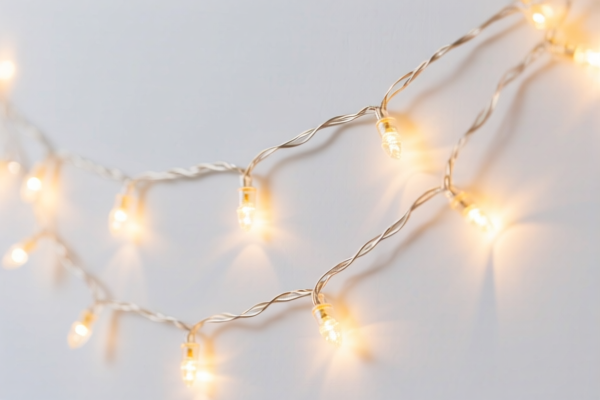
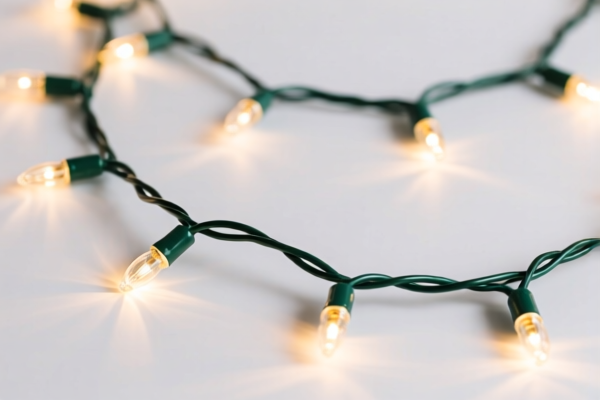
AI Analysis
💡 Smart Light Strings (LED Holiday Decorations)
🌐 HS Code Reference & Customs Clearance Guide | 2026 Latest Tariff Analysis | Professional Clearance Strategy
📌 I. Product Definition & Classification: What Exactly Are "Smart Light Strings"?
Smart light strings are modern, programmable LED lighting solutions used for home decoration, holiday celebrations (especially Christmas), and architectural lighting. In international trade, they sit at the intersection of lighting equipment, electrical components, and holiday decorations.
The core ambiguity lies in whether they are classified as: 1. Luminaires (Lights): Focusing on the lighting function (LEDs + Plastic/Metal casing). 2. Decorative Articles: Focusing on the festive usage (Christmas/Jingle Bell style). 3. Electrical Conductors: Focusing on the wire and connector structure.
⚠️ Key Distinction:
- If the primary value and function are lighting (e.g., high-end smart home integration, high wattage) → Often Chapter 94.
- If the primary value and function are festive decoration (e.g., low-cost plastic strings for Christmas trees) → Often Chapter 95.
- If the structure is primarily wiring/connectors with minimal lighting value → Chapter 85.
📦 II. HS Code Classification Details (2026 Latest Tariff Authority Comparison)
Based on the provided data, here are the possible classifications and their corresponding tax implications:
| HS Code | Product Description | Key Classification Logic |
|---|---|---|
9405.31.00.40 |
Luminaires: Lamp fittings or lighting accessories, using light-emitting diodes (LEDs) | Based on LED source inference; classified under "Lamps and Lighting Fixtures" |
9505.10.40.20 |
Festive Articles: Christmas trees and other Christmas decorations | Plastic shell + Wire composition; classified as "Christmas & Festival Celebration Supplies" |
9505.10.50.20 |
Festive Articles: Other festive, carnival, or theatrical articles | Plastic, metal wire, and LED components; classified as "Celebration Decorations" |
8544.42.90.90 |
Insulated Wires: Insulated electric conductors, fitted with connectors, voltage ≤ 1,000 V | Core attribute is "conductor with connector"; voltage considerations apply |
8544.49.30.80 |
Other Insulated Wires: Other electric conductors fitted with connectors | Based on electrical conductor attributes; fits "other categories" of wires |
9405.39.00.40 |
Other Luminaires: Other lamp fittings or lighting accessories | No material conflict; inferred as electrical/plastic material based on common sense |
🔍 Critical Reminder:
- Chapter 95 (9505.10) is often the most favorable for low-cost, festive-themed smart lights due to lower base tariffs (0%).
- Chapter 94 (9405.3x) is standard for general LED lighting but carries an 8% base tariff plus heavy Section 301 tariffs.
- Chapter 85 (8544.4x) is risky. While it might apply to the wire aspect, customs may reject it if the product is clearly a functional light string rather than just wiring. However, if accepted, the tax burden can be extremely high due to complex surcharges.
💰 III. 2026 Latest Tariff Rate Breakdown (Including Surcharges & Policy Add-ons)
✅ Applicable Country: USA (US)
✅ Origin: China (CN)
✅ Effective Time: Post-November 2025 (including subsequent imports)
🎯 1. Classification: Festive Decorations (HS 9505.10)
Codes: 9505.10.40.20, 9505.10.50.20
| Item | Detail |
|---|---|
| Base Tariff | 0.0% (Free trade agreement or general MFN rate for festive items) |
| Section 301 Surcharge (Add-on Tariff) | 0.0% |
| Section 122 Tariff (IEEPA Add-on) | +10.0% (Specific surcharge on Chinese products) |
| Total Tariff Rate | 10.0% |
| Tax Calculation | CIF Value × 10% |
| De Minimis Exemption | ❌ No (Denied for goods subject to Section 122/301 tariffs) |
| Legal Basis Path | USITC:9505.10.40.20 / USITC:9505.10.50.20 → IEEPA:122 Clause |
📌 Analysis:
- This is the lowest cost option among the three main paths.
- The 0% base and 0% Section 301 rate make it highly attractive.
- Only the 10% Section 122 tariff applies.
- Strategy: If the product is clearly Christmas/Holiday-themed, push for this classification.
🎯 2. Classification: LED Luminaires (HS 9405.3x)
Codes: 9405.31.00.40, 9405.39.00.40
| Item | Detail |
|---|---|
| Base Tariff | 8.0% |
| Section 301 Surcharge (Add-on Tariff) | +25.0% (Standard USITC Footnote for Chinese electronics/lighting) |
| Section 122 Tariff (IEEPA Add-on) | +10.0% |
| Total Tariff Rate | 43.0% |
| Tax Calculation | CIF Value × 43% |
| De Minimis Exemption | ❌ No |
| Legal Basis Path | USITC:9405.31.00.40 / USITC:9405.39.00.40 → Section 301: 25% + IEEPA: 10% |
📌 Analysis:
- This is the standard classification for general LED lights.
- The 8% base tariff is significant.
- The 25% Section 301 tariff is heavy.
- Result: High compliance cost. Only use if the product is NOT considered "festive decoration" (e.g., professional architectural lighting).
🎯 3. Classification: Insulated Wires/Conductors (HS 8544.4x)
Codes: 8544.42.90.90, 8544.49.30.80
A. Code 8544.42.90.90 (Fitted with Connectors)
| Item | Detail |
|---|---|
| Base Tariff | 2.6% |
| Section 301 Surcharge (Add-on Tariff) | +25.0% |
| Section 122 Tariff (IEEPA Add-on) | +10.0% |
| Steel/Aluminum/Copper Add-on | +50.0% (If applicable to specific material components) |
| Total Tariff Rate | 87.6% |
| Tax Calculation | CIF Value × 87.6% |
| De Minimis Exemption | ❌ No |
📌 Analysis:
- This is the most expensive option.
- The combination of base tariff, Section 301, Section 122, and potential material-specific surcharges creates a punitive rate.
- Risk: High likelihood of rejection by customs if the product is primarily a "light" and not just a "wire."
B. Code 8544.49.30.80 (Other Conductors)
| Item | Detail |
|---|---|
| Base Tariff | 5.3% |
| Section 301 Surcharge (Add-on Tariff) | +25.0% |
| Section 122 Tariff (IEEPA Add-on) | +10.0% |
| Total Tariff Rate | 40.3% |
| Tax Calculation | CIF Value × 40.3% |
| De Minimis Exemption | ❌ No |
📌 Analysis:
- Slightly better than the 87.6% rate but still much higher than the 10% festive rate.
- Not recommended unless the product is marketed specifically as a "wiring kit" rather than a "light string."
🛠️ IV. Customs Clearance Practical Advice (Avoid Pitfalls)
✅ 1. Documentation Checklist (Essential)
| Document | Required? | Explanation |
|---|---|---|
| ✅ Product Specifications | ✔️ | Must clearly state: Voltage, Wattage, LED Type, Smart Features (App/Remote), Material (Plastic/Wire). |
| ✅ Product Photos | ✔️ | Clear images of the entire string, connectors, and any festive packaging (boxes with Christmas themes). |
| ✅ Commercial Invoice | ✔️ | Description must align with HS Code. Use terms like "Christmas LED String Lights" for 9505 or "LED Lamp Fitting" for 9405. |
| ✅ Origin Certificate | ✔️ | To prove origin (China) and apply correct surcharges. |
| ✅ Declaration of Composition | ✔️ | Detail the ratio of wire vs. LED vs. plastic to support classification logic. |
✅ 2. Classification Strategy (Key Tactics)
🔥 "Decide the Identity: Is it a Toy/Decoration or a Light Bulb?"
| Scenario | Recommended HS Code | Reasoning |
|---|---|---|
| Christmas/Holiday Theme (Boxes with Santa, Snowflakes, "Merry Christmas") |
9505.10.40.20 or 9505.10.50.20 |
Strongest case for "Festive Decoration." Lowest tax (10%). |
| General Home Decor (No specific holiday branding, sleek design, used year-round) |
9405.31.00.40 |
Classified as "Luminaires." Higher tax (43%), but more defensible if not festive. |
| Professional/Architectural (High voltage, industrial use, no decorative casing) |
8544.49.30.80 |
Rare for consumer smart strings. Only use if specifically marketed as wiring components. |
✅ 3. Special Considerations
| Issue | Advice |
|---|---|
| "Smart" Functionality | Does the "smart" feature (WiFi/Bluetooth) change the classification? → Generally No. It remains a lighting fixture or decorative item. The electronics inside do not automatically push it to Chapter 85 unless it's sold as a "control module." |
| Packaging is Key | If you want 9505, ensure the packaging and marketing materials emphasize "Christmas," "Holiday," or "Festival." If the box looks like a generic electronics box, customs may lean toward 9405. |
| Material Composition | If the string is predominantly metal wire with minimal LEDs, customs might argue for 8544. However, for plastic-coated wire strings, 9505 or 9405 is standard. |
🌍 V. Global Market Comparison (2026 Latest)
| Country/Region | Recommended HS Code | Tariff Rate (China Origin) | Key Certification | Notes |
|---|---|---|---|---|
| 🇺🇸 USA | 9505.10.40.20 (Festive) |
10% (122 Clause) | UL/ETL, FCC | Best Rate. Avoid 9405 (43%) and 8544 (40-87%). |
| 🇨🇳 China | 9405.31.00.40 (Import) |
~5-8% | CCC | Domestic sales may differ. |
| 🇪🇺 EU | 9405.42.00 (LED Lamps) |
0% (if CE Marked) | CE, RoHS, Ecodesign | EU does not have 301/122 equivalents. Focus on CE compliance. |
| 🇬🇧 UK | 9405.42.00 |
0% | UKCA | Post-Brexit rules apply. |
| 🇦🇺 Australia | 9405.42.00 |
5% | SAA | Standard low tariff. |
📌 Conclusion:
- The USA is the most challenging market due to Section 301 and Section 122 tariffs.
- Classification as "Festive Decoration" (9505) is the only viable strategy to minimize costs (10% vs 43%+).
- Ensure your product is undeniably festive in design and packaging to justify this classification.
📌 VI. Common Errors & Pitfalls (Lessons Learned)
❌ Error 1: Classifying Christmas lights under 9405 (Lights)
👉 Consequence: Paying 43% instead of 10%.
👉 Fix: Prove festive nature through packaging and description.
❌ Error 2: Classifying smart lights under 8544 (Wires)
👉 Consequence: Risk of 87.6% tariff or customs rejection for misclassification.
👉 Fix: Do not use wire codes for functional lighting products.
❌ Error 3: Ignoring the "Smart" aspect
👉 Consequence: Customs may demand additional technical docs for FCC/RF compliance.
👉 Fix: Include FCC ID and RF test reports clearly.
❌ Error 4: Mixing "General Decor" and "Christmas" in one shipment
👉 Consequence: Customs may audit the entire shipment and apply the higher rate to all items.
👉 Fix: Separate shipments or clearly differentiate in documentation.
✅ Correct Declaration Example:
"Christmas LED String Lights, Plastic Wire, LED Bulbs, Battery/Plug Operated, Decorative Use for Holiday Celebrations, Model: XmasSmart01, FCC ID: XYZ123"
🎯 VII. Conclusion: Professional Declaration, Cost Savings, and Efficiency
🎯 Remember the Golden Rule:
🔹 "If it's for Christmas, call it Christmas (9505)!"
🔹 "10% vs 43% is a huge difference. Packaging is your best friend."
🔹 "Avoid Wire Codes (8544) unless you are selling wiring kits, not lights."
📌 Pro Tip:
- If your smart light strings are NOT specifically Christmas-themed (e.g., general garden lighting), you may have to accept the 43% rate under 9405.
- In that case, consider Value Engineering: Reducing material costs to offset the high tariff.
- Always apply for an Advance Ruling from US Customs if the classification is ambiguous.
📣 Immediate Action:
📞 Consult a licensed customs broker.
📦 Review your packaging design.
📄 Prepare technical files for FCC/UL compliance.
🚀 Clear your goods efficiently, protect your margins, and grow your business!
✨ Professional Customs Clearance Starts with Precise Classification!
💼 Every percentage point of tariff impacts your bottom line!
Customer Reviews
About HS Code Classification
The Harmonized System (HS) is an internationally standardized nomenclature developed by the World Customs Organization (WCO) to classify traded products. Over 200 countries use the HS system as the basis for customs tariffs, trade statistics, and import/export regulations.
Each HS code follows a hierarchical structure:
- Chapter (2 digits) — Broad category of goods (e.g., Chapter 84: Machinery and Mechanical Appliances)
- Heading (4 digits) — More specific grouping within the chapter
- Subheading (6 digits) — Internationally standardized breakdown, used by all WCO member countries
- National subdivisions (8-10 digits) — Country-specific extensions for further classification, such as US HTSUS 10-digit codes
Correct HS code classification is essential for smooth customs clearance, accurate duty payment, and compliance with trade regulations. Misclassification can lead to customs delays, overpayment of duties, or penalties.
When importing from CN to US, the applicable tariff rates may include:
- Most-Favored-Nation (MFN) rate — The standard duty rate applied to WTO members
- General rate — Applied to countries without trade agreements
- Trade remedy duties — Additional tariffs such as Section 301 (anti-dumping), Section 232 (national security), or countervailing duties
The information provided on this page is for reference purposes only. For official classification, please consult with your local customs authority or a licensed customs broker.