Smart Time Lock
CN → US| HS Code | Tariff Rate | Origin | Destination | Doc |
|---|---|---|---|---|
| 8301106080 | 23.6% | CN | US | Official Doc |
| 8301108000 | 22.3% | CN | US | Official Doc |
| 8301406030 | 23.2% | CN | US | Official Doc |
Product Images
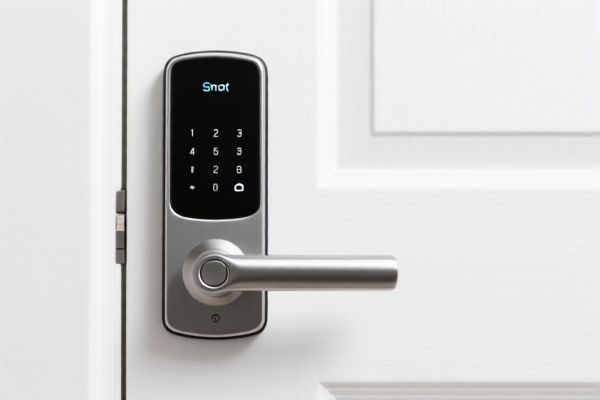
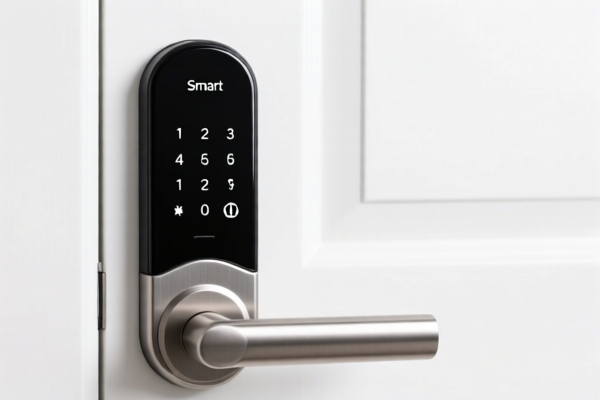
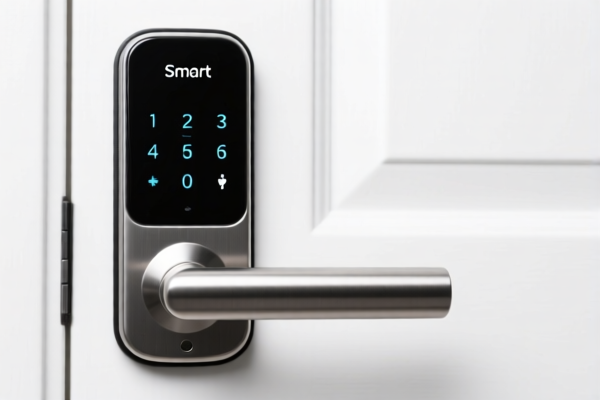
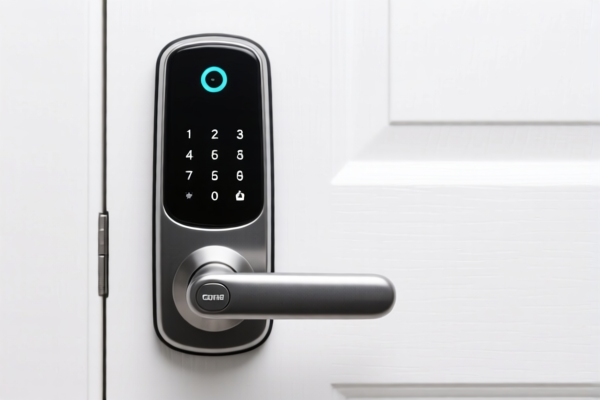
AI Analysis
🔐 Smart Time Lock (Intelligent Electronic Locks)
🌐 HS Code Reference & Customs Clearance Guide | 2026 Latest Tariff Analysis | Professional Clearance Strategy
📌 I. Product Definition & Classification: Do You Really Understand "Smart Time Locks"?
A Smart Time Lock is an advanced locking mechanism that combines mechanical security with electronic timing functions. It typically restricts access to specific time windows or locks automatically after a set duration. In international trade, these products are classified based on their material composition and functional form (specifically, whether they fall under the category of "padlocks" or "built-in/indoor-outdoor door locks").
The classification hinges on two key factors: 1. Form Factor: Is it a standalone portable lock (Padlock style) or a fixed fixture (Door Lock style)? 2. Material: Is it primarily made of base metals (common for durable outdoor locks)?
⚠️ Key Distinction Point:
- If the device functions as a portable padlock (with a shackle or hanging mechanism) regardless of electronic features →归类 to 8301.10 (Padlocks).
- If the device functions as a fixed lock body (for doors, cabinets, or buildings) →归类 to 8301.40 (Other locks).
📦 II. HS Code Classification Details (2026 Latest Tariff Authority Mapping)
| HS Code | Product Description | Application Scenario | Material/Type |
|---|---|---|---|
8301.10.60.80 |
Smart Time Lock Classified as Base Metal Padlock | Portable smart padlocks, luggage locks, locker locks with time functions | Base Metal |
8301.10.80.00 |
Inferred Base Metal Padlock | Generic smart locks inferred to be padlocks due to form factor | Base Metal |
8301.40.60.30 |
Smart Fingerprint/Time Lock for Indoor/Outdoor Doors | Electronic door locks with time-fingerprint combo, fixed installation | Metal/Metal Parts |
🔍 Key Reminder:
- "Smart" or "Electronic" features do not automatically change the HS code to Chapter 85 (Electrical Machinery) if the primary function is mechanical locking. The World Customs Organization (WCO) generally classifies electronic locks under Chapter 83 (Miscellaneous Manufactured Articles) if they are primarily locks. - Specifically, 8301.10 is for Padlocks, while 8301.40 is for Other Locks (like mortise locks, deadbolts, etc.). - Misclassification between "Padlock" and "Door Lock" can lead to different duty rates and regulatory scrutiny.
💰 III. 2026 Latest Tariff Rate Detailed Explanation (Including Additional Taxes)
✅ Applicable Country: United States (US)
✅ Origin: China (CN)
✅ Effective Date: Post-2025 Trade Policies (Including 301 & IEEPA Measures)
🎯 1. 8301.10.60.80 —— Base Metal Padlock (Smart Time Lock)
| Item | Content |
|---|---|
| Base Tariff Rate | 6.1% (General/Column 2) |
| Section 301 Additional Tariff | +7.5% (List 3/4a items) |
| Section 122 Tariff (IEEPA) | +10% (Specific measure for Chinese-origin goods) |
| Total Tariff Rate | 23.6% |
| Tax Calculation | CIF Value × 23.6% |
| De Minimis Eligibility | ❌ No (High-risk category for Section 301) |
| Legal Basis Path | HTSUS:8301.10.60.80 → USITC:301_Tariff → IEEPA:122_Section |
📌 Explanation:
- This code treats the smart lock as a padlock. - The 7.5% is the standard 301 tariff for many Chinese hardware items. - The 10% is an additional "122 Clause" tariff often applied to specific Chinese imports under emergency powers. - Total 23.6% is a significant cost burden.
🎯 2. 8301.10.80.00 —— Other Base Metal Padlocks
| Item | Content |
|---|---|
| Base Tariff Rate | 4.8% |
| Section 301 Additional Tariff | +7.5% |
| Section 122 Tariff (IEEPA) | +10% |
| Total Tariff Rate | 22.3% |
| Tax Calculation | CIF Value × 22.3% |
| De Minimis Eligibility | ❌ No |
| Legal Basis Path | HTSUS:8301.10.80.00 → USITC:301_Tariff → IEEPA:122_Section |
📌 Note:
- Slightly lower base rate (4.8%) compared to8301.10.60.80, but still carries the same additional tariffs. - Use this code if the specific sub-category60.80is not applicable due to minor design differences (e.g., no specific shackle shape fitting60.80).
🎯 3. 8301.40.60.30 —— Smart Fingerprint/Time Lock for Doors
| Item | Content |
|---|---|
| Base Tariff Rate | 5.7% |
| Section 301 Additional Tariff | +7.5% |
| Section 122 Tariff (IEEPA) | +10% |
| Total Tariff Rate | 23.2% |
| Tax Calculation | CIF Value × 23.2% |
| De Minimis Eligibility | ❌ No |
| Legal Basis Path | HTSUS:8301.40.60.30 → USITC:301_Tariff → IEEPA:122_Section |
📌 Note:
- This code is for fixed locks (e.g., mortise locks, deadbolts) that include smart features like fingerprint or time codes. - If your "Smart Time Lock" is installed into a door frame and is not a portable padlock, this is the correct classification. - Rate is 23.2%, which is competitive with padlock rates but depends on the "fixed" nature of the product.
🛠️ IV. Customs Clearance Practical Advice (Field Avoidance Guide)
✅ 1. Required Documentation Checklist (Missing Any = Delay)
| Document | Mandatory | Description |
|---|---|---|
| ✅ Product Specification Sheet | ✔️ | Must detail: Material (Base Metal), Power Source (Battery/Solar), Locking Mechanism (Time/Electronic/Fingerprint). |
| ✅ Structure Diagram | ✔️ | Show if it’s a Padlock (portable) or Door Lock (fixed). This determines 8301.10 vs 8301.40. |
| ✅ Clear Product Photos | ✔️ | Front, back, interior mechanism, and labeling (Model, Country of Origin). |
| ✅ Commercial Invoice | ✔️ | Clearly state: "Electronic Time Lock, Base Metal, Chinese Origin". Avoid vague terms like "Gadget". |
| ✅ Packing List | ✔️ | List contents precisely. If batteries are included, declare them separately for hazardous goods compliance. |
| ✅ FCC/CE Certification | ✔️ | Since it’s an electronic device emitting radio frequencies or containing circuits, FCC ID (US) is critical. |
✅ 2. Declaration Tips (Critical Rules)
🔥 “Define Form, Declare Metal, List Electronic Features, Avoid ‘Computer’ Codes!”
| Situation | Correct Declaration | Wrong Practice |
|---|---|---|
| Portable Lock with Shackle | HS 8301.10.xxxx (Padlock) |
Declare as 8301.40 (Door Lock) → Risk of reclassification |
| Fixed Door Lock Body | HS 8301.40.xxxx (Other Lock) |
Declare as 8301.10 (Padlock) → Risk of penalty |
| Electronic Component Only | HS 8537.10 (Control Panel) |
Declare as full Lock → Incorrect valuation |
| Name on Invoice | "Smart Time Padlock, Model XYZ" | "Smart Lock Device" (Too vague) |
✅ 3. Special Cases Handling
| Situation | Handling Advice |
|---|---|
| Batteries Included | If Lithium-ion, must comply with UN38.3 and IATA packing. Declare as "Contained in equipment". |
| OEM Custom Locks | Provide user manual and design specs. If it’s a standard lock with a custom keypad, still use standard HS. |
| Combined Fingerprint + Time | Use 8301.40.60.30 if fixed. The fingerprint module is seen as an add-on to the mechanical lock. |
| Origin Marking | Must clearly mark "Made in China" on the product and packaging. Failure leads to detention. |
🌍 V. Global Market Clearance Comparison (2026 Latest)
| Country/Region | Recommended HS Code | Tariff (China Origin) | Certification Required | Notes |
|---|---|---|---|---|
| 🇺🇸 USA | 8301.10.60.80 or 8301.40.60.30 |
22.3% - 23.6% (incl. 301+122) | FCC, CPSIA (if for children) | High Tariff! Prepare budget. |
| 🇨🇳 China | 8301.10 or 8301.40 |
0% - 6% | CCC (if applicable) | Low entry barrier. |
| 🇪🇺 EU | 8301.10 or 8301.40 |
0% - 1.7% | CE, RoHS, WEEE | No major anti-dumping duties on locks. |
| 🇬🇧 UK | 8301.10 or 8301.40 |
0% - 1.7% | UKCA, RoHS | Post-Brexit rules similar to EU. |
| 🇨🇦 Canada | 8301.10 or 8301.40 |
0% (CUSMA if Canadian origin) | IC (Industry Canada) | Check for NAFTA/CUSMA eligibility if assembled in US/Mexico. |
📌 Conclusion:
- The US is the most expensive market for Chinese smart locks due to the 23%+ total duty rate. - EU and UK are much more favorable (~0-2% duty), but CE/RoHS compliance is strict. - If you are exporting to the US, consider supply chain diversification (e.g., assembly in Vietnam/Mexico) to avoid Section 301 and 122 tariffs, provided substantial transformation rules are met.
📌 VI. Common Mistakes & Pitfalls Guide (Blood & Tears Lessons)
❌ Mistake 1: Classifying as 8537.10 (Control Panels) because it has an electronic keypad.
👉 Consequence: Customs may reject it because the primary purpose is locking, not control. Re-classification delays shipment.
❌ Mistake 2: Ignoring the Section 122 Tariff.
👉 Consequence: Underpaying duties by 10% leads to audits, penalties, and interest.
❌ Mistake 3: Declaring as "Gadget" or "Security Device".
👉 Consequence: Vague descriptions trigger manual inspection. If the inspector determines it’s a padlock but you declared a general code, you face fines.
❌ Mistake 4: Forgetting FCC ID on the invoice/package.
👉 Consequence: CBP will hold the shipment until an FCC ID is provided. Electronic locks are subject to RF emission rules.
✅ Correct Declaration Example:
"Base Metal Smart Time Padlock, Model ABC, Electronic Timer Function, FCC ID: XYZ123, Made in China, HS 8301.10.60.80"
🎯 VII. Conclusion: Precise Classification, Cost Control, Smooth Clearance!
🎯 Remember the Mantra:
🔹 "Padlock is 8301.10, Door Lock is 8301.40."
🔹 "Smart/Electronic doesn't mean Chapter 85."
🔹 "US Tariff is ~23%, Budget for it!"
🔹 "FCC ID is Mandatory for Electronic Locks!"
📌 Pro Tip:
If your smart lock is assembled in a country with a Free Trade Agreement (FTA) with the US (e.g., Mexico under CUSMA), you may be eligible for 0% tariffs. However, ensure substantial transformation occurs (not just simple assembly).
📣 Immediate Action:
📞 Consult your customs broker for an Advance Ruling on the exact HS code (
8301.10.60.80vs8301.40.60.30).
🚀 Secure your FCC ID before production.
💼 Calculate landed cost including the 23.6% US tariff to ensure profitability!
✨ Professional Clearance Starts with Accurate Classification!
💼 Every cent saved on tariffs is pure profit!
Customer Reviews
About HS Code Classification
The Harmonized System (HS) is an internationally standardized nomenclature developed by the World Customs Organization (WCO) to classify traded products. Over 200 countries use the HS system as the basis for customs tariffs, trade statistics, and import/export regulations.
Each HS code follows a hierarchical structure:
- Chapter (2 digits) — Broad category of goods (e.g., Chapter 84: Machinery and Mechanical Appliances)
- Heading (4 digits) — More specific grouping within the chapter
- Subheading (6 digits) — Internationally standardized breakdown, used by all WCO member countries
- National subdivisions (8-10 digits) — Country-specific extensions for further classification, such as US HTSUS 10-digit codes
Correct HS code classification is essential for smooth customs clearance, accurate duty payment, and compliance with trade regulations. Misclassification can lead to customs delays, overpayment of duties, or penalties.
When importing from CN to US, the applicable tariff rates may include:
- Most-Favored-Nation (MFN) rate — The standard duty rate applied to WTO members
- General rate — Applied to countries without trade agreements
- Trade remedy duties — Additional tariffs such as Section 301 (anti-dumping), Section 232 (national security), or countervailing duties
The information provided on this page is for reference purposes only. For official classification, please consult with your local customs authority or a licensed customs broker.