Smart Toilet Seat Set
CN → US| HS Code | Tariff Rate | Origin | Destination | Doc |
|---|---|---|---|---|
| 8509805080 | 14.2% | CN | US | Official Doc |
| 3922900000 | 41.3% | CN | US | Official Doc |
| 8509805095 | 14.2% | CN | US | Official Doc |
Product Images
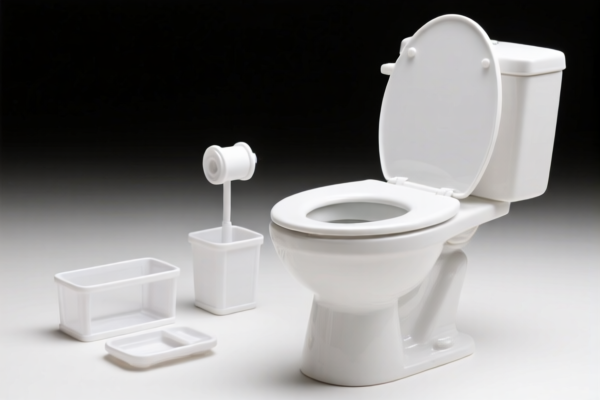
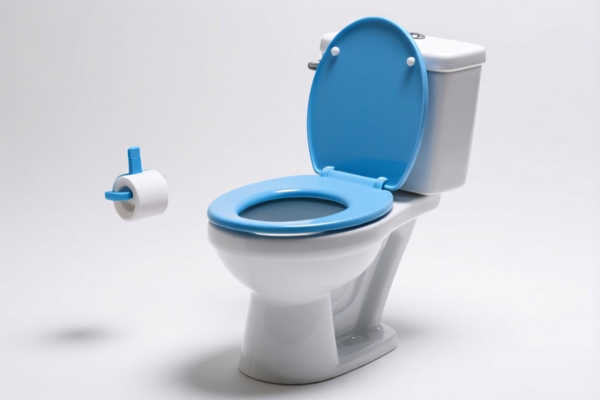
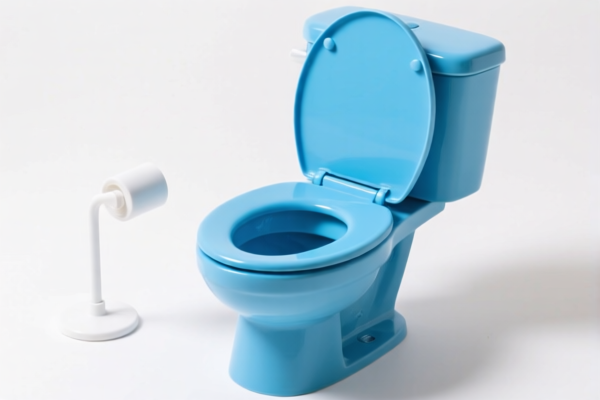
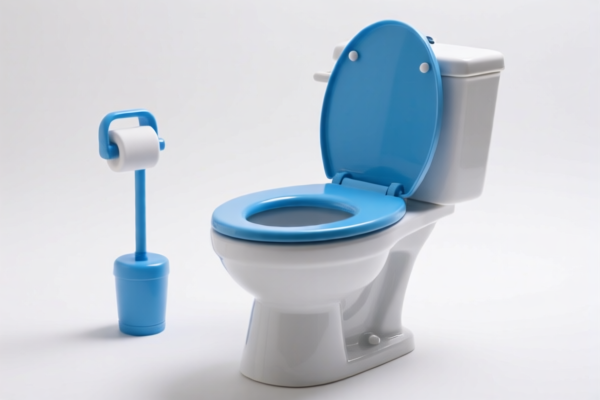
AI Analysis
🚽 Smart Toilet Seat Set (Intelligent Toilet Seats)
🌐 HS Code Reference & Customs Clearance Guide | 2026 Latest Tariff Analysis | Professional Strategy
📌 I. Product Definition & Classification: Do You Know What a "Smart Toilet Seat" Actually Is?
A Smart Toilet Seat Set is not merely a plastic lid; it is a sophisticated electromechanical appliance designed for hygiene and comfort. In international trade, the classification hinges on two critical factors: 1. Functionality: Does it have built-in electric motors/heaters (e.g., bidet functions, seat warming)? 2. Material & Form: Is it primarily a plastic sanitary fixture or an electrical appliance?
⚠️ Key Distinction Point:
- If it contains self-contained electric motors (for heating, spraying, drying) and is classified as a household appliance, it falls under Chapter 85 (Electrical Machinery).
- If it is viewed primarily as a sanitary ceramic/plastic fixture (seat cover) without strong emphasis on the electrical component's primary status, it may fall under Chapter 39 (Plastics) or other sanitary goods.
📦 II. HS Code Classification Details (Based on Provided Data)
Based on the input data provided, there are three possible classification paths. The choice depends heavily on how the importer and customs authorities view the "essential character" of the product.
| HS Code | Summary from Data | Tax Rate (Total) | Key Characteristics |
|---|---|---|---|
| 8509.80.50.80 | Electromechanical household appliances with self-contained motors. Matches "Smart Toilet Seat" as a home appliance, excluding vacuum cleaners. | 14.2% | Low Tariff. Focuses on the electric/motorized nature. |
| 3922.90.00.00 | Matches the category of "Toilet Seat Cover." Inferred material is plastic, consistent with sanitary ware usage. | 41.3% | High Tariff. Focuses on the plastic/sanitary nature. |
| 8509.80.50.95 | Based on use: Household electrical appliance. Fits "Other household electrical appliances" where no material conflict exists. | 14.2% | Low Tariff. Broad "Other" appliance category. |
🔍 Critical Analysis:
- Codes8509.80.50.80and8509.80.50.95offer a significantly lower total tax rate (14.2%) compared to3922.90.00.00(41.3%).
- The large difference (27.1%) highlights the importance of correct classification. Misclassifying a high-tech appliance as a simple plastic part can lead to massive overpayment or, if under-declared, severe penalties.
💰 III. Detailed Tariff Breakdown (2026 Rates)
✅ Applicable Country: United States (US)
✅ Origin: China (CN) (Inferred from "122 Clause" and specific tax details provided)
✅ Effective Date: As per data context
🎯 Option 1: Electromechanical Household Appliance (Codes 8509.80.50.80 & .95)
Recommended for most modern smart toilet seats.
| Item | Detail |
|---|---|
| HS Code | 8509.80.50.80 / 8509.80.50.95 |
| Basic Tariff | 4.2% |
| Section 301 Tariff | 0.0% |
| Section 122 Tariff | 10.0% |
| Total Tax Rate | 14.2% |
| Calculation | CIF Value × 14.2% |
| De Minimis Eligibility | ❌ Not Eligible (Typically for Section 301/122 goods) |
📌 Explanation:
- The 10% Section 122 tariff applies to certain goods from China.
- The Basic Tariff of 4.2% is standard for many household electrical machines.
- Crucially, these codes do not carry the heavy Section 301 (25%) tariff often associated with electrical components, making them highly competitive for cost-saving.
🎯 Option 2: Plastic Sanitary Fixture (Code 3922.90.00.00)
Risky and Expensive.
| Item | Detail |
|---|---|
| HS Code | 3922.90.00.00 |
| Basic Tariff | 6.3% |
| Section 301 Tariff | 25.0% |
| Section 122 Tariff | 10.0% |
| Total Tax Rate | 41.3% |
| Calculation | CIF Value × 41.3% |
| De Minimis Eligibility | ❌ Not Eligible |
📌 Explanation:
- This classification treats the smart seat as a plastic seat cover.
- It triggers the 25% Section 301 tariff (trade war tariffs) PLUS the 10% Section 122 tariff.
- Result: The tax burden is nearly 3x higher than the appliance classification. Avoid this unless explicitly required by customs for specific non-electric parts.
🛠️ IV. Customs Clearance Practical Advice (Real-World Pitfalls)
✅ 1. Documentation Checklist (Non-Negotiable)
| Document | Required? | Purpose |
|---|---|---|
| Product Specification Sheet | ✅ Yes | Must detail voltage, wattage, motor type, and functions (heating, washing). |
| Product Photos | ✅ Yes | Clear images showing power cord, control panel, and brand label. |
| Commercial Invoice | ✅ Yes | Must describe item as "Smart Toilet Seat" or "Electric Bidet Seat", NOT just "Toilet Seat Cover." |
| Material Composition | ✅ Yes | Clarify that while plastic is used, the essential character is electrical. |
| Certifications | ✅ Yes | UL, ETL, or FCC certificates (if applicable) prove it is an electrical appliance. |
✅ 2. Declaration Strategy
🔥 Golden Rule: "Electrical Character Dominates!"
| Scenario | Correct Declaration | Incorrect Declaration |
|---|---|---|
| Smart Seat with Wiring | 8509.80.50.80 (Smart Toilet Seat) |
3922.90.00.00 (Plastic Seat) |
| Seat Only (No Power) | 3922.90.00.00 (If truly non-electric) |
8509.80.50.80 (Misleading) |
| Bundle (Seat + Ceramic Base) | Declare seat separately as appliance; ceramic separately. | Bundle together as "Toilet Set" → Risk of audit. |
⚠️ Warning:
Do not simply label the product as "Toilet Seat Cover" on the invoice. Customs officers may default to 3922.90.00.00, triggering the 41.3% tariff. Always use "Electric/Bidet/Smart Toilet Seat" to align with 8509.
✅ 3. Special Handling
| Situation | Advice |
|---|---|
| OEM Custom Brands | Provide authorization letters to prevent "Counterfeit" flags, but ensure HS code is based on function. |
| Kit Packaging | If shipped with a separate power adapter, the entire set is still classified under 8509 if the seat is the principal item. |
| Audit Defense | Keep circuit diagrams or motor specs handy. If challenged, prove the "Motor/Heater" is the essential feature, not the plastic shell. |
🌍 V. Market Comparison (US Focus)
| Market | Recommended HS Code | Est. Total Tax | Notes |
|---|---|---|---|
| 🇺🇸 USA | 8509.80.50.80 |
14.2% | Best option. Avoids 25% Sec 301. |
| 🇺🇸 USA | 3922.90.00.00 |
41.3% | Avoid. High penalty rate. |
| 🇨🇳 China | 8509.80.50 |
~5-10% | Lower VAT/Duty, but focus is on US export. |
📌 VI. Common Errors & Pitfalls (Lessons Learned)
❌ Mistake 1: Using the term "Plastic Seat Cover" in documentation.
👉 Consequence: Customs classifies as 3922, applying 41.3% tax.
👉 Fix: Use "Electromechanical Smart Toilet Seat."
❌ Mistake 2: Ignoring Section 122.
👉 Consequence: Underpayment by 10%. Even if Sec 301 is avoided, Sec 122 may still apply.
👉 Fix: Ensure your broker checks for Section 122 applicability for the 8509 code.
❌ Mistake 3: Assuming all "Toilets" are sanitary ware.
👉 Consequence: Classification confusion.
👉 Fix: Distinguish between Ceramic Fixtures (Toilets/Sinks) and Electrical Appliances (Bidet Seats/Heated Seats).
🎯 VII. Conclusion: Optimize Your Clearance!
🎯 Key Takeaway:
✅ Always classify Smart Toilet Seats under
8509.80.50.xx(Electrical Appliance) to secure the 14.2% rate.
❌ Never classify them as3922.90.00.00(Plastic) unless they are non-electric replacements, or you will pay 41.3% tax.
📌 Pro Tip:
When submitting the commercial invoice, explicitly state:
"Electric Smart Toilet Seat with Heating & Bidet Functions, Model XYZ, UL Listed"
This description supports the 8509 classification and minimizes the risk of re-classification by customs.
✨ Professional clearance starts with precise classification!
💼 Save 27% in taxes by choosing the right HS Code!
Customer Reviews
About HS Code Classification
The Harmonized System (HS) is an internationally standardized nomenclature developed by the World Customs Organization (WCO) to classify traded products. Over 200 countries use the HS system as the basis for customs tariffs, trade statistics, and import/export regulations.
Each HS code follows a hierarchical structure:
- Chapter (2 digits) — Broad category of goods (e.g., Chapter 84: Machinery and Mechanical Appliances)
- Heading (4 digits) — More specific grouping within the chapter
- Subheading (6 digits) — Internationally standardized breakdown, used by all WCO member countries
- National subdivisions (8-10 digits) — Country-specific extensions for further classification, such as US HTSUS 10-digit codes
Correct HS code classification is essential for smooth customs clearance, accurate duty payment, and compliance with trade regulations. Misclassification can lead to customs delays, overpayment of duties, or penalties.
When importing from CN to US, the applicable tariff rates may include:
- Most-Favored-Nation (MFN) rate — The standard duty rate applied to WTO members
- General rate — Applied to countries without trade agreements
- Trade remedy duties — Additional tariffs such as Section 301 (anti-dumping), Section 232 (national security), or countervailing duties
The information provided on this page is for reference purposes only. For official classification, please consult with your local customs authority or a licensed customs broker.