Smartphone monopod
CN → US| HS Code | Tariff Rate | Origin | Destination | Doc |
|---|---|---|---|---|
| 9620001000 | 12.0% | CN | US | Official Doc |
| 9620007000 | 37.5% | CN | US | Official Doc |
| 8529109100 | 35.0% | CN | US | Official Doc |
| 8529909800 | 35.0% | CN | US | Official Doc |
| 9013809100 | 22.0% | CN | US | Official Doc |
Product Images
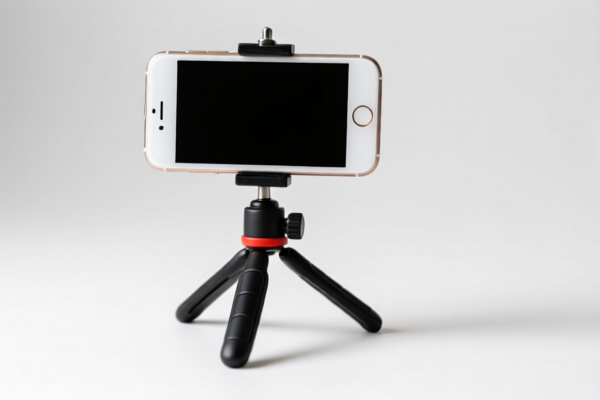
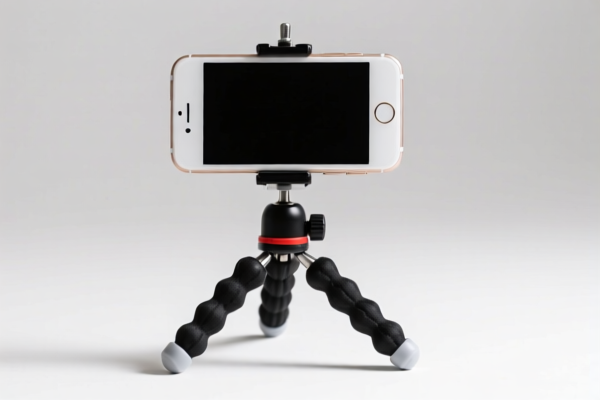
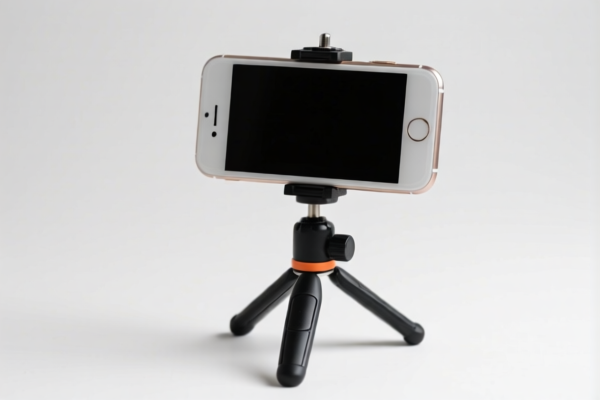
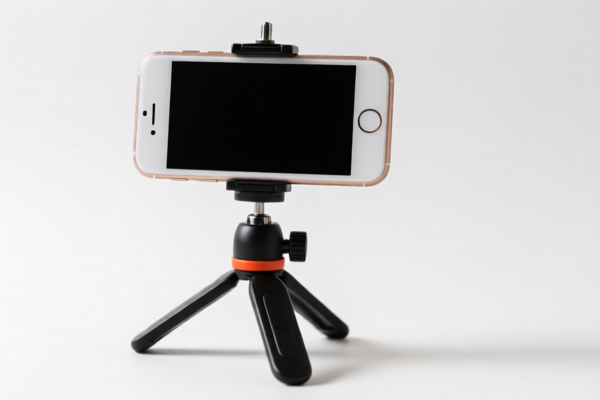
AI Analysis
📱 Smartphone Monopod (Selfie Stick) Classification & Customs Strategy
🌐 HS Code Reference & Customs Clearance Guide | 2026 Latest Tariff Analysis | Professional Clearance Strategy
📌 I. Product Definition & Classification: Do You Really Understand "Smartphone Monopods"?
A Smartphone Monopod (commonly known as a Selfie Stick) is an extendable support device designed to hold a smartphone at a distance for photography or video recording. In international trade, its classification is controversial and depends heavily on material composition, structural design, and perceived primary function.
The data indicates six potential HS Code classifications, ranging from low-tax "general support" items to high-tax "electronic accessories" or "aluminum goods." The key determinant is whether the customs authority views it as: 1. A mechanical support accessory (Tripod-like) → Lower tax. 2. An electronic device part (Antenna/Accessory) → Medium/High tax. 3. A metal/aluminum product → Higher tax (due to anti-dumping/Section 301).
⚠️ Key Distinction Point:
- If classified under 9620 (Tripods/Monopods): Tax is lowest (~12%).
- If classified under 8529 (Parts of electrical appliances/antennas): Tax is high (~35-40%).
- If classified under 9013 (Optical/Electronic instruments): Tax is medium (~22-40%).
📦 II. HS Code Classification Details (2026 Latest Tariff Authority Mapping)
Based on the provided data, here are the 6 specific HS Codes with their corresponding tax implications and logic.
| HS Code | Product Description | Classification Logic (Why this code?) | Total Tax Rate | Tax Breakdown |
|---|---|---|---|---|
9620.00.10.00 |
Monopod/Support Device (General) | Classified as a telescopic support product, fitting the characteristics of monopods, tripods, and similar supports. No specific material mentioned. | 12.0% | Base: 2.0% Add-on: 0.0% Section 122: 10% |
9620.00.70.00 |
Metal/Aluminum Monopod | Classified as a monopod/tripod, but inferred to be made of aluminum or metal. This triggers higher Section 301/anti-dumping duties. | 37.5% | Base: 2.5% Add-on: 25.0% Section 122: 10% |
8529.10.91.00 |
Antenna Support/Accessory | Classified as a support bracket/component related to antennas/reflectors. Uses the "catch-all" logic for antenna-related parts. | 35.0% | Base: 0.0% Add-on: 25.0% Section 122: 10% |
8529.90.98.00 |
Electronic Device Part (Generic) | Inferred as a support accessory for electronic devices, falling under "other parts/components" with no material conflict. | 35.0% | Base: 0.0% Add-on: 25.0% Section 122: 10% |
9013.80.91.00 |
Optical/Electronic Instrument | Classified as a usage tool for optical/electronic accessories, fitting the category of "other instruments/devices." | 22.0% | Base: 4.5% Add-on: 7.5% Section 122: 10% |
9013.80.40.00 |
Optical/Support Instrument (Specific) | Classified as an optical/support instrument. Inferred to be plastic or metal, fitting the "catch-all" category for optical devices. | 40.8% | Base: 5.8% Add-on: 25.0% Section 122: 10% |
🔍 Critical Insight:
- The lowest tax rate (12%) is under9620.00.10.00, assuming the product is purely mechanical and not explicitly metal/aluminum in a way that triggers additional duties.
- The highest tax rate (40.8%) is under9013.80.40.00, which adds a high base duty (5.8%) plus 25% add-on.
- Section 122 Tariff (10%) appears to be a consistent anti-dumping/countervailing duty applicable to most Chinese-origin goods in this category.
- 25% Add-on (likely Section 301) applies to most codes except9620.00.10.00.
💰 III. 2026 Latest Tariff Rate Breakdown (Including Add-ons & Policy Surcharges)
✅ Applicable Country: USA (US)
✅ Country of Origin: China (CN)
✅ Effective Time: 2025-2026 (Current Tariff Structure)
🎯 1. 9620.00.10.00 — The "Optimal" Classification (Lowest Tax)
| Item | Details |
|---|---|
| Base Tariff | 2.0% (General) |
| Add-on Tariff | 0.0% (No Section 301 applied here in this specific entry) |
| Section 122 Tariff | 10.0% (Anti-dumping/Special Measure) |
| Total Rate | 12.0% |
| Calculation | CIF Value × 12% |
| De Minimis Exemption | ❌ Not Eligible (Likely due to Section 122 or specific anti-dumping rules) |
| Legal Path | USITC:9620.00.10.00 → FOOTNOTE:Section122 |
📌 Explanation:
- This code treats the selfie stick as a general-purpose support device, avoiding the "electronic part" or "metal product" penalties.
- Zero Section 301 makes this the most cost-effective classification if the product can be legitimately argued as a "monopod" without electronic components.
🎯 2. 9620.00.70.00 — The "Metal/Aluminum" Risk
| Item | Details |
|---|---|
| Base Tariff | 2.5% |
| Add-on Tariff | 25.0% (Section 301) |
| Section 122 Tariff | 10.0% |
| Total Rate | 37.5% |
| Calculation | CIF Value × 37.5% |
| De Minimis Exemption | ❌ Not Eligible |
📌 Warning:
- If the product is made of aluminum or explicitly marketed as "Aluminum Selfie Stick," customs may force this classification.
- The 25% add-on is the primary driver of cost increase.
🎯 3. 8529.10.91.00 & 8529.90.98.00 — The "Electronic Part" Trap
| Item | Details |
|---|---|
| Base Tariff | 0.0% |
| Add-on Tariff | 25.0% (Section 301) |
| Section 122 Tariff | 10.0% |
| Total Rate | 35.0% |
| Calculation | CIF Value × 35.0% |
📌 Risk:
- Classifying as an "antenna part" or "electronic accessory" invites scrutiny.
- Even with 0% base duty, the 35% total is significantly higher than the 12% option.
🎯 4. 9013.80.91.00 & 9013.80.40.00 — The "Optical" Ambiguity
| Item | Details |
|---|---|
| Base Tariff | 4.5% (91) or 5.8% (40) |
| Add-on Tariff | 7.5% (91) or 25.0% (40) |
| Section 122 Tariff | 10.0% |
| Total Rate | 22.0% (91) or 40.8% (40) |
📌 Observation:
-9013.80.91.00(22%) is a middle-ground option if the stick is considered part of an "optical instrument" but doesn't trigger the full 25% Section 301.
-9013.80.40.00(40.8%) is the worst-case scenario due to high base + full add-on.
🛠️ IV. Customs Clearance Practical Advice (Battle-Tested Pitfall Guide)
✅ 1. Documentation Checklist (Non-Negotiable)
| Document | Required? | Notes |
|---|---|---|
| ✅ Product Description | ✔️ | Must clearly state: "Monopod for Smartphone, Non-Electronic, Telescopic Support" |
| ✅ Material Declaration | ✔️ | If plastic/carbon fiber, emphasize NO aluminum. If aluminum, prepare for 37.5%. |
| ✅ Product Photos | ✔️ | Show no Bluetooth, no camera controls. If it has a remote, clarify it’s a simple mechanical or basic Bluetooth accessory. |
| ✅ Bill of Lading | ✔️ | Consistent with invoice. |
| ✅ Commercial Invoice | ✔️ | Value must be accurate. Undervaluation triggers audits. |
| ✅ FCC Certification | ⚠️ Optional | If the stick has a Bluetooth remote, FCC certification is required. If purely mechanical, not needed. |
✅ 2. Declaration Strategy (Key Mantras)
🔥 "Monopod Not Antenna, Aluminum Not Plastic, Name Precise, Tax Low!"
| Scenario | Recommended HS Code | Why? |
|---|---|---|
| Plastic/Carbon Fiber Stick | 9620.00.10.00 |
Lowest tax (12%). Avoids Section 301. |
| Aluminum Stick | 9620.00.70.00 |
Inevitable 37.5% if material is metal. |
| Stick with Bluetooth Remote | 8529.90.98.00 or 8529.10.91.00 |
Electronic component triggers "Part of Electrical Appliance" classification (35%). |
| Stick as Part of Camera Kit | 9013.80.91.00 |
Middle ground (22%) if argued as optical instrument accessory. |
✅ 3. Special Case Handling
| Situation | Handling Advice |
|---|---|
| OEM/White Label | Ensure no brand-specific electronic features are highlighted. Keep description generic: "Smartphone Support Stand." |
| Mixed Packaging | If shipping sticks + tripods + mounts, declare all under 9620.00.10.00 if possible. Do not split. |
| Bluetooth Remote Included | If the remote is integral, customs may classify the entire set as an electronic accessory (35%). Consider shipping remotely separately if feasible. |
| Section 122 Impact | Note that Section 122 (10%) applies to ALL codes in the data. This is a fixed cost for Chinese-origin goods. |
🌍 V. Global Market Comparison (2026)
| Country/Region | Recommended HS Code | Estimated Tax (China Origin) | Notes |
|---|---|---|---|
| 🇺🇸 USA | 9620.00.10.00 |
12.0% (Optimal) | Avoid 8529 (35%) and 9620.70 (37.5%). |
| 🇨🇳 China | 9620.00.10.00 |
~10-15% | Domestic duty varies; not critical for export. |
| 🇪🇺 EU | 9620.00.10.00 |
0-2% | No Section 301. CE Marking required. |
| 🇬🇧 UK | 9620.00.10.00 |
0-2% | Post-Brexit rules apply. UKCA Marking. |
| 🇯🇵 Japan | 9620.00.10.00 |
1.5% | Low tariff. No Section 301. |
📌 Conclusion:
- The USA is the most expensive market due to Section 301 (25%) and Section 122 (10%).
- Classification under9620.00.10.00is critical to save ~25% in tariffs compared to electronic or metal classifications.
📌 VI. Common Errors & Pitfalls (Blood Lessons)
❌ Error 1: Declaring an Aluminum Stick as 9620.00.10.00
👉 Consequence: Customs reclassifies to 9620.00.70.00 → Tax jumps from 12% to 37.5% + penalties!
❌ Error 2: Including a Bluetooth Remote without declaring electronic nature
👉 Consequence: Regarded as undeclared electronic part → Reclassified under 8529 → 35% tax + fines.
❌ Error 3: Using "Selfie Stick" as a generic term without material specification
👉 Consequence: Customs assumes Aluminum (highest duty) or Electronics → 35-40% tax.
✅ Correct Approach:
"Monopod for Smartphone, Telescopic, Plastic Body, Mechanical Lock, No Electronic Components, Model XYZ"
🎯 VII. Conclusion: Precise Classification Saves Money!
🎯 Remember the Mantra:
🔹 "Plastic/Mechanical = 9620.10 (12%)
🔹 Aluminum = 9620.70 (37.5%)
🔹 Electronic/Bluetooth = 8529 (35%)
🔹 Always pay Section 122 (10%)!"
📌 Pro Tip:
- If your product is plastic or carbon fiber, insist on 9620.00.10.00.
- If it’s aluminum, budget for 37.5%.
- If it has Bluetooth, prepare for 35% and FCC compliance.
- Apply for a Pre-Ruling with US Customs if the product is complex.
📣 Action Item:
📞 Contact a licensed customs broker.
📸 Provide high-resolution photos and material specs.
📝 Declare "Monopod, Non-Electronic" to target the 12% rate.
✨ Professional Clearance Starts with Accurate Classification!
💼 Every percentage point saved is pure profit!
Customer Reviews
About HS Code Classification
The Harmonized System (HS) is an internationally standardized nomenclature developed by the World Customs Organization (WCO) to classify traded products. Over 200 countries use the HS system as the basis for customs tariffs, trade statistics, and import/export regulations.
Each HS code follows a hierarchical structure:
- Chapter (2 digits) — Broad category of goods (e.g., Chapter 84: Machinery and Mechanical Appliances)
- Heading (4 digits) — More specific grouping within the chapter
- Subheading (6 digits) — Internationally standardized breakdown, used by all WCO member countries
- National subdivisions (8-10 digits) — Country-specific extensions for further classification, such as US HTSUS 10-digit codes
Correct HS code classification is essential for smooth customs clearance, accurate duty payment, and compliance with trade regulations. Misclassification can lead to customs delays, overpayment of duties, or penalties.
When importing from CN to US, the applicable tariff rates may include:
- Most-Favored-Nation (MFN) rate — The standard duty rate applied to WTO members
- General rate — Applied to countries without trade agreements
- Trade remedy duties — Additional tariffs such as Section 301 (anti-dumping), Section 232 (national security), or countervailing duties
The information provided on this page is for reference purposes only. For official classification, please consult with your local customs authority or a licensed customs broker.