Snack Bowl
CN → US| HS Code | Tariff Rate | Origin | Destination | Doc |
|---|---|---|---|---|
| 6911103510 | 43.5% | CN | US | Official Doc |
| 6911103710 | 25.5% | CN | US | Official Doc |
| 7013492090 | 40.0% | CN | US | Official Doc |
| 7013495090 | 25.0% | CN | US | Official Doc |
| 3924102000 | 24.0% | CN | US | Official Doc |
| 3924104000 | 13.4% | CN | US | Official Doc |
Product Images
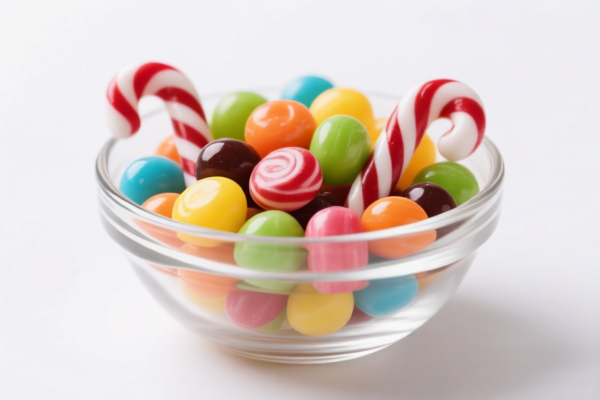


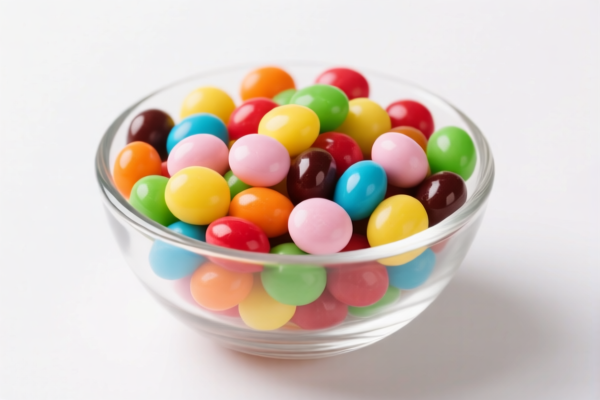
AI Analysis
🥣 Snack Bowl (Ceramic, Plastic, and Glass)
🌐 HS Code Reference & Customs Clearance Guide | 2026 Latest Tariff Analysis | Professional Level Strategy
📌 I. Product Definition: What is a "Snack Bowl"?
A "Snack Bowl" is a broad term in international trade. To determine the correct HS Code and Tax Rate, you must define the material and value. In the provided dataset, snack bowls fall under three main material categories: Porcelain/China, Plastic, and Glass.
⚠️ Critical Distinction:
- Material: Is it ceramic, plastic, or glass? (Determines the Chapter)
- Set vs. Single: Is it sold in a set? If so, what is the aggregate value of the articles in the set?
- Size: Are the items (plates/cups) over or under specific dimensions (27.9 cm / 22.9 cm)?
📦 II. HS Code Classification Details (Based on Provided Data)
| HS Code | Material | Product Description & Conditions | Tax Rate (Base + Section 301) |
|---|---|---|---|
6911.10.35.10 |
Porcelain/China | Set: Aggregate value ≤ $56. Items include plates (≤27.9cm), teacups, mugs, soup/fruit/cereal bowls (≤22.9cm). | 33.5% (26.0% Base + 7.5% Addl.) |
6911.10.37.10 |
Porcelain/China | Set: Aggregate value > $56 but ≤ $200. Same item constraints as above. | 15.5% (8.0% Base + 7.5% Addl.) |
3924.10.20.00 |
Plastics | Tableware: Plates, cups, saucers, soup bowls, cereal bowls, sugar bowls, creamers, gravy boats, serving dishes, platters. | 14.0% (6.5% Base + 7.5% Addl.) |
3924.10.40.00 |
Plastics | Other Tableware/Kitchenware: Not specifically listed as plates/cups above (e.g., unique shapes, non-standard sets). | 3.4% (3.4% Base + 0.0% Addl.) |
7013.49.20.90 |
Glass | Table/Kitchen Glassware: Valued ≤ $3 each. Other. | 30.0% (22.5% Base + 7.5% Addl.) |
7013.49.50.90 |
Glass | Table/Kitchen Glassware: Valued > $3 but ≤ $5 each. Other. | 15.0% (15.0% Base + 0.0% Addl.) |
🔍 Key Insight:
- Ceramic Sets are heavily taxed if cheap (≤$56) due to high base tariffs.
- Plastic "Other" Items have the lowest tax burden (3.4%) because they often fall outside specific "plate/cup" definitions or lack additional duties.
- Glass tax depends strictly on unit price per item ($3 and $5 thresholds).
💰 III. 2026 Tariff Rate Breakdown (In-Depth Analysis)
✅ Applicable Market: United States (US)
✅ Origin: Typically China (CN) - Assumption based on Section 301 tariffs included in DATA
✅ Note: The "Additional Tariff" (加征关税) listed is 7.5% for most categories, consistent with U.S. Trade Act Section 301 tariffs on Chinese goods.
🎯 1. Ceramic/Porcelain Snack Bowls (6911.10)
| HS Code | Condition | Base Rate | Addl. Rate | Total Rate |
|---|---|---|---|---|
6911.10.35.10 |
Set Value ≤ $56 | 26.0% | 7.5% | 33.5% |
6911.10.37.10 |
Set Value $56–$200 | 8.0% | 7.5% | 15.5% |
📌 Explanation:
- Why is the ≤$56 set taxed so much (33.5%)? U.S. customs view low-value ceramic sets as high-volume, low-margin imports, hence the higher base tariff (26%) to protect domestic manufacturers.
- Strategy: If your set's total invoice value is just under $56, you pay 33.5%. If it is $56.01, you drop to 15.5%. This creates a "Tariff Cliff".
- Action: Structure your sets to ensure the aggregate value exceeds $56 if possible, or break them into smaller non-set shipments if individual item duties allow (check if individual items are taxed differently).
🎯 2. Plastic Snack Bowls (3924.10)
| HS Code | Description | Base Rate | Addl. Rate | Total Rate |
|---|---|---|---|---|
3924.10.20.00 |
Standard Tableware (Plates/Cups/Bowls) | 6.5% | 7.5% | 14.0% |
3924.10.40.00 |
Other Plastic Tableware | 3.4% | 0.0% | 3.4% |
📌 Explanation:
- Huge Tax Difference:3924.10.40.00is 82% cheaper than3924.10.20.00.
- Definition of "Other": This category often catches items that are not standard plates, cups, or saucers. For example, uniquely shaped snack bowls, non-stackable designs, or items marketed as "kitchen accessories" rather than "tableware" might qualify here.
- Strategy: Ensure your product description and function do not strictly fall under "plates, cups, saucers." Use terms like "snack container," "dip bowl," or "serving vessel" if applicable, and ensure they don't look exactly like standard dinnerware.
🎯 3. Glass Snack Bowls (7013.49)
| HS Code | Valuation Threshold | Base Rate | Addl. Rate | Total Rate |
|---|---|---|---|---|
7013.49.20.90 |
≤ $3 each | 22.5% | 7.5% | 30.0% |
7013.49.50.90 |
> $3 but ≤ $5 each | 15.0% | 0.0% | 15.0% |
📌 Explanation:
- Value Matters: Glass is taxed based on the unit value per piece.
- Tariff Cliff:
- If your bowl costs $2.99 → 30.0% tax.
- If your bowl costs $3.01 → 15.0% tax.
- Strategy: Price your glass bowls at just over $3.00 per unit to drop the tax rate by half. Avoid pricing between $3.00 and $3.99 if you can justify a price of $4.00+ (which still falls in the 15% bucket up to $5).
🛠️ IV. Customs Clearance Practical Advice (Real-World Pitfalls)
✅ 1. Documentation Checklist (Must-Have)
| Document | Requirement | Why It Matters |
|---|---|---|
| Commercial Invoice | Must specify Material (Porcelain, Plastic, Glass) and Unit Price | Determines HS Code and Tax Rate (especially for Glass ≤$3/$5 thresholds). |
| Product Photos | Show shape, usage, and branding | Helps CBP distinguish between "Tableware" (standard) and "Other" (plastic) or "Toilet Articles." |
| Set Declaration | If sold as a set, list individual item values and total set value | Crucial for Ceramic sets to prove if value is >$56 or ≤$56. |
| Dimensions | Max dimension of plates/bowls (cm) | Required for Ceramic HS Code 6911.10 (must be ≤27.9cm for plates, ≤22.9cm for bowls). |
✅ 2. Classification Strategy (Key Tips)
🔥 "Know Your Material, Know Your Price!"
| Scenario | Recommended Action | Risk |
|---|---|---|
| Plastic Snack Bowl | Try to classify under 3924.10.40.00 (Other) |
If CBP deems it a "bowl/cup," it falls under 3924.10.20.00 (14%). Provide functional descriptions emphasizing non-standard use. |
| Ceramic Set | Ensure Set Value > $56 | If ≤$56, tax is 33.5%. If >$56, tax drops to 15.5%. Adjust packaging or include higher-value items (e.g., a teapot) to push value over $56. |
| Glass Bowl | Price at $3.01+ per unit | Avoid $2.99 (30% tax). $3.01+ drops to 15% tax. Ensure invoice clearly states unit price >$3. |
✅ 3. Common Mistakes to Avoid
| Mistake | Consequence | Solution |
|---|---|---|
| Mislabeling Material | e.g., Calling plastic "ceramic" | CBP will reclassify and back-taxes + penalties. Use accurate material names. |
| Ignoring Unit Price for Glass | Under-declaring price to $2.90 | CBP may assess higher value based on market price → 30% tax + penalties. |
| Failing to Declare Set Value | Ceramic set valued at $55 instead of $56 | 33.5% tax instead of 15.5%. Big difference! |
| Generic Description | "Household Items" | CBP may assign the highest default tariff. Use specific descriptions: "Plastic Snack Bowl, 6-inch." |
🌍 V. Global Market Comparison (2026 Outlook)
| Market | Recommended HS Code | Est. Tariff (China Origin) | Key Requirement |
|---|---|---|---|
| 🇺🇸 USA | Depends on Material/Value | 3.4% – 33.5% (See DATA) | Precise value declaration; Section 301 applies. |
| 🇨🇳 China | Same HS Codes | Low/Zero (FTA if applicable) | No additional duties. |
| 🇪🇺 EU | Similar HS Codes | 0% – 12% | No Section 301. Focus on CE marking. |
| 🇬🇧 UK | Similar HS Codes | 0% – 12% | Post-Brexit rules. No US-style add-on tariffs. |
📌 Conclusion:
The U.S. market is the most complex due to Section 301 tariffs and value-based cliffs.
- Plastic is the safest bet for low tax (3.4%) if classified as "Other."
- Glass requires strict pricing control (> $3.00).
- Ceramic requires strategic set pricing (> $56).
📌 VI. Final Checklist for Importers
- Identify Material: Ceramic, Plastic, or Glass?
- Calculate Value:
- Ceramic: Is Set Value > $56?
- Glass: Is Unit Price > $3.00?
- Plastic: Can it be classified as "Other" (3.4%)?
- Prepare Documentation: Invoice with precise unit prices, dimensions, and material breakdown.
- Consult a Broker: For plastic "other" classification or ceramic set structuring, get a Pre-Ruling if possible.
🎯 VII. Pro Tip: Optimize Your Tax Burden
💡 Plastic Strategy: If your snack bowl is not a standard "cup/plate," argue for
3924.10.40.00(3.4%). Provide images showing it is a "snack container" not a "dinner bowl."💡 Glass Strategy: Price every bowl at $3.01 minimum. Avoid $2.99 like the plague (30% tax).
💡 Ceramic Strategy: Add a small, inexpensive item (e.g., a spoon or napkin holder) to push a $54 set to $56.01, reducing tax from 33.5% to 15.5%.
📣 Immediate Action:
📞 Verify your product’s unit price and material with your supplier.
📄 Draft an invoice that clearly states "Unit Value > $3" for glass or "Set Value > $56" for ceramics.
🚀 Secure the lowest possible tariff today!
✨ Smart Classification = Higher Margins.
💼 Don't let avoidable tariffs eat your profits!
Customer Reviews
About HS Code Classification
The Harmonized System (HS) is an internationally standardized nomenclature developed by the World Customs Organization (WCO) to classify traded products. Over 200 countries use the HS system as the basis for customs tariffs, trade statistics, and import/export regulations.
Each HS code follows a hierarchical structure:
- Chapter (2 digits) — Broad category of goods (e.g., Chapter 84: Machinery and Mechanical Appliances)
- Heading (4 digits) — More specific grouping within the chapter
- Subheading (6 digits) — Internationally standardized breakdown, used by all WCO member countries
- National subdivisions (8-10 digits) — Country-specific extensions for further classification, such as US HTSUS 10-digit codes
Correct HS code classification is essential for smooth customs clearance, accurate duty payment, and compliance with trade regulations. Misclassification can lead to customs delays, overpayment of duties, or penalties.
When importing from CN to US, the applicable tariff rates may include:
- Most-Favored-Nation (MFN) rate — The standard duty rate applied to WTO members
- General rate — Applied to countries without trade agreements
- Trade remedy duties — Additional tariffs such as Section 301 (anti-dumping), Section 232 (national security), or countervailing duties
The information provided on this page is for reference purposes only. For official classification, please consult with your local customs authority or a licensed customs broker.