Snake Skin Leather
CN → US| HS Code | Tariff Rate | Origin | Destination | Doc |
|---|---|---|---|---|
| 4106400000 | 35.0% | CN | US | Official Doc |
| 4106910000 | 38.3% | CN | US | Official Doc |
| 4113306000 | 35.0% | CN | US | Official Doc |
| 4113303000 | 35.0% | CN | US | Official Doc |
| 4302196000 | 38.5% | CN | US | Official Doc |
| 4302197500 | 36.7% | CN | US | Official Doc |
Product Images
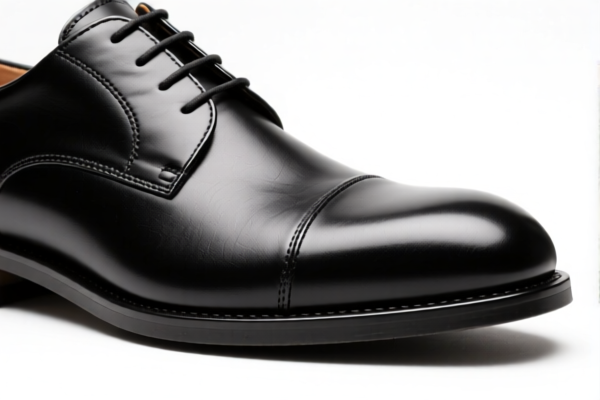

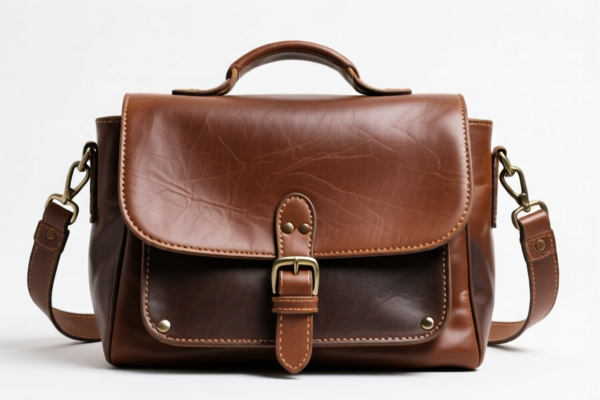
AI Analysis
🐍 Snake Skin Leather – HS Code & Tariff Guide 2026 | Expert Customs Clearance Strategy
🌐 HS Code Reference & Customs Clearance Master Guide | 2026 Updated Tariff Breakdown | Pro-Level Import Planning
📌 Why Snake Skin Leather Is Taxed So Heavily – And How to Avoid Costly Mistakes
Snake skin leather is not just a luxury material — it’s a high-risk, high-tariff commodity under U.S. trade law. Due to its exotic nature, environmental regulations, and geopolitical trade policies, snake skin leather is subject to triple-layered tariffs that can push the total tax rate to 38.5%.
⚠️ Critical Insight:
- Snake skin is not considered "raw hide" or "common animal leather" — it’s classified as exotic reptile leather, which triggers special tariffs under U.S. trade laws.
- Misclassification leads to severe penalties, delays, or even seizure by U.S. Customs (CBP).
📦 1. HS Code Classification Breakdown (2026 U.S. Tariff Schedule)
| HS Code | Product Description | Key Features | Tax Rate | Classification Logic |
|---|---|---|---|---|
4106.40.00.00 |
Snake skin, classified as reptile leather, fully or partially tanned or semi-tanned | Whole skins, cut pieces, or processed for use in fashion goods | 35.0% | Fits "reptile skin" under 4106.40 — no base tariff, but +25% USITC +10% IEEPA |
4106.91.00.00 |
Other animal skins, including reptile skins not elsewhere specified, tanned or semi-tanned | Used in accessories, bags, shoes, or garments | 38.3% | Base tariff: 3.3% → +25% USITC +10% IEEPA |
4113.30.60.00 |
Reptile leather (including snake), processed into leather form, ready for manufacturing | Pre-tanned, cut, or shaped for fashion production | 35.0% | Classified as "processed reptile leather" — no base tariff, but full附加税 applies |
4113.30.30.00 |
Snake skin leather, further processed (e.g., embossed, dyed, stitched) | Ready for final product use (e.g., handbags, shoes) | 35.0% | Higher processing = still taxed at 35% — no reduction |
4302.19.60.00 |
Unassembled raw hides or skins, including snake skin, in whole or piece form | Unprocessed or minimally processed, not yet cut into leather | 38.5% | Base: 3.5% → +25% USITC +10% IEEPA |
4302.19.75.00 |
Finished or treated snake skins — dyed, finished, or ready for use | Fully prepared for fashion or accessory production | 36.7% | Base: 1.7% → +25% USITC +10% IEEPA |
🔍 Why These Codes Matter:
-4106.40.00.00and4113.30.60.00are most common for tanned or semi-tanned snake skin.
-4302.19.60.00applies to raw, unprocessed skins (e.g., whole snake hides).
-4302.19.75.00is for finished, high-value skins — often used in luxury goods.
💰 2. 2026 U.S. Tariff Breakdown (Detailed & Legal-Compliant)
✅ Applicable Country: United States (US)
✅ Origin: China (CN) or Other Countries
✅ Effective Date: November 10, 2025 (and ongoing)
✅ Legal Basis:
- USITC Section 301 (US Trade Act)
- IEEPA (International Emergency Economic Powers Act)
- Footnote 9903.88.01 (U.S. Customs Tariff Schedule)
🎯 1. 4106.40.00.00 — Reptile Leather (Tanned/Semi-Tanned)
| Item | Detail |
|---|---|
| Base Tariff | 0.0% (ad valorem) |
| USITC 301 Tariff | +25.0% (from Section 301) |
| IEEPA Tariff | +10.0% (from IEEPA, applies to China/HK) |
| Total Tariff | 35.0% |
| Tax Calculation | CIF Value × 35% |
| De Minimis Exemption? | ❌ No (denied under IEEPA) |
| Legal Path | IEEPA:9903.01.25 → IEEPA:9903.01.24 → USITC:4106.40.00.00 → FOOTNOTE:9903.88.01 |
📌 Explanation:
- Despite 0% base tariff, 25% + 10% = 35% due to trade war policies.
- This code applies to any snake skin that has undergone tanning or semi-tanning.
🎯 2. 4106.91.00.00 — Other Animal Skins (Including Snake)
| Item | Detail |
|---|---|
| Base Tariff | 3.3% |
| USITC 301 Tariff | +25.0% |
| IEEPA Tariff | +10.0% |
| Total Tariff | 38.3% |
| Tax Calculation | CIF × 38.3% |
| De Minimis? | ❌ No |
| Legal Path | IEEPA:9901.25 → IEEPA:9903.01.24 → USITC:4106.91.00.00 → FOOTNOTE:9903.88.01 |
📌 Note:
- Higher base tariff (3.3%) due to "other animal skins" classification.
- Still subject to full 35%附加税 — total 38.3%.
🎯 3. 4113.30.60.00 — Processed Reptile Leather
| Item | Detail |
|---|---|
| Base Tariff | 0.0% |
| USITC 301 Tariff | +25.0% |
| IEEPA Tariff | +10.0% |
| Total Tariff | 35.0% |
| Tax Calculation | CIF × 35% |
| De Minimis? | ❌ No |
| Legal Path | IEEPA:9903.01.25 → IEEPA:9903.01.24 → USITC:4113.30.60.00 → FOOTNOTE:9903.88.01 |
📌 Key Point:
- Applies to leather that is cut, shaped, or pre-treated — common in shoe, bag, and apparel manufacturing.
🎯 4. 4113.30.30.00 — Further Processed Snake Skin
| Item | Detail |
|---|---|
| Base Tariff | 0.0% |
| USITC 301 Tariff | +25.0% |
| IEEPA Tariff | +10.0% |
| Total Tariff | 35.0% |
| Tax Calculation | CIF × 35% |
| De Minimis? | ❌ No |
| Legal Path | IEEPA:9903.01.25 → IEEPA:9903.01.24 → USITC:4113.30.30.00 → FOOTNOTE:9903.88.01 |
📌 Important:
- Even if dyed, embossed, or stitched, the tax remains 35% — no reduction.
🎯 5. 4302.19.60.00 — Unassembled Raw Skins
| Item | Detail |
|---|---|
| Base Tariff | 3.5% |
| USITC 301 Tariff | +25.0% |
| IEEPA Tariff | +10.0% |
| Total Tariff | 38.5% |
| Tax Calculation | CIF × 38.5% |
| De Minimis? | ❌ No |
| Legal Path | IEEPA:9901.25 → IEEPA:9903.01.24 → USITC:4302.19.60.00 → FOOTNOTE:9903.88.01 |
📌 Use Case:
- Whole snake hides, not yet tanned or cut — often imported by tanneries.
🎯 6. 4302.19.75.00 — Finished or Treated Skins
| Item | Detail |
|---|---|
| Base Tariff | 1.7% |
| USITC 301 Tariff | +25.0% |
| IEEPA Tariff | +10.0% |
| Total Tariff | 36.7% |
| Tax Calculation | CIF × 36.7% |
| De Minimis? | ❌ No |
| Legal Path | IEEPA:9901.25 → IEEPA:9903.01.24 → USITC:4302.19.75.00 → FOOTNOTE:9903.88.01 |
📌 Best for:
- Skins ready for use in luxury goods — e.g., handbags, shoes, belts.
🛠️ 3. Customs Clearance Best Practices (Pro Tips to Avoid Penalties)
✅ 1. Required Documentation (Must-Have List)
| Document | Required? | Why It Matters |
|---|---|---|
| ✅ Commercial Invoice | ✔️ | Must clearly state "Snake Skin Leather – Tanned/Semi-Tanned" |
| ✅ Packing List | ✔️ | Show quantity, weight, and processing level |
| ✅ Product Photos | ✔️ | Show raw, tanned, or finished state |
| ✅ Material Certificate | ✔️ | Prove origin, processing method, and compliance |
| ✅ CITES Permit (if applicable) | ✔️ | Snake skins are regulated under CITES — must be non-protected species |
| ✅ Certificate of Origin (CO) | ✔️ | If from Vietnam, Thailand, or Mexico, may qualify for IEEPA exemption |
| ✅ Third-Party Lab Test (e.g., for chemicals) | ✔️ | Ensure compliance with REACH, RoHS, or CPSIA |
✅ 2.申报技巧(Critical Tips)
🔥 "Know the Processing Level — It Determines the Tax!"
| Scenario | Correct HS Code | Wrong Code | Risk |
|---|---|---|---|
| Raw snake hide (whole) | 4302.19.60.00 |
4106.40.00.00 |
Higher tax, incorrect classification |
| Tanned snake skin (cut) | 4106.40.00.00 or 4113.30.60.00 |
4302.19.75.00 |
Underpaying → audit risk |
| Dyed/embossed skin | 4113.30.30.00 |
4106.91.00.00 |
Overpaying |
| Finished skin (ready for bag) | 4302.19.75.00 |
4113.30.60.00 |
Misleading — risk of seizure |
✅ 3. Special Cases & Solutions
| Situation | Solution |
|---|---|
| Snake skin from Vietnam/Mexico | Apply for IEEPA exemption — 0% extra tariff (if origin is non-China) |
| CITES-protected species | ❌ Not allowed — must prove non-protected species (e.g., farmed python, non-endangered) |
| Re-export from China to U.S. | Must declare origin clearly — no exemptions |
| Small shipments (<$800) | ❌ No de minimis — still taxed at full rate |
| Customs Audit Risk | Apply for Advance Ruling (Pre-Clearance) — protects against future penalties |
🌍 4. Global Tariff Comparison (2026)
| Country | Recommended HS Code | Tariff | Certification | Notes |
|---|---|---|---|---|
| 🇺🇸 USA | 4106.40.00.00 / 4302.19.75.00 |
35–38.5% | CITES + Origin | No de minimis |
| 🇨🇳 China | 4106.40.00.00 |
5% | None | No附加税 |
| 🇪🇺 EU | 4106.40.00.00 |
0% (if CE) | CE + CITES | No IEEPA |
| 🇦🇺 Australia | 4106.40.00.00 |
5% | RCM | No附加税 |
| 🇯🇵 Japan | 4106.40.00.00 |
0% | PSE | No附加税 |
📌 Insight:
- Only the U.S. applies IEEPA + USITC tariffs to snake skin.
- China, EU, Australia, Japan have no additional trade war tariffs.
📌 5. Common Mistakes & Costly Errors
❌ Mistake 1: Declaring raw snake hide as "tanned leather"
👉 Result: Underpaid tax → penalty + seizure
❌ Mistake 2: Using "leather" instead of "snake skin" in description
👉 Result: Misclassification → delayed clearance
❌ Mistake 3: Not providing CITES permit
👉 Result: Import blocked — no exceptions
❌ Mistake 4: Assuming "small shipment" is exempt
👉 Result: Still taxed at 35–38.5% — no de minimis
✅ Correct Declaration Example:
"Snake Skin Leather, Tanned, Semi-Processed, 1.5 kg, from Vietnam, CITES-compliant, for luxury handbag production, HS Code: 4106.40.00.00"
🎯 6. Final Verdict: Avoid the Trap — Be Smart, Be Legal
🔹 "Snake skin is not just leather — it’s a tariff bomb."
🔹 "One wrong HS Code = 38.5% tax on top of base cost."
🔹 "Always verify CITES, origin, and processing level before shipment."
📣 Action Steps Now
📞 Contact a U.S. Customs Broker with Exotic Leather Experience
📄 Submit product photos, processing details, and origin proof
🚀 Apply for an Advance Ruling (Pre-Clearance) – Avoid Future Risks
✅ Use Vietnam/Mexico as origin if possible — qualify for IEEPA exemption
✨ Pro Tip:
If your snake skin is farmed, not wild, and from non-China origin, you may qualify for 0% IEEPA tariff — save up to 10% on every shipment.
📣 Your Snake Skin Import Success Starts Here
🛡️ Accurate HS Code = Lower Tax = Faster Clearance = Higher Profit
💼 Don’t gamble with customs — get it right the first time.
✅ Professional Customs, Precision Tariffs, Global Confidence
💼 Your luxury materials deserve expert handling.
Customer Reviews
About HS Code Classification
The Harmonized System (HS) is an internationally standardized nomenclature developed by the World Customs Organization (WCO) to classify traded products. Over 200 countries use the HS system as the basis for customs tariffs, trade statistics, and import/export regulations.
Each HS code follows a hierarchical structure:
- Chapter (2 digits) — Broad category of goods (e.g., Chapter 84: Machinery and Mechanical Appliances)
- Heading (4 digits) — More specific grouping within the chapter
- Subheading (6 digits) — Internationally standardized breakdown, used by all WCO member countries
- National subdivisions (8-10 digits) — Country-specific extensions for further classification, such as US HTSUS 10-digit codes
Correct HS code classification is essential for smooth customs clearance, accurate duty payment, and compliance with trade regulations. Misclassification can lead to customs delays, overpayment of duties, or penalties.
When importing from CN to US, the applicable tariff rates may include:
- Most-Favored-Nation (MFN) rate — The standard duty rate applied to WTO members
- General rate — Applied to countries without trade agreements
- Trade remedy duties — Additional tariffs such as Section 301 (anti-dumping), Section 232 (national security), or countervailing duties
The information provided on this page is for reference purposes only. For official classification, please consult with your local customs authority or a licensed customs broker.