Snowflake Decoration
CN → US| HS Code | Tariff Rate | Origin | Destination | Doc |
|---|---|---|---|---|
| 9505102500 | 10.0% | CN | US | Official Doc |
| 3926400010 | 15.3% | CN | US | Official Doc |
| 3926400090 | 15.3% | CN | US | Official Doc |
| 7018905000 | 41.6% | CN | US | Official Doc |
| 7018105000 | 35.0% | CN | US | Official Doc |
Product Images
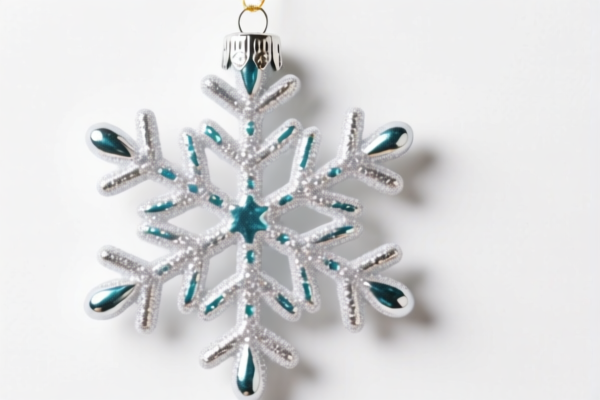



AI Analysis
❄️🎄 Snowflake Decoration (Christmas & Winter Ornaments)
🌐 HS Code Reference & Customs Clearance Guide | 2026 Updated Tariff Analysis | Professional Holiday Clearance Strategy
📌 I. Product Definition & Classification: Do You Really Know "Snowflake Decorations"?
Snowflake decorations are festive ornaments widely used for Christmas trees, window displays, indoor/outdoor holiday installations, and seasonal retail packaging. In international trade, they are classified primarily by material and design, leading to different HS Codes and tax liabilities.
They fall into three main categories: 1. Christmas-specific ornaments (Seasonal use): Directly linked to holiday traditions. 2. Plastic general decorations: Mass-produced, versatile, non-specific. 3. Glass/Specialty ornaments: Premium, fragile, high-value decorative items.
⚠️ Critical Distinction:
- Material is King: Glass items face significantly higher tariffs (up to 41.6%) than Plastic (15.3%) or Christmas-specific items (10.0%).
- Specificity: "Christmas-related" items enjoy a lower base tax but still face specific 122 Clause tariffs.
- Function: General decorative statues/items have a different classification than specific holiday-themed goods.
📦 II. HS Code Classification Details (2026 Official Tariff Reference)
| HS Code | Product Summary | Material Focus | Holiday Specific? | Tax Rate |
|---|---|---|---|---|
9505.10.25.00 |
Christmas-related decorative articles | Plastic, Metal, etc. | ✅ Yes (Christmas Specific) | 10.0% |
3926.40.00.10 |
Decorative articles of plastics | Plastic / Plastic-like | ❌ No (General Plastic) | 15.3% |
3926.40.00.90 |
Statues and other ornamental articles | Plastic (Unspecified) | ❌ No (General Ornament) | 15.3% |
7018.90.50.00 |
Small articles of glass | Glass | ❌ No (General Glass) | 41.6% |
7018.10.50.00 |
Small articles of glass/plastic | Glass or Plastic | ❌ No (General) | 35.0% |
🔍 Key Insight:
-9505.10.25.00is your best-case scenario (10% total tax) if the product is explicitly marketed/imported as a Christmas ornament.
-7018.90.50.00is the most expensive category (41.6%) due to heavy penalties on glass imports.
- Plastic vs. Glass: Switching from Glass to Plastic can reduce tariffs by 60-75%.
💰 III. 2026 Tariff Rate Breakdown (Detailed Tax Structure)
✅ Applicable Country: United States (US)
✅ Origin: China (CN)
✅ Effective Date: Based on current 2025/2026 trade policies.
🎯 1. 9505.10.25.00 – Christmas Decorations (Best Option)
- Scenario: Snowflake made of plastic/metal explicitly for Christmas.
- Total Tax: 10.0%
| Component | Rate | Details |
|---|---|---|
| Base Tariff | 0.0% | No standard duty for this seasonal category. |
| Section 301 / Add-on | 0.0% | No additional penalty for this specific code. |
| 122 Clause Tax | 10.0% | Mandatory Section 122 surcharge on Chinese imports. |
| Calculation | CIF × 10% | Simple and predictable. |
| De Minimis? | ❌ No | Must be declared with proper duties. |
📌 Explanation:
- The 10% is purely the Section 122 surcharge.
- Strategy: Ensure the product description and marketing materials explicitly state "Christmas Ornament" to lock in this lower rate.
🎯 2. 3926.40.00.10 & 3926.40.00.90 – Plastic Decorations
- Scenario: Snowflakes made of PVC/ABS but not strictly for Christmas (e.g., year-round use).
- Total Tax: 15.3%
| Component | Rate | Details |
|---|---|---|
| Base Tariff | 5.3% | Standard duty for plastic articles. |
| Section 301 / Add-on | 0.0% | No extra penalty. |
| 122 Clause Tax | 10.0% | Mandatory Section 122 surcharge. |
| Calculation | CIF × 15.3% | Higher than Christmas-specific items. |
📌 Explanation:
- The 5.3% base duty makes this category more expensive than9505.
- Use this code only if the product is not sold strictly as a "Christmas" item (e.g., generic winter decoration).
🎯 3. 7018.90.50.00 & 7018.10.50.00 – Glass Decorations (Highest Risk)
- Scenario: Glass snowflakes or glass/plastic hybrids.
- Total Tax: 35.0% – 41.6% (⚠️ High Cost)
| Component | Rate | Details |
|---|---|---|
| Base Tariff | 0.0% ~ 6.6% | Depends on specific glass type. |
| Section 301 / Add-on | 25.0% | Heavy Penalty on glass imports. |
| 122 Clause Tax | 10.0% | Mandatory Section 122 surcharge. |
| Calculation | CIF × 35-41% | Significantly impacts profit margins. |
| De Minimis? | ❌ No | Strict declaration required. |
📌 Explanation:
- The 25% Section 301 tariff on glass is the main driver of high costs.
- Glass items are fragile and expensive to ship; high tariffs make them less competitive unless sold as premium luxury goods.
🛠️ IV. Customs Clearance Practical Advice (Avoiding Pitfalls)
✅ 1. Documentation Checklist (Must-Haves)
| Document | Requirement | Why It Matters |
|---|---|---|
| Product Photo | ✔️ Mandatory | Must clearly show the material (Glass vs. Plastic) and shape. |
| Material Statement | ✔️ Critical | Explicitly state "100% Plastic," "Glass," or "Mixed." |
| Commercial Invoice | ✔️ Specific | Must list "Christmas Decoration" for 9505 or "General Ornament" for 3926. |
| Packaging Label | ✔️ Check | If the box says "Holiday Decor," Customs will force 9505. |
| Bill of Materials | ✔️ Optional | Helps if material is composite (e.g., Plastic with Glass center). |
✅ 2. Strategic Declaration Tips
🔥 "Material First, Purpose Second"
| Scenario | Recommended Code | Risk if Wrong |
|---|---|---|
| Plastic Snowflake (Sold for Xmas) | 9505.10.25.00 (10%) |
Reporting as 3926 (15.3%) → Overpay 5.3%. |
| Plastic Snowflake (Year-round) | 3926.40.00.10 (15.3%) |
Reporting as 9505 → Underpayment (Audit risk). |
| Glass Snowflake (Premium) | 7018.90.50.00 (41.6%) |
Reporting as Plastic → Severe Penalty (Fraud). |
| Glass + Plastic Hybrid | 7018.10.50.00 (35.0%) |
Misclassification leads to 25% penalty + Back taxes. |
Golden Rule:
"If it's Christmas, say Christmas (
9505). If it's Glass, expect to pay 25% extra (7018). If it's just Plastic, check the purpose."
✅ 3. Special Handling for Glass vs. Plastic
| Issue | Recommendation |
|---|---|
| Glass Fragility | Use high-density packaging; Customs may inspect glass items more rigorously. |
| Material Mix | If the snowflake has a plastic frame and glass center, declare based on the main constituent material (often Glass if it looks decorative). |
| Seasonal Timing | Import 9505 items before October 1st to ensure they are seen as "Christmas Stock" and not generic decor. |
🌍 V. Market Comparison: Where Does Snowflake Decoration Go?
| Market | Best HS Code | Estimated Duty (China Origin) | Key Advice |
|---|---|---|---|
| 🇺🇸 USA | 9505.10.25.00 (Plastic) |
10% | Avoid Glass (7018) unless premium pricing allows 41% cost. |
| 🇪🇺 EU | 9505.10.10 |
5% | Lower base rates, but VAT applies. Glass still high. |
| 🇨🇦 Canada | 9505.10.00 |
5-10% | Similar to US, watch for Section 301 equivalents. |
| 🇦🇺 Australia | 9505.10.00 |
5% | Glass items face anti-dumping risks. |
📌 Conclusion:
- The US market is the most complex due to Section 301 (25%) on Glass and Section 122 (10%) on all Chinese goods.
- Plastic Christmas ornaments are the most cost-effective for mass market.
- Glass snowflakes should be treated as luxury goods to absorb the 41.6% tax.
📌 VI. Common Errors & How to Avoid Them
❌ Mistake 1: Calling a Glass snowflake "Plastic" to save tax.
👉 Result: Fraud Investigation, 25% penalty + 100% back taxes + seizure.
❌ Mistake 2: Using 3926 (Plastic) for Christmas items when 9505 is available.
👉 Result: Overpaying 5.3% unnecessarily on every unit.
❌ Mistake 3: Failing to specify "Christmas" on the invoice.
👉 Result: Customs defaults to the general 3926 or 7018 code, increasing tax.
✅ Correct Declaration Example:
"Christmas Decorations, Snowflake Shape, Plastic Material, For Holiday Season Use, Model SF-2026, No. 1000 PCS"
🎯 VII. Final Verdict: Smart Import Strategy
🎯 The Strategy:
1. Maximize9505.10.25.00: Ensure your product is marketed and labeled as a Christmas Ornament. This locks in the 10% total rate.
2. Minimize7018: Avoid glass unless your margin can absorb 41.6%. Consider using PETG or Acrylic (Plastic) to mimic glass look at 15.3% tax.
3. Clear Documentation: Invoice must explicitly mention "Christmas," "Seasonal," or "Holiday" to justify the lower9505code.🔹 Remember:
"Plastic + Christmas = 10% | Plastic + General = 15.3% | Glass = 35-41%"
"One wrong letter on the material description costs you thousands!"
📌 Pro Tip:
If you are importing mixed material snowflakes (e.g., Plastic frame + Glass center), declare them as Glass (7018) to be safe. The risk of under-declaring a luxury material is far higher than over-declaring a cheaper one.
📣 Next Steps:
1. Verify Material: Check your BOM (Bill of Materials).
2. Update Invoice: Add "Christmas Ornament" to the description.
3. Consult Broker: Confirm if your specific design qualifies for 9505 vs 3926.
4. Calculate Margin: Re-calculate profits with 10% vs 41% duty.
✨ Precise Classification = Lower Costs + Faster Clearance!
💼 Don't let a snowflake freeze your profits!
Customer Reviews
About HS Code Classification
The Harmonized System (HS) is an internationally standardized nomenclature developed by the World Customs Organization (WCO) to classify traded products. Over 200 countries use the HS system as the basis for customs tariffs, trade statistics, and import/export regulations.
Each HS code follows a hierarchical structure:
- Chapter (2 digits) — Broad category of goods (e.g., Chapter 84: Machinery and Mechanical Appliances)
- Heading (4 digits) — More specific grouping within the chapter
- Subheading (6 digits) — Internationally standardized breakdown, used by all WCO member countries
- National subdivisions (8-10 digits) — Country-specific extensions for further classification, such as US HTSUS 10-digit codes
Correct HS code classification is essential for smooth customs clearance, accurate duty payment, and compliance with trade regulations. Misclassification can lead to customs delays, overpayment of duties, or penalties.
When importing from CN to US, the applicable tariff rates may include:
- Most-Favored-Nation (MFN) rate — The standard duty rate applied to WTO members
- General rate — Applied to countries without trade agreements
- Trade remedy duties — Additional tariffs such as Section 301 (anti-dumping), Section 232 (national security), or countervailing duties
The information provided on this page is for reference purposes only. For official classification, please consult with your local customs authority or a licensed customs broker.