Soap Cutter
CN → US| HS Code | Tariff Rate | Origin | Destination | Doc |
|---|---|---|---|---|
| 8210000000 | 38.7% | CN | US | Official Doc |
| 8479899599 | 87.5% | CN | US | Official Doc |
| 3926909989 | 22.8% | CN | US | Official Doc |
| 3926909910 | 22.8% | CN | US | Official Doc |
| 8479820080 | 35.0% | CN | US | Official Doc |
Product Images
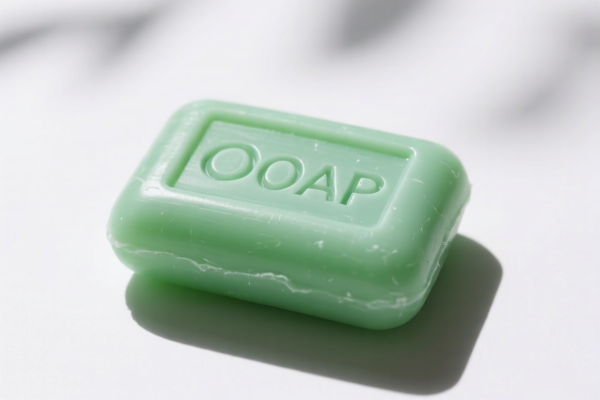
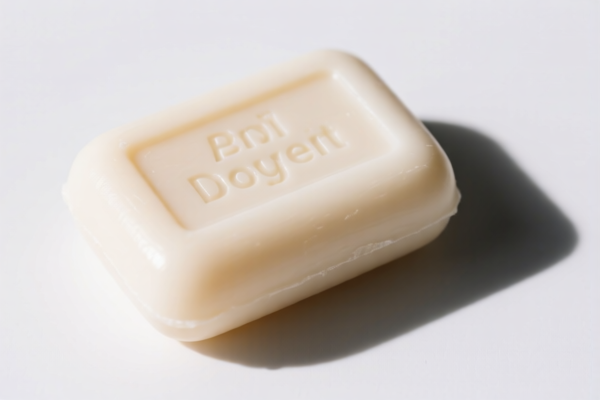


AI Analysis
🧼 Soap Cutter (Soap Cutter / Slicer)
🌐 HS Code Reference & Customs Clearance Guide | 2024 Latest Tariff Analysis | Professional-Level Entry Strategy
📌 I. Product Definition & Classification: Do You Really Understand "Soap Cutter"?
A Soap Cutter is a manual mechanical tool or a standalone machine designed to slice, press, or crush soap bars into desired shapes or sizes. In international trade, its classification depends heavily on two factors:
1. Operation Mode: Is it a hand-held manual tool or an electric/mechanical machine?
2. Material Composition: Is it primarily made of plastic, metal, or a combination?
⚠️ Key Classification Logic:
- If it’s a simple hand-held device (no motor), it falls under Manual Mechanical Appliances.
- If it’s a standalone machine with specific cutting/crushing functions, it falls under General Machinery.
- If it’s a plastic accessory or container, it may fall under Plastic Articles.
📦 II. HS Code Classification Details (Latest Tariff Authority Comparison)
Based on the provided data, here are the five possible HS Code classifications for a "Soap Cutter," along with their rationale and total tax rates.
| HS Code | Product Description | Rationale for Classification | Total Tax Rate (China Origin to US) |
|---|---|---|---|
8210.00.00.00 |
Manual Mechanical Appliances (Hand-held soap cutters) | Designed for preparing/treating goods; fits the definition of manual mechanical appliances. | 38.7% |
8479.89.95.99 |
Other Machines & Mechanical Appliances (Standalone motorized cutters) | A standalone machine with independent functions; used as a "catch-all" category for other machines. | 87.5% |
3926.90.99.89 |
Other Plastic Articles (Plastic-bodied soap cutters) | Inferred as a finished article made of plastic or metal; falls under the "catch-all" for other plastic/material articles. | 22.8% |
3926.90.99.10 |
Other Plastic Articles (Plastic cutting tools/lab ware) | Inferred as plastic material; used as a cutting tool or lab-like vessel. | 22.8% |
8479.82.00.80 |
Mixing/Kneading/Crushing Machines (Motorized soap crushers) | Used for cutting, crushing, or grinding; falls under machines for mixing/kneading/crushing (excluding simple mixing/stirring). | 35.0% |
🔍 Key Insight:
- The highest tariff (87.5%) applies to8479.89.95.99due to an additional 50% tariff on steel/aluminum/copper products under specific provisions.
- The lowest tariff (22.8%) applies to plastic-based classifications (3926.90.99.89/3926.90.99.10).
- Manual tools (8210.00.00.00) have a moderate rate of 38.7%.
💰 III. Detailed Tariff Breakdown by HS Code (Including Additional Duties)
✅ Applicable Country: United States (US)
✅ Origin: China (CN)
✅ Effective Time: Current as of latest trade data (Includes Section 301 & IEEPA tariffs)
🎯 1. 8210.00.00.00 —— Manual Mechanical Appliance (Hand-held Soap Cutter)
| Item | Detail |
|---|---|
| Base Duty Rate | 3.7% |
| Section 301 Additional Duty | +25.0% |
| 122 Clause Tariff | +10.0% |
| Total Tax Rate | 38.7% |
| Calculation Basis | CIF Value × 38.7% |
| De Minimis Exemption | ❌ Not Eligible (High tariff rates usually block de minimis) |
| Legal Basis Path | Base Rate → Section 301 → IEEPA (122 Clause) |
📌 Explanation:
- This classification is for hand-held, non-motorized soap cutters.
- The 3.7% is the standard MFN (Most Favored Nation) duty.
- The 25% and 10% are additional duties imposed on Chinese imports, leading to a 38.7% total burden.
🎯 2. 8479.89.95.99 —— Other Machines (Motorized/Complex Soap Cutter)
| Item | Detail |
|---|---|
| Base Duty Rate | 2.5% |
| Section 301 Additional Duty | +25.0% |
| 122 Clause Tariff | +10.0% |
| Steel/Aluminum/Copper Additional Duty | +50.0% (If applicable to material composition) |
| Total Tax Rate | 87.5% |
| Calculation Basis | CIF Value × 87.5% |
| De Minimis Exemption | ❌ Not Eligible |
| Legal Basis Path | Base Rate → Section 301 → IEEPA → Specific Metal Surcharge |
📌 Warning:
- This is the highest tariff category.
- The additional 50% is triggered if the machine contains significant steel, aluminum, or copper components and falls under specific punitive clauses.
- Avoid this classification if possible due to extreme cost impact.
🎯 3. 3926.90.99.89 —— Other Plastic Articles (Plastic Soap Cutter)
| Item | Detail |
|---|---|
| Base Duty Rate | 5.3% |
| Section 301 Additional Duty | +7.5% |
| 122 Clause Tariff | +10.0% |
| Total Tax Rate | 22.8% |
| Calculation Basis | CIF Value × 22.8% |
| De Minimis Exemption | ❌ Not Eligible (Due to combined rates) |
| Legal Basis Path | Base Rate → Section 301 → IEEPA |
📌 Advantage:
- This is one of the most cost-effective classifications.
- Applies to soap cutters primarily made of plastic.
- Lower base duty (5.3%) compared to machinery (2.5% but high surcharges).
🎯 4. 3926.90.99.10 —— Other Plastic Articles (Lab/Cutting Tool)
| Item | Detail |
|---|---|
| Base Duty Rate | 5.3% |
| Section 301 Additional Duty | +7.5% |
| 122 Clause Tariff | +10.0% |
| Total Tax Rate | 22.8% |
| Calculation Basis | CIF Value × 22.8% |
| De Minimis Exemption | ❌ Not Eligible |
| Legal Basis Path | Base Rate → Section 301 → IEEPA |
📌 Nuance:
- Similar to3926.90.99.89, but specifically inferred as a cutting tool or lab-like vessel.
- Tax rate is identical to3926.90.99.89(22.8%).
- Use this if the product is marketed as a precision cutting tool rather than a general household item.
🎯 5. 8479.82.00.80 —— Crushing/Mixing Machines (Motorized Soap Crusher)
| Item | Detail |
|---|---|
| Base Duty Rate | 0.0% |
| Section 301 Additional Duty | +25.0% |
| 122 Clause Tariff | +10.0% |
| Total Tax Rate | 35.0% |
| Calculation Basis | CIF Value × 35.0% |
| De Minimis Exemption | ❌ Not Eligible |
| Legal Basis Path | Base Rate → Section 301 → IEEPA |
📌 Strategy:
- Zero base duty is attractive, but the 35% total is still significant.
- Applies to machines that crush, grind, or slice soap, not just hand-held tools.
- Lower than8479.89.95.99because it avoids the 50% metal surcharge.
🛠️ IV. Customs Clearance Practical Advice (Pitfall Avoidance Guide)
✅ 1. Documentation Checklist (Essential Items)
| Document | Required? | Notes |
|---|---|---|
| ✅ Product Specifications | ✔️ | Must specify material (Plastic vs. Metal), operation (Manual vs. Motorized), and function (Cutting vs. Crushing). |
| ✅ Material Composition Report | ✔️ | Critical to prove if the item is >50% plastic (for 3926) or metal/mixed (for 8479/8210). |
| ✅ Product Photos | ✔️ | Show clear view of handles, blades, and any power cords/motors. |
| ✅ Commercial Invoice | ✔️ | Clearly state "Soap Cutter" and describe its manual/motorized nature. |
| ✅ Packing List | ✔️ | Ensure quantities match invoice. |
| ✅ Certifications | ✔️ | If motorized, FCC/UL certification may be required for entry. |
✅ 2. Classification Strategy & Declaration Tips
🔥 Golden Rule: "Material & Mechanism Determine the Code; Plastic Saves Money!"
| Scenario | Recommended HS Code | Reasoning |
|---|---|---|
| Hand-held, Plastic | 3926.90.99.89 or 3926.90.99.10 |
Lowest tax (22.8%). Best for cost-sensitive imports. |
| Hand-held, Metal | 8210.00.00.00 |
Moderate tax (38.7%). Classified as manual mechanical appliance. |
| Motorized, Crush/Slice | 8479.82.00.80 |
Moderate-high tax (35.0%). Avoid metal surcharges. |
| Motorized, General Machine | 8479.89.95.99 |
AVOID. Highest tax (87.5%) due to metal surcharges. |
| Plastic Cutting Tool | 3926.90.99.10 |
Same as 3926.90.99.89, but emphasizes "cutting tool" nature. |
⚠️ Critical Warning:
- Do not declare a motorized soap cutter as8479.89.95.99if it can be classified under8479.82.00.80. The 52.5% difference is significant.
- If the product is plastic, always prefer3926classifications over8210or8479to save ~14-15% in duties.
✅ 3. Special Cases
| Case | Advice |
|---|---|
| Mixed Material (Plastic + Metal Blades) | If metal is functional (blade), it may still be 3926 if plastic is the main body. Consult customs broker for "principal character" argument. |
| Battery-Operated | Treated as Motorized → Likely 8479.82.00.80 or 8479.89.95.99. Not manual. |
| Commercial vs. Household | Classification remains similar, but marketing material should align with the declared function (e.g., "Artisan Soap Making Tool" vs. "Industrial Crusher"). |
🌍 V. Global Market Comparison (2024 Data)
| Country/Region | Recommended HS Code | Estimated Duty (China Origin) | Notes |
|---|---|---|---|
| 🇺🇸 USA | 3926.90.99.89 |
22.8% (Plastic) | High tariffs due to trade war; plastic is best. |
| 🇺🇸 USA | 8210.00.00.00 |
38.7% (Manual Metal) | Moderate burden. |
| 🇺🇸 USA | 8479.82.00.80 |
35.0% (Motorized) | No metal surcharge, but high Section 301. |
| 🇪🇺 EU | Varies | 0% - 6.5% | Lower tariffs; no Section 301. CE marking required. |
| 🇨🇳 China | Varies | 0% - 5% | Low import duties. CCC certification may apply. |
📌 Conclusion:
- USA Market: Cost is critical. Use Plastic classification (3926) whenever possible to minimize the 22.8% rate.
- EU/China Market: Tariffs are lower, but CE/CCC certifications are mandatory.
📌 VI. Common Mistakes & Pitfalls (Lessons Learned)
❌ Mistake 1: Classifying a plastic soap cutter as 8210.00.00.00 (Manual Appliance).
👉 Result: Pay 38.7% instead of 22.8%. Overpaid by 15.9%.
✅ Fix: Emphasize material composition (Plastic) in documentation.
❌ Mistake 2: Classifying a motorized cutter as 8479.89.95.99 without checking for metal surcharges.
👉 Result: Pay 87.5% due to 50% metal surcharge.
✅ Fix: Check if it fits 8479.82.00.80 (Crushing/Mixing) to avoid the metal surcharge.
❌ Mistake 3: Not declaring manual vs. motorized clearly.
👉 Result: Customs may reclassify, leading to delays and penalties.
✅ Fix: Clearly state "Manual" or "Motorized" on the invoice.
🎯 VII. Conclusion: Strategic Classification for Maximum Profit
🎯 Key Takeaway:
🔹 Plastic > Metal > Machine (in terms of tariff savings for US imports).
🔹 Manual > Motorized (unless motorized offers a clear functional advantage that fits a lower-surcharge category).
🔹 Always verify material composition to qualify for3926(22.8%) instead of8210(38.7%) or8479(35-87.5%).
📌 Pro Tip:
If your soap cutter is plastic-based, declare it under
3926.90.99.89or3926.90.99.10to benefit from the 22.8% rate.
If it is metal/manual, use8210.00.00.00(38.7%).
If it is motorized, prefer8479.82.00.80(35.0%) over8479.89.95.99(87.5%).
📣 Action Plan:
- Identify Material: Plastic vs. Metal vs. Mixed.
- Identify Power: Manual vs. Motorized.
- Select HS Code:
- Plastic + Manual →
3926.90.99.89(22.8%)- Metal + Manual →
8210.00.00.00(38.7%)- Motorized + Crush →
8479.82.00.80(35.0%)- Prepare Documentation: Highlight material and function.
- Consult Broker: Confirm classification before shipping.
✨ Professional Customs Clearance Starts with Accurate Classification!
💼 Every percentage point saved is pure profit!
Customer Reviews
About HS Code Classification
The Harmonized System (HS) is an internationally standardized nomenclature developed by the World Customs Organization (WCO) to classify traded products. Over 200 countries use the HS system as the basis for customs tariffs, trade statistics, and import/export regulations.
Each HS code follows a hierarchical structure:
- Chapter (2 digits) — Broad category of goods (e.g., Chapter 84: Machinery and Mechanical Appliances)
- Heading (4 digits) — More specific grouping within the chapter
- Subheading (6 digits) — Internationally standardized breakdown, used by all WCO member countries
- National subdivisions (8-10 digits) — Country-specific extensions for further classification, such as US HTSUS 10-digit codes
Correct HS code classification is essential for smooth customs clearance, accurate duty payment, and compliance with trade regulations. Misclassification can lead to customs delays, overpayment of duties, or penalties.
When importing from CN to US, the applicable tariff rates may include:
- Most-Favored-Nation (MFN) rate — The standard duty rate applied to WTO members
- General rate — Applied to countries without trade agreements
- Trade remedy duties — Additional tariffs such as Section 301 (anti-dumping), Section 232 (national security), or countervailing duties
The information provided on this page is for reference purposes only. For official classification, please consult with your local customs authority or a licensed customs broker.