Soap Dispenser
CN → US| HS Code | Tariff Rate | Origin | Destination | Doc |
|---|---|---|---|---|
| 7323930080 | 62.0% | CN | US | Official Doc |
| 8309900080 | 37.6% | CN | US | Official Doc |
| 7323930060 | 62.0% | CN | US | Official Doc |
| 7323999030 | 88.4% | CN | US | Official Doc |
| 3924104000 | 13.4% | CN | US | Official Doc |
Product Images
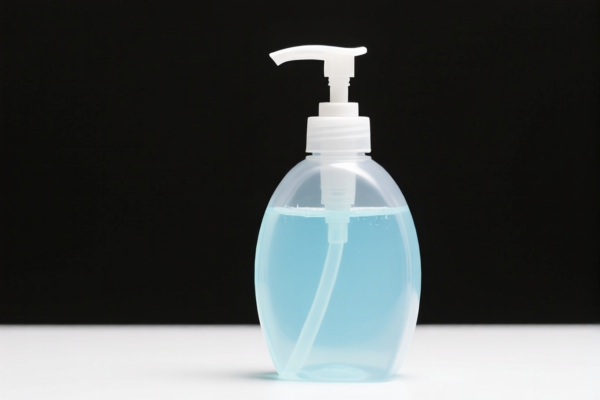
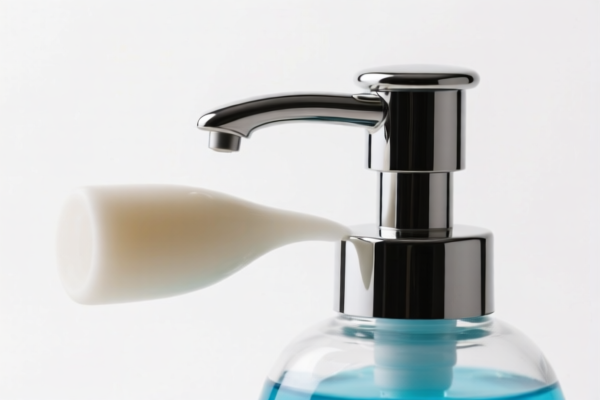
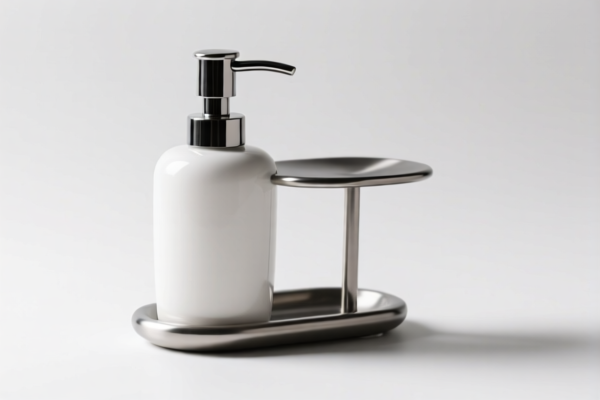
AI Analysis
🧴 Soap Dispenser (Liquid Soap Doser)
🌐 HS Code Reference & Customs Clearance Guide | 2026 Latest Tariff Regime | Professional-Level Strategy
📌 I. Product Definition & Classification: Do You Really Know "Soap Dispenser"?
The Soap Dispenser is a common household or commercial item used to dispense liquid soap, sanitizer, or lotion. In international trade, it is classified based on material composition (stainless steel, plastic, etc.) and intended use (kitchen, bathroom, commercial).
There are two main categories for customs classification:
Metal-Based Dispensers (Stainless Steel): Primarily used in kitchens or bathrooms, classified under Chapter 73 (Articles of Iron/Steel) or Chapter 83 (Miscellaneous Articles of Base Metal).
Plastic-Based Dispensers: Classified under Chapter 39 (Plastics) as sanitary or toilet articles.
⚠️ Key Distinction:
- Material matters: Stainless steel = Metal Chapter; Plastic = Plastic Chapter.
- Use matters: Kitchen vs. general household may affect sub-classification within the same chapter.
- Incorrect classification leads to massive tax differences (e.g., 13.4% vs. 88.4%).
📦 II. HS Code Classification Breakdown (2026 Latest Tariff Regime)
| HS Code | Product Description | Material | Intended Use | Tax Rate |
|---|---|---|---|---|
7323.93.00.80 |
Stainless Steel Soap Dispenser | Stainless Steel | Household Use | 62.0% |
8309.90.00.80 |
Stainless Steel Soap Dispenser | Stainless Steel | General Steel Product | 37.6% |
7323.93.00.60 |
Stainless Steel Soap Dispenser | Stainless Steel | Kitchen/Household Utensil | 62.0% |
7323.99.90.30 |
Soap Dispenser (Metal, inferred) | Metal (Unspecified) | Kitchen/Tableware | 88.4% |
3924.10.40.00 |
Soap Dispenser (Plastic) | Plastic | Sanitary/Bathroom | 13.4% |
🔍 Critical Insight:
- Stainless steel models can fall into Chapter 73 (Tableware) or Chapter 83 (Miscellaneous Metal). The difference in tax rate is huge (37.6% vs. 62% vs. 88.4%).
- Plastic models are significantly cheaper to import (13.4%).
- Chapter 73.23.99.90.30 (Metal, unspecified) carries the highest tax (88.4%) due to "other" classification.
💰 III. 2026 Latest Tariff Rate Breakdown (Including Surtaxes & Policy Add-ons)
✅ Applicable Country: United States (US)
✅ Country of Origin: China (CN)
✅ Effective Date: November 10, 2025 (and subsequent imports)
🎯 1. 7323.93.00.80 / 7323.93.00.60 — Stainless Steel Soap Dispenser (Household/Kitchen)
| Item | Content |
|---|---|
| Base Tariff | 2.0% (ad valorem) |
| Section 301 Surtax (USITC) | +25.0% |
| Section 301 (122 Clause) Surtax | +50.0% (Steel, Aluminum, Copper Products) |
| Total Tax Rate | 62.0% |
| Tax Calculation | CIF Value × 62% |
| De Minimis Exemption | ❌ Not Allowed (High-risk category) |
| Legal Basis Path | 301:7323.93.00 → 122:Steel/Aluminum/Copper |
📌 Explanation:
- Base 2.0%: Standard MFN tariff for steel articles.
- Section 301 +25%: Trump-era tariffs on Chinese goods.
- Section 122 +50%: Additional surcharge on steel, aluminum, and copper products under "10% steel, aluminum, copper products" rule.
- Total 62%: This is a very high tax burden for stainless steel soap dispensers.
🎯 2. 8309.90.00.80 — Stainless Steel Soap Dispenser (Miscellaneous Metal)
| Item | Content |
|---|---|
| Base Tariff | 2.6% (ad valorem) |
| Section 301 Surtax | +25.0% |
| Total Tax Rate | 37.6% |
| Tax Calculation | CIF Value × 37.6% |
| De Minimis Exemption | ❌ Not Allowed |
| Legal Basis Path | 301:8309.90.00 |
📌 Note:
- This classification falls under Chapter 83 (Miscellaneous Articles of Base Metal), not Chapter 73 (Tableware).
- Lower tax (37.6%) compared to Chapter 73 classifications because it avoids the Section 122 steel surtax.
- Strategy: If your product can be legally classified under 8309, you save 24.4% in taxes.
🎯 3. 7323.99.90.30 — Soap Dispenser (Metal, Inferred, Kitchen/Tableware)
| Item | Content |
|---|---|
| Base Tariff | 3.4% (ad valorem) |
| Section 301 Surtax | +25.0% |
| Section 122 Surtax | +50.0% (Steel/Aluminum/Copper) |
| Total Tax Rate | 88.4% |
| Tax Calculation | CIF Value × 88.4% |
| De Minimis Exemption | ❌ Not Allowed |
| Legal Basis Path | 301:7323.99.90 → 122:Steel/Aluminum/Copper |
📌 Warning:
- This is the most expensive classification due to being "Other" metal tableware with full Section 122 surtax.
- Avoid this classification unless absolutely necessary.
🎯 4. 3924.10.40.00 — Plastic Soap Dispenser (Sanitary/Bathroom)
| Item | Content |
|---|---|
| Base Tariff | 3.4% (ad valorem) |
| Section 301 Surtax | +0.0% (Plastic not subject to 301 steel surtax) |
| Total Tax Rate | 13.4% |
| Tax Calculation | CIF Value × 13.4% |
| De Minimis Exemption | ✅ Possible (if under $800,000 de minimis) |
| Legal Basis Path | 3924.10.40 |
📌 Advantage:
- Lowest tax rate (13.4%) for soap dispensers.
- No Section 301 or 122 surtaxes apply to plastic.
- Recommendation: If possible, switch to plastic models to save up to 75% in taxes.
🛠️ IV. Customs Clearance Practical Advice (Real-World Pitfall Avoidance)
✅ 1. Document Checklist (Non-Negotiable)
| Document | Required | Notes |
|---|---|---|
| ✅ Product Specifications | ✔️ | Include material (steel/plastic), capacity, mechanism type |
| ✅ Material Certificate | ✔️ | Proof of stainless steel grade or plastic type |
| ✅ Product Photos (Label + Structure) | ✔️ | Show brand, model, material, and design |
| ✅ Third-Party Test Report | ✔️ | FDA, NSF, LFGB (if food contact) |
| ✅ Commercial Invoice | ✔️ | Must state "Soap Dispenser" + Material Type |
| ✅ Packing List | ✔️ | Show unit weight, packaging type |
| ✅ Country of Origin Certificate | ✔️ | For potential duty exemptions (if applicable) |
✅ 2. Declaration Strategy (Key Mnemonic)
🔥 "Material First, Use Second, Name Specific, Tax Halved!"
| Scenario | Correct Declaration | Wrong Declaration |
|---|---|---|
| Stainless Steel (Kitchen) | 7323.93.00.60 |
7323.99.90.30 → 88.4% |
| Stainless Steel (General) | 8309.90.00.80 |
7323.93.00.80 → 62% |
| Plastic (Bathroom) | 3924.10.40.00 |
7323.93.00.60 → 62% |
| Mixed Material (Steel + Plastic) | Split Declaration | Single HS Code → Audit Risk |
✅ 3. Special Cases Handling
| Case | Recommendation |
|---|---|
| OEM Customized Dispenser | Provide client order + design drawings to prove intended use |
| Wall-Mounted vs. Countertop | Same HS Code, but provide installation diagram |
| Soap Dispenser + Soap Bottle Set | Declare as one unit (Dispenser only) if soap is not sold separately |
| Commercial Grade (Restaurant) | Still 7323.93.00.60, but provide proof of commercial use |
| Plastic with Metal Parts | Declare as Plastic if metal is accessory (not main material) |
🌍 V. Global Market Comparison (2026 Latest)
| Country/Region | Recommended HS Code | Tariff | Certification | Notes |
|---|---|---|---|---|
| 🇺🇸 USA | 3924.10.40.00 (Plastic) |
13.4% | FDA + RoHS | Stainless Steel = 37.6%~88.4% |
| 🇨🇳 China | 3924.10.40.00 |
0% | CCC + RoHS | No extra surtax |
| 🇪🇺 EU | 3924.10.40.00 |
0% (if CE) | CE + REACH | No surtax |
| 🇦🇺 Australia | 3924.10.40.00 |
5% | RCM | No surtax |
| 🇯🇵 Japan | 3924.10.40.00 |
0% | PSE | No surtax |
📌 Conclusion:
- USA is the most expensive market for stainless steel soap dispensers due to Section 122 surtax.
- Plastic models are the best choice for US export to minimize costs.
- China, EU, and Japan have no surtaxes, making them easier to export to.
📌 VI. Common Mistakes & Pitfalls (Lessons Learned)
❌ Mistake 1: Declaring stainless steel soap dispenser as plastic to avoid tax
👉 Consequence: Seizure + Fine for misdeclaration
❌ Mistake 2: Using "Soap Dispenser" without specifying material
👉 Consequence: Customs will assume metal → 62%~88.4% tax
❌ Mistake 3: Declaring "Kitchen Utensil" for a bathroom soap dispenser
👉 Consequence: May trigger audit for wrong classification
❌ Mistake 4: Failing to provide Material Certificate for stainless steel
👉 Consequence: Delayed clearance or retroactive tax assessment
✅ Correct Practice:
"Soap Dispenser, Stainless Steel 304, Wall-Mounted, 500ml Capacity, Model XYZ, FDA/NSF Certified"
OR
"Soap Dispenser, ABS Plastic, Countertop, 300ml, Model ABC, RoHS Compliant"
🎯 VII. Conclusion: Smart Classification, Save Money, Avoid Risk!
🎯 Remember the Mnemonic:
🔹 "Plastic First, Steel Second, Name Specific, Tax Halved!"
🔹 "HS Code is Life, Tax Difference 75%, Declaration Step, Millions Saved!"
📌 Pro Tip:
If your soap dispenser is originally from Vietnam, Mexico, Thailand, or Malaysia, you may qualify for Section 301 Exemption, reducing tax to 0%~5%.
Recommendation: Apply for Pre-Ruling (Advance Ruling) before shipment to avoid risks.
📣 Take Action Now:
📞 Contact Professional Customs Broker + Provide Product Photos + Apply for HS Code Pre-Ruling
🚀 Let your soap dispenser clear customs smoothly, export efficiently, and double your profits!
✨ Professional Customs Clearance Starts with Accurate Classification!
💼 Every Cost You Pay Must Be Precisely Calculated!
Customer Reviews
About HS Code Classification
The Harmonized System (HS) is an internationally standardized nomenclature developed by the World Customs Organization (WCO) to classify traded products. Over 200 countries use the HS system as the basis for customs tariffs, trade statistics, and import/export regulations.
Each HS code follows a hierarchical structure:
- Chapter (2 digits) — Broad category of goods (e.g., Chapter 84: Machinery and Mechanical Appliances)
- Heading (4 digits) — More specific grouping within the chapter
- Subheading (6 digits) — Internationally standardized breakdown, used by all WCO member countries
- National subdivisions (8-10 digits) — Country-specific extensions for further classification, such as US HTSUS 10-digit codes
Correct HS code classification is essential for smooth customs clearance, accurate duty payment, and compliance with trade regulations. Misclassification can lead to customs delays, overpayment of duties, or penalties.
When importing from CN to US, the applicable tariff rates may include:
- Most-Favored-Nation (MFN) rate — The standard duty rate applied to WTO members
- General rate — Applied to countries without trade agreements
- Trade remedy duties — Additional tariffs such as Section 301 (anti-dumping), Section 232 (national security), or countervailing duties
The information provided on this page is for reference purposes only. For official classification, please consult with your local customs authority or a licensed customs broker.