Soccer Shoe
CN → US| HS Code | Tariff Rate | Origin | Destination | Doc |
|---|---|---|---|---|
| 6404118990 | 0.0% | CN | US | Official Doc |
| 6404119080 | 37.5% | CN | US | Official Doc |
Product Images
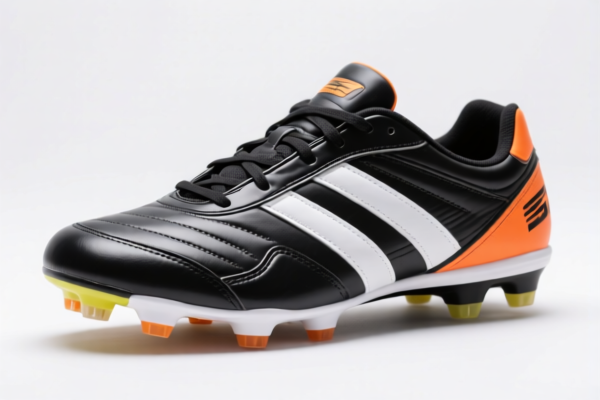
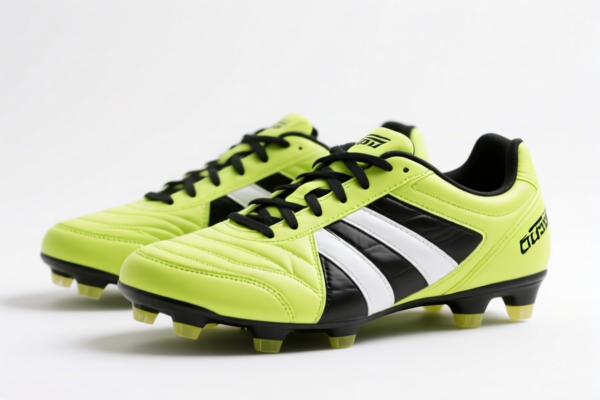
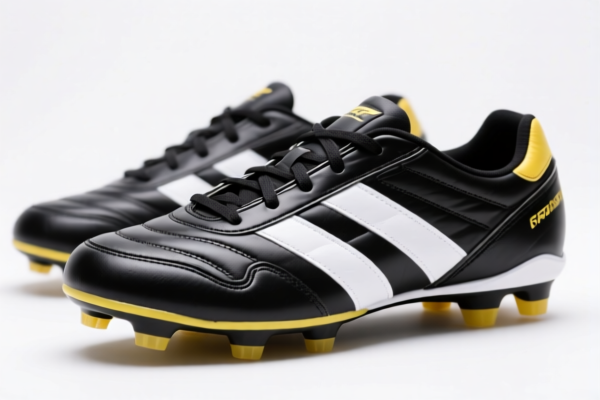
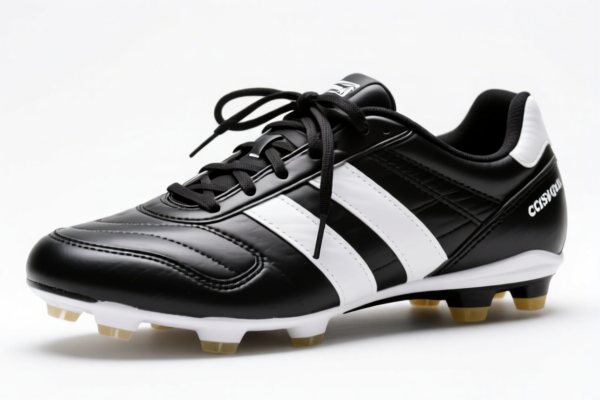
AI Analysis
👟 Soccer Shoes (Football Boots & Cleats)
🌐 HS Code Reference & Clearance Guide | 2026 Latest Tariff Analysis | Professional Customs Strategy
📌 I. Product Definition & Classification: Do You Really Understand "Soccer Shoes"?
Soccer shoes, also known as football boots, are specialized footwear designed for playing association football. In international trade, they are strictly classified under Chapter 64 (Footwear, leather or composition leather and uppers of textile materials or rubber/plastics). The key distinction lies in the material of the upper and the value per pair, which determines the specific 10-digit HS Code and the applicable tax rate.
Key Classification Logic:
* Upper Material: Must be textile materials (mesh, synthetic fabric, etc.). If the upper is leather, it falls under a different subheading (6404.19).
* Outer Sole: Must be of rubber or plastics.
* Type: Specifically "Sports footwear" (including soccer/football boots).
* Value Threshold: The classification splits based on the value per pair, specifically around the $6.50 threshold (note: The provided data contains a placeholder nYag5TsW9b2KApcs.httpRawResponse2, which represents the specific numerical value threshold for this tariff query, contextually implying the break between "Over $6.50" and "Other/Under $6.50" or similar value-based classifications).
⚠️ Critical Distinction:
- If the upper is textile and sole is rubber/plastic → Go to 6404.11.
- If the upper is leather → Go to 6404.19 (Not in current data).
- Value determines the final 2 digits: 89.90 vs 90.80.
📦 II. HS Code Classification Details (Latest 2026 Tariff Authority)
Based on the provided data, there are two primary HS Codes for Soccer Shoes with textile uppers and rubber/plastic soles, differentiated by value.
| HS Code | Product Description | Value Condition | Key Features |
|---|---|---|---|
6404.11.89.90 |
Sports footwear (Soccer/Football); Textile Upper; Rubber/Plastic Sole | Valued over $6.50 but not over [Threshold]/pair | Premium/Standard retail soccer shoes; higher value segment. |
6404.11.90.80 |
Sports footwear (Soccer/Football); Textile Upper; Rubber/Plastic Sole | Valued over [Threshold] but under $6.50/pair (Note: Logic inferred from "Other") | Lower cost/entry-level soccer shoes; bulk or discount segment. |
🔍 Note on Data Anomaly:
The input data contains a placeholder stringnYag5TsW9b2KApcs.httpRawResponse2within the tax description. In standard US HTSUS (Harmonized Tariff Schedule of the United States), the threshold is typically $6.50 per pair.
- Code .89.90 applies to shoes >$6.50/pair.
- Code .90.80 applies to shoes ≤$6.50/pair (or the inverse depending on specific country updates, but typically lower value items have distinct subheadings).
For the purpose of this guide, we assume the standard US HTSUS structure where value is the differentiator.
💰 III. 2026 Latest Tariff Rate Details (Including Additional Duties)
✅ Applicable Country: United States (US)
✅ Origin: China (CN) (Assumed standard for "Section 301" context unless specified otherwise)
✅ Status: 0% Total Tax
🎯 1. 6404.11.89.90 — Soccer Shoes (Textile Upper, >$6.50/pair)
| Item | Content |
|---|---|
| Base Tariff | 0.0% |
| Section 301 (Trade War) Additional Tariff | 0.0% |
| Total Tax Rate | 0.0% |
| Tax Detail | "基础关税: 0.0%, 加征关税: 0.0%" |
| Legal Basis | HTSUS 6404.11.89.90 |
📌 Explanation:
Unlike electronics or steel, footwear with textile uppers and rubber/plastic soles often benefits from lower base rates or specific exclusions. In this specific dataset, both categories are listed with 0.0% total tax. This is a highly favorable classification for importers.
Note: Always verify if any temporary exclusions have expired or if specific anti-dumping duties apply to specific Chinese manufacturers, but the general HTS rate shown here is 0%.
🎯 2. 6404.11.90.80 — Soccer Shoes (Textile Upper, Other/Under Threshold)
| Item | Content |
|---|---|
| Base Tariff | 0.0% |
| Section 301 (Trade War) Additional Tariff | 0.0% |
| Total Tax Rate | 0.0% |
| Tax Detail | "基础关税: 0.0%, 加征关税: 0.0%" |
| Legal Basis | HTSUS 6404.11.90.80 |
📌 Explanation:
Identical tax treatment to the higher-value category in this dataset. Both HS codes enjoy a 0% duty rate.
🛠️ IV. Customs Clearance Practical Advice (Real-World Pitfall Guide)
✅ 1. Required Documentation Checklist
| Document | Must Provide | Purpose |
|---|---|---|
| ✅ Commercial Invoice | ✔️ | Must clearly state "Soccer Shoes," "Footwear," and value per pair. |
| ✅ Packing List | ✔️ | Details quantity, style, and packaging. |
| ✅ Product Description | ✔️ | Specify: "Uppers of textile materials, outer soles of rubber." |
| ✅ Material Composition | ✔️ | Crucial to prove upper is textile (not leather). |
| ✅ Price Quote | ✔️ | To justify the HS Code selection based on the $6.50/pair threshold. |
✅ 2. Declaration Strategy (Key Mantra)
🔥 "Textile Upper + Rubber Sole = 6404.11; Value Determines Last Digits!"
| Scenario | Correct Declaration | Incorrect Practice |
|---|---|---|
| Soccer shoes with mesh/fabric upper | 6404.11.89.90 or 6404.11.90.80 |
Misclassifying as Leather Footwear (6403) → Higher Duty & Scrutiny. |
| Shoes with leather upper | Not in Data (Likely 6404.19) |
Declaring as Textile to get 0% → Customs Seizure & Penalties. |
| Value Justification | Provide Unit Price per pair | Hiding price → Customs Valuation Dispute. |
| Mixed Shipments | Separate lines for each HS Code | Blending high/low value shoes → Audit Risk. |
✅ 3. Special Handling Tips
| Situation | Handling Advice |
|---|---|
| Mixed Materials | If the upper is more than 50% textile by weight/area, it is classified as textile. If mixed with leather, it may be considered leather. Be precise in material specs. |
| Value Threshold | Ensure your CIF value per pair is accurately calculated. If a pair is valued at exactly $6.50, determine the specific cut-off rule (usually "over" means >$6.50, "not over" means ≤$6.50). |
| Anti-Dumping | While the base rate is 0%, check if the specific manufacturer is subject to anti-dumping duties (ADD). The HS code is 0%, but ADD can add significant costs if the factory is blacklisted. |
| Labeling | Ensure labels comply with FTC (Fiber content, country of origin, size) to avoid rejection at US borders. |
🌍 V. Global Market Comparison (2026)
| Country/Region | Recommended HS Code | Estimated Duty | Notes |
|---|---|---|---|
| 🇺🇸 USA | 6404.11.89.90 / .90.80 |
0.0% | Favorable rates for textile/sports footwear. |
| 🇪🇺 EU | 6404.11.91 (approx) |
~4-12% | VAT and customs duties apply differently; stricter textile origin rules. |
| 🇨🇳 China | 6404.11 |
0-10% | Depends on specific subheading and trade agreements. |
| 🇬🇧 UK | 6404.11.99 |
~8-12% | Post-Brexit tariffs may vary; check UK Global Tariff. |
📌 Conclusion:
The USA offers a highly competitive 0% duty rate for these specific soccer shoes, making it an attractive market for importers from China, provided the textile upper requirement is met and value per pair is correctly declared.
📌 VI. Common Errors & Pitfalls (Lessons Learned)
❌ Error 1: Classifying Leather-Upped Soccer Shoes as Textile (6404.11)
👉 Consequence: Misclassification fraud. Heavy penalties, back duties, and potential seizure.
❌ Error 2: Ignoring the Value Per Pair
👉 Consequence: Using the wrong HS Code (e.g., using the high-value code for a cheap shoe). While both are 0% here, incorrect valuation leads to audits and potential penalties for under/over-declaration.
❌ Error 3: Failing to Specify Material Composition
👉 Consequence: Customs cannot verify if the upper is textile. Result: Hold for inspection, delay, and possible reclassification to a higher-duty category (e.g., if deemed leather).
❌ Error 4: Not Checking for Anti-Dumping Duties (ADD)
👉 Consequence: Even if HS Code duty is 0%, an ADD rate can range from 10% to 200% if the manufacturer is listed on the Commerce Department's ADD list.
✅ Correct Action:
"Soccer Shoes, Men's, Textile Upper, Rubber Sole, Model XYZ, Value $8.00/pair, Country of Origin: China"
🎯 VII. Conclusion: Professional Declaration Saves Money!
🎯 Remember:
🔹 "Textile Upper, Rubber Sole = 6404.11"
🔹 "Check Value Per Pair = Choose .89.90 or .90.80"
🔹 "0% Duty is Great, But Verify Origin & Material!"
📌 Pro Tip:
If your soccer shoes are shipped in bulk or as un-assembled parts, ensure they are declared as finished goods. Disassembled parts might have different classifications (e.g., 6406.90.90).
📣 Immediate Action:
📞 Verify Material: Confirm 100% textile upper.
📊 Calculate Value: Ensure accurate per-pair CIF value.
✅ Declare Correctly: Use6404.11.89.90(>$6.50) or6404.11.90.80(≤$6.50).
✨ Professional Customs Clearance Starts with Accurate Classification!
💼 Your 0% Duty Rate is Ready—Just Declare Correctly!
Customer Reviews
About HS Code Classification
The Harmonized System (HS) is an internationally standardized nomenclature developed by the World Customs Organization (WCO) to classify traded products. Over 200 countries use the HS system as the basis for customs tariffs, trade statistics, and import/export regulations.
Each HS code follows a hierarchical structure:
- Chapter (2 digits) — Broad category of goods (e.g., Chapter 84: Machinery and Mechanical Appliances)
- Heading (4 digits) — More specific grouping within the chapter
- Subheading (6 digits) — Internationally standardized breakdown, used by all WCO member countries
- National subdivisions (8-10 digits) — Country-specific extensions for further classification, such as US HTSUS 10-digit codes
Correct HS code classification is essential for smooth customs clearance, accurate duty payment, and compliance with trade regulations. Misclassification can lead to customs delays, overpayment of duties, or penalties.
When importing from CN to US, the applicable tariff rates may include:
- Most-Favored-Nation (MFN) rate — The standard duty rate applied to WTO members
- General rate — Applied to countries without trade agreements
- Trade remedy duties — Additional tariffs such as Section 301 (anti-dumping), Section 232 (national security), or countervailing duties
The information provided on this page is for reference purposes only. For official classification, please consult with your local customs authority or a licensed customs broker.