Socket Converter
CN → US| HS Code | Tariff Rate | Origin | Destination | Doc |
|---|---|---|---|---|
| 8536904000 | 35.0% | CN | US | Official Doc |
| 8536698000 | 37.7% | CN | US | Official Doc |
| 8543706000 | 35.0% | CN | US | Official Doc |
| 8543709860 | 37.6% | CN | US | Official Doc |
| 8504314065 | 41.6% | CN | US | Official Doc |
Product Images
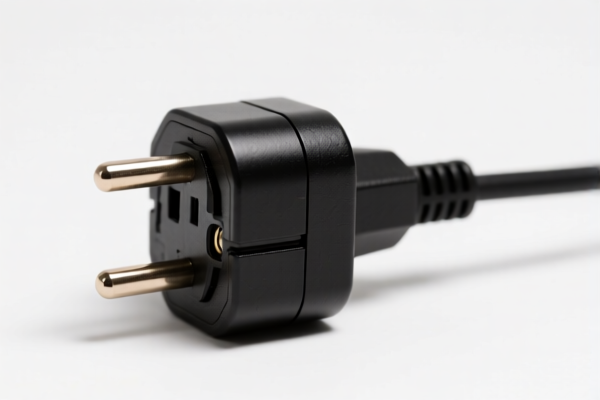
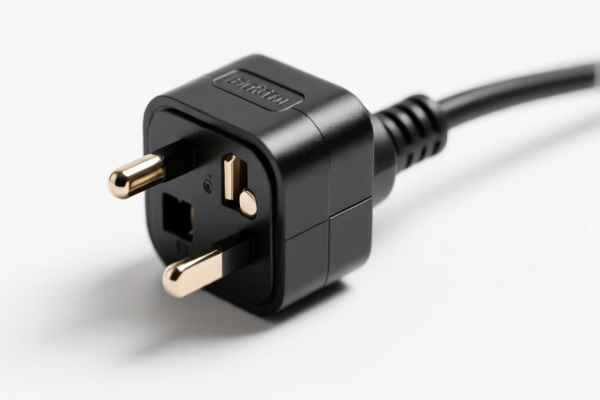
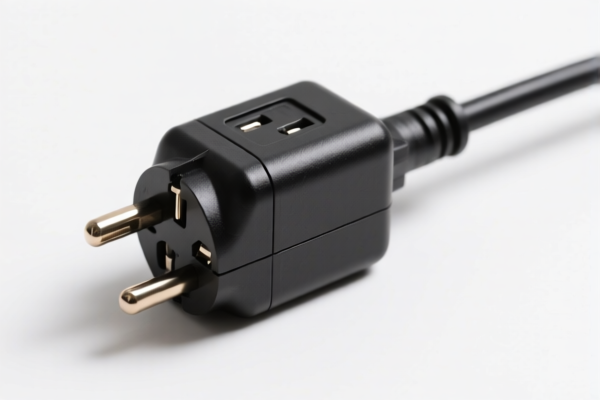

AI Analysis
🔌 Socket Converter (Power Adapters & Plugs)
🌐 HS Code Reference & Customs Clearance Guide | 2026 Latest Tariff Analysis | Professional Strategy
📌 I. Product Definition & Classification: Do You Truly Understand "Socket Converters"?
Socket Converters (also known as power adapters, travel plugs, or socket adapters) are electrical devices designed to connect circuits, adapt voltage, or convert plug types. In international trade, their classification depends heavily on their functional logic and material composition. They are generally categorized into three main types:
1. Pure Mechanical Connectors (Plugs/Adapters):
Devices that simply adapt physical plug shapes or connect wires without electronic processing. Functionally similar to terminal blocks.
2. Electronic/Network Interface Converters:
Devices designed to connect to telephones, data networks, or specific electronic equipment, often involving signal or power logic conversion.
3. Active Power Conversion Devices (Transformers/Converters):
Devices that actively transform voltage or convert electrical energy (AC/DC), often containing transformers or static converters.
⚠️ Key Distinction Point:
- If it is merely a plug/adapter with no internal circuitry changing the current's nature → Classify as Connector/Plug (8536 or 8543.70)
- If it contains a transformer/static converter for power adjustment → Classify as Transformer/Converter (8504)
- Note: Pure mechanical adapters with no active components generally attract lower base tariffs than active electronic converters.
📦 II. HS Code Classification Details (2026 Latest Authoritative Reference)
| HS Code | Product Description | Functionality Logic | Material/Structure |
|---|---|---|---|
8536.90.40.00 |
Parts for electrical circuits (Connectors/Plugs) | Functions like terminal blocks; connects circuits | Plastic/Metal; No active circuitry |
8536.69.80.00 |
Plugs and Sockets (Voltage ≤ 1000V) | General purpose connection devices for low voltage | Plastic/Metal; Mechanical interface |
8543.70.60.00 |
Apparatus for electrical signals/networking | Connects to telephones, data devices, or network equipment | Plastic/Metal/Electronic components |
8543.70.98.60 |
Other independent functional electrical apparatus | Independent devices not specified elsewhere | Plastic/Metal/Electronic components |
8504.31.40.65 |
Transformers/Static Converters | Active transformation of electricity/voltage | Contains transformer coils/circuitry |
🔍 Key Reminder:
- Passive Adapters (simply changing plug shape) usually fall under 8536 or 8543.70, with lower base tariffs (0%-2.7%).
- Active Converters (changing voltage/current type) fall under 8504, with higher base tariffs (6.6%) and potentially higher total tax burden.
- Misclassifying a simple plug as a transformer can lead to overpayment; misclassifying a transformer as a plug leads to severe penalties.
💰 III. 2026 Latest Tariff Rate Breakdown (Including Surcharges & Policy Add-ons)
✅ Applicable Country: United States (US)
✅ Origin: China (CN)
✅ Effective Time: November 10, 2025 onwards (including subsequent imports)
🎯 1. 8536.90.40.00 —— Parts for Electrical Circuits (Connector Type)
| Item | Detail |
|---|---|
| Base Tariff | 0.0% (ad valorem) |
| Section 301 Surcharge | +25.0% |
| IEEPA Surcharge (Section 122) | +10.0% |
| Total Tariff | 35.0% |
| Tax Calculation | CIF Value × 35% |
| De Minimis Eligibility | ❌ Not Eligible (deny_de_minimis) |
| Legal Basis Path | Section 301:8536.90.40 → IEEPA:9903.01.24 |
📌 Explanation:
- This code is often used for passive plug adapters or parts that function like terminal blocks.
- The 0% base tariff is the key advantage, but the 35% total rate (25% + 10%) is still significant.
- Suitable for simple travel plugs that do not convert voltage.
🎯 2. 8536.69.80.00 —— Plugs and Sockets (≤1000V)
| Item | Detail |
|---|---|
| Base Tariff | 2.7% (ad valorem) |
| Section 301 Surcharge | +25.0% |
| IEEPA Surcharge (Section 122) | +10.0% |
| Total Tariff | 37.7% |
| Tax Calculation | CIF Value × 37.7% |
| De Minimis Eligibility | ❌ Not Eligible |
| Legal Basis Path | Section 301:8536.69.80 → IEEPA:9903.01.24 |
📌 Explanation:
- This is the standard code for general-purpose plugs and sockets.
- Slightly higher total tax than8536.90.40.00due to the 2.7% base rate.
- Best for standard household or industrial plugs/sockets.
🎯 3. 8543.70.60.00 —— Apparatus for Network/Telecom Connection
| Item | Detail |
|---|---|
| Base Tariff | 0.0% (ad valorem) |
| Section 301 Surcharge | +25.0% |
| IEEPA Surcharge (Section 122) | +10.0% |
| Total Tariff | 35.0% |
| Tax Calculation | CIF Value × 35% |
| De Minimis Eligibility | ❌ Not Eligible |
| Legal Basis Path | Section 301:8543.70.60 → IEEPA:9903.01.24 |
📌 Explanation:
- Used for socket adapters specifically designed for telecom/data devices (e.g., RJ45/RJ11 adapters with power pass-through).
- Shares the 0% base advantage, totaling 35%.
- Ensure the product description emphasizes "connection to telephone/data equipment."
🎯 4. 8543.70.98.60 —— Other Independent Electrical Apparatus
| Item | Detail |
|---|---|
| Base Tariff | 2.6% (ad valorem) |
| Section 301 Surcharge | +25.0% |
| IEEPA Surcharge (Section 122) | +10.0% |
| Total Tariff | 37.6% |
| Tax Calculation | CIF Value × 37.6% |
| De Minimis Eligibility | ❌ Not Eligible |
| Legal Basis Path | Section 301:8543.70.98 → IEEPA:9903.01.24 |
📌 Explanation:
- A "catch-all" for electronic adapters with specific independent functions not covered elsewhere.
- Total tax is 37.6%.
- Applicable if the adapter has some unique electronic logic but isn't a standard plug or transformer.
🎯 5. 8504.31.40.65 —— Transformers/Static Converters
| Item | Detail |
|---|---|
| Base Tariff | 6.6% (ad valorem) |
| Section 301 Surcharge | +25.0% |
| IEEPA Surcharge (Section 122) | +10.0% |
| Total Tariff | 41.6% |
| Tax Calculation | CIF Value × 41.6% |
| De Minimis Eligibility | ❌ Not Eligible |
| Legal Basis Path | Section 301:8504.31.40 → IEEPA:9903.01.24 |
📌 Explanation:
- HIGHEST TAX RATE (41.6%).
- Must be used ONLY if the device contains a transformer or static converter that actively changes voltage/current (e.g., 110V to 220V step-up/down).
- Risk: If your product is just a passive plug but declared as8504, you pay unnecessary taxes. If it is a transformer but declared as8536, you face customs penalties for misclassification.
🛠️ IV. Customs Clearance Practical Advice (Avoiding Pitfalls)
✅ 1. Documentation Checklist (All Required)
| Document | Mandatory | Notes |
|---|---|---|
| ✅ Product Specification Sheet | ✔️ | Must include voltage, amperage, and internal circuitry details |
| ✅ Circuit Diagram / Schematic | ✔️ | Critical to prove if it is passive (8536/8543) or active (8504) |
| ✅ Product Photos (with Label) | ✔️ | Show input/output ports, wattage, and model number |
| ✅ Third-Party Test Report | ✔️ | UL, FCC, CE, RoHS (if applicable) |
| ✅ Commercial Invoice | ✔️ | Clearly describe as "Power Adapter" or "Transformer" based on function |
| ✅ Packing List | ✔️ | Detail contents to avoid suspicion of mixed shipments |
✅ 2. Declaration Strategy (Key Mantras)
🔥 "Passive Plug = 35%, Active Transformer = 41.6% – Choose Wisely!"
| Scenario | Correct HS Code | Incorrect Action | Consequence |
|---|---|---|---|
| Simple Travel Plug (No voltage change) | 8536.90.40.00 (35%) |
Declare as Transformer (8504) |
Overpay 6.6% base + risk audit |
| Voltage Converter (110V↔220V) | 8504.31.40.65 (41.6%) |
Declare as Plug (8536) |
Customs Penalty for misclassification |
| Data/Telecom Adapter | 8543.70.60.00 (35%) |
Declare as General Plug | Minor discrepancy, usually fine |
| Complex Electronic Adapter | 8543.70.98.60 (37.6%) |
Declare as Plug | Risk of audit if circuit is complex |
✅ 3. Special Handling
| Situation | Recommendation |
|---|---|
| OEM Custom Plugs | Provide customer design drawings to prove passive nature |
| Smart Plugs (Wi-Fi/Bluetooth) | May fall under 8543.70.98.60 due to active electronics |
| High-Power Industrial Plugs | Ensure voltage rating is ≤1000V for 8536.69.80.00 |
| Mixed Shipments | Declare separately. Do not bundle transformers with passive plugs |
🌍 V. Global Market Customs Comparison (2026 Latest)
| Country/Region | Recommended HS Code | Tariff (China Origin) | Certification Required | Notes |
|---|---|---|---|---|
| 🇺🇸 USA | 8536.90.40.00 |
35% (Passive) 41.6% (Active) |
UL, FCC, CEC | High tariffs apply; strict enforcement |
| 🇨🇳 China | 8536.90.40.00 |
0% - 6% | CCC (if applicable) | No surcharges |
| 🇪🇺 EU | 8536.90.40.00 |
0% - 4% | CE, RoHS | No additional trade taxes |
| 🇬🇧 UK | 8536.90.40.00 |
0% - 4% | UKCA, RoHS | Post-Brexit rules apply |
| 🇦🇺 Australia | 8536.90.40.00 |
5% | RCM | Moderate tariff |
📌 Conclusion:
- The USA imposes the highest effective tariff (35%-41.6%) on socket converters from China.
- EU/UK/Australia offer much lower rates (0%-5%), making them more attractive for cost-sensitive markets.
- Key Strategy: If shipping to the US, ensure accurate classification to avoid delays. If the product is passive,8536.90.40.00is optimal. If active, budget for 41.6%.
📌 VI. Common Errors & Pitfalls (Lessons Learned)
❌ Error 1: Declaring a Voltage Transformer as a Simple Plug (8536.90.40.00)
👉 Consequence: Customs audit, back taxes + penalty (difference between 35% and 41.6% plus fees).
❌ Error 2: Declaring a Simple Plug as a Transformer (8504.31.40.65)
👉 Consequence: Overpayment of 6.6% base tariff unnecessarily.
❌ Error 3: Providing no circuit diagram for smart adapters
👉 Consequence: Customs cannot determine if it’s passive or active → Shipment held for classification review.
❌ Error 4: Using vague terms like "Electrical Part" on the invoice
👉 Consequence: CBP issues Request for Information (RFI) → Delays of 2-4 weeks.
✅ Correct Approach:
"Power Adapter, Model XYZ, Input: 100-240V, Output: 12V DC, Passive Mechanical Connector, UL Certified, FCC Listed"
(If passive)"Voltage Converter, Model ABC, Input: 110V, Output: 220V, Contains Transformer, UL Certified"
(If active)
🎯 VII. Conclusion: Precision in Classification, Efficiency in Clearance
🎯 Remember the Mantra:
🔹 "Passive = 35%, Active = 41.6% – Diagrams Define the Rate!"
🔹 "No Circuit Diagram = Customs Delay – Provide Schematics!"
🔹 "Misclassification = Penalty – Verify Function First!"
📌 Pro Tip:
If your socket converters are originating from Vietnam, Thailand, or Malaysia, you may qualify for USMCA/ASEAN duty exemptions or lower IEEPA surcharges.
Consider Advance Ruling (CBP Ruling) for high-volume shipments to lock in the correct HS Code and avoid retrospective penalties.
📣 Immediate Action:
📞 Consult a licensed customs broker + Provide Circuit Diagrams + Request HS Code Pre-Ruling
🚀 Ensure your Socket Converters clear customs smoothly, minimizing costs and maximizing speed!
✨ Professional clearance starts with precise classification!
💼 Every cent of tariff matters – optimize your supply chain today!
Customer Reviews
About HS Code Classification
The Harmonized System (HS) is an internationally standardized nomenclature developed by the World Customs Organization (WCO) to classify traded products. Over 200 countries use the HS system as the basis for customs tariffs, trade statistics, and import/export regulations.
Each HS code follows a hierarchical structure:
- Chapter (2 digits) — Broad category of goods (e.g., Chapter 84: Machinery and Mechanical Appliances)
- Heading (4 digits) — More specific grouping within the chapter
- Subheading (6 digits) — Internationally standardized breakdown, used by all WCO member countries
- National subdivisions (8-10 digits) — Country-specific extensions for further classification, such as US HTSUS 10-digit codes
Correct HS code classification is essential for smooth customs clearance, accurate duty payment, and compliance with trade regulations. Misclassification can lead to customs delays, overpayment of duties, or penalties.
When importing from CN to US, the applicable tariff rates may include:
- Most-Favored-Nation (MFN) rate — The standard duty rate applied to WTO members
- General rate — Applied to countries without trade agreements
- Trade remedy duties — Additional tariffs such as Section 301 (anti-dumping), Section 232 (national security), or countervailing duties
The information provided on this page is for reference purposes only. For official classification, please consult with your local customs authority or a licensed customs broker.