Socket Style Plastic Pipe Fittings
CN → US| HS Code | Tariff Rate | Origin | Destination | Doc |
|---|---|---|---|---|
| 3917400010 | 40.3% | CN | US | Official Doc |
| 3917400095 | 40.3% | CN | US | Official Doc |
Product Images
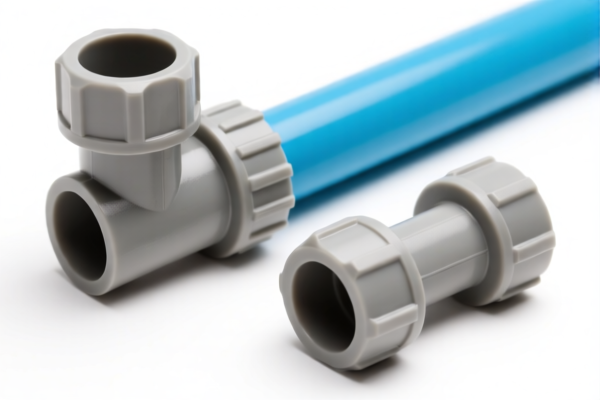
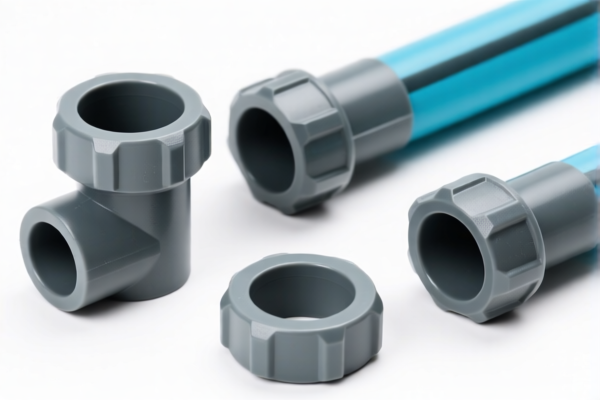
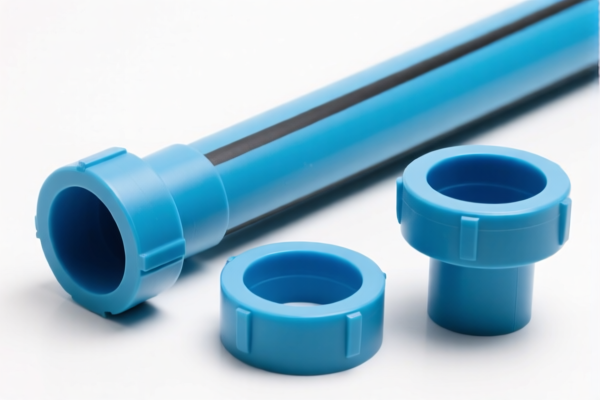
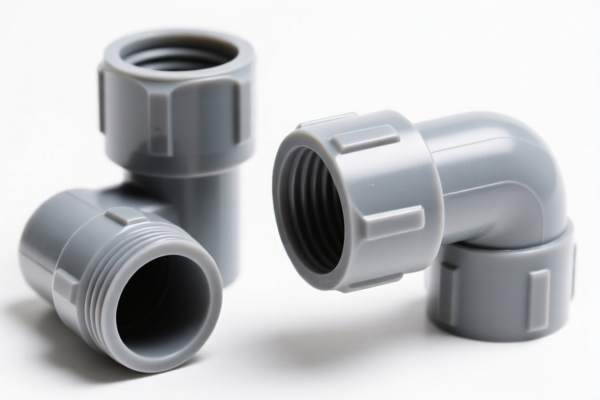
AI Analysis
🔌 Socket Style Plastic Pipe Fittings
🌐 HS Code Reference & Clearance Guide | 2026 Latest Tariff Analysis | Professional Customs Strategy
📌 I. Product Definition: What Exactly is a "Socket Style Fitting"?
In the world of fluid transport, Socket Style Plastic Pipe Fittings are critical components used to connect plastic pipes (such as PVC, CPVC, PEX, or PP-R) without the need for threading or welding. They rely on solvent welding (glue) or push-fit mechanisms.
In international trade, these fittings are not classified by their shape alone, but by their specific application. The most critical distinction is whether they are designated for brake systems in specific vehicle categories or for general industrial/consumer use.
⚠️ Key Distinction Point: - If the fitting is explicitly designed for brake hoses on vehicles under HS Headings 8701–8711 → It falls under 3917.40.00.10. - If the fitting is for general plumbing, HVAC, irrigation, or other industrial uses → It falls under 3917.40.00.95.
📦 II. HS Code Classification Details (2026 Latest Tariff Authority Comparison)
Based strictly on the provided data, here is the authoritative breakdown:
| HS Code | Product Description | Applicable Scenario | Tax Rate (Total) |
|---|---|---|---|
| 3917.40.00.10 | Fittings for brake hoses for vehicles of subheadings 8701.21, 8701.22, 8701.23, 8701.24, 8701.29, or headings 8702, 8703, 8704, 8705, or 8711. | Automotive brake systems (e.g., fittings for brake lines in trucks, buses, cars, motorcycles, tractors, and other special vehicles). | 0.0% |
| 3917.40.00.95 | Fittings, Other (General purpose plastic pipe fittings). | General plumbing, irrigation, HVAC, industrial fluid transport, residential water supply, etc. | 0.0% |
🔍 Critical Clarification: - Both HS Codes listed in the data carry a 0.0% Total Tax Rate. - However, misclassification can still lead to significant delays, as customs officers need to verify if the fittings are indeed for "brake hoses" (which is a niche, safety-critical application) or "general fittings."
💰 III. 2026 Latest Tariff Rate Details (Including Surtaxes & Policy Surcharges)
✅ Applicable Country: United States (US)
✅ Origin: China (CN)
✅ Effective Date: 2025-11-10 onwards (including subsequent imports)
🎯 1. 3917.40.00.10 —— Fittings for Brake Hoses (Specific Vehicle Use)
| Item | Content |
|---|---|
| Base Tariff Rate | 0.0% |
| Surtax / Section 301 | 0.0% |
| Total Tax Rate | 0.0% |
| Calculation Basis | CIF Value × 0% = $0 |
| De Minimis Eligibility | ❌ Not Applicable (Since tax is 0, de minimis is irrelevant for duty, but documentation must still prove "brake hose" usage). |
| Legal Basis Path | HTSUS:3917.40.00.10 → Customs Ruling: Specific Brake Hose Application |
📌 Explanation:
- The base tariff for plastic fittings is already low or zero for this specific subheading. - There are no additional surtaxes (such as the 25% or 10% IEEPA tariffs mentioned in other categories) for this specific HS code in the provided data. - Compliance Note: You must provide evidence that the fittings are exclusively or primarily for brake hoses of the specified vehicle types. If they are general-purpose fittings sold as "brake fittings" but used for water pipes, customs may reclassify them.
🎯 2. 3917.40.00.95 —— Other Fittings (General Purpose)
| Item | Content |
|---|---|
| Base Tariff Rate | 0.0% |
| Surtax / Section 301 | 0.0% |
| Total Tax Rate | 0.0% |
| Calculation Basis | CIF Value × 0% = $0 |
| De Minimis Eligibility | ❌ Not Applicable (Again, tax is 0). |
| Legal Basis Path | HTSUS:3917.40.00.95 → General Plastic Fittings |
📌 Explanation:
- This is the "catch-all" category for plastic pipe fittings not specified elsewhere (like brake hoses). - Like the brake hose fittings, the tax rate is 0.0% according to the provided data. - Compliance Note: This is the most common classification for plumbing fittings (PVC, CPVC, PEX connectors). Ensure the description clearly states "General Purpose" or specific material/use (e.g., "PVC Socket Fitting for Water Supply") to avoid being flagged for review.
🛠️ IV. Customs Clearance Practical Advice (Real-World Pitfall Avoidance)
✅ 1. Required Documentation Checklist (Non-Negotiable)
| Document | Must Provide | Explanation |
|---|---|---|
| ✅ Product Specification Sheet | ✔️ | Must specify material (PVC, CPVC, etc.), size, pressure rating, and intended application. |
| ✅ Product Photos (Labeled) | ✔️ | Clear images showing the fitting type (socket, elbow, tee) and any markings (e.g., "Brake Line," "Water Safe"). |
| ✅ Commercial Invoice | ✔️ | Must explicitly state: "Plastic Pipe Fittings" AND either "For Brake Hoses of Vehicles HS 8701-8711" OR "General Purpose Plumbing Fittings." |
| ✅ Origin Certificate (CO) | ✔️ | Required to prove country of origin (China) and ensure correct tax calculation. |
| ✅ Packing List | ✔️ | Detailing quantity, weight, and HS Code used. |
| ✅ Declaration of Non-Use | ⚠️ Conditional | If declaring as 3917.40.00.10, you may need a letter stating these are not for general plumbing to avoid reclassification. |
✅ 2. Declaration Tips (Key Mantras)
🔥 “Be Specific, Don’t Be Vague! ‘Fittings’ is Too Broad.”
| Scenario | Correct Declaration | Incorrect Declaration |
|---|---|---|
| Automotive Brake Parts | "Plastic Fittings for Brake Hoses, for Vehicles of HS 8703, Model X, Material PVC" | "Plastic Pipe Fittings" (Too vague, risks reclassification to general category) |
| Household Plumbing | "PVC Socket Pipe Fittings for Water Supply, General Purpose, Size 1/2 inch" | "Brake Hose Fittings" (False declaration, leads to penalties) |
| Industrial Fluids | "CPVC Fittings for Chemical Fluid Transport, Not for Automotive Use" | "Plastic Fittings" |
⚠️ Critical Warning:
- If you declare3917.40.00.10(Brake Hose Fittings) but the goods are not for brake hoses, customs may deny the 0% tax benefit if it were different (though here it's 0%, the legal violation of false declaration remains a risk for audits, fines, or loss of import privileges). - Always match the actual end-use with the HS Code.
✅ 3. Special Circumstances Handling
| Situation | Handling Advice |
|---|---|
| Mixed Shipment | If a shipment contains both brake hose fittings and general plumbing fittings, split the HS Codes in the declaration. Do not lump them into one code. |
| OEM Custom Fittings | Provide the client’s design specs and purchase order specifying the end-use (e.g., "Fittings for Toyota Brake System"). |
| "Universal" Fittings | If the fitting can be used for both brake lines and water, declare as 3917.40.00.95 (Other) unless you have a contract showing it’s sold exclusively for brakes. |
| Packaging | Ensure packaging does not mislead (e.g., don’t box general plumbing fittings in boxes labeled "Brake Line Parts"). |
🌍 V. Global Major Market Comparison (2026 Latest)
| Country/Region | Recommended HS Code | Tariff | Certification Requirements | Notes |
|---|---|---|---|---|
| 🇺🇸 USA | 3917.40.00.10 or 3917.40.00.95 |
0.0% | None specific for plastic fittings (but FDA/NSF for water) | Both codes have 0% tax in provided data. |
| 🇨🇳 China | 3917.40.00.10 or 3917.40.00.95 |
Varies | CCC (if for brake systems) | Import duties may differ; check Chinese customs. |
| 🇪🇺 EU | 3917.40.00 (10-digit varies) |
0% - 2.5% | REACH, RoHS | EU has different subheadings; 0% is common for many plastics. |
| 🇬🇧 UK | 3917.40.00 |
0% - 2.5% | UKCA | Post-Brexit rules apply. |
| 🇦🇺 Australia | 3917.40.00 |
5% | ACCC | May have higher tariffs than US. |
📌 Conclusion:
- The US tariff advantage for these items is significant (0.0% in the provided data). - However, documentation accuracy is paramount to ensure the correct HS Code is applied, especially for3917.40.00.10which has a very specific definition.
📌 VI. Common Mistakes & Pitfall Avoidance (Lessons Learned)
❌ Mistake 1: Declaring all plastic fittings as 3917.40.00.10 to save time.
👉 Consequence: If not for brake hoses, this is a false declaration. Even if tax is 0%, it can lead to audits, seizures, or fines for misclassification.
❌ Mistake 2: Using vague descriptions like "Plastic Connectors."
👉 Consequence: Customs will ask for clarification, causing delays in clearance. Be specific: "PVC Socket Elbow Fitting."
❌ Mistake 3: Ignoring the "Brake Hose" specificity.
👉 Consequence: If you declare 3917.40.00.10 but cannot prove it’s for brake hoses of HS 8701-8711, customs may force a reclassification (though tax is same here, legal risk remains).
✅ Correct Approach:
"Plastic Pipe Fittings, PVC, Socket Type, for General Plumbing Use, Not for Automotive Brake Systems"
OR
"Plastic Brake Line Fittings, for Heavy-Duty Trucks, Material: Nylon/PVC, Compliant with FMVSS Standards"
🎯 VII. Conclusion: Precision in Classification, Efficiency in Clearance!
🎯 Remember the Mantra:
🔹 "Brake Hoses? Yes:
3917.40.00.10. No?3917.40.00.95."
🔹 "Tax is 0% for both, but compliance is key. Don’t gamble with false declarations!"
🔹 "Clear documentation saves time. Vague descriptions cost money in delays."
📌 Pro Tip:
If your fittings are for automotive brake systems, ensure they meet FMVSS (Federal Motor Vehicle Safety Standards) or relevant international safety standards. This not only helps with HS Code classification but also ensures product compliance in the US market.
📣 Immediate Action:
📞 Contact a Licensed Customs Broker to verify the specific end-use of your fittings.
🚀 Provide Detailed Product Data (Material, Size, Intended Use) to ensure accurate HS Code assignment.
💼 Keep Records of invoices and specifications proving the end-use for at least 5 years.
✨ Professional Customs Clearance Starts with Accurate Classification!
💼 Every Detail Counts in International Trade!
Customer Reviews
About HS Code Classification
The Harmonized System (HS) is an internationally standardized nomenclature developed by the World Customs Organization (WCO) to classify traded products. Over 200 countries use the HS system as the basis for customs tariffs, trade statistics, and import/export regulations.
Each HS code follows a hierarchical structure:
- Chapter (2 digits) — Broad category of goods (e.g., Chapter 84: Machinery and Mechanical Appliances)
- Heading (4 digits) — More specific grouping within the chapter
- Subheading (6 digits) — Internationally standardized breakdown, used by all WCO member countries
- National subdivisions (8-10 digits) — Country-specific extensions for further classification, such as US HTSUS 10-digit codes
Correct HS code classification is essential for smooth customs clearance, accurate duty payment, and compliance with trade regulations. Misclassification can lead to customs delays, overpayment of duties, or penalties.
When importing from CN to US, the applicable tariff rates may include:
- Most-Favored-Nation (MFN) rate — The standard duty rate applied to WTO members
- General rate — Applied to countries without trade agreements
- Trade remedy duties — Additional tariffs such as Section 301 (anti-dumping), Section 232 (national security), or countervailing duties
The information provided on this page is for reference purposes only. For official classification, please consult with your local customs authority or a licensed customs broker.