Socket Type Plastic Pipe Fitting
CN → US| HS Code | Tariff Rate | Origin | Destination | Doc |
|---|---|---|---|---|
| 3917400010 | 40.3% | CN | US | Official Doc |
| 3926909987 | 22.8% | CN | US | Official Doc |
| 3917400095 | 40.3% | CN | US | Official Doc |
| 3926909989 | 22.8% | CN | US | Official Doc |
| 8481909040 | 35.0% | CN | US | Official Doc |
Product Images
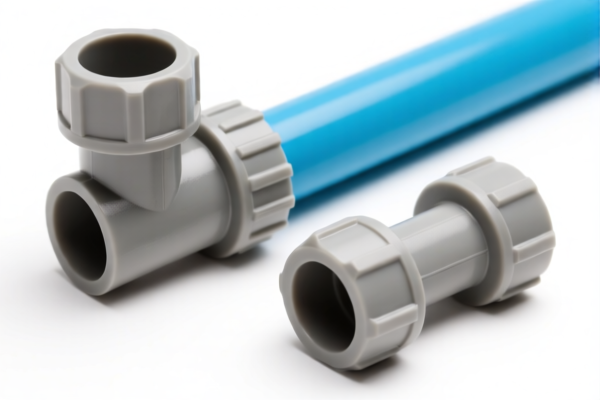
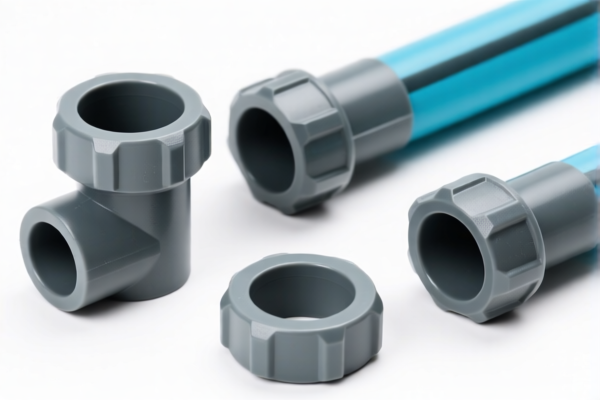
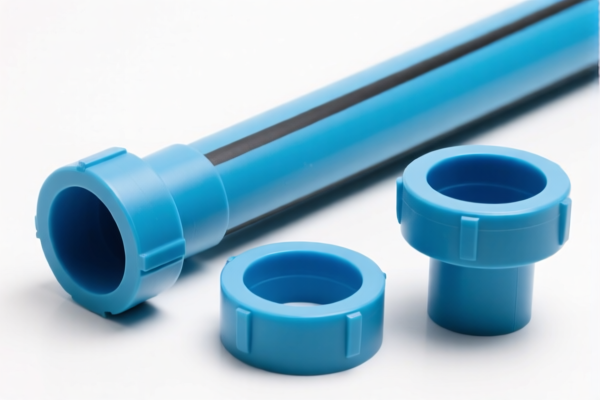
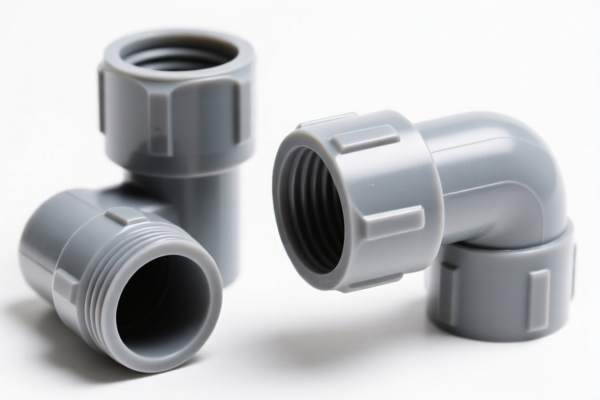
AI Analysis
🔌 Socket-Type Plastic Pipe Fittings (Plastic Hose Connectors)
🌐 HS Code Reference & Clearance Guide | 2026 Latest Tariff Analysis | Professional Entry Strategies
📌 I. Product Definition & Classification: Do You Really Understand “Plastic Pipe Fittings”?
Plastic pipe fittings, specifically socket-type connectors, are critical components in fluid transmission systems. In international trade, they are primarily classified based on material (Plastic) and function (Pipe Accessory/Valve Part).
Key Distinction:
- Plastic Pipe Accessories (3917/3926): If the item is primarily a plastic connector for pipes/tubes, it falls under Chapter 39.
- Parts of Valves/Devices (8481): If the fitting is considered a specific part of a valve assembly or complex piping device, it might fall under Chapter 84, but this is less common for simple plastic connectors unless specified as such in customs rulings.
⚠️ Critical Classification Point:
- If the product is a plastic connector/joint for hoses or pipes → Chapter 39 (Plastics) is the primary choice.
- Specific sub-headings vary based on whether it’s explicitly listed as a “pipe joint” (3917) or a “general plastic article” (3926).
- Misclassification as a valve part (8481) can lead to duty discrepancies due to different base tariffs.
📦 II. HS Code Classification Details (2026 Latest Tariff Authority Comparison)
| HS Code | Product Description | Application Scenario | Material Basis |
|---|---|---|---|
3917.40.00.10 |
Plastic pipe fittings, socket type, joint form | Direct match for plastic hose/pipe joints | Plastic, Joint Form |
3926.90.99.87 |
Plastic pipe fittings, based on plastic material direct match | General plastic article classification | Plastic, Accessory Part |
3917.40.00.95 |
Plastic pipe fittings, plastic material correspondence | Tube accessories classification | Plastic, Tube Accessory |
3926.90.99.89 |
Plastic pipe fittings, plastic material fits 3901-3914 range | Plastic product parts classification | Plastic, General Part |
8481.90.90.40 |
Plastic pipe fittings, considered parts of valve/piping devices | Valve accessory classification | Plastic, Valve Part |
🔍 Key Reminder:
- 3917.40 series is for “Rigid or flexible tubes, pipes and hoses, and fittings therefor.” This is the most precise category for pipe fittings.
- 3926.90 is for “Other articles of plastics.” This is a fallback category if the fitting doesn’t fit the specific definition of a tube joint in 3917.
- 8481.90 is for “Parts of taps, cocks, valves and similar appliances.” Use only if the fitting is explicitly sold as a part of a valve assembly, not as a standalone pipe connector.
💰 III. 2026 Latest Tariff Rate Details (Including Surtaxes & Policy Surcharges)
✅ Applicable Country: USA (US)
✅ Origin: China (CN)
✅ Effective Date: From November 10, 2025 (including subsequent imports)
🎯 1. 3917.40.00.10 & 3917.40.00.95 —— Plastic Pipe Fittings (Precise Fit)
| Item | Content |
|---|---|
| Base Rate | 5.3% (Ad Valorem) |
| USITC Surtax (Section 301) | +25.0% |
| IEEPA Surtax (Section 122/Other) | +10.0% |
| Total Tax Rate | 40.3% |
| Tax Calculation | CIF Value × 40.3% |
| De Minimis Eligibility | ❌ No (deny_de_minimis) |
| Legal Basis Path | Base: 5.3% → Section 301: 25.0% → IEEPA: 10.0% |
📌 Explanation:
- These codes are the most accurate for “pipe fittings.”
- The 25% Section 301 surtax applies to plastic products from China.
- The 10% IEEPA surtax applies to Chinese-origin goods under emergency economic powers.
- Total 40.3% is a high tariff, significantly impacting cost.
🎯 2. 3926.90.99.87 & 3926.90.99.89 —— General Plastic Articles (Fallback Category)
| Item | Content |
|---|---|
| Base Rate | 5.3% (Ad Valorem) |
| USITC Surtax (Section 301) | +7.5% |
| IEEPA Surtax (Section 122/Other) | +10.0% |
| Total Tax Rate | 22.8% |
| Tax Calculation | CIF Value × 22.8% |
| De Minimis Eligibility | ❌ No (deny_de_minimis) |
| Legal Basis Path | Base: 5.3% → Section 301: 7.5% → IEEPA: 10.0% |
📌 Note:
- This category has a lower Section 301 surtax (7.5%) compared to the 25% for 3917.40.
- However, customs may reject this classification if the product is clearly a pipe fitting (3917), leading to audits and penalties.
- Use this only if there is ambiguity or if the product is a complex plastic assembly not strictly a “pipe joint.”
🎯 3. 8481.90.90.40 —— Parts of Valves/Devices (Misclassification Risk)
| Item | Content |
|---|---|
| Base Rate | 0.0% (Ad Valorem) |
| USITC Surtax (Section 301) | +25.0% |
| IEEPA Surtax (Section 122/Other) | +10.0% |
| Total Tax Rate | 35.0% |
| Tax Calculation | CIF Value × 35.0% |
| De Minimis Eligibility | ❌ No (deny_de_minimis) |
| Legal Basis Path | Base: 0.0% → Section 301: 25.0% → IEEPA: 10.0% |
📌 Warning:
- While the base rate is 0%, the 25% Section 301 surtax still applies to plastic parts from China.
- This code is risky for simple plastic fittings. Customs may reclassify to 3917, resulting in back taxes and penalties.
- Only use if the fitting is an integral part of a valve system.
🛠️ IV. Clearance Practical Advice (Practical Pitfall Avoidance Guide)
✅ 1. Required Documentation Checklist (Missing Any = Delay)
| Document | Mandatory | Description |
|---|---|---|
| ✅ Product Specification Sheet | ✔️ | Material type (PP, PVC, PE, etc.), dimensions, pressure rating |
| ✅ Photos (Clear & Labeled) | ✔️ | Show “socket” structure, markings, brand, model |
| ✅ Commercial Invoice | ✔️ | Clearly state “Plastic Pipe Fitting” or “Hose Connector” |
| ✅ Packing List | ✔️ | Itemize quantities and weights |
| ✅ Material Declaration | ✔️ | Confirm plastic type (no rubber/metal mixed unless stated) |
| ✅ Origin Certificate | ✔️ | For proving Chinese origin (or exemption claims) |
✅ 2. Declaration Tips (Key Mantra)
🔥 “Material First, Function Second, Name Specific, Avoid ‘Valve’!”
| Scenario | Correct Declaration | Incorrect Practice |
|---|---|---|
| Standard plastic pipe connector | 3917.40.00.10 “Plastic Pipe Fitting” |
Mislabel as “Valve Part” → 35% but high audit risk |
| Complex plastic assembly | 3926.90.99.87 “Plastic Article” |
Mislabel as simple joint → 40.3% |
| Fitting with metal insert | Declare as composite | Omit metal part → Classification error |
✅ 3. Special Cases Handling
| Scenario | Recommendation |
|---|---|
| OEM Custom Fittings | Provide client order + design drawings to justify 3917 classification |
| Mixed Materials (Plastic + Rubber) | May require different classification; consult expert |
| High-Pressure Industrial Fittings | Emphasize “Pipe Fitting” function, not “Valve Part” |
| Small Batch Samples | Still subject to full tariff; de minimis does not apply for Chinese goods |
🌍 V. Global Market Clearance Comparison (2026 Latest)
| Country/Region | Recommended HS Code | Tariff | Certification | Remarks |
|---|---|---|---|---|
| 🇺🇸 USA | 3917.40.00.10 |
40.3% (CN Origin) | None Specific | High tariff due to Section 301 |
| 🇨🇳 China | 3917.40.00.10 |
5.3% | None Specific | No surtax |
| 🇪🇺 EU | 3917.40 |
0-6.5% | REACH/RoHS | No surtax |
| 🇦🇺 Australia | 3917.40 |
5% | None Specific | No surtax |
| 🇯🇵 Japan | 3917.40 |
0-6% | PSE (if applicable) | No surtax |
📌 Conclusion:
- USA is the only market with high surtaxes (25% + 10%) for Chinese plastic pipe fittings.
- Tariff savings strategy: Consider transshipment or final assembly in a third country (e.g., Vietnam, Mexico) to avoid Section 301, but ensure compliance with rules of origin.
📌 VI. Common Errors & Pitfall Avoidance (Blood Lessons)
❌ Error 1: Calling the product “Valve Part” when it’s a simple connector
👉 Consequence: Customs may reclassify to 3917, leading to audits and delays.
❌ Error 2: Using 3926.90.99.87 for a clear pipe joint
👉 Consequence: Underpayment of duty (22.8% vs 40.3%) → Penalties + Back Taxes.
❌ Error 3: Not specifying “Plastic” in the description
👉 Consequence: Customs may assume metal/rubber, leading to wrong classification.
❌ Error 4: Ignoring “Section 301” applicability
👉 Consequence: Unexpected 25% surtax on top of base duty.
✅ Correct Approach:
“Socket-Type Plastic Pipe Fitting, Material: PVC, For Water/Gas Transmission, Model XYZ, Made in China”
🎯 VII. Conclusion: Precise Classification, Cost Control, Smooth Clearance!
🎯 Remember the Mantra:
🔹 “Pipe Fitting = 3917 (40.3%)”,
🔹 “General Plastic = 3926 (22.8%)”,
🔹 “Valve Part = 8481 (35.0%)”,
🔹 “Choose Wisely, Avoid Audits!”📌 Tip:
If your product can be classified under 3926 without clear contradiction, you may save 17.5% in tariffs (22.8% vs 40.3%). However, ensure the description supports this to avoid customs challenges.
📣 Immediate Action:
📞 Contact a professional customs broker + Provide product photos + Apply for Advance Ruling if possible.
🚀 Let your pipe fittings pass customs smoothly, control costs, and boost profits!
✨ Professional Clearance Starts with Accurate Classification!
💼 Every Cent of Cost Deserves Precise Calculation!
Customer Reviews
About HS Code Classification
The Harmonized System (HS) is an internationally standardized nomenclature developed by the World Customs Organization (WCO) to classify traded products. Over 200 countries use the HS system as the basis for customs tariffs, trade statistics, and import/export regulations.
Each HS code follows a hierarchical structure:
- Chapter (2 digits) — Broad category of goods (e.g., Chapter 84: Machinery and Mechanical Appliances)
- Heading (4 digits) — More specific grouping within the chapter
- Subheading (6 digits) — Internationally standardized breakdown, used by all WCO member countries
- National subdivisions (8-10 digits) — Country-specific extensions for further classification, such as US HTSUS 10-digit codes
Correct HS code classification is essential for smooth customs clearance, accurate duty payment, and compliance with trade regulations. Misclassification can lead to customs delays, overpayment of duties, or penalties.
When importing from CN to US, the applicable tariff rates may include:
- Most-Favored-Nation (MFN) rate — The standard duty rate applied to WTO members
- General rate — Applied to countries without trade agreements
- Trade remedy duties — Additional tariffs such as Section 301 (anti-dumping), Section 232 (national security), or countervailing duties
The information provided on this page is for reference purposes only. For official classification, please consult with your local customs authority or a licensed customs broker.