Socks and Shoelaces
CN → US| HS Code | Tariff Rate | Origin | Destination | Doc |
|---|---|---|---|---|
| 6115940000 | 28.8% | CN | US | Official Doc |
| 6115966010 | 36.3% | CN | US | Official Doc |
| 5609001000 | 37.9% | CN | US | Official Doc |
| 5609003000 | 39.5% | CN | US | Official Doc |
| 6115298010 | 26.0% | CN | US | Official Doc |
| 6115959000 | 31.0% | CN | US | Official Doc |
Product Images
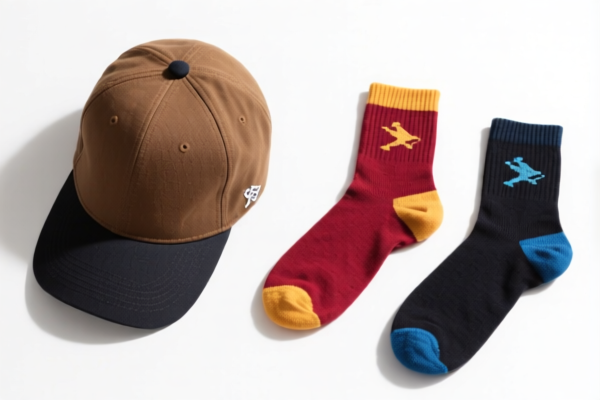
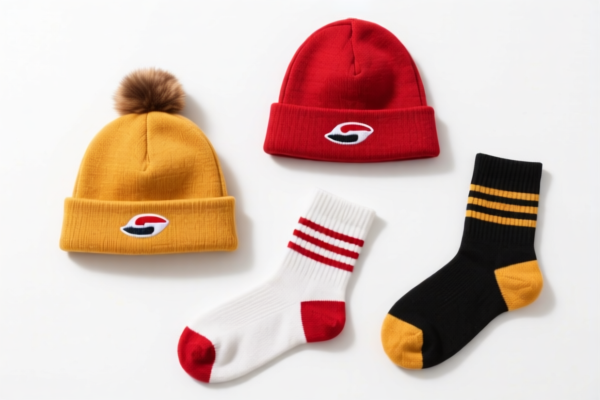
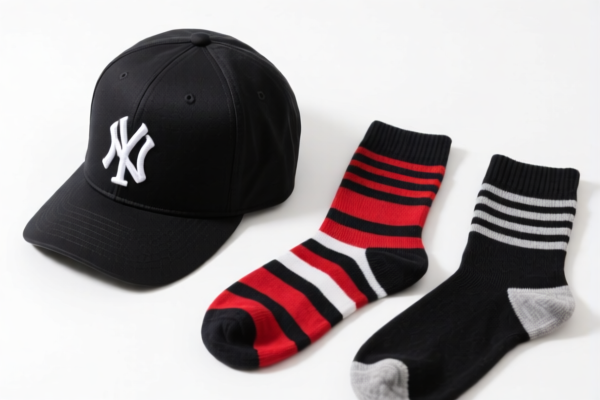
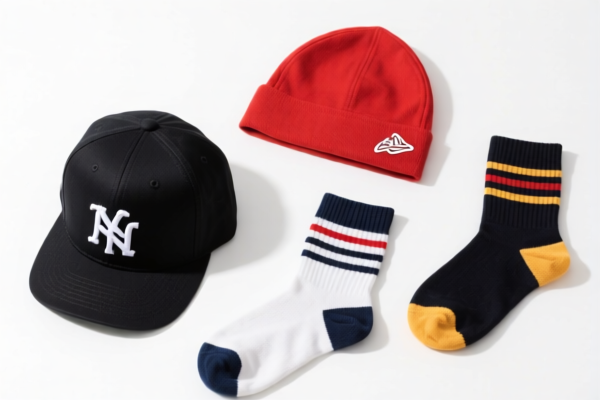
AI Analysis
🧦👟 Socks & Shoelaces: The Ultimate HS Code & Tariff Breakdown for US Imports (2026)
🌐 HS Code Reference & Customs Clearance Guide | 2026 Latest Tariff Analysis | Professional Entry Strategy
📌 I. Product Definition & Classification: Do You Really Understand "Footwear Accessories"?
Socks and Shoelaces are often underestimated in international trade, yet they carry significant tariff implications, especially for goods originating from China. In international trade, these items are classified based on material composition, knitting method, and specific use.
Socks (Hosiery): Usually classified under Chapter 61 (Knitted or Crocheted Apparel). The key determinant is the fiber content (Cotton, Synthetic, Other). Shoelaces: Classified under Chapter 56 (Textile Yarns, Woven Fabrics, etc.) as "Articles of Yarn, Cord, Rope or Twine." They are NOT footwear (Chapter 64).
⚠️ Key Distinction:
- Socks: Knitted, elastic, cover the foot/leg → Chapter 61.
- Shoelaces: Twisted, woven, or braided cords for tying shoes → Chapter 56.
- Misclassification Risk: Declaring shoelaces as "socks" or vice versa can lead to massive duty discrepancies and customs penalties.
📦 II. HS Code Classification Details (2026 Latest Tariff Authority)
Based on the provided data, here are the specific HS Codes for Socks and Shoelaces, along with their tax implications.
🧦 Category 1: Socks (Knitted/Crocheted)
| HS Code | Product Description | Material Assumption | Tax Detail Breakdown | Total Tax Rate |
|---|---|---|---|---|
| 6115.94.00.00 | Socks, other | Unclear/Mixed (Inferred standard mix) | Base: 11.3% Add'l (Sec 301): 7.5% Add'l (Sec 122): 10% |
28.8% |
| 6115.96.60.10 | Socks, other | Synthetic/Other Fiber | Base: 18.8% Add'l (Sec 301): 7.5% Add'l (Sec 122): 10% |
36.3% |
| 6115.29.80.10 | Socks, ankle-length, of cotton | Cotton (Inferred) | Base: 16.0% Add'l (Sec 301): 0.0% Add'l (Sec 122): 10% |
26.0% |
| 6115.95.90.00 | Socks (Pairs), other | Cotton/Other Fiber | Base: 13.5% Add'l (Sec 301): 7.5% Add'l (Sec 122): 10% |
31.0% |
🔍 Key Insight for Socks:
- Cotton socks (6115.29.80.10) benefit from 0% Section 301 tariff, making them the most tax-efficient option if material is verified.
- Non-cotton/synthetic socks face a higher base rate (18.8%) but still carry the 7.5% Section 301 duty.
- Section 122 Tariff (10%) applies to ALL sock categories listed here.
👟 Category 2: Shoelaces (Textile Articles)
| HS Code | Product Description | Material Assumption | Tax Detail Breakdown | Total Tax Rate |
|---|---|---|---|---|
| 5609.00.10.00 | Shoelaces, of textile materials | Textile Fiber | Base: 2.9% Add'l (Sec 301): 25.0% Add'l (Sec 122): 10% |
37.9% |
| 5609.00.30.00 | Shoelaces, of artificial/textile fiber | Artificial/Plant Fiber | Base: 4.5% Add'l (Sec 301): 25.0% Add'l (Sec 122): 10% |
39.5% |
🔍 Key Insight for Shoelaces:
- Shoelaces are classified under Chapter 56, not Chapter 61.
- They carry a heavy 25% Section 301 tariff, regardless of fiber type.
- The base tariff is low (2.9%-4.5%), but the Section 301 duty dominates the total cost.
💰 III. 2026 Latest Tariff Rate Explanation (Including Surcharges)
✅ Applicable Country: United States (US)
✅ Origin: China (CN)
✅ Effective Time: 2025-2026 (Current Trade Policy)
🎯 1. Socks: Material is King for Duty Savings
A. 6115.94.00.00 – General Socks (Mixed/Unclear Material)
- Base Tariff: 11.3% (Section 9802/General)
- Section 301 Surcharge: +7.5% (List 4A/B specific items)
- Section 122 Surcharge: +10% (Presidential proclamation)
- Total: 28.8%
- Why this rate? When material is not clearly defined as cotton or synthetic, customs applies a mid-range base tariff.
B. 6115.96.60.10 – Synthetic/Other Fiber Socks
- Base Tariff: 18.8% (Higher base for synthetics)
- Section 301 Surcharge: +7.5%
- Section 122 Surcharge: +10%
- Total: 36.3%
- Why this rate? Synthetic fibers often face higher base duties due to domestic industry protections.
C. 6115.29.80.10 – Cotton Ankle Socks (Best Value)
- Base Tariff: 16.0%
- Section 301 Surcharge: +0.0% (Exempt/Not on List)
- Section 122 Surcharge: +10%
- Total: 26.0%
- Why this rate? Critical Advantage: Cotton socks are currently exempt from the 7.5% Section 301 tariff, saving 7.5% compared to non-cotton options.
D. 6115.95.90.00 – Other Socks (Pairs)
- Base Tariff: 13.5%
- Section 301 Surcharge: +7.5%
- Section 122 Surcharge: +10%
- Total: 31.0%
🎯 2. Shoelaces: High Surcharge Applies
A. 5609.00.10.00 – Textile Shoelaces
- Base Tariff: 2.9%
- Section 301 Surcharge: +25.0% (High penalty for textile accessories)
- Section 122 Surcharge: +10%
- Total: 37.9%
B. 5609.00.30.00 – Artificial/Plant Fiber Shoelaces
- Base Tariff: 4.5%
- Section 301 Surcharge: +25.0%
- Section 122 Surcharge: +10%
- Total: 39.5%
📌 Explanation:
- Section 301 (25%): Applies to all shoelaces under Chapter 56. This is the largest cost driver.
- Section 122 (10%): Applies to all imports from China in this category.
- Base Tariff: Very low (2.9-4.5%), but negligible compared to the 35% combined surcharge.
🛠️ IV. Customs Clearance Practical Advice (Combat Pitfalls)
✅ 1. Documentation Checklist (Non-negotiable)
| Document | Required? | Note |
|---|---|---|
| ✅ Product Specification Sheet | ✔️ | Must state Fiber Content (e.g., "80% Cotton, 15% Polyester, 5% Elastane") |
| ✅ Product Photos | ✔️ | Show label, stitching, and shape (sock vs. lace) |
| ✅ Commercial Invoice | ✔️ | Clearly describe as "Cotton Socks" or "Textile Shoelaces" – DO NOT use generic terms |
| ✅ Packing List | ✔️ | Separate Socks and Shoelaces in different lines if shipped together |
| ✅ Origin Certificate | ✔️ | Essential for verifying Section 301 applicability |
✅ 2. Declaration Strategy (Key Mantra)
🔥 "Cotton Socks Save 7.5%, Shoelaces Pay 25%!"
| Scenario | Correct Declaration | Wrong Declaration | Consequence |
|---|---|---|---|
| Cotton Socks | 6115.29.80.10"Cotton Socks" |
6115.96.60.10"Socks" |
Overpay 10.3% (36.3% vs 26.0%) |
| Synthetic Socks | 6115.96.60.10"Polyester Socks" |
6115.94.00.00"Socks" |
Overpay 7.5% (36.3% vs 28.8%) |
| Shoelaces | 5609.00.10.00"Shoelaces, Textile" |
6115.95.90.00"Socks" |
Misclassification → Fine + Retroactive Duty |
| Mixed Package | Separate Lines | Single Line | Customs Detention → Rejection |
✅ 3. Special Cases
| Case | Advice |
|---|---|
| OEM Custom Socks | Provide design proof. If material is cotton, insist on 6115.29.80.10 to save 7.5% Section 301. |
| Shoelaces with Metal Tips | Still classified as Shoelaces (5609.00.10.00) if textile is primary. Do not declare as "Hardware." |
| Sample Shipment | Still subject to duties. Use de minimis only if value < $800 (if applicable). Otherwise, pay full 28-39%. |
| Return Goods | If previously exported, may qualify for drawback, but duties are still applicable on re-import. |
🌍 V. Global Market Comparison (2026)
| Country/Region | Recommended HS Code | Total Tariff (China Origin) | Notes |
|---|---|---|---|
| 🇺🇸 USA | 6115.29.80.10 (Cotton Socks) |
26.0% | Best for cotton. Shoelaces at 37.9%. |
| 🇺🇸 USA | 5609.00.10.00 (Shoelaces) |
37.9% | High duty due to Sec 301. |
| 🇨🇳 China | 6115.29.80.10 |
~5-10% | No Section 301/122. Lower cost. |
| 🇪🇺 EU | 6115.95.90.00 |
~12-16% | No Section 301. Lower than US. |
| 🇬🇧 UK | 6115.95.90.00 |
~12-16% | Post-Brexit rules apply. |
📌 Conclusion:
- USA is the most expensive market for Chinese footwear accessories due to Section 301 and Section 122.
- Cotton socks are the most tariff-efficient product in the US market.
- Shoelaces are heavily taxed. Consider sourcing from non-China origins if possible to avoid Section 301.
📌 VI. Common Errors & Pitfalls (Lessons Learned)
❌ Error 1: Declaring "Cotton Socks" as "Socks" (General)
👉 Result: Pay 28.8% instead of 26.0%. Loss: 2.8% on every unit.
❌ Error 2: Declaring "Shoelaces" as "Socks"
👉 Result: Customs rejects because HS Code 6115 does not match 5609. Fine + Delay.
❌ Error 3: Ignoring Section 122 Tariff
👉 Result: All these items carry an extra 10%. Forgetting this leads to underpayment and penalties.
❌ Error 4: Not specifying Fiber Content
👉 Result: Customs assigns highest base tariff (e.g., 18.8% for socks). Loss: 2.5-12.8%.
✅ Correct Approach:
"Cotton Ankle Socks, Knitted, 80% Cotton, 15% Polyester, 5% Elastane, US Size 8-10, Model XYZ"
"Textile Shoelaces, Woven, 100% Polyester, Black, 45cm, Model ABC"
🎯 VII. Conclusion: Precise Classification Saves Money!
🎯 Remember the Mantra:
🔹 "Cotton Socks: 26% (Best!)"
🔹 "Synthetic Socks: 31-36%"
🔹 "Shoelaces: 37-39% (Expensive!)"
🔹 "Always declare Fiber Content!"
📌 Tip:
If you are importing Shoelaces, consider if the volume justifies the 37.9% tariff.
If possible, source from Vietnam or Indonesia to avoid Section 301 and 122 tariffs, reducing total duty to ~3-5%.
📣 Immediate Action:
📞 Contact your customs broker to verify the exact fiber composition.
🚀 File an Advance Ruling if you have large volumes of mixed materials.
💼 Save every 1% counts! In high-volume goods, 1% tariff difference = thousands of dollars.
✨ Professional Customs Clearance Starts with Precise Classification!
💼 Your every penny deserves to be calculated accurately!
Customer Reviews
About HS Code Classification
The Harmonized System (HS) is an internationally standardized nomenclature developed by the World Customs Organization (WCO) to classify traded products. Over 200 countries use the HS system as the basis for customs tariffs, trade statistics, and import/export regulations.
Each HS code follows a hierarchical structure:
- Chapter (2 digits) — Broad category of goods (e.g., Chapter 84: Machinery and Mechanical Appliances)
- Heading (4 digits) — More specific grouping within the chapter
- Subheading (6 digits) — Internationally standardized breakdown, used by all WCO member countries
- National subdivisions (8-10 digits) — Country-specific extensions for further classification, such as US HTSUS 10-digit codes
Correct HS code classification is essential for smooth customs clearance, accurate duty payment, and compliance with trade regulations. Misclassification can lead to customs delays, overpayment of duties, or penalties.
When importing from CN to US, the applicable tariff rates may include:
- Most-Favored-Nation (MFN) rate — The standard duty rate applied to WTO members
- General rate — Applied to countries without trade agreements
- Trade remedy duties — Additional tariffs such as Section 301 (anti-dumping), Section 232 (national security), or countervailing duties
The information provided on this page is for reference purposes only. For official classification, please consult with your local customs authority or a licensed customs broker.