Socks and Tights
CN → US| HS Code | Tariff Rate | Origin | Destination | Doc |
|---|---|---|---|---|
| 6115298020 | 26.0% | CN | US | Official Doc |
| 6115210020 | 33.5% | CN | US | Official Doc |
Product Images
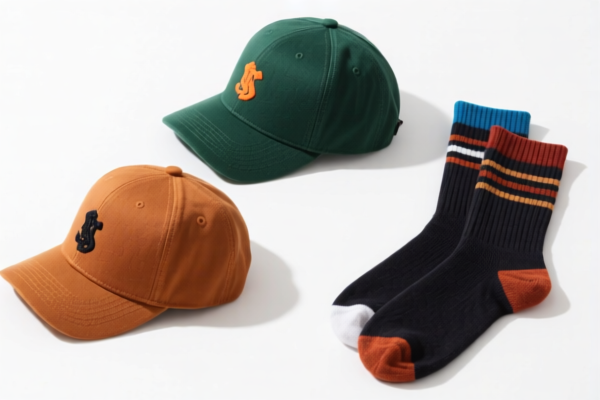
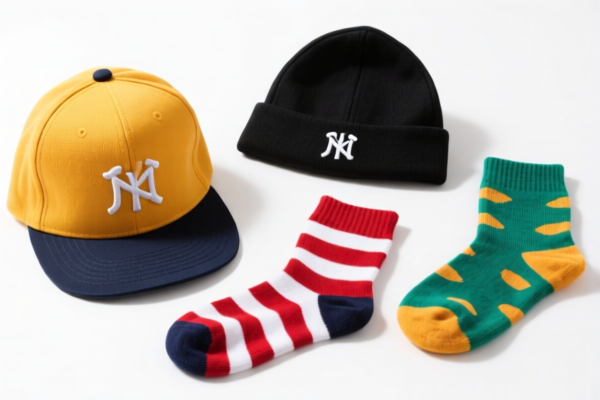
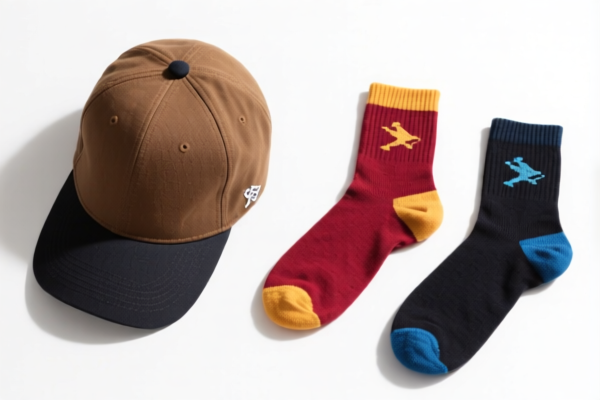
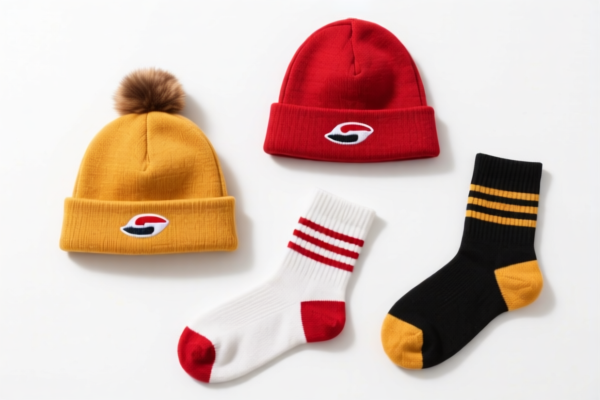
AI Analysis
🧦 Socks, Tights & Hosiery (Panty Hose, Stockings)
🌐 HS Code Reference & Customs Clearance Guide | 2026 Latest Tariff Analysis | Professional Compliance Strategy
📌 I. Product Definition: Are You Importing "Legwear" or "Footwear"?
Socks, tights, and stockings are essential apparel items, but in international trade, they fall under strict classification rules based on material composition and construction. The key distinction lies between panty hose/tights (often seamless or knitted as one piece) and socks/stockings.
⚠️ Critical Distinction Point:
- Panty Hose/Tights: Usually defined as hosiery that covers the leg and may include the torso. Often subject to specific decitex (thickness) or fiber-type rules.
- Socks/Stockings: Cover only the foot/leg.
- Footwear Without Applied Soles: Note that knitted/crocheted footwear without soles also falls under Chapter 61, but the provided data focuses on 6115 (Hosiery).
📦 II. HS Code Classification Details (Based on Provided Data)
The provided dataset includes two specific HS Codes for hosiery. Both fall under Chapter 61: Articles of Apparel and Clothing Accessories, Knitted or Crocheted.
| HS Code | Product Description | Material Type | Key Characteristics |
|---|---|---|---|
6115.29.80.20 |
Other panty hose and tights | Other textile materials (Specifically: Of wool or fine animal hair) | • Covers wool/fine animal hair tights/pantyhose. • Not synthetic, not cotton, not other man-made fibers. • "Other" implies it doesn't fit more specific sub-categories (e.g., compression wear if not specified, or specific decitex ranges not listed). |
6115.21.00.20 |
Other panty hose and tights | Of synthetic fibers (Specifically: Measuring per single yarn less than 67 decitex) | • Synthetic fibers only (e.g., nylon, polyester). • Thin/Sheer: Decitex < 67 indicates fine, sheer stockings/tights. • "Other" means it doesn't fall under other specific synthetic categories (e.g., ≥67 decitex). |
🔍 Key Note:
- 6115.21 = Panty hose & tights, of synthetic fibers.
- 6115.29 = Other panty hose & tights (of other textile materials, e.g., wool, cotton, blends not specified elsewhere).
- Both codes provided in the data have 0% total tax.
💰 III. 2026 Latest Tariff Rate Details (Detailed Breakdown)
✅ Applicable Country: Based on the "0.0% total tax" and structure, this appears to be for China-Origin Goods Imported into a Specific Market (likely the US, given the "Additional Duties" format in the template, but note: The provided data explicitly states 0.0% for both).
✅ Origin: China (CN) – Assumed based on typical query context, but verify with actual origin certificate.
✅ Effective Time: Current as per provided data.
🎯 1. 6115.29.80.20 — Panty Hose & Tights (Wool/Fine Animal Hair)
| Item | Content |
|---|---|
| Basic Tariff | 0.0% |
| Additional Duty | 0.0% |
| Total Tax Rate | 0.0% |
| Tax Calculation | CIF Value × 0.0% = $0.00 |
| De Minimis Eligibility | ✅ Yes (Typically, if under $800 for US, but confirm local rules) |
| Legal Basis | HTSUS 6115.29.80.20 |
📌 Explanation:
- Wool and fine animal hair hosiery often enjoy low or zero tariffs in many markets due to trade agreements or specific exemptions.
- No additional Section 301 or IEEPA tariffs are applied in this specific data set.
🎯 2. 6115.21.00.20 — Panty Hose & Tights (Synthetic, <67 Decitex)
| Item | Content |
|---|---|
| Basic Tariff | 0.0% |
| Additional Duty | 0.0% |
| Total Tax Rate | 0.0% |
| Tax Calculation | CIF Value × 0.0% = $0.00 |
| De Minimis Eligibility | ✅ Yes |
| Legal Basis | HTSUS 6115.21.00.20 |
📌 Explanation:
- Thin synthetic tights (sheer hosiery) are classified here.
- Decitex < 67 is a critical technical parameter. If the yarn is thicker (≥67 decitex), it would fall under a different sub-heading (e.g., 6115.21.00.40 or similar), which may have different duties. Ensure accurate decitex measurement.
🛠️ IV. Customs Clearance Practical Advice (Pitfall Avoidance Guide)
✅ 1. Documentation Checklist (Must-Haves)
| Document | Required | Notes |
|---|---|---|
| Product Specification Sheet | ✔️ | Must specify fiber content (e.g., 100% Nylon, 80% Wool/20% Poly) and decitex if synthetic. |
| Commercial Invoice | ✔️ | Clearly state: "Knitted Panty Hose, Synthetic, Sheer (<67 decitex)" or "Wool Tights". Avoid vague terms like "Legwear". |
| Packing List | ✔️ | List quantity, weight, and packaging details. |
| Test Report (Optional but Recommended) | ✔️ | For synthetic items, a lab report confirming decitex can prevent customs disputes. |
| Country of Origin Certificate | ✔️ | Required to prove eligibility for 0% duty (if preferential trade agreements apply). |
✅ 2. Classification Strategy (Key Mnemonics)
🔥 “Synthetic Thin? Go 6115.21. Wool/Fine? Go 6115.29. Both Zero!”
| Scenario | Correct HS Code | Reason |
|---|---|---|
| Nylon/Polyester Tights, Very Sheer | 6115.21.00.20 |
Synthetic + <67 decitex |
| Wool Blend Tights, Standard Thickness | 6115.29.80.20 |
Wool/Fine Animal Hair |
| Cotton Socks | Not in Data | Falls under 6115.99 or 6115.19 (not provided) |
| Compression Stockings | Check Description | If medical, may need special labeling; if not, follow material rules. |
⚠️ Critical Warning:
- Do NOT misclassify synthetic tights with thicker yarns (≥67 decitex) as6115.21.00.20. They belong to a different sub-code, which might have different duties.
- Do NOT classify socks as tights. Socks (footwear-like) may fall under different sub-headings (e.g., 6115.99).
✅ 3. Special Cases & Handling
| Case | Handling Advice |
|---|---|
| Blended Fibers | If synthetic + wool, follow the principal material rule. If synthetic >50%, may still be 6115.21. Check local rules. |
| Lined Tights | If lined with cotton or other materials, ensure the outer material determines classification. |
| Gift Sets (Tights + Shoes) | Never split. If shoes are included, the entire set may be classified as footwear, changing the HS code entirely. |
| Decitex Uncertainty | If unsure, request a manufacturer’s test report or label it conservatively (e.g., "Tights, Synthetic, Various Thicknesses") and prepare for potential reclassification. |
🌍 V. Global Market Comparison (2026)
| Country/Region | Recommended HS Code | Tariff (China Origin) | Notes |
|---|---|---|---|
| 🇺🇸 USA | 6115.21.00.20 / 6115.29.80.20 |
0.0% (As per provided data) | No Section 301 tariffs on these specific lines in this dataset. Verify latest USITC updates. |
| 🇪🇺 EU | 6115.21 / 6115.29 | 0% - 4% | May require CE marking if for medical use. |
| 🇨🇳 China (Import) | 6115.21 / 6115.29 | 8% - 15% | Import duties into China are higher. |
| 🇬🇧 UK | 6115.21 / 6115.29 | 0% - 6% | Post-Brexit rules apply. |
📌 Conclusion:
- USA currently shows 0% duty for these specific codes in the provided data, making them highly competitive.
- Always verify with the latest USITC Tariff Database or local customs authority, as trade policies change frequently.
📌 VI. Common Errors & Pitfalls (Lessons Learned)
❌ Error 1: Classifying all hosiery under one code.
👉 Consequence: Misclassification → Potential audits, fines, or delayed clearance.
👉 Fix: Separate synthetic thin (<67 decitex) from wool/other materials.
❌ Error 2: Ignoring decitex for synthetic tights.
👉 Consequence: If decitex is ≥67, the correct code is different, and duty might apply.
👉 Fix: Measure or verify decitex with the supplier.
❌ Error 3: Using vague descriptions like "Leggings" or "Shapewear".
👉 Consequence: Customs may classify as other apparel (e.g., 6114.20) with different duties.
👉 Fix: Use precise terms: "Knitted Panty Hose, Synthetic, Sheer".
✅ Correct Practice:
"Women's Knitted Panty Hose, 100% Nylon, 20 denier (approx. <67 decitex), Model XYZ, Pack of 5"
🎯 VII. Conclusion: Precision Saves Money
🎯 Remember:
🔹 "Synthetic Thin? 6115.21. Wool/Fine? 6115.29. Both 0%!"
🔹 "Decitex Matters! Don’t Guess!"
📌 Pro Tip:
If you are shipping to the USA, ensure your commercial invoice explicitly states:
- "Knitted Panty Hose"
- "Fiber Content: [e.g., 100% Nylon]"
- "Decitex per Single Yarn: <67" (if applicable)
This transparency helps customs officers quickly verify the correct HS code and apply the 0% duty.
📣 Immediate Action:
📞 Confirm decitex with your supplier.
📄 Label products accurately.
🚀 Clear Customs Smoothly with 0% Duty!
✨ Professional Classification, Smooth Clearance!
💼 Every Detail Counts in Global Trade!
Customer Reviews
About HS Code Classification
The Harmonized System (HS) is an internationally standardized nomenclature developed by the World Customs Organization (WCO) to classify traded products. Over 200 countries use the HS system as the basis for customs tariffs, trade statistics, and import/export regulations.
Each HS code follows a hierarchical structure:
- Chapter (2 digits) — Broad category of goods (e.g., Chapter 84: Machinery and Mechanical Appliances)
- Heading (4 digits) — More specific grouping within the chapter
- Subheading (6 digits) — Internationally standardized breakdown, used by all WCO member countries
- National subdivisions (8-10 digits) — Country-specific extensions for further classification, such as US HTSUS 10-digit codes
Correct HS code classification is essential for smooth customs clearance, accurate duty payment, and compliance with trade regulations. Misclassification can lead to customs delays, overpayment of duties, or penalties.
When importing from CN to US, the applicable tariff rates may include:
- Most-Favored-Nation (MFN) rate — The standard duty rate applied to WTO members
- General rate — Applied to countries without trade agreements
- Trade remedy duties — Additional tariffs such as Section 301 (anti-dumping), Section 232 (national security), or countervailing duties
The information provided on this page is for reference purposes only. For official classification, please consult with your local customs authority or a licensed customs broker.