Sodium Alginate Encapsulation Material
CN → US| HS Code | Tariff Rate | Origin | Destination | Doc |
|---|---|---|---|---|
| 1302310000 | 17.5% | CN | US | Official Doc |
| 1302390090 | 20.7% | CN | US | Official Doc |
Product Images

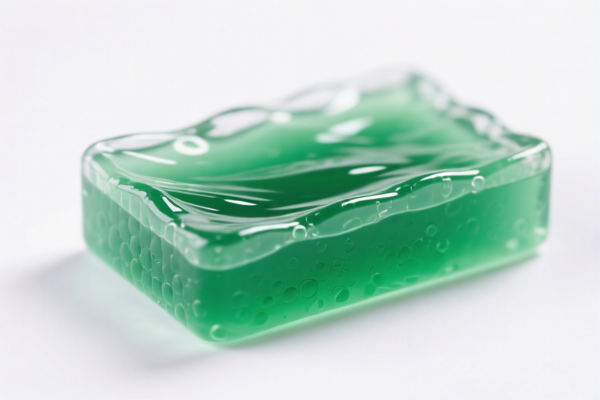
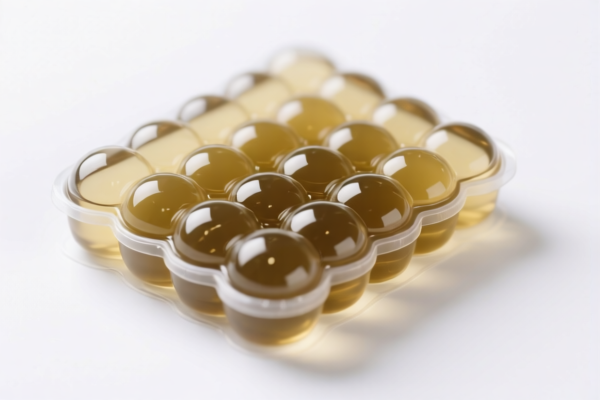
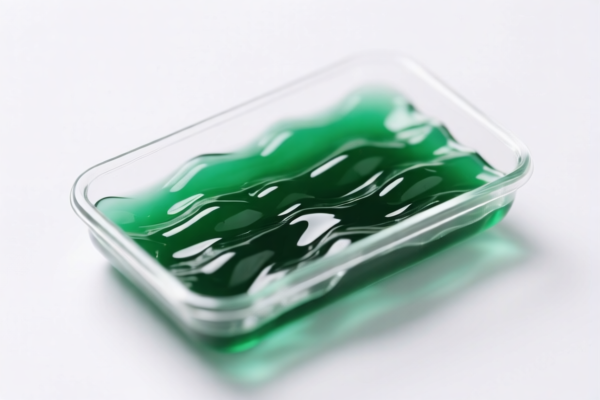
AI Analysis
🌿 Sodium Alginate Encapsulation Material
🌐 HS Code Reference & Customs Clearance Guide | 2026 Latest Tariff Analysis | Professional Strategy
📌 I. Product Definition & Classification: What Exactly is "Sodium Alginate"?
Sodium Alginate is a natural polysaccharide derived primarily from brown seaweed (such as Laminaria or Macrocystis). It is widely used in the food, pharmaceutical, textile, and paper industries as a thickening, gelling, and stabilizing agent.
In the context of encapsulation materials, Sodium Alginate is often used for microencapsulation or bead formation (e.g., spherification in molecular gastronomy, controlled-release drug delivery, or food flavor protection).
Key Distinction in Tariff Classification:
The Harmonized System (HS) categorizes vegetable-derived mucilages and thickeners broadly under Chapter 13. However, specific subheadings distinguish between Agar-agar and Other Mucilages/Thickeners.
⚠️ Critical Classification Point:
- If the product is strictly Agar-agar (derived from red algae), it falls under 1302.31.
- Sodium Alginate is derived from brown algae and is NOT Agar-agar. Therefore, it falls under "Other mucilages and thickeners" → 1302.39.
📦 II. HS Code Classification Details (2026 Tariff Authority)
Based on the provided data, here are the relevant HS codes for Vegetable Mucilages and Thickeners:
| HS Code | Product Description | Applicability | Contains Agar-agar? |
|---|---|---|---|
1302.31.00.00 |
Agar-agar | Red algae extract, used for gelling in food/jelly | ✅ Yes |
1302.39.00.90 |
Other Mucilages and Thickeners (incl. Sodium Alginate) | Brown algae extract (Sodium Alginate), Pectin, Guar Gum, etc. | ❌ No |
🔍 Key Takeaway:
- Sodium Alginate must be classified under 1302.39.00.90 ("Other").
- Do NOT misclassify it as Agar-agar (1302.31.00.00) just because both are "gelling agents." Customs will check the botanical source and chemical composition.
💰 III. 2026 Latest Tariff Rate Breakdown (Including Surcharges)
✅ Applicable Country: United States (US)
✅ Country of Origin: China (CN)
✅ Effective Date: 2025-11-10 (and subsequent imports)
🎯 1. 1302.31.00.00 —— Agar-agar (For Comparison Only)
| Item | Details |
|---|---|
| Base Tariff | 0.0% |
| Additional Tariff (Section 301 / IEEPA) | +7.5% |
| Total Tax Rate | 7.5% |
| Tax Calculation | CIF Value × 7.5% |
| De Minimis Exemption | ❌ Not Applicable (High tariff threshold) |
| Legal Basis Path | IEEPA:1302.31 → USITC:1302.31.00.00 |
📌 Note: This code is NOT for Sodium Alginate. It is included here only to show the lower rate for Agar-agar, highlighting the importance of correct classification.
🎯 2. 1302.39.00.90 —— Other Mucilages & Thickeners (Sodium Alginate)
| Item | Details |
|---|---|
| Base Tariff | 3.2% |
| Additional Tariff (Section 301 / IEEPA) | +7.5% |
| Total Tax Rate | 10.7% |
| Tax Calculation | CIF Value × 10.7% |
| De Minimis Exemption | ❌ Not Applicable |
| Legal Basis Path | IEEPA:1302.39 → USITC:1302.39.00.90 |
📌 Interpretation:
- Base Rate (3.2%): Standard MFN (Most Favored Nation) rate for "other vegetable mucilages."
- Additional Tariff (7.5%): Imposed under US trade laws (Section 301) on Chinese-origin goods.
- Total Effective Rate: 10.7%.
- This is a moderate-to-high tariff compared to raw agricultural exports (which may be 0%), but significantly lower than high-tech goods.
🛠️ IV. Customs Clearance Practical Advice (Real-World Pitfall Guide)
✅ 1. Documentation Checklist (Must-Have)
| Document | Required? | Description |
|---|---|---|
| ✅ Commercial Invoice | ✔️ | Must clearly state: "Sodium Alginate, CAS No. 9005-38-3, Derived from Brown Seaweed" |
| ✅ Certificate of Origin | ✔️ | Prove country of origin (e.g., China). If from Vietnam/Indonesia, different rates may apply. |
| ✅ Ingredient/Composition Sheet | ✔️ | Explicitly state: 100% Sodium Alginate. No other fillers if claiming purity. |
| ✅ FDA Registration / DSHEA Compliance | ✔️ | If for food/pharma use, ensure FDA facility registration and prior notice are completed. |
| ✅ MSDS (Material Safety Data Sheet) | ✔️ | Required for chemical customs classification verification. |
| ✅ Third-Party Lab Report | ✔️ | Confirm it is NOT Agar-agar (different seaweed species). |
✅ 2. Declaration Strategy (Key Mnemonics)
🔥 "Correct Name, Correct HS, Avoid 7.5% Mistake!"
| Scenario | Correct Declaration | Wrong Action |
|---|---|---|
| Pure Sodium Alginate | 1302.39.00.90 |
Misclassifying as 1302.31 (Agar-agar) → Under-declaration penalty |
| Sodium Alginate + Other Additives | 1302.39.00.90 |
Splitting into "Additives" and "Thickeners" → Complicated clearance |
| Modified Sodium Alginate | 1302.39.00.90 |
Claiming "Chemical Product" (Chapter 29) → Wrong Chapter |
| Packaged for Retail (Food) | 1302.39.00.90 |
Declaring as "Food Ingredient" without HS code → Customs hold |
📌 Critical Warning:
- Do NOT declare as "Agar" or "Jelly Powder" if it is Sodium Alginate.
- Do NOT split the shipment into "Raw Material" and "Finished Product" if it is the same chemical substance.
- Always include CAS Number 9005-38-3 in the description to avoid ambiguity.
🌍 V. Global Market Clearance Comparison (2026)
| Country/Region | Recommended HS Code | Tariff (China Origin) | Certification Requirements | Remarks |
|---|---|---|---|---|
| 🇺🇸 USA | 1302.39.00.90 |
10.7% (3.2% + 7.5%) | FDA, FDA Prior Notice | High compliance needed |
| 🇨🇳 China | 1302.39.00.90 |
0% (Import) | GB Standard Compliance | Free trade within China |
| 🇪🇺 EU | 1302.39.00 |
6.5% | REACH, EFSA | Higher base rate than US |
| 🇦🇺 Australia | 1302.39.00 |
5.0% | FSANZ | No Section 301 surcharge |
| 🇯🇵 Japan | 1302.39.00 |
0% - 3.5% | FSC (Food Sanitation Act) | Favorable rates |
📌 Conclusion:
- The US tariff (10.7%) is competitive compared to the EU (6.5% base) once you factor in other trade barriers, but higher than Japan/Australia.
- Sodium Alginate is NOT Agar-agar, so the 7.5% surcharge applies to the 3.2% base, totaling 10.7%.
📌 VI. Common Errors & Pitfalls (Lessons Learned)
❌ Mistake 1: Declaring Sodium Alginate as "Agar-agar" (1302.31.00.00)
👉 Consequence: Customs will reject it due to different chemical properties. If detected later, back taxes + penalties apply.
👉 Tax Diff: You might think you save 3.2% (0% vs 3.2%), but the penalty risk is high.
❌ Mistake 2: Declaring as "Other Chemicals" (Chapter 29)
👉 Consequence: Misclassification. Sodium Alginate is a natural polysaccharide, not a single organic compound, so it stays in Chapter 13.
❌ Mistake 3: Ignoring the "Encapsulation" context
👉 Consequence: If declared as "Finished Encapsulation Product," it might fall under pharmaceuticals (Chapter 30) or foods (Chapter 21), leading to higher duties and FDA drug regulations.
👉 Solution: Declare as "Raw Material: Sodium Alginate" unless it is a pre-mixed, labeled consumer product.
🎯 VII. Conclusion: Professional Declaration for Cost Efficiency
🎯 Remember the Mnemonic:
🔹 "Sodium Alginate is NOT Agar.
HS 1302.39, 10.7% Total Tax.
Declare CAS 9005-38-3,
Avoid Penalties, Stay Legal!"
📌 Pro Tip:
- If your Sodium Alginate is sourced from Indonesia or Vietnam, check for preferential tariffs under RCEP or bilateral FTAs. The US may still apply 301 tariffs, but other markets could offer 0% duty.
- Always request an Advance Ruling (CBP Ruling) from US Customs if importing large volumes. It locks in the classification and protects you from future audits.
📣 Immediate Action:
📞 Consult a licensed customs broker.
📄 Prepare CAS Number, Botanical Source, and FDA Documentation.
🚀 Ensure smooth clearance with accurate HS Code 1302.39.00.90.
✨ Professional Customs Clearance Starts with Accurate Classification!
💼 Your Every Dollar is Worth Precise Calculation!
Customer Reviews
About HS Code Classification
The Harmonized System (HS) is an internationally standardized nomenclature developed by the World Customs Organization (WCO) to classify traded products. Over 200 countries use the HS system as the basis for customs tariffs, trade statistics, and import/export regulations.
Each HS code follows a hierarchical structure:
- Chapter (2 digits) — Broad category of goods (e.g., Chapter 84: Machinery and Mechanical Appliances)
- Heading (4 digits) — More specific grouping within the chapter
- Subheading (6 digits) — Internationally standardized breakdown, used by all WCO member countries
- National subdivisions (8-10 digits) — Country-specific extensions for further classification, such as US HTSUS 10-digit codes
Correct HS code classification is essential for smooth customs clearance, accurate duty payment, and compliance with trade regulations. Misclassification can lead to customs delays, overpayment of duties, or penalties.
When importing from CN to US, the applicable tariff rates may include:
- Most-Favored-Nation (MFN) rate — The standard duty rate applied to WTO members
- General rate — Applied to countries without trade agreements
- Trade remedy duties — Additional tariffs such as Section 301 (anti-dumping), Section 232 (national security), or countervailing duties
The information provided on this page is for reference purposes only. For official classification, please consult with your local customs authority or a licensed customs broker.