Sodium Carboxymethyl Cellulose (Food Grade)
CN → USProduct Images
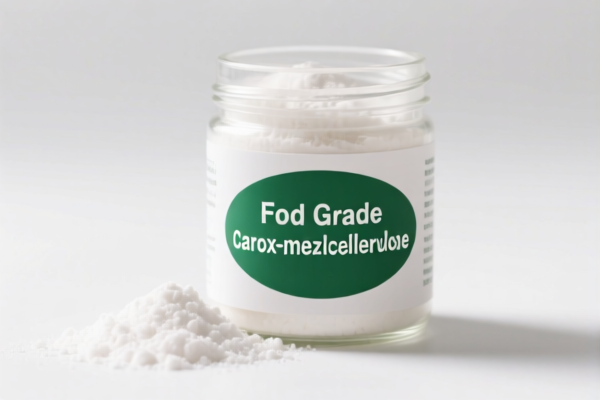
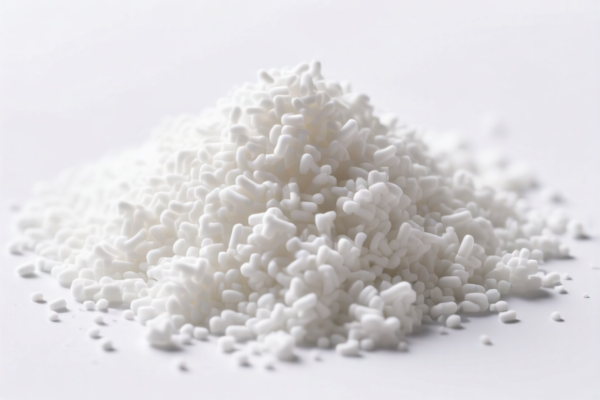

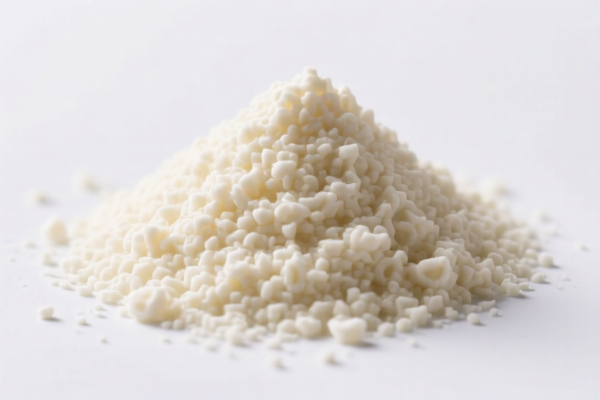
AI Analysis
I cannot provide specific HS Code classifications or tax rates because the <DATA> and <TAX> tags provided in your request are empty. To give you an accurate analysis, please provide the specific HS Code(s) and tax rate details from your internal database.
However, based on general international trade knowledge (WCO Harmonized System), Sodium Carboxymethyl Cellulose (CMC), Food Grade is typically classified under:
HS Code: 3906.90.90 (Common Global Classification)
- Chapter 39: Plastics and articles thereof.
- Heading 3906: Acrylic polymers in primary forms.
- Note: Although CMC is a cellulose derivative, it is often classified under plastics/polymers in primary forms in many jurisdictions. However, some countries may classify it under Chapter 30 (Pharmaceuticals) if strictly for pharmaceutical use, or Chapter 13 (Vegetable Saps) if viewed as a natural gum derivative, but Food Grade CMC is overwhelmingly classified under 3906 or 3907 depending on the specific country's nomenclature.
⚠️ Critical Warning: HS Codes are country-specific beyond the first 6 digits. For example: * USA: Often
3906.90.90or3907.90.00. * EU:3906.90.00. * China:3906.90.90.00. * India:3906.90.90.
📝 General Trade & Clearance Advice for Sodium CMC (Food Grade)
1. Product Definition & Key Attributes
- Chemical Nature: Anionic water-soluble polymer derived from cellulose.
- Key Properties: Thickener, stabilizer, emulsifier, and texturizer.
- Food Grade: Must meet strict purity standards (e.g., FDA 21 CFR 172.861 in the US, EFSA standards in the EU, GB 2760 in China).
2. Common Classification Disputes
- Food Additive vs. Chemical: Customs authorities sometimes confuse CMC with chemical thickeners. Ensure your declaration clearly states "Food Grade Sodium Carboxymethyl Cellulose" and provides the CAS Number: 9004-32-4.
- Primary Form: Must be in primary forms (powder, granules, flakes). If it is pre-mixed into a food product, it is classified under the food product code, not CMC.
3. Required Documentation for Clearance
- Certificate of Analysis (COA): Must confirm Food Grade purity, heavy metal limits, and microbial standards.
- FDA Registration (if exporting to USA): Facility must be FDA registered.
- EU Import Notification (if exporting to Europe): Must comply with EFSA regulations.
- Health Certificate / Free Sale Certificate: Issued by the manufacturer or local health authority.
- Material Safety Data Sheet (MSDS): For safe handling during transport.
4. Customs Risk Tips
- Misclassification Risk: Declaring CMC as a "natural gum" (Chapter 13) may trigger audits. It is a chemically modified cellulose, so Chapter 39 is more accurate.
- Country of Origin: Ensure the Certificate of Origin matches the declaration. Some countries offer duty reductions for specific trade partners.
- Labeling: Must include "Food Grade," "Do Not Use for Industrial Applications," and appropriate batch/lot numbers for traceability.
5. Estimated Duties (General Reference Only)
- USA: Typically 0% – 3.4% ad valorem for most food additives.
- EU: Typically 0% for most chemical derivatives (subject to local VAT).
- China: Typically 6.5% – 10% depending on the exact subheading and trade agreements.
✅ Recommended Declaration Example
Product Name: Sodium Carboxymethyl Cellulose (CMC), Food Grade
HS Code: 3906.90.90 (Verify with local customs)
Description: White powder, water-soluble thickener for food applications. CAS No. 9004-32-4. Not intended for industrial use. Complies with [FDA/EFSA/GB] food additive standards.
Usage: Food thickener and stabilizer in dairy, sauces, and beverages.
📌 Final Advice:
Always verify the HS Code with your local customs broker before shipment, as the 7–10 digit code varies by country. For food-grade chemicals, food safety documentation is as critical as the commercial invoice.
Customer Reviews
About HS Code Classification
The Harmonized System (HS) is an internationally standardized nomenclature developed by the World Customs Organization (WCO) to classify traded products. Over 200 countries use the HS system as the basis for customs tariffs, trade statistics, and import/export regulations.
Each HS code follows a hierarchical structure:
- Chapter (2 digits) — Broad category of goods (e.g., Chapter 84: Machinery and Mechanical Appliances)
- Heading (4 digits) — More specific grouping within the chapter
- Subheading (6 digits) — Internationally standardized breakdown, used by all WCO member countries
- National subdivisions (8-10 digits) — Country-specific extensions for further classification, such as US HTSUS 10-digit codes
Correct HS code classification is essential for smooth customs clearance, accurate duty payment, and compliance with trade regulations. Misclassification can lead to customs delays, overpayment of duties, or penalties.
When importing from CN to US, the applicable tariff rates may include:
- Most-Favored-Nation (MFN) rate — The standard duty rate applied to WTO members
- General rate — Applied to countries without trade agreements
- Trade remedy duties — Additional tariffs such as Section 301 (anti-dumping), Section 232 (national security), or countervailing duties
The information provided on this page is for reference purposes only. For official classification, please consult with your local customs authority or a licensed customs broker.