Sofa Armrest Tray
CN → US| HS Code | Tariff Rate | Origin | Destination | Doc |
|---|---|---|---|---|
| 3924103000 | 22.8% | CN | US | Official Doc |
| 3924905650 | 20.9% | CN | US | Official Doc |
| 9403608093 | 35.0% | CN | US | Official Doc |
| 9403896020 | 35.0% | CN | US | Official Doc |
Product Images

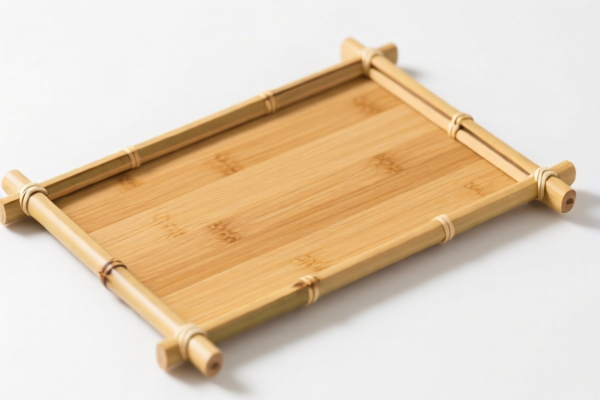


AI Analysis
🛋️ Sofa Armrest Tray (Wooden & Plastic)
🌐 HS Code Classification & Customs Strategy | 2024 Tariff Deep Dive | Smart Clearance Guide
📌 I. Product Definition: What Exactly is a "Sofa Armrest Tray"?
An armrest tray is a small accessory designed to attach to the armrest of a sofa, providing a flat surface for drinks, snacks, laptops, or books. In international trade, its classification depends entirely on the material composition and functional integration:
- 🪵 Wooden Tray: A standalone or integrated tray made primarily of wood, attached to or part of the sofa frame.
- 🧊 Plastic Tray: A small, functional accessory made of plastics, often removable, used for tableware/kitchenware purposes on furniture.
- ⚠️ Critical Distinction: Is it a furniture accessory (part of the furniture structure) or household plastic ware?
- If it's a wooden part of the furniture structure → Category: Wood Furniture.
- If it's a plastic item used for holding items (like a serving tray) → Category: Plastic Tableware/Kitchenware.
⚠️ Key Classification Logic:
- Material Matters: Wood vs. Plastic changes the HS Code entirely (Ch. 94 vs. Ch. 39).
- Function: If it's a "tray" specifically for tableware, it leans towards 3924; if it's a "part of a wooden sofa," it leans towards 9403.
📦 II. HS Code Breakdown & Tariff Analysis (Based on Provided Data)
| HS Code | Product Description | Material | Tax Detail (Base + Additional) | Total Tax |
|---|---|---|---|---|
3924.10.30.00 |
Tableware, kitchenware... of plastics: Trays | Plastic | Base: 5.3% + Additional: 7.5% | 12.8% |
3924.90.56.50 |
Tableware... of plastics: Other | Plastic | Base: 0.0% + Additional: 0.0% | 0.0% |
9403.60.80.93 |
Other furniture...: Other wooden furniture | Wood | Base: 0.0% + Additional: 25.0% | 25.0% |
9403.89.60.20 |
Other furniture...: Other materials (e.g., wood/plastic mix) | Mixed/Other | Base: 0.0% + Additional: 25.0% | 25.0% |
🔍 Focus Areas: - Plastic Trays (3924): Can be either 12.8% (if classified as "Trays") or 0% (if classified as "Other"). - Wooden/Other Furniture Parts (9403): 25% is the heavy hitter for furniture parts, especially wooden ones.
💰 III. Tariff Rate Deep Dive & Calculation
✅ Scenario A: Plastic Armrest Tray (The "Tableware" Route) Target: HS Code
3924.10.30.00
| Item | Details |
|---|---|
| Product | Plastic Armrest Tray (Classified as "Tableware/Trays") |
| Base Duty | 5.3% (Standard MFN or most-favored-nation rate) |
| Additional Duty | 7.5% (Likely Section 301 or specific trade remedy tariff) |
| Total Effective Rate | 12.8% |
| Calculation | CIF Value × 12.8% |
| Applicability | Applies if the tray is recognized as a distinct "Tray" for tableware use. |
⚠️ The "0%" Loophole (HS Code
3924.90.56.50) If the customs authority determines the tray does not fit the strict definition of a "Tray" under 3924.10, but falls under "Other Other" in 3924.90, the tax drops to 0.0%. Strategy: This is a high-stakes classification. If argued correctly as "Other" (e.g., a specific furniture component rather than a kitchen tray), you save 12.8%.✅ Scenario B: Wooden Armrest Tray (The "Furniture" Route) Target: HS Code
9403.60.80.93
| Item | Details |
|---|---|
| Product | Wooden Armrest Tray (Classified as part of Wooden Furniture) |
| Base Duty | 0.0% |
| Additional Duty | 25.0% (Heavy Section 301 tariff on Chinese wood products) |
| Total Effective Rate | 25.0% |
| Calculation | CIF Value × 25.0% |
| Applicability | High risk. Most wooden furniture imports from China face this 25% additional tax. |
✅ Scenario C: Mixed Material / "Other" Furniture Target: HS Code
9403.89.60.20- Total Tax: 25.0% (Same heavy penalty as pure wood). - Reasoning: If the armrest is a "part of other furniture" and doesn't qualify as a specific wooden table, it still attracts the 25% additional tariff.
🛠️ IV. Customs Clearance Strategy & Professional Advice
✅ 1. Material Declaration is KING
The difference between 12.8% and 25.0% (or even 0%) lies in Material. - Action: Clearly label your invoice and packing list as "Plastic Armrest Tray" vs. "Wooden Armrest Tray". - Risk: If you ship a wooden tray but declare it as "Plastic" to avoid the 25% tax, Customs will reject it, seize goods, and issue fines.
✅ 2. The "0% vs. 12.8%" Debate for Plastics
- Strategy: Argue for
3924.90.56.50("Other") if your product is not a standard "serving tray" but a specific furniture attachment. - Justification: Provide technical drawings showing it is a furniture accessory, not a general-purpose kitchen/plastic tray.
- Outcome: If successful, tax drops from 12.8% to 0.0%. If failed, it jumps back to 12.8%.
✅ 3. Avoid the 25% Trap (Wood)
- Warning: Wooden furniture parts (
9403.60.80.93) are heavily targeted. - Solution:
- Hybrid Materials: If possible, design armrests using plastic or metal components instead of wood.
- Separate Shipping: If the tray is detachable and primarily a "tableware" item, try to classify it under
3924.10rather than as a permanent part of the sofa (9403). - Country of Origin: Verify if the wood is sourced from a non-targeted country (though 25% often applies broadly to Chinese-origin wood furniture).
✅ 4. Documentation Checklist
| Document | Why it's needed |
|---|---|
| Technical Drawing | Must show if the tray is a separate part or integrated into the sofa frame. |
| Material Declaration | Explicitly state "100% Plastic" or "Solid Wood". |
| Usage Photos | Show the tray in use as a "tableware" item (for 3924) or as a "furniture part" (for 9403). |
| Bill of Materials (BOM) | Breakdown of wood vs. plastic components. |
🚨 V. Common Pitfalls & "Don'ts"
❌ Mistake 1: Mislabeling Wood as Plastic - Consequence: Seizure, fines, and forced re-export. - Fix: Be brutally honest in documentation.
❌ Mistake 2: Classifying a Wooden Armrest under "Plastic Tray" - Consequence: Customs will see the wood and assess 25% tax + penalties for misdeclaration. - Fix: If it's wood, you must accept the 25% rate or redesign the product.
❌ Mistake 3: Ignoring the "Furniture Part" Definition
- Consequence: If the tray is permanently attached to the sofa, Customs may force it into 9403 (25%) even if it's plastic.
- Fix: Ensure the product is sold as a detachable accessory with a clear "Tableware" function to justify 3924.
📌 VI. Summary Recommendation
| Product Type | Recommended HS Code | Tax Rate | Strategy |
|---|---|---|---|
| Plastic Tray (Detachable, Tableware style) | 3924.90.56.50 |
0.0% | Argue "Other" category to avoid "Tray" tax. |
| Plastic Tray (Standard Serving Tray) | 3924.10.30.00 |
12.8% | Acceptable if standard tray definition is met. |
| Wooden Tray (Integrated/Furniture Part) | 9403.60.80.93 |
25.0% | High Risk. Avoid if possible or redesign. |
| Mixed Material | 9403.89.60.20 |
25.0% | Treat as "Other Furniture". |
🚀 Final Verdict:
To minimize costs, avoid wood entirely for armrest trays if possible. If plastic, strive to classify under3924.90.56.50(0% tax) by proving it is an "Other" furniture accessory rather than a standard "Tray". If wood is mandatory, budget for the 25% additional tariff immediately.
✨ Pro Tip: Always request a Binding Tariff Information (BTI) ruling or pre-classification from customs before shipping large volumes to lock in the 0.0% or 12.8% rate and avoid the 25% surprise!
Customer Reviews
About HS Code Classification
The Harmonized System (HS) is an internationally standardized nomenclature developed by the World Customs Organization (WCO) to classify traded products. Over 200 countries use the HS system as the basis for customs tariffs, trade statistics, and import/export regulations.
Each HS code follows a hierarchical structure:
- Chapter (2 digits) — Broad category of goods (e.g., Chapter 84: Machinery and Mechanical Appliances)
- Heading (4 digits) — More specific grouping within the chapter
- Subheading (6 digits) — Internationally standardized breakdown, used by all WCO member countries
- National subdivisions (8-10 digits) — Country-specific extensions for further classification, such as US HTSUS 10-digit codes
Correct HS code classification is essential for smooth customs clearance, accurate duty payment, and compliance with trade regulations. Misclassification can lead to customs delays, overpayment of duties, or penalties.
When importing from CN to US, the applicable tariff rates may include:
- Most-Favored-Nation (MFN) rate — The standard duty rate applied to WTO members
- General rate — Applied to countries without trade agreements
- Trade remedy duties — Additional tariffs such as Section 301 (anti-dumping), Section 232 (national security), or countervailing duties
The information provided on this page is for reference purposes only. For official classification, please consult with your local customs authority or a licensed customs broker.