Sofa Protector
CN → US| HS Code | Tariff Rate | Origin | Destination | Doc |
|---|---|---|---|---|
| 6304920000 | 23.8% | CN | US | Official Doc |
| 6304930000 | 23.8% | CN | US | Official Doc |
| 9401991020 | 17.5% | CN | US | Official Doc |
| 9401999021 | 10.0% | CN | US | Official Doc |
| 4202929700 | 52.6% | CN | US | Official Doc |
Product Images
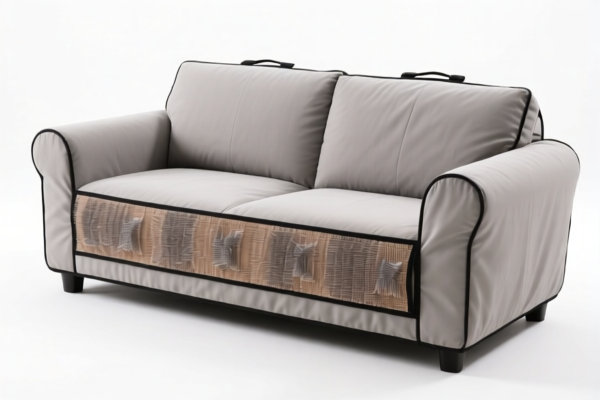
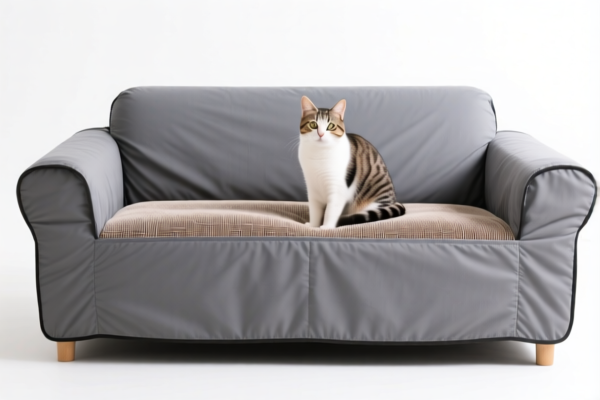
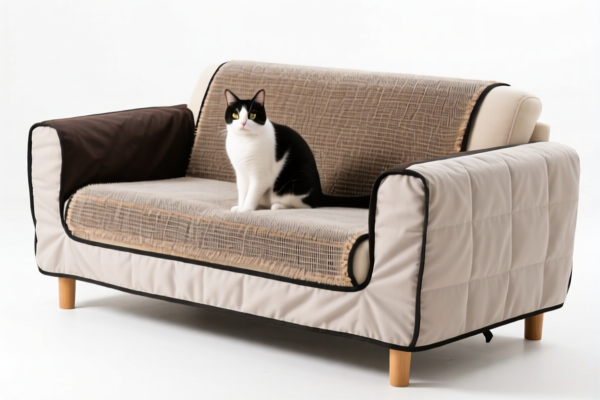
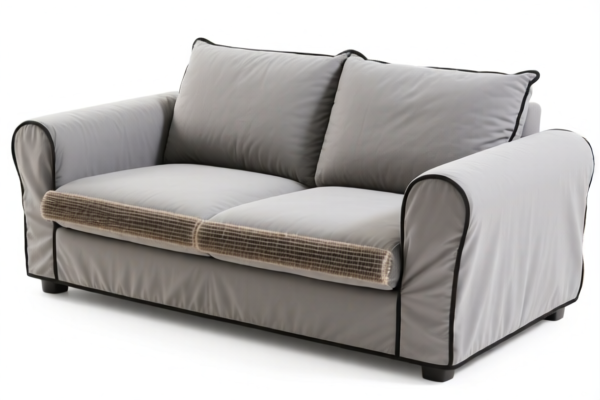
AI Analysis
🛋️ Sofa Protector (Furniture Covers & Seat Accessories)
🌐 HS Code Reference & Customs Clearance Guide | 2026 Latest Tariff Analysis | Professional Clearance Strategy
📌 I. Product Definition & Classification: What Exactly is a "Sofa Protector"?
In international trade, "Sofa Protector" is a broad term that can refer to two distinct categories of goods, leading to significantly different HS Code classifications and tax liabilities:
- Sofa Covers/Cases: Textile or fabric items designed to cover the entire sofa (upholstered furniture). These are considered accessories or parts of furniture.
- Protective Cases/Shells: Hard plastic, leather, or reinforced textile shells designed to protect the sofa structure or seat. These may be classified as containers, cases, or seat parts.
⚠️ Critical Distinction Point:
- If it is a soft textile fabric that slips over the sofa → It is likely a Furniture Accessory or Textile Article.
- If it is a hard shell or structural component for a seat → It is likely a Seat Part or Case/Container.
- Material Matters: Cotton vs. Synthetic Fibers vs. Plastic/Leather drastically changes the HS Code.
📦 II. HS Code Classification Details (Based on Provided Data)
Below are the specific HS Codes mapped to your product based on the provided dataset. Note that the total tax rate varies significantly (from 10% to 52.6%) depending on the precise material and functional classification.
| HS Code | Product Description | Key Classification Logic | Total Tax Rate |
|---|---|---|---|
| 6304.92.00.00 | Sofa Cover (Cotton/Non-Knit) | Classified as Furniture Accessories. Material is specifically Cotton or non-knitted textiles. | 23.8% |
| 6304.93.00.00 | Sofa Cover (Synthetic/Fabric) | Classified as Furniture Accessories. Material is Synthetic Fibers or general fabric materials. | 23.8% |
| 9401.99.10.20 | Sofa Cover (Textile Seat Part) | Classified as Parts/Accessories of Seats. Form is a Textile Product specifically for seats. | 17.5% |
| 9401.99.90.21 | Sofa Protector (Textile Seat Part) | Classified as Parts/Accessories of Seats. Material is Textile, but falls under a different sub-heading for parts. | 10.0% |
| 4202.92.97.00 | Protective Shell/Case | Classified as Cases, Containers, or Similar Articles. Material is Plastic or mixed Textile/Plastic. | 52.6% |
🔍 Key Insight:
- Lowest Tax (10%):9401.99.90.21– If your product is clearly a textile part of a seat (not a general furniture accessory), this is the most tax-efficient code.
- Highest Tax (52.6%):4202.92.97.00– Avoid this if your product is a soft cover. This code attracts high tariffs because it is treated as a "Case/Container" with plastic components, triggering 25% Section 301 duties + 17.6% base tariff.
- Middle Ground (17.5% - 23.8%): Codes under Chapter 94 (Furniture) and Chapter 63 (Other Made Up Textile Articles) are standard for upholstery covers.
💰 III. 2026 Latest Tariff Rate Breakdown (Detailed)
✅ Applicable Country: United States (US)
✅ Origin: China (CN)
✅ 生效时间: 2025年11月10日起 (Effective Nov 10, 2025)
🎯 1. 6304.92.00.00 & 6304.93.00.00 – Sofa Covers (Textile Furniture Accessories)
| Item | Details |
|---|---|
| Base Tariff | 6.3% |
| Section 301 Tariff | +7.5% |
| IEEPA Tariff (Section 122) | +10% |
| Total Effective Rate | 23.8% |
| De Minimis Eligibility | ❌ No (Denied for Section 122/301 goods) |
| Legal Path | Base: 6.3% + Sec 301: 7.5% + IEEPA: 10% |
📌 Explanation:
- These codes are for soft covers made of cotton (92) or synthetic fibers (93).
- They are treated as furniture accessories, not just plain textiles.
- Total 23.8% is a moderate-to-high burden. Must be included in Landed Cost calculations.
🎯 2. 9401.99.10.20 – Sofa Cover (Seat Part, Textile)
| Item | Details |
|---|---|
| Base Tariff | 0.0% |
| Section 301 Tariff | +7.5% |
| IEEPA Tariff (Section 122) | +10% |
| Total Effective Rate | 17.5% |
| De Minimis Eligibility | ❌ No |
| Legal Path | Base: 0.0% + Sec 301: 7.5% + IEEPA: 10% |
📌 Explanation:
- Best Rate for Textile Covers if classified as a seat part rather than a general furniture accessory.
- Base tariff is 0%, which reduces the absolute value of the additive tariffs.
- Crucial: You must prove it is a part of a seat (e.g., fits tightly, structural function) to qualify for this vs. 6304.
🎯 3. 9401.99.90.21 – Sofa Protector (Seat Part, Textile)
| Item | Details |
|---|---|
| Base Tariff | 0.0% |
| Section 301 Tariff | 0.0% |
| IEEPA Tariff (Section 122) | +10% |
| Total Effective Rate | 10.0% |
| De Minimis Eligibility | ❌ No (Check specific exemptions, but generally Section 122 applies) |
| Legal Path | Base: 0.0% + Sec 301: 0.0% + IEEPA: 10% |
📌 Explanation:
- Lowest Possible Rate (10%).
- This code implies the item is a specialized part/accessory of a seat, with no Section 301 duty (possibly due to specific exclusions or sub-heading rules).
- Strategy: Try to classify your product here if it is a textile protector and not a general "cover."
🎯 4. 4202.92.97.00 – Protective Shell/Case (Plastic/Textile)
| Item | Details |
|---|---|
| Base Tariff | 17.6% |
| Section 301 Tariff | +25.0% |
| IEEPA Tariff (Section 122) | +10% |
| Total Effective Rate | 52.6% |
| De Minimis Eligibility | ❌ No |
| Legal Path | Base: 17.6% + Sec 301: 25% + IEEPA: 10% |
📌 Explanation:
- Highest Tax Burden.
- This code is for cases, suitcases, handbags, or protective shells made of plastic or textile/leather.
- Warning: If your "Sofa Protector" has a hard plastic frame or is marketed as a "Shell," it will likely fall here. Avoid this classification if possible.
🛠️ IV. Customs Clearance Practical Advice (Risk Mitigation)
✅ 1. Documentation Checklist (Must-Have)
| Document | Requirement | Notes |
|---|---|---|
| Product Specification | ✔️ | Must specify Material (Cotton/Synthetic/Plastic) and Function (Cover vs. Shell). |
| Photos | ✔️ | Clear images showing how it fits. Is it a slipcover? A rigid shell? |
| Commercial Invoice | ✔️ | Description must be precise: "Sofa Cover, Cotton, Non-Knit" vs. "Protective Case, Plastic." |
| Material Composition | ✔️ | % of Cotton vs. Polyester. Critical for 6304.92 vs. 6304.93. |
| Proof of Seat Association | ✔️ | If claiming 9401 (Seat Part), provide diagrams showing it attaches to a sofa seat. |
✅ 2. Classification Strategy (How to Optimize Tax)
🔥 "Material & Function Dictate Tax!"
| Scenario | Recommended HS Code | Reason |
|---|---|---|
| Soft Fabric Cover (Cotton) | 6304.92.00.00 |
Standard for cotton furniture accessories. |
| Soft Fabric Cover (Polyester) | 6304.93.00.00 |
Standard for synthetic furniture accessories. |
| Textile Seat Cover (Generic) | 9401.99.10.20 |
Lower base tariff (0%) than 6304. |
| Textile Seat Protector (Special) | 9401.99.90.21 |
Lowest Tax (10%). Claim as a specialized seat part. |
| Hard Plastic Shell | 4202.92.97.00 |
Avoid! High tax (52.6%). Only if it’s a rigid case. |
⚠️ Critical Warning:
- Do NOT use4202.92.97.00for a simple fabric slipcover. This is misclassification and will lead to back taxes + penalties.
- Do NOT use9401.99.90.21if the product is a general-purpose furniture cover. CBP may reclassify to6304if it’s not clearly a "part" of a seat.
✅ 3. Common Mistakes to Avoid
| Mistake | Consequence |
|---|---|
| Listing as "Plastic Cover" when it’s Fabric | Risk of 4202 classification → 52.6% Tax. |
| Not specifying Material | CBP will apply the highest default rate or request a binding ruling (delaying shipment). |
| Ignoring Section 122 | All products in this dataset are subject to 10% IEEPA tariff. Do not assume exemption. |
| Misusing "De Minimis" | None of these codes qualify for de minimis (under $800) exemption due to Section 122/301 restrictions. |
🌍 V. Global Market Comparison (2026)
| Market | Recommended HS Code | Est. Total Tax | Key Requirement |
|---|---|---|---|
| 🇺🇸 USA | 9401.99.90.21 |
10.0% | Strict material proof. Avoid 4202. |
| 🇪🇺 EU | 6304.92.00 (approx.) |
~6-12% | CE marking not required for textiles, but safety standards apply. |
| 🇨🇳 China | 6304.92.00 |
~6.3% | Standard import tariff. No Section 122. |
| 🇬🇧 UK | 6304.92.00 |
~6.5% | Post-Brexit tariff rules apply. |
📌 Conclusion:
- USA is the most complex market due to Section 301 (7.5%) and Section 122 (10%) layered tariffs.
- Optimal Strategy for US: Aim for9401.99.90.21(10%) or9401.99.10.20(17.5%) by emphasizing textile seat part status.
- Avoid4202.92.97.00unless the product is truly a rigid plastic shell.
📌 VI. Final Action Plan
- Identify Material: Is it Cotton, Synthetic, or Plastic?
- Identify Function: Is it a Cover (6304/9401) or a Shell (4202)?
- Select Code:
- Best Tax:
9401.99.90.21(10%) – If textile seat part. - Safe Standard:
6304.92/93(23.8%) – If general furniture cover. - Worst Case:
4202.92.97.00(52.6%) – If plastic shell.
- Best Tax:
- Documentation: Ensure invoice clearly states "Sofa Protector, Textile, [Cotton/Synthetic]" and NOT "Plastic Case."
- Pre-Ruling: For large shipments, consider applying for a Binding Ruling with CBP to confirm
9401.99.90.21eligibility.
🎯 Pro Tip:
"Textile Seat Part (10%) vs. Furniture Cover (23.8%) vs. Plastic Shell (52.6%)"
The difference is $42.6 per $100 value.
Correct classification saves you thousands in duties.
✨ Clearance Starts with Precision!
💼 Don't Guess the HS Code – Calculate the Cost!
Customer Reviews
About HS Code Classification
The Harmonized System (HS) is an internationally standardized nomenclature developed by the World Customs Organization (WCO) to classify traded products. Over 200 countries use the HS system as the basis for customs tariffs, trade statistics, and import/export regulations.
Each HS code follows a hierarchical structure:
- Chapter (2 digits) — Broad category of goods (e.g., Chapter 84: Machinery and Mechanical Appliances)
- Heading (4 digits) — More specific grouping within the chapter
- Subheading (6 digits) — Internationally standardized breakdown, used by all WCO member countries
- National subdivisions (8-10 digits) — Country-specific extensions for further classification, such as US HTSUS 10-digit codes
Correct HS code classification is essential for smooth customs clearance, accurate duty payment, and compliance with trade regulations. Misclassification can lead to customs delays, overpayment of duties, or penalties.
When importing from CN to US, the applicable tariff rates may include:
- Most-Favored-Nation (MFN) rate — The standard duty rate applied to WTO members
- General rate — Applied to countries without trade agreements
- Trade remedy duties — Additional tariffs such as Section 301 (anti-dumping), Section 232 (national security), or countervailing duties
The information provided on this page is for reference purposes only. For official classification, please consult with your local customs authority or a licensed customs broker.