Soft LED Strip
CN → US| HS Code | Tariff Rate | Origin | Destination | Doc |
|---|---|---|---|---|
| 8539510000 | 10.0% | CN | US | Official Doc |
| 8541410000 | 35.0% | CN | US | Official Doc |
| 9405428440 | 38.9% | CN | US | Official Doc |
| 9405426000 | 41.0% | CN | US | Official Doc |
| 8539520091 | 12.0% | CN | US | Official Doc |
| 8541499500 | 60.0% | CN | US | Official Doc |
Product Images
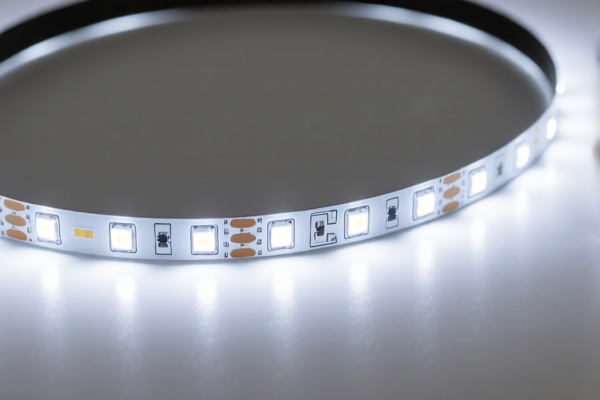
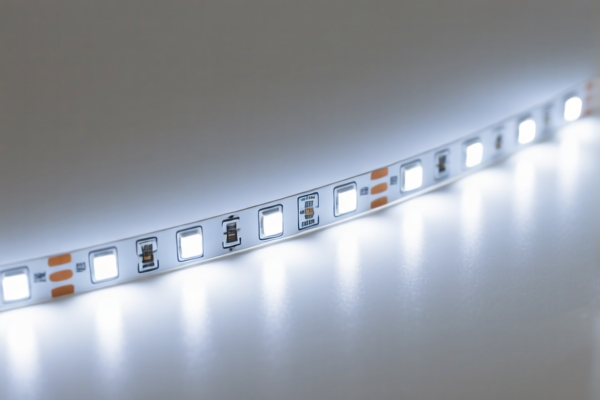
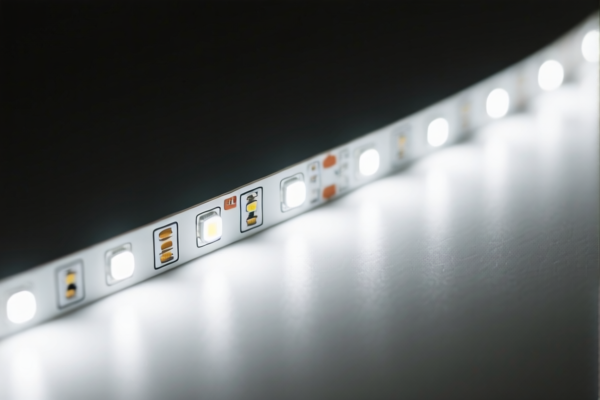
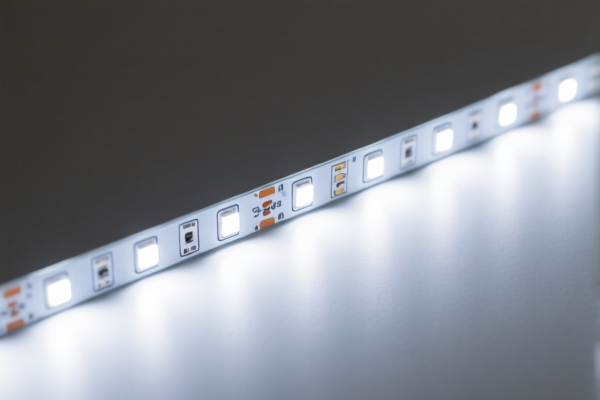
AI Analysis
💡 Soft LED Strip (LED Lighting)
🌐 HS Code Reference & Customs Clearance Guide | 2026 Latest Tariff Analysis | Professional Compliance Strategy
📌 I. Product Definition & Classification: Do You Truly Understand "Soft LED Strips"?
LED strips, commonly referred to as "soft LED lights," are flexible, linear lighting solutions that have revolutionized interior design, architectural lighting, and decorative applications. In international trade, their classification is not straightforward. They are often caught between being classified as lighting sources (components) or lighting fixtures (finished goods).
LED Modules/Sources (8539/8541): - Considered the "bulb" or "chip" equivalent. - Usually classified under LED lamps or light-emitting diodes. - Key Factor: If the product is essentially just the LED chips on a flexible PCB with minimal auxiliary equipment, it may fall here.
Lighting Fixtures (9405): - Considered "complete lighting apparatuses." - Includes the housing, drivers, and structure designed to distribute and control light. - Key Factor: If the strip includes a power driver, casing, mounting clips, or is sold as a complete kit for illumination, it is likely a fixture.
⚠️ Critical Distinction Point:
- If it is a bare strip (just PCB + LEDs + resistors) → Likely 8539 or 8541.
- If it is a complete kit (with driver, casing, connectors, diffusers) → Likely 9405.
- Material Influence: Presence of metal housings can shift classification toward 9405.42.60.00.
📦 II. HS Code Classification Details (2026 Latest Tariff Authority Comparison)
| HS Code | Product Description | Applicable Scenario | Tax Detail Breakdown |
|---|---|---|---|
8539.51.00.00 |
LED Lamps & Light Sources (Extended Application) | Bare LED strips; core LED application without complex housing | Total Tax: 10.0% • Base: 0.0% • Section 301: 0.0% • IEEPA (122): 10% |
8539.52.00.91 |
Other LED Lamps (Specific LED Lighting Forms) | LED strips categorized strictly as LED lamps | Total Tax: 12.0% • Base: 2.0% • Section 301: 0.0% • IEEPA (122): 10% |
8541.41.00.00 |
Light Emitting Diodes (Assembled Components) | Strips viewed as assembled LED diodes/modules | Total Tax: 35.0% • Base: 0.0% • Section 301: 25.0% • IEEPA (122): 10% |
8541.49.95.00 |
Other LEDs & Assembled Optical Units | Core component classification for LED chips/modules | Total Tax: 60.0% • Base: 0.0% • Section 301: 50.0% • IEEPA (122): 10% |
9405.42.84.40 |
Other Electric Lamps (LED Driven) | Lighting fixtures specifically designed for LED sources only | Total Tax: 38.9% • Base: 3.9% • Section 301: 25.0% • IEEPA (122): 10% |
9405.42.60.00 |
Other Electric Lamps (With Base Metal Structure) | Fixtures where casing/structure contains precious/non-precious metals | Total Tax: 41.0% • Base: 6.0% • Section 301: 25.0% • IEEPA (122): 10% |
🔍 Key Insight:
- Cheapest Route:8539.51.00.00(10% total) is the most favorable if the product is considered a pure "LED lamp/source" extension.
- Most Expensive:8541.49.95.00(60% total) applies if viewed as generic LED components with high Section 301 tariffs.
- Fixture Route:9405codes carry higher base duties (3.9%-6.0%) plus the standard 25% Section 301 tariff.
💰 III. 2026 Latest Tariff Rate Detailed Explanation (Including Surcharges)
✅ Applicable Country: United States (US)
✅ Origin: China (CN)
✅ Effective Date: November 10, 2025 (and subsequent imports)
🎯 1. 8539.51.00.00 —— LED Lamps (Lowest Risk/Highest Cost Efficiency)
| Item | Content |
|---|---|
| Base Tariff | 0% (ad valorem) |
| Section 301 Surcharge | +0.0% (Exempt from 301 tariffs for this specific subheading) |
| IEEPA Surcharge | +10% (For China/HK products, under Section 122) |
| Total Effective Rate | 10.0% |
| Calculation | CIF Value × 10% |
| De Minimis Eligibility | ❌ No (deny_de_minimis applies) |
| Legal Basis Path | IEEPA:122 → USITC:8539.51.00.00 |
📌 Explanation:
- This classification treats the LED strip as a specialized LED lamp source rather than a generic electronic component.
- Crucially, it avoids the 25% Section 301 tariff, which is the biggest cost driver for other LED codes.
- Only the 10% IEEPA surcharge applies.
- Strategy: Ideal for "bare strip" products without heavy metal housings.
🎯 2. 8539.52.00.91 —— Other LED Lamps
| Item | Content |
|---|---|
| Base Tariff | 2.0% |
| Section 301 Surcharge | +0.0% |
| IEEPA Surcharge | +10% |
| Total Effective Rate | 12.0% |
| Calculation | CIF Value × 12% |
| De Minimis Eligibility | ❌ No |
| Legal Basis Path | IEEPA:122 → USITC:8539.52.00.91 |
📌 Explanation:
- Similar to above but carries a 2% base duty.
- Still avoids the 25% Section 301 tariff.
- Slightly more expensive than8539.51.00.00.
🎯 3. 8541.41.00.00 —— LEDs (High Risk)
| Item | Content |
|---|---|
| Base Tariff | 0.0% |
| Section 301 Surcharge | +25.0% |
| IEEPA Surcharge | +10% |
| Total Effective Rate | 35.0% |
| Calculation | CIF Value × 35% |
| De Minimis Eligibility | ❌ No |
| Legal Basis Path | IEEPA:9903.01.24 → USITC:8541.41.00.00 |
📌 Explanation:
- Classified as LED diodes/modules.
- Subject to the full 25% Section 301 tariff.
- Only suitable if the product is strictly defined as a component, not a finished light source.
🎯 4. 8541.49.95.00 —— Other LEDs (Highest Cost)
| Item | Content |
|---|---|
| Base Tariff | 0.0% |
| Section 301 Surcharge | +50.0% (Higher rate for specific LED categories) |
| IEEPA Surcharge | +10% |
| Total Effective Rate | 60.0% |
| Calculation | CIF Value × 60% |
| De Minimis Eligibility | ❌ No |
| Legal Basis Path | IEEPA:9903.01.25 → USITC:8541.49.95.00 |
📌 Explanation:
- Applies to generic or unspecified LED components.
- Highest penalty at 60%. Avoid this classification for LED strips unless absolutely necessary.
🎯 5. 9405.42.84.40 & 9405.42.60.00 —— Lighting Fixtures
| Item | Content |
|---|---|
| Base Tariff | 3.9% (84.40) or 6.0% (60.00) |
| Section 301 Surcharge | +25.0% |
| IEEPA Surcharge | +10% |
| Total Effective Rate | 38.9% (84.40) or 41.0% (60.00) |
| Calculation | CIF Value × Rate |
| De Minimis Eligibility | ❌ No |
| Legal Basis Path | IEEPA:9903.01.24 → USITC:9405.42.xxxx |
📌 Explanation:
- Classified as complete lighting fixtures.
- Includes base duty (3.9% or 6.0%) + 25% Section 301 + 10% IEEPA.
- Used when the product is sold as a complete lighting system with housing/drivers.
-9405.42.60.00is more expensive if the housing contains base metals.
🛠️ IV. Customs Clearance Practical Advice (Pitfall Avoidance Guide)
✅ 1. Documentation Checklist (Mandatory)
| Document | Required | Explanation |
|---|---|---|
| ✅ Product Specification Sheet | ✔️ | Must detail: Voltage, LED Chip Type, IP Rating, Length, Flexibility, Control Type. |
| ✅ Circuit Diagram / Structure Photo | ✔️ | Crucial: Proves whether it is a bare strip (Source) or a fixture with housing/driver. |
| ✅ Commercial Invoice | ✔️ | Description must match HS Code logic. E.g., "Flexible LED Light Source Module" vs. "LED Lighting Kit." |
| ✅ Third-Party Certification | ✔️ | UL, ETL, CE, RoHS. Essential for proving safety, especially for 9405 classifications. |
| ✅ Packing List | ✔️ | Clearly separate components if sold as a kit (e.g., Driver, Strip, Controller) to avoid splitting duties. |
✅ 2. Declaration Strategy (Key Mantra)
🔥 "Bare Strip = Source (10-12%), Full Kit = Fixture (38-41%), Component = LED (35-60%)"
| Scenario | Correct HS Code | Wrong Code | Consequence |
|---|---|---|---|
| Bare Flex PCB + LEDs | 8539.51.00.00 |
9405.42.xxxx |
Overpayment of ~29% duties. |
| Strip + Driver + Housing | 9405.42.84.40 |
8539.51.00.00 |
Underpayment + Penalties for misclassification. |
| LED Chips/Modules Only | 8541.41.00.00 |
8539.51.00.00 |
Risk of 25% Section 301 surcharge. |
| Metal-Cased Strip | 9405.42.60.00 |
9405.42.84.40 |
Higher base duty (6% vs 3.9%). |
✅ 3. Special Situation Handling
| Situation | Handling Advice |
|---|---|
| Kit Sales (Strip + Driver + Remote) | Declare as one single item under 9405 to avoid splitting duties on accessories. |
| OEM Custom Colors | Provide design specs to prove it is a "finished lighting product" if claiming 9405. |
| High IP Rated (Waterproof) | Emphasize "Outdoor/Indoor Fixture" status to support 9405 classification, which may be easier for customs to recognize as a complete unit. |
| Import via Third Country | If transshipped, ensure origin remains China to avoid additional scrutiny, but note that IEEPA and 301 tariffs still apply to Chinese-origin goods. |
🌍 V. Global Market Clearance Comparison (2026 Latest)
| Country/Region | Recommended HS Code | Tariff (China Origin) | Certification | Notes |
|---|---|---|---|---|
| 🇺🇸 USA | 8539.51.00.00 |
10% | FCC + UL/ETL | Best option for bare strips. |
| 🇨🇳 China | 8539.51.00.00 |
~13-17% | CCC | Domestic duties differ; focus on export. |
| 🇪🇺 EU | 9405.42 |
0-4% | CE + LVD | No major surcharges like US. |
| 🇬🇧 UK | 9405.42 |
0-4% | UKCA | Post-Brexit rules apply. |
| 🇦🇺 Australia | 9405.42 |
5% | RCM | Standard LED lighting duties. |
📌 Conclusion:
- USA is the most complex market due to IEEPA (10%) and Section 301 (0-50%) tariffs.
- Choosing8539.51.00.00saves up to 50% in duties compared to other LED classifications.
- EU/UK/AU are more straightforward, focusing on fixture vs. source based on completion level.
📌 VI. Common Mistakes & Pitfall Guide (Lessons Learned)
❌ Mistake 1: Declaring a complete LED strip kit (with driver) as 8539.51.00.00.
👉 Result: Customs may reclassify to 9405, demanding back-tariffs (~38.9%) + penalties.
✅ Fix: If it has a driver/casing, declare as 9405.42.84.40.
❌ Mistake 2: Declaring bare LED strips as 8541.41.00.00.
👉 Result: Paying 35% instead of 10%. Unnecessary cost increase.
✅ Fix: Use 8539.51.00.00 for LED lamps/sources.
❌ Mistake 3: Ignoring IEEPA 122 Clause.
👉 Result: All LED imports from China face 10% IEEPA surcharge.
✅ Fix: Factor 10% into all cost calculations.
❌ Mistake 4: Splitting Strip + Controller into two packages to avoid kit classification.
👉 Result: Customs may aggregate them, applying higher fixture duties to both.
✅ Fix: Declare as a single kit or ensure they are truly separate articles with no functional dependency.
🎯 VII. Conclusion: Professional Declaration, Cost Optimization!
🎯 Remember the Mantra:
🔹 "Bare Strip = 10% (8539.51), Full Kit = 39% (9405), LED Component = 35-60% (8541)"
🔹 "HS Code Defines Life, Tariff Differs by 25%, Declaration Step Changes Cost Drastically!"
📌 Pro Tip:
If your LED strips are purchased as components for further assembly (e.g., into larger fixtures), ensure your documentation clearly states "For Further Assembly" to potentially argue for 8539 classification. However, if sold directly to end-users, 9405 is more common.
Recommendation: Always seek a Pre-Ruling (Advance Ruling) from US Customs and Border Protection (CBP) if the product structure is ambiguous.
📣 Immediate Action:
📞 Contact a Professional Customs Broker + Provide Circuit Diagrams + Apply for HS Code Pre-Ruling
🚀 Let your LED Strips Clear Smoothly, Reduce Costs, and Maximize Profits!
✨ Professional Customs Clearance Starts with Precise Classification!
💼 Every Cent of Your Cost Deserves Precision!
Customer Reviews
About HS Code Classification
The Harmonized System (HS) is an internationally standardized nomenclature developed by the World Customs Organization (WCO) to classify traded products. Over 200 countries use the HS system as the basis for customs tariffs, trade statistics, and import/export regulations.
Each HS code follows a hierarchical structure:
- Chapter (2 digits) — Broad category of goods (e.g., Chapter 84: Machinery and Mechanical Appliances)
- Heading (4 digits) — More specific grouping within the chapter
- Subheading (6 digits) — Internationally standardized breakdown, used by all WCO member countries
- National subdivisions (8-10 digits) — Country-specific extensions for further classification, such as US HTSUS 10-digit codes
Correct HS code classification is essential for smooth customs clearance, accurate duty payment, and compliance with trade regulations. Misclassification can lead to customs delays, overpayment of duties, or penalties.
When importing from CN to US, the applicable tariff rates may include:
- Most-Favored-Nation (MFN) rate — The standard duty rate applied to WTO members
- General rate — Applied to countries without trade agreements
- Trade remedy duties — Additional tariffs such as Section 301 (anti-dumping), Section 232 (national security), or countervailing duties
The information provided on this page is for reference purposes only. For official classification, please consult with your local customs authority or a licensed customs broker.