Softball Training Gloves
CN → US| HS Code | Tariff Rate | Origin | Destination | Doc |
|---|---|---|---|---|
| 6116100800 | 20.3% | CN | US | Official Doc |
| 6216000800 | 18.3% | CN | US | Official Doc |
| 6116930800 | 20.3% | CN | US | Official Doc |
| 4203214000 | 35.0% | CN | US | Official Doc |
| 4203212000 | 38.0% | CN | US | Official Doc |
Product Images
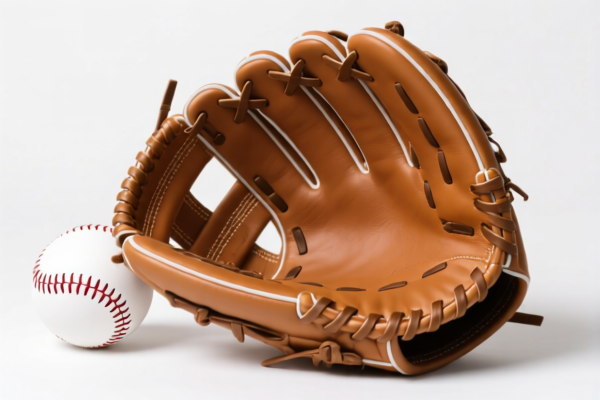
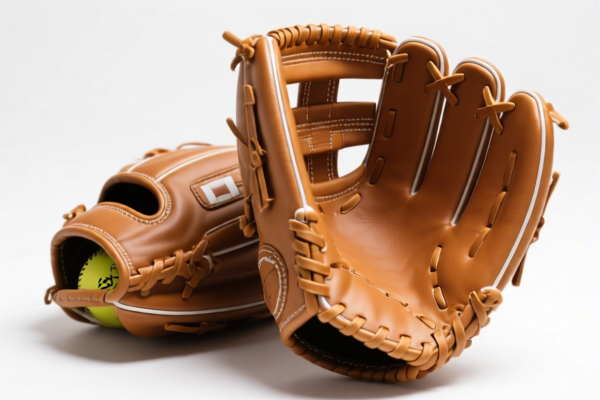
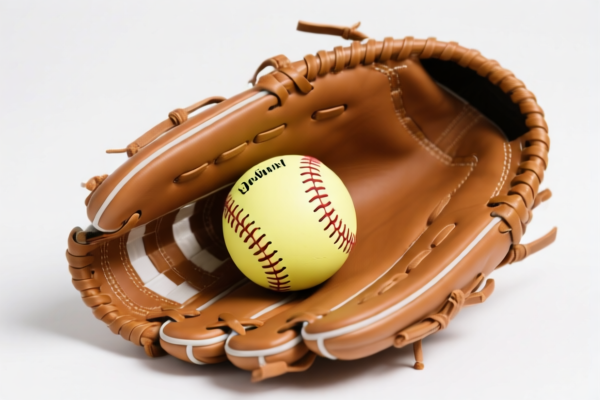
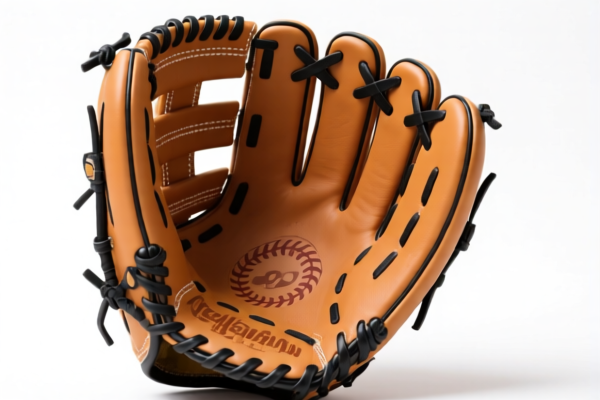
AI Analysis
🧤 Softball Training Gloves: HS Code Classification & US Customs Clearance Guide (2026)
🌐 HS Code Reference & Clearance Strategy | 2026 Latest Tariff Analysis | Professional Compliance Guide
📌 I. Product Definition & Classification: What Exactly Are "Softball Training Gloves"?
Softball Training Gloves are specialized sports equipment designed for bat control, hand-eye coordination, and fielding drills. In international trade, they fall under the broader category of Gloves, but their precise classification depends heavily on their material composition and manufacturing method.
Based on common market configurations, these gloves typically fall into two main branches: 1. Knitted/Textile Based (Chapter 61): Often used for batting practice to reduce sting or as lightweight fielding mitts. 2. Leather/Synthetic Leather Based (Chapter 42): Traditional fielding gloves made from cowhide or synthetic leather for durability and structure.
⚠️ Key Distinction Point:
- If the glove is knitted or crocheted (flexible, fabric-based) →归入 Chapter 61
- If the glove is made of leather, composition leather, or plastic/rubber coated (structured, durable) →归入 Chapter 42 or Chapter 62 (if not knitted)
📦 II. HS Code Classification Details (2026 Latest Tariff Authority Comparison)
| HS Code | Product Description | Application Scenario | Material Logic |
|---|---|---|---|
6116.10.08.00 |
Gloves, impregnated, coated or covered with plastic or rubber | Batting practice gloves with rubber grip/palm coating; lightweight training mitts | ✅ Plastic/Rubber Coated |
6216.00.08.00 |
Other gloves, mitts and muffs | Non-knitted gloves made of textile materials with plastic/rubber coating; general sports handwear | ✅ Non-Knitted Textile + Coating |
6116.93.08.00 |
Gloves, other, of synthetic fibers | Synthetic fiber batting gloves; mesh-back training gloves | ✅ Synthetic Fiber |
4203.21.40.00 |
Gloves and mitts, of leather or composition leather | Traditional leather softball fielding gloves; heavy-duty training mitts | ✅ Leather/Composition Leather |
4203.21.20.00 |
Gloves and mitts, of leather or composition leather | Premium leather training gloves; high-end softball mitts | ✅ Leather/Composition Leather |
🔍 Critical Reminder:
- Leather Gloves (Ch. 42) are significantly more expensive in duties due to higher base rates and higher Section 301 tariffs.
- Textile/Knitted Gloves (Ch. 61/62) generally have lower base tariffs but may still face significant Section 301 and IEEPA additions.
- "Training Gloves" is not a specific HS heading; it must be classified by material and construction.
💰 III. 2026 Latest Tariff Rate Breakdown (Including Surtaxes & Policy Add-ons)
✅ Applicable Country: United States (US)
✅ Country of Origin: China (CN)
✅ Effective Date: November 10, 2025 (and subsequent imports)
🎯 1. 6116.10.08.00 —— Gloves, Coated/Covered (Plastic/Rubber)
| Item | Content |
|---|---|
| Base Tariff | 2.8% (ad valorem) |
| Section 301 Surcharge | +7.5% (From USITC Footnote 9903.88.01 / Trade Act Section 301) |
| IEEPA Surcharge | +10% (Against China/HK products, effective Nov 10, 2025) |
| Total Rate | 20.3% |
| Tax Calculation | CIF Value × 20.3% |
| De Minimis Eligibility | ❌ No (deny_de_minimis) |
| Legal Basis Path | IEEPA:9903.01.25 → USITC:6116.10.08.00 → FOOTNOTE:9903.88.01 |
📌 Explanation:
- This category often includes batting gloves with rubberized palms for grip.
- Total 20.3% is moderately high but significantly lower than leather options.
- Must declare coating material clearly to avoid misclassification.
🎯 2. 6216.00.08.00 —— Other Gloves (Non-Knitted, Textile + Coating)
| Item | Content |
|---|---|
| Base Tariff | 0.8% (ad valorem) |
| Section 301 Surcharge | +7.5% |
| IEEPA Surcharge | +10% |
| Total Rate | 18.3% |
| Tax Calculation | CIF Value × 18.3% |
| De Minimis Eligibility | ❌ No (deny_de_minimis) |
| Legal Basis Path | IEEPA:9903.01.25 → USITC:6216.00.08.00 → FOOTNOTE:9903.88.01 |
📌 Note:
- This is the lowest total tax rate among the provided options.
- Suitable for non-knitted textile gloves with plastic/rubber coating (e.g., synthetic weave with rubber palm).
- Ensure the product is not classified as "knitted" (which would fall under Ch. 61).
🎯 3. 6116.93.08.00 —— Gloves, Synthetic Fibers (Other)
| Item | Content |
|---|---|
| Base Tariff | 2.8% (ad valorem) |
| Section 301 Surcharge | +7.5% |
| IEEPA Surcharge | +10% |
| Total Rate | 20.3% |
| Tax Calculation | CIF Value × 20.3% |
| De Minimis Eligibility | ❌ No (deny_de_minimis) |
| Legal Basis Path | IEEPA:9903.01.25 → USITC:6116.93.08.00 → FOOTNOTE:9903.88.01 |
📌 Explanation:
- Covers gloves made of synthetic fibers that are not specifically "impregnated/coated" under 6116.10.
- Common for lightweight, breathable softball batting gloves made of polyester/nylon blends.
🎯 4. 4203.21.40.00 —— Gloves, of Leather or Composition Leather
| Item | Content |
|---|---|
| Base Tariff | 0.0% (ad valorem) |
| Section 301 Surcharge | +25.0% |
| IEEPA Surcharge | +10% |
| Total Rate | 35.0% |
| Tax Calculation | CIF Value × 35.0% |
| De Minimis Eligibility | ❌ No (deny_de_minimis) |
| Legal Basis Path | IEEPA:9903.01.25 → USITC:4203.21.40.00 → FOOTNOTE:9903.88.01 |
📌 Warning:
- Leather gloves face the highest total tax burden due to the 25% Section 301 tariff.
- Even though the base rate is 0%, the additional taxes make this the most expensive option.
- High Risk of Audit: Customs frequently scrutinizes leather goods to ensure they are not misclassified as textile to avoid the 25% surcharge.
🎯 5. 4203.21.20.00 —— Gloves, of Leather or Composition Leather (Other)
| Item | Content |
|---|---|
| Base Tariff | 3.0% (ad valorem) |
| Section 301 Surcharge | +25.0% |
| IEEPA Surcharge | +10% |
| Total Rate | 38.0% |
| Tax Calculation | CIF Value × 38.0% |
| De Minimis Eligibility | ❌ No (deny_de_minimis) |
| Legal Basis Path | IEEPA:9903.01.25 → USITC:4203.21.20.00 → FOOTNOTE:9903.88.01 |
📌 Note:
- This is the highest total tax rate among all options.
- Typically applies to specific types of leather gloves not covered by the 0% base rate subheading.
- Avoid if possible unless the product is strictly defined as such.
🛠️ IV. Customs Clearance Practical Advice (Battle-Tested Pitfall Guide)
✅ 1. Required Documentation Checklist (No Exceptions)
| Document | Mandatory? | Description |
|---|---|---|
| ✅ Product Specification Sheet | ✔️ | Must detail material composition (e.g., "80% Polyester, 20% Rubber"), size, and type (batting/fielding). |
| ✅ Product Photos | ✔️ | Clear images of the interior lining, exterior material, and any logos/tags. |
| ✅ Commercial Invoice | ✔️ | Must explicitly state: "Softball Training Gloves, Made in China, Material: [Specify]". |
| ✅ Packing List | ✔️ | Shows quantity per carton, net/gross weight. |
| ✅ Material Declaration | ✔️ | Crucial for distinguishing between Ch. 61/62 (Textile) and Ch. 42 (Leather). |
✅ 2. Declaration Tips (Key Mnemonic)
🔥 "Material Dictates Duty, Coating Changes Class, Leather Costs Triple!"
| Scenario | Correct HS Code | Common Mistake | Consequence |
|---|---|---|---|
| Rubber-Palmed Batting Glove | 6116.10.08.00 or 6216.00.08.00 |
Classifying as Leather | 35-38% vs 18-20% Tax Savings |
| All-Synthetic Mesh Glove | 6116.93.08.00 |
Classifying as Textile with Coating | Minor difference, but consistency matters |
| Real Leather Fielding Glove | 4203.21.40.00 or 4203.21.20.00 |
Classifying as Synthetic | Severe Penalty + Back Duties |
| Composite Material Glove | Depends on Essential Character | Vague Description ("Sports Gloves") | Audit Trigger + Delays |
✅ 3. Special Cases Handling
| Situation | Handling Advice |
|---|---|
| "Training" vs. "Game Use" | Customs does not differentiate based on "training" label. Classify by material. |
| Leather-Textile Mix | If leather is the essential character → Ch. 42. If textile dominates → Ch. 61/62. |
| Samples for Evaluation | Even samples are subject to duty if valued > $800 (de minimis). Plan ahead. |
| OEM Custom Gloves | Provide design specs to prove material composition. Avoid "generic" descriptions. |
🌍 V. Global Market Clearance Comparison (2026 Latest)
| Country/Region | Recommended HS Code | Tariff Rate | Certification Requirements | Notes |
|---|---|---|---|---|
| 🇺🇸 USA | 6116.10.08.00 / 4203.21.40.00 |
18.3% – 38% | None (General) | High Taxes due to IEEPA & Sec 301. |
| 🇨🇳 China | 6116.10.08.00 / 4203.21.40.00 |
0% – 10% | CCC (if applicable) | No additional surcharges. |
| 🇪🇺 EU | 6116.10.08.00 / 4203.21.40.00 |
4% – 6% | CE (if PPE) | Moderate duties. |
| 🇬🇧 UK | 6116.10.08.00 / 4203.21.40.00 |
4% – 6% | UKCA (if PPE) | Post-Brexit rules apply. |
| 🇯🇵 Japan | 6116.10.08.00 / 4203.21.40.00 |
0% – 3% | PSE (if electrical, not applicable) | Low tariffs. |
📌 Conclusion:
- USA is the most expensive market for these goods due to multiple surtax layers.
- Material choice (Textile vs. Leather) is the biggest cost driver.
- Textile/Coated gloves (Ch. 61/62) are the most cost-effective for US export.
📌 VI. Common Mistakes & Pitfall Guide (Lessons Learned)
❌ Mistake 1: Calling all gloves "Softball Gloves" on the invoice
👉 Consequence: Customs cannot determine material → Delayed Release + Audit Risk
❌ Mistake 2: Classifying leather gloves as textile to save taxes
👉 Consequence: Penalties, Back Duties, and potential seizure if tested and found to be leather.
❌ Mistake 3: Ignoring the "Coating" requirement for 6116.10
👉 Consequence: If gloves are knitted but not coated, they may not fit 6116.10. Misclassification leads to incorrect duty payment.
❌ Mistake 4: Assuming "Training" gloves get a lower tariff
👉 Consequence: No such exemption exists. Function does not override material in HS classification.
✅ Correct Practice:
"Softball Batting Gloves, 100% Polyester Knit with Nitrile Rubber Palm Coating, Model XYZ, Made in China"
🎯 VII. Conclusion: Professional Declaration, Save Money, Ensure Smooth Clearance!
🎯 Remember the Mantra:
🔹 "Material First, Function Second. Leather Costs 35%, Textile Saves You Cash!"
🔹 "Coating Defines 6116, Leather Defines 4203. Guess Wrong, Pay More!"
📌 Pro Tip:
If your gloves are originating from Vietnam, Mexico, or Thailand, you may qualify for IEEPA Exemptions, reducing tariffs to 0% – 5%.
Recommend Applying for an Advance Ruling (Pre-Classification) from CBP before shipping large volumes.
📣 Take Action Now:
📞 Contact a licensed customs broker + Provide Product Specs + Apply for Pre-Classification
🚀 Let your Softball Gloves clear smoothly, reduce costs, and maximize profit!
✨ Professional Customs Clearance Starts with Accurate Classification!
💼 Every percentage point matters in the age of trade wars!
Customer Reviews
About HS Code Classification
The Harmonized System (HS) is an internationally standardized nomenclature developed by the World Customs Organization (WCO) to classify traded products. Over 200 countries use the HS system as the basis for customs tariffs, trade statistics, and import/export regulations.
Each HS code follows a hierarchical structure:
- Chapter (2 digits) — Broad category of goods (e.g., Chapter 84: Machinery and Mechanical Appliances)
- Heading (4 digits) — More specific grouping within the chapter
- Subheading (6 digits) — Internationally standardized breakdown, used by all WCO member countries
- National subdivisions (8-10 digits) — Country-specific extensions for further classification, such as US HTSUS 10-digit codes
Correct HS code classification is essential for smooth customs clearance, accurate duty payment, and compliance with trade regulations. Misclassification can lead to customs delays, overpayment of duties, or penalties.
When importing from CN to US, the applicable tariff rates may include:
- Most-Favored-Nation (MFN) rate — The standard duty rate applied to WTO members
- General rate — Applied to countries without trade agreements
- Trade remedy duties — Additional tariffs such as Section 301 (anti-dumping), Section 232 (national security), or countervailing duties
The information provided on this page is for reference purposes only. For official classification, please consult with your local customs authority or a licensed customs broker.