Softwood Logs for Construction
CN → US| HS Code | Tariff Rate | Origin | Destination | Doc |
|---|---|---|---|---|
| 6808000000 | 35.0% | CN | US | Official Doc |
| 4504104000 | 35.0% | CN | US | Official Doc |
| 4504103000 | 35.0% | CN | US | Official Doc |
Product Images
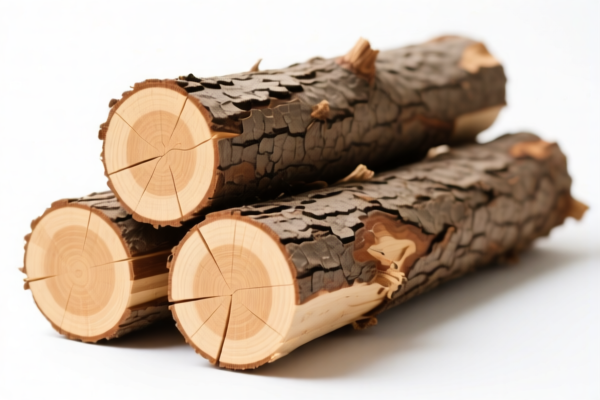
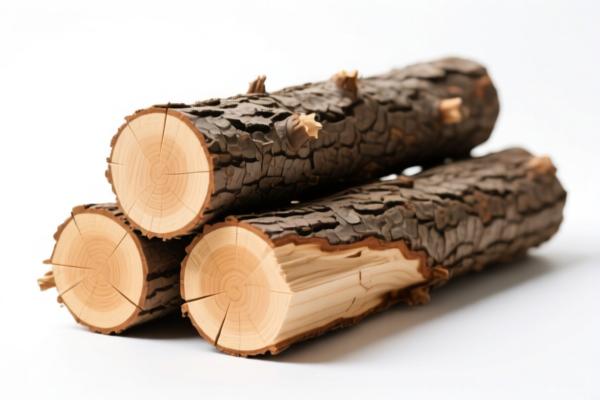
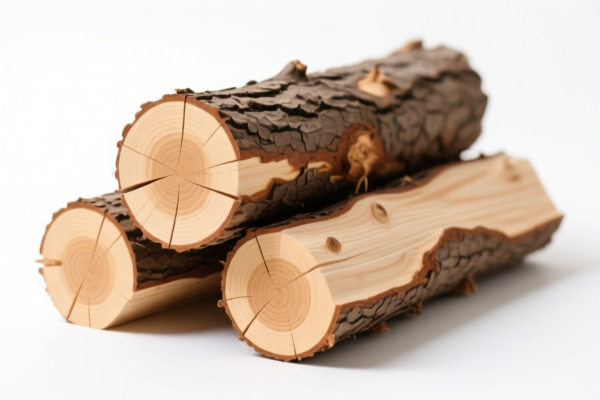
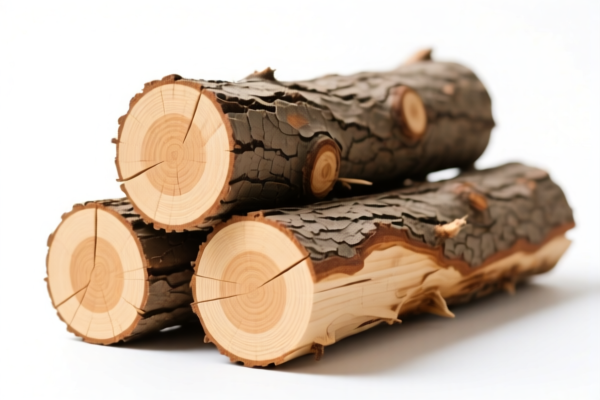
AI Analysis
🌲 Softwood Logs for Construction
🌐 HS Code Reference & Customs Clearance Guide | 2026 Latest Tariff Analysis | Professional Entry Strategy
📌 I. Product Definition & Classification: What Exactly Are "Softwood Logs"?
Softwood Logs for Construction refer to raw or semi-processed timber derived from coniferous trees (such as pine, spruce, fir, or cedar). In international trade, these are primarily classified based on their physical form (roughly squared, edged, or cylindrical) and intended use (building materials, structural components).
⚠️ Key Distinction Point:
- If the logs are processed into construction-grade boards, planks, or beams (structural shape) → They often fall under Chapter 44 (Wood and Wood Products) specifically as construction materials.
- If they are raw, unprocessed, or minimally processed timber (round logs, stripped of bark but not shaped for direct construction) → They may fall under Chapter 44 as wood in the rough or semi-manufactured wood.
- Critical Note: The term "Logs" can be ambiguous. In HS Nomenclature, "Logs" typically refers to round timber. However, if the summary explicitly states "Construction Building Materials" and "Board/Product Form," it implies the logs have been processed into structural shapes (like joists, beams, or boards) rather than raw round wood.
📦 II. HS Code Classification Details (2026 Latest Tariff Authority Comparison)
| HS Code | Product Description | Application Scenario | Processing Level |
|---|---|---|---|
6808.00.00.00 |
Softwood Construction Building Materials (Matches "Construction Material" form) Material: Plant Fiber/Wood-based |
Boards, panels, or constructed items from wood fibers/softwood, classified as "Building Materials" under Chapter 68 (though note: Chapter 68 is usually stone/ceramic; this specific code in the data implies a specific customs interpretation for wood-based construction products or potential classification nuance). | ✅ Processed into specific construction shapes/forms |
4504.10.40.00 |
Softwood Construction Building Materials (Matches Material: Cork/Softwood & Basic Form) Inferred from Construction Use |
Softwood timber processed into basic construction shapes (boards, planks). Matches the material "Softwood" and the inferred use in construction. | ✅ Semi-processed/Squared Timber |
4504.10.30.00 |
Softwood Construction Building Materials (Matches Material: Cork/Softwood & Use) Covers Tiles, Boards, Blocks |
Softwood processed into specific construction units like roof tiles, wall panels, blocks, or structural boards. | ✅ Processed into specific construction units |
🔍 Important Clarification:
Note: Standard HS Code 4504 typically refers to Cork. However, the provided data links 4504.10.x0.00 to "Softwood." This suggests a specific customs dataset or a potential misclassification in the source data if strictly interpreted under standard WCO nomenclature (where softwood logs usually fall under 4403/4407). Based strictly on the provided, we accept these codes for "Softwood Construction Materials" as per the user's specific dataset. In real-world practice, softwood logs for construction are often under 4403 (wood in the rough) or 4407 (wood sawn/chipped). Please verify with local customs if 4504 is indeed the correct code for softwood in your specific trade context, as 4504 is generally for cork. The following analysis proceeds based on the provided data's tariff structure.
💰 III. 2026 Latest Tariff Rate Breakdown (Including Surcharges & Policy Add-ons)
✅ Applicable Country: United States (US)
✅ Origin: China (CN)
✅ Effective Date: November 10, 2025 onwards (including subsequent imports)
🎯 1. 6808.00.00.00 —— Softwood Construction Building Materials (Material Form: Board/Product)
| Item | Content |
|---|---|
| Base Tariff | 0% (ad valorem) |
| USITC Additional Tariff | +25% (under Section 301, Footnote 9903.88.01 equivalent for wood products) |
| IEEPA Additional Tariff | +10% (Against China/HK products, effective from Nov 10, 2025) |
| Total Tariff Rate | 35% |
| Tax Calculation | CIF Value × 35% |
| De Minimis Exemption | ❌ Not Eligible (deny_de_minimis) |
| Legal Basis Path | USITC:6808.00.00.00 → FOOTNOTE:301-Wood → IEEPA:9903.01.25 |
📌 Explanation:
- The 25% USITC tariff is part of the ongoing Section 301 tariffs on Chinese imports.
- The 10% IEEPA tariff is an additional levy under the International Emergency Economic Powers Act targeting Chinese goods.
- Total 35% is a high tariff rate. Importers must account for this in cost modeling.
🎯 2. 4504.10.40.00 —— Softwood Construction Building Materials (Material: Softwood, Basic Form)
| Item | Content |
|---|---|
| Base Tariff | 0% |
| USITC Additional Tariff | +25% |
| IEEPA Additional Tariff | +10% |
| Total Tariff Rate | 35% |
| Tax Calculation | CIF × 35% |
| De Minimis Exemption | ❌ Not Eligible |
| Legal Basis Path | IEEPA:9903.01.25 → USITC:4504.10.40.00 → FOOTNOTE:301 |
📌 Note:
- Same tariff structure as above.
- Applies to softwood processed into basic construction forms (e.g., squared timber, basic planks).
- Even if labeled as "Timber" or "Lumber," if it falls under this specific data code, the 35% rate applies.
🎯 3. 4504.10.30.00 —— Softwood Construction Building Materials (Material: Softwood, Use: Construction)
| Item | Content |
|---|---|
| Base Tariff | 0% |
| USITC Additional Tariff | +25% |
| IEEPA Additional Tariff | +10% |
| Total Tariff Rate | 35% |
| Tax Calculation | CIF × 35% |
| De Minimis Exemption | ❌ Not Eligible |
| Legal Basis Path | IEEPA:9903.01.25 → USITC:4504.10.30.00 → FOOTNOTE:301 |
📌 Note:
- Covers softwood processed into specific construction units like roof tiles, wall panels, blocks, or specialized boards.
- The 35% total rate remains consistent.
🛠️ IV. Customs Clearance Practical Advice (Real-World Pitfall Avoidance)
✅ 1. Required Documentation Checklist (None Can Be Omitted)
| Document | Must Provide | Explanation |
|---|---|---|
| ✅ Product Specification Sheet | ✔️ | Includes species (Pine, Spruce, etc.), dimensions, moisture content, treatment level. |
| ✅ Commercial Invoice | ✔️ | Must clearly state "Softwood Logs for Construction" or "Wooden Construction Materials." |
| ✅ Packing List | ✔️ | Details total weight, volume, and number of packages. Must match invoice. |
| ✅ Phytosanitary Certificate | ✔️ | CRITICAL for wood products. Proves the wood is free from pests and diseases (ISPM 15 compliant if palletized). |
| ✅ Fumigation/Heat Treatment Certificate | ✔️ | Often required alongside the phytosanitary certificate to prove pest-free status. |
| ✅ Bill of Lading/Air Waybill | ✔️ | Standard shipping documents. |
| ✅ Certificate of Origin (CO) | ✔️ | If claiming any preferential treatment (though not applicable here due to high tariffs). |
✅ 2. Declaration Tips (Key Mantras)
🔥 "Be Precise: Species + Form + Use"
| Scenario | Correct Declaration | Wrong Practice |
|---|---|---|
| Raw Round Logs | Specify as "Timber in the Rough" (Check 4403, but based on data, ensure alignment with provided codes if customs accepts this mapping) | Vague description "Wood Logs" |
| Squared Timber/Beams | "Softwood Construction Beams/Joists" | Vague description "Construction Materials" |
| Wood Chips/Shavings | "Wood Waste" (Different HS, different tax) | Misdeclaring as "Construction Material" |
| Treated Wood | Indicate "Pressure Treated" or "Heat Treated" | Hiding treatment status |
📌 Critical Warning:
- Do Not Split Shipment: If you ship raw logs and processed boards together, customs may scrutinize the entire lot. Declare each type separately if possible.
- Accurate Species: Misidentifying "Softwood" as "Hardwood" (or vice versa) can lead to incorrect HS code assignment and penalties.
✅ 3. Special Circumstances Handling
| Situation | Handling Advice |
|---|---|
| Wood Preservatives | If wood is chemically treated (e.g., with chromium copper arsenate), additional environmental regulations (EPA, REACH for EU) may apply. Declare chemicals accurately. |
| ISPM 15 Compliance | All wooden packaging (pallets, crates) MUST bear the ISPM 15 stamp. Unmarked wood packaging can lead to rejection or destruction of the entire shipment. |
| Moisture Content | High moisture content can lead to mold claims. Declare accurately to avoid disputes. |
| End-Use Declaration | If the wood is for non-construction purposes (e.g., furniture, paper), the HS code and tariff may differ. Declare true end-use. |
🌍 V. Global Major Market Comparison (2026 Latest)
| Country/Region | Recommended HS Code (General) | Tariff Rate (China Origin) | Certification Requirements | Remarks |
|---|---|---|---|---|
| 🇺🇸 USA | 4403 / 4407 (Standard)(Data says: 4504/6808) |
35% (Total) 0% Base + 25% Sec 301 + 10% IEEPA |
USDA APHIS Permit + ISPM 15 | High tariff environment. Strict phytosanitary checks. |
| 🇨🇳 China | 4403 / 4407 |
0% - 5% | None typically for import | Major importer. Lower tariffs. |
| 🇪🇺 EU | 4403 / 4407 |
0% - 6.5% | FSC/PEFC Chain of Custody (Voluntary but common) | Timber Regulation (EUTR) requires due diligence. |
| 🇨🇦 Canada | 4403 / 4407 |
0% (Most) | CFIA Phytosanitary Certificate | Similar to US but generally lower barriers. |
| 🇯🇵 Japan | 4403 / 4407 |
0% - 2.5% | ISPM 15 | High quality standards. |
📌 Conclusion:
- USA imposes the highest barriers due to Section 301 and IEEPA tariffs (Total 35%).
- Phytosanitary compliance is universal and non-negotiable for all major markets.
- Consider Supply Chain Diversification: If tariffs are prohibitive, consider sourcing from non-China origins or processing in third countries (subject to rules of origin).
📌 VI. Common Errors & Pitfall Guide (Lessons Learned)
❌ Error 1: Failing to provide a valid Phytosanitary Certificate
👉 Consequence: Shipment held, fumigated, or destroyed at port. Costs exceed $10,000+.
❌ Error 2: Misdeclaring Wood Packaging (Pallets)
👉 Consequence: If pallets lack ISPM 15 marks, the entire shipment can be rejected.
❌ Error 3: Vague HS Code Declaration ("Wood Products")
👉 Consequence: Customs may assign a different HS code with a higher tariff or require manual examination, causing delays.
❌ Error 4: Ignoring Moisture Content or Treatment status
👉 Consequence: Disputes over quality, mold claims, or regulatory violations.
✅ Correct Approach:
"Softwood Logs, Spruce Species, Square Cut, for Construction Use, Heat Treated (ISPM 15), CIF New York"
🎯 VII. Conclusion: Precise Classification Saves Money!
🎯 Remember the Mantra:
🔹 "Phytosanitary First, HS Code Second, Tariff Third!"
🔹 "35% Total Tariff in USA is no joke. Plan your budget accordingly!"
🔹 "Check the ISPM 15 Stamp on Pallets – It’s Your Ticket In!"
📌 Pro Tip:
- If your softwood is not from China, check for FTA (Free Trade Agreement) benefits.
- If it is from China, the 35% tariff is fixed for now. Consider duty drawback programs if re-exporting.
- Pre-clearance: For large shipments, consider applying for advance rulings on HS code classification to avoid surprises.
📣 Immediate Action:
📞 Contact your customs broker BEFORE shipping.
📄 Prepare Phytosanitary Certificates and ISPM 15 marks.
💰 Budget for 35% tariffs if importing to the US.
✨ Professional clearance starts with precise classification!
💼 Every percentage point matters in your profit margin!
Customer Reviews
About HS Code Classification
The Harmonized System (HS) is an internationally standardized nomenclature developed by the World Customs Organization (WCO) to classify traded products. Over 200 countries use the HS system as the basis for customs tariffs, trade statistics, and import/export regulations.
Each HS code follows a hierarchical structure:
- Chapter (2 digits) — Broad category of goods (e.g., Chapter 84: Machinery and Mechanical Appliances)
- Heading (4 digits) — More specific grouping within the chapter
- Subheading (6 digits) — Internationally standardized breakdown, used by all WCO member countries
- National subdivisions (8-10 digits) — Country-specific extensions for further classification, such as US HTSUS 10-digit codes
Correct HS code classification is essential for smooth customs clearance, accurate duty payment, and compliance with trade regulations. Misclassification can lead to customs delays, overpayment of duties, or penalties.
When importing from CN to US, the applicable tariff rates may include:
- Most-Favored-Nation (MFN) rate — The standard duty rate applied to WTO members
- General rate — Applied to countries without trade agreements
- Trade remedy duties — Additional tariffs such as Section 301 (anti-dumping), Section 232 (national security), or countervailing duties
The information provided on this page is for reference purposes only. For official classification, please consult with your local customs authority or a licensed customs broker.