Softwood Logs for Fine Woodworking or Carpentry
CN → US| HS Code | Tariff Rate | Origin | Destination | Doc |
|---|---|---|---|---|
| 4403210130 | 35.0% | CN | US | Official Doc |
| 4403220120 | 35.0% | CN | US | Official Doc |
Product Images
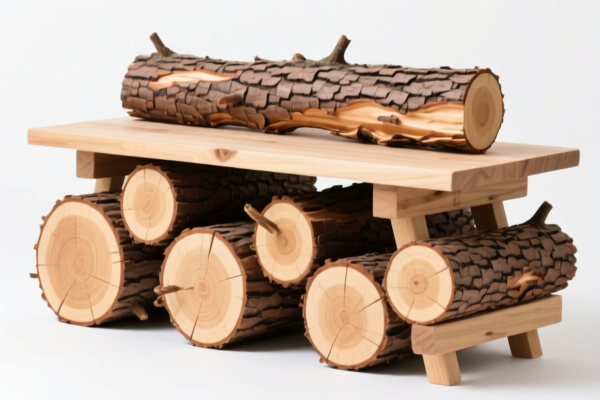
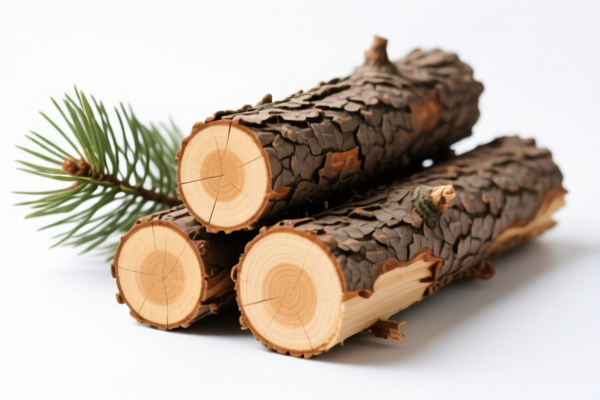
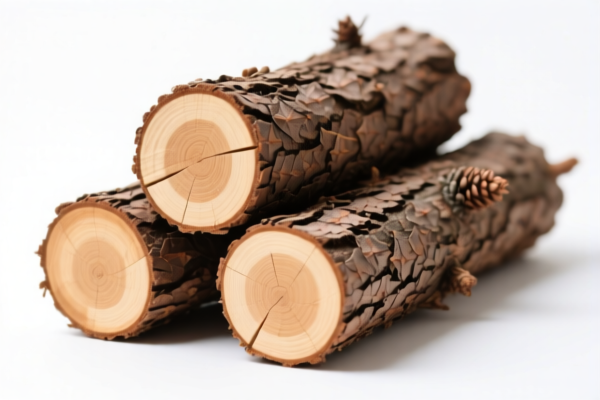
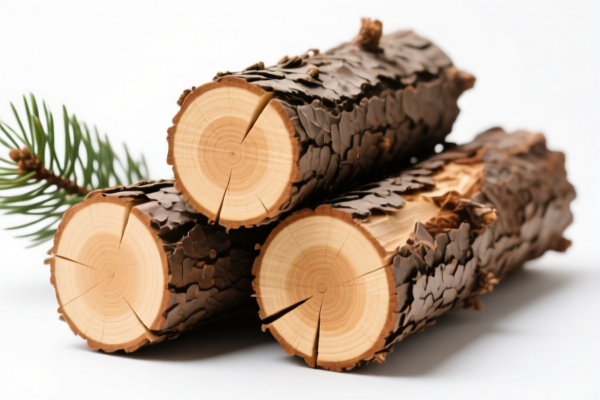
AI Analysis
🌲 Softwood Logs for Fine Woodworking or Carpentry (Coniferous Timber)
🌐 HS Code Reference & Customs Clearance Guide | 2026 Latest Tariff Analysis | Professional Clearance Strategy
📌 I. Product Definition and Classification: What Exactly Are "Fine Woodworking Logs"?
"Softwood logs for fine woodworking or carpentry" refers to timber that has not been processed into planks, beams, or finished furniture parts. Instead, these are raw or semi-processed logs intended for further milling, turning, or crafting.
In international trade, these goods fall strictly under Chapter 44 (Wood and articles of wood) and more specifically under Heading 44.03 (Wood in the rough, whether or not stripped of bark or sapwood, or roughly squared).
⚠️ Critical Distinction:
- If the wood is rubbish, sawn, or shaped (e.g., planks, beams), it falls under HS 44.07 or 44.09.
- If it is raw, rough-squared, or stripped, it falls under HS 44.03.
- For Pine (Pinus spp.), a specific distinction is made based on the smallest cross-sectional dimension:
- ≥ 15 cm: Classified as specific pine logs (HS 4403.21).
- Other/Smaller or Specific Species: Classified under other subheadings (HS 4403.22 or others).
📦 II. HS Code Classification Details (2026 Latest Tariff Authority Reference)
Based on the provided data, we have two primary HS Codes for Coniferous Pine Logs. Both categories attract the same tariff structure but differ in physical specifications.
| HS Code | Product Description | Physical/Species Criteria | Application Scenario |
|---|---|---|---|
4403.21.01.30 |
Other Coniferous Wood, Pine (Pinus spp.) | Smallest cross-sectional dimension ≥ 15 cm. Roughly squared or stripped. | Large-diameter pine logs used for heavy timber framing, large-scale carpentry, or high-end furniture blanks. |
4403.22.01.20 |
Other Coniferous Wood, Pine (Pinus spp.) | Specific species: Southern Yellow Pine (e.g., Loblolly, Long Leaf, Pitch, Short Leaf, Slash, Virginia Pine). | Logs of these specific southern US pine species, regardless of exact dimension (if not meeting the ≥15cm "Other Pine" category or if classified under this specific species list). |
🔍 Key Note:
- Both codes apply to "Wood in the rough".
- "Roughly squared" means the log has been hewn or sawn on all four sides but retains a rough surface.
- "Stripped of bark or sapwood" is acceptable; the wood does not need to be fully debarked to qualify, but it must not be processed beyond rough squaring.
💰 III. 2026 Latest Tariff Rate Breakdown (Including Duties & Surcharges)
✅ Applicable Country: United States (US)
✅ Origin: China (CN) (Implied by tariff structure context)
✅ Effective Date: Current rates apply as per 2026 tariff schedules.
🎯 1. 4403.21.01.30 —— Pine Logs (≥ 15 cm cross-section)
| Item | Content |
|---|---|
| Base Tariff | 0.0% (ad valorem) |
| Section 301 Surcharge | +25.0% |
| Total Tax Rate | 25.0% |
| Tax Calculation | CIF Value × 25% |
| De Minimis Exemption | ❌ Not Eligible (Deny De Minimis) |
| Legal Basis | Based on HTSUS 4403.21.01.30 with applicable Section 301 footnote. |
📌 Explanation:
- The base duty for many rough softwood logs is 0%, making them attractive from a base rate perspective.
- However, the 25% Section 301 tariff applies to a wide range of Chinese-origin wood products, including logs and timber.
- Total Effective Rate: 25%. This is a significant cost factor for importers.
🎯 2. 4403.22.01.20 —— Specific Pine Species (Southern Yellow Pine Types)
| Item | Content |
|---|---|
| Base Tariff | 0.0% (ad valorem) |
| Section 301 Surcharge | +25.0% |
| Total Tax Rate | 25.0% |
| Tax Calculation | CIF Value × 25% |
| De Minimis Exemption | ❌ Not Eligible (Deny De Minimis) |
| Legal Basis | Based on HTSUS 4403.22.01.20 with applicable Section 301 footnote. |
📌 Note:
- This code covers specific species like Loblolly, Long Leaf, Pitch, Short Leaf, Slash, and Virginia Pines.
- Despite the different HS code due to species specificity, the tax rate is identical (25%).
- Importers must ensure species accuracy in documentation, as misclassification can lead to penalties.
🛠️ IV. Practical Customs Clearance Advice (Battle-Proven Pitfall Avoidance)
✅ 1. Required Documentation Checklist (Non-Negotiable)
| Document | Mandatory? | Description |
|---|---|---|
| ✅ Commercial Invoice | ✔️ | Must clearly state "Wood in the Rough," species (e.g., Pinus taeda), and dimensions. |
| ✅ Packing List | ✔️ | Must detail number of logs, total volume (MBF or CBM), and weight. |
| ✅ Phytosanitary Certificate | ✔️ | CRITICAL: Issued by the country of origin's agricultural authority. Must confirm freedom from pests/diseases. |
| ✅ ISPM 15 Markings | ✔️ | All wooden packaging (pallets/crates) must be heat-treated or fumigated and marked. |
| ✅ Bill of Lading/Air Waybill | ✔️ | Consistent with invoice and packing list. |
| ✅ Species Identification Document | ✔️ | If claimed as specific species (e.g., Southern Yellow Pine), scientific name must be included. |
✅ 2. Declaration Tips (Key Mantras)
🔥 “Rough Not Sawn, Species Must Name, Phytosanitary Key, Tariff Won’t Change!”
| Scenario | Correct Declaration | Incorrect Practice |
|---|---|---|
| Raw Logs with Bark | "Wood in the rough, stripped of bark" | "Lumber" or "Planks" → Wrong HS, higher duty. |
| Rough-Squared Logs | "Roughly squared pine logs" | "Finished timber" → Wrong HS. |
| Mixed Pine Species | List all species individually | "General Softwood" → Risk of misclassification. |
| Wooden Pallets | Declare separately if not part of goods | Ignore pallets → Is detention + fines. |
✅ 3. Special Case Handling
| Situation | Recommendation |
|---|---|
| OEM Custom Dimensions | Provide detailed logs specifications (diameter/length) to prove they are "rough" and not "sawn." |
| Treated Wood | Declare treatment method (e.g., Methyl Bromide) on Phytosanitary Certificate. |
| Value Fluctuation | Since tax is 25% of CIF, accurate valuation is crucial. Under-declaration leads to severe penalties. |
| Origin Verification | Ensure wood is not from prohibited regions or unsourced illegal logging areas. |
🌍 V. Global Market Customs Comparison (2026 Latest)
| Country/Region | Recommended HS Code | Tariff Rate | Certification Required | Notes |
|---|---|---|---|---|
| 🇺🇸 USA | 4403.21.01.30 / 4403.22.01.20 |
25% (Section 301) | Phytosanitary + ISPM 15 | Base duty 0%, but 25% surcharge applies. |
| 🇨🇳 China | 4403.21 / 4403.22 | ~0-5% | Phytosanitary | Import duties may vary by origin; check FTA if applicable. |
| 🇪🇺 EU | 4403.21 / 4403.22 | 0% (if EUTR compliant) | EUTR Compliance + FSC/PEFC | Strict illegal logging regulations. |
| 🇬🇧 UK | 4403.21 / 4403.22 | 0% | UK Timber Regulations | Post-Brexit rules apply. |
📌 Conclusion:
- The US market imposes a 25% surcharge on these wood products, significantly increasing landed cost.
- Phytosanitary compliance is the biggest hurdle in customs clearance globally.
- Ensure species accuracy to avoid audits or misclassification penalties.
📌 VI. Common Mistakes & Pitfall Guide (Lessons from the Field)
❌ Mistake 1: Declaring "Logs" when they are actually "Sawn Timber"
👉 Consequence: Wrong HS Code → Potential higher duties or rejection of entry.
❌ Mistake 2: Missing Phytosanitary Certificate
👉 Consequence: Immediate seizure or destruction of goods by USDA/APHIS.
❌ Mistake 3: Ignoring ISPM 15 on Packaging
👉 Consequence: Refusal of entry or re-export at importer’s cost.
❌ Mistake 4: Vague Species Description ("Pine Logs")
👉 Consequence: Customs may assign a general code with higher scrutiny or penalties for misdeclaration.
✅ Correct Practice:
“Pine Logs, Pinus taeda (Loblolly Pine), Roughly Squared, 16cm+ Diameter, Heat-Treated Packaging, Phytosanitary Cert Attached”
🎯 VII. Conclusion: Professional Clearance, Cost Control, Efficiency!
🎯 Remember the Mantra:
🔹 “Rough Logs, 25% Tax, Phyto Cert is Key, Species Must Be Specific!”
🔹 “HS Code 4403, Base 0%, Add 25%, Total Cost High, Declare Right to Survive!”
📌 Pro Tip:
If your logs originate from countries with Free Trade Agreements (FTAs) with the US (e.g., Mexico, Canada, Chile), check if Section 301 exclusions apply. However, note that most wood products remain subject to the 25% tariff unless specifically excluded.
📣 Immediate Action:
📞 Contact a licensed customs broker + Provide Phytosanitary Cert + Verify Species Accuracy
🚀 Ensure smooth clearance, avoid seizures, and protect your margins!
✨ Professional clearance starts with precise classification!
💼 Every percentage point of duty matters in the lumber trade!
Customer Reviews
About HS Code Classification
The Harmonized System (HS) is an internationally standardized nomenclature developed by the World Customs Organization (WCO) to classify traded products. Over 200 countries use the HS system as the basis for customs tariffs, trade statistics, and import/export regulations.
Each HS code follows a hierarchical structure:
- Chapter (2 digits) — Broad category of goods (e.g., Chapter 84: Machinery and Mechanical Appliances)
- Heading (4 digits) — More specific grouping within the chapter
- Subheading (6 digits) — Internationally standardized breakdown, used by all WCO member countries
- National subdivisions (8-10 digits) — Country-specific extensions for further classification, such as US HTSUS 10-digit codes
Correct HS code classification is essential for smooth customs clearance, accurate duty payment, and compliance with trade regulations. Misclassification can lead to customs delays, overpayment of duties, or penalties.
When importing from CN to US, the applicable tariff rates may include:
- Most-Favored-Nation (MFN) rate — The standard duty rate applied to WTO members
- General rate — Applied to countries without trade agreements
- Trade remedy duties — Additional tariffs such as Section 301 (anti-dumping), Section 232 (national security), or countervailing duties
The information provided on this page is for reference purposes only. For official classification, please consult with your local customs authority or a licensed customs broker.