Softwood Logs for Furniture Manufacturing (Roughly Processed)
CN → US| HS Code | Tariff Rate | Origin | Destination | Doc |
|---|---|---|---|---|
| 4407190092 | 35.0% | CN | US | Official Doc |
| 4403260165 | 35.0% | CN | US | Official Doc |
| 4407190093 | 35.0% | CN | US | Official Doc |
| 4403210165 | 35.0% | CN | US | Official Doc |
Product Images
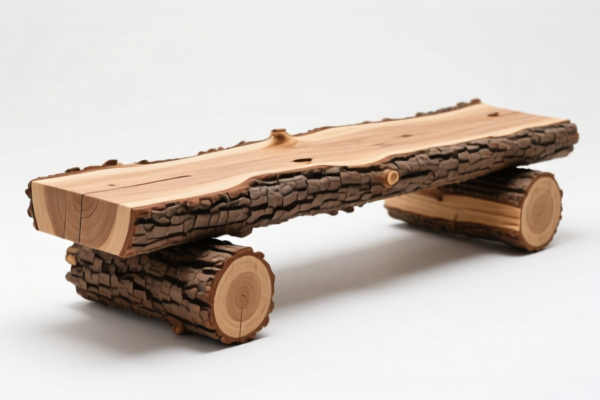
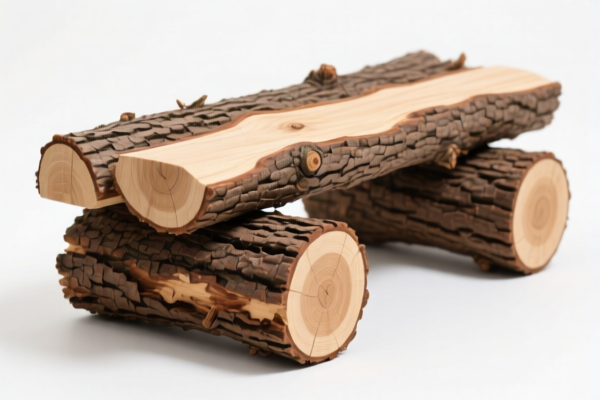
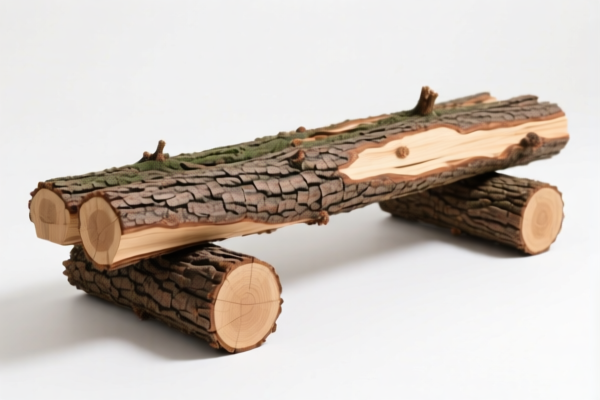
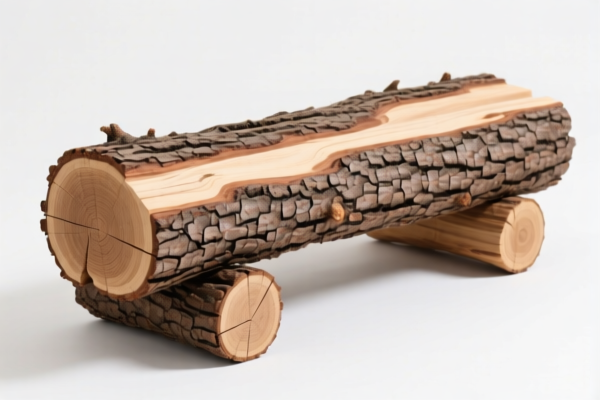
AI Analysis
🌲 Softwood Logs for Furniture Manufacturing (Roughly Processed)
🌐 HS Code Reference & Customs Clearance Guide | 2026 Latest Tariff Analysis | Professional Clearance Strategy
📌 I. Product Definition & Classification: Do You Truly Understand "Softwood Logs"?
Softwood logs, specifically those intended for furniture manufacturing, are the foundational raw materials for the wood processing industry. In international trade, these are not merely "tree trunks" but are classified based on their processing state, species, and intended use. For furniture-grade softwood, the key distinction lies between raw timber (logs/sawn timber) and finished products.
Softwood Logs (Unprocessed/Roughly Processed): Raw or partially processed wood, often in the form of logs, baulks, or rough-sawn timber, lacking the final shaping required for furniture assembly. These fall under Chapter 44 (Wood and Articles of Wood).
⚠️ Key Distinction Point:
- If the wood is not yet sawn (i.e., peeled or roughly hewn but still in log form), it falls under 4403.
- If the wood is sawn or chipped lengthwise (even roughly) for furniture components, it falls under 4407.
- Crucial for Furniture Manufacturing: Since the prompt specifies "Roughly Processed" and "For Furniture," if the wood has been sawn into planks/boards, 4407 is often the more precise category for "wood sawn lengthwise." If it remains in log form, 4403 applies. However, many furniture manufacturers import sawn softwood (4407) for direct planing and joinery. Below, we analyze both scenarios based on the provided data.
📦 II. HS Code Classification Details (2026 Latest Tariff Authority Comparison)
Based on the provided <DATA>, all items are subject to high tariffs due to US trade policies (Section 301/IEEPA). Here is the breakdown of why each code applies:
| HS Code | Product Description | Application Scenario | Key Classification Logic |
|---|---|---|---|
4407.19.00.92 |
Softwood Timber (Sawn), for Furniture | Sawn softwood timber specifically aligned with furniture manufacturing needs. | Matches sawn softwood timber. Since it is "roughly processed" (likely sawn but not finished) and specified for furniture, this is the primary target code for furniture-grade timber. |
4403.26.01.65 |
Softwood Logs (Other), Not Poles/Palisades | Raw softwood logs that do not fit other specific log categories (e.g., not for construction poles). | Matches logs (unsawn). If the wood is still in log form and doesn't fit specific pole/palisade categories, it falls here. "No material conflict" indicates it’s pure softwood. |
4407.19.00.93 |
Softwood Timber, Includes Log Form | Softwood timber that may include rough-hewn or semi-processed forms. | A broader category under 4407. Includes "other" softwood timber. If the processing is ambiguous between log and sawn, this catch-all for sawn/rough timber may apply. |
4403.21.01.65 |
Softwood Logs, Non-Poles/Palisades | Softwood logs that are explicitly not poles, baulks, or palisades. | Matches logs (unsawn). Specifically excludes construction-specific forms. If the furniture manufacturer is importing raw logs to process in-house, this is the correct code. |
🔍 Critical Reminder:
- Furniture Manufacturing Context: If the wood is sawn (even roughly), use 4407. If it is unsawn logs, use 4403.
- No Material Conflict: All codes confirm pure softwood, avoiding stricter regulations on hardwoods or treated wood.
💰 III. 2026 Latest Tariff Rate Breakdown (Including Additional Taxes & Policy Surcharges)
✅ Applicable Country: United States (US)
✅ Origin: China (CN) (Implied by 122-Clause & 25% Section 301 rates)
✅ Effective Time: Current policies active (2025-2026)
🎯 1. General Tariff Structure for All Listed Codes
| Item | Content |
|---|---|
| Base Tariff Rate | 0.0% (Standard MFN rate for softwood timber/logs) |
| Section 301 Additional Tariff | +25.0% (USITC Footnote 9903.88.01 - Trade War Tariff) |
| Section 122/IEEPA Additional Tariff | +10.0% (Specific clause for certain Chinese-origin goods) |
| Total Tariff Rate | 35.0% |
| Tax Calculation | CIF Value × 35% |
| De Minimis Exemption | ❌ Not Applicable (High-value commercial shipments) |
| Legal Basis Path | USITC:4407/4403 → SECTION301:25% → IEEPA/122:10% |
📌 Explanation:
- "Base Tariff 0%": Softwood timber and logs typically have a 0% base duty under normal trade terms.
- "25% Additional Tariff": This is the hallmark of Section 301 tariffs imposed on Chinese-origin wood products.
- "122-Clause Tariff 10%": This refers to specific USITC footnotes or IEEPA provisions adding an extra layer of duty for certain wood products.
- Total 35%: This is a significant cost driver. Importers must calculate landed cost carefully.
🛠️ IV. Customs Clearance Practical Advice (Field Risk Avoidance Guide)
✅ 1. Required Documentation Checklist (Mandatory)
| Document | Required | Notes |
|---|---|---|
| ✅ Phytosanitary Certificate | ✔️ | Issued by the country of origin’s plant protection agency. Critical for preventing pests. |
| ✅ Commercial Invoice | ✔️ | Must clearly state: "Softwood Logs/Timber," HS Code, Weight (MBF or m³), and Origin. |
| ✅ Packing List | ✔️ | Detail the number of bundles, wood species, and dimensions. |
| ✅ Bill of Lading (B/L) | ✔️ | Ensure "Freight Prepaid" or "Collect" is clear. |
| ✅ Proof of Processing | ✔️ | If claiming 4407, provide sawmill invoices or photos showing sawn edges. If 4403, provide log photos. |
| ✅ ISPM 15 Mark (if applicable) | ✔️ | If wood is packaged (pallets/crates), they must be heat-treated/stamped. The wood itself (logs/timber) does not require ISPM 15, but packaging does. |
✅ 2. Declaration Techniques (Key Mantras)
🔥 "Species Clear, Processing State Precise, 35% Tariff Expected!"
| Scenario | Correct Declaration | Wrong Practice |
|---|---|---|
| Sawn Softwood (for Furniture) | 4407.19.00.92 - "Softwood Timber, Sawn, for Furniture" |
Declaring as "Raw Logs" to avoid 35% → High Risk of Audit/Seizure |
| Unprocessed Logs | 4403.26.01.65 - "Softwood Logs, Unprocessed" |
Using vague terms like "Wood" → Classification Error |
| Mixed Species | Do Not Mix | Combining hardwood and softwood → Customs Rejection |
| Treated Wood | Declare Treatment | If chemically treated, additional rules apply (HS change or additional duties). |
⚠️ Warning:
- Misclassification Risk: Declaring sawn timber (4407) as logs (4403) to potentially argue for different treatment is dangerous if the wood is visibly sawn. Customs will inspect and impose penalties.
- 35% is Non-Negotiable: Do not attempt to undervalue or misrepresent origin to avoid the 25% + 10% surcharge.
✅ 3. Special Situations
| Situation | Handling Advice |
|---|---|
| OEM Custom Sizing | Provide cut lists and diagrams to prove "Furniture-Ready" status, supporting 4407. |
| Wood Species Identification | Provide lab test results (DNA or microscopic) if species is disputed (e.g., Pine vs. Spruce), as some species have different base duties. |
| Transshipment via Third Country | High Risk: If shipped from Vietnam/Malaysia but originally Chinese, Rule of Origin checks may still apply. Ensure proper change in tariff classification or substantial transformation. |
| Seasonal Restrictions | Check for pest outbreaks (e.g., Emerald Ash Borer) in the exporting region. Some regions may face temporary bans. |
🌍 V. Global Market Customs Comparison (2026 Latest)
| Country/Region | Recommended HS Code | Tariff (China Origin) | Key Requirements | Notes |
|---|---|---|---|---|
| 🇺🇸 USA | 4407.19.00.92 / 4403.26.01.65 |
35% (Base 0% + 25% + 10%) | Phytosanitary, ISPM 15 (packaging) | Highest Cost: 35% total duty. |
| 🇨🇳 China | 4407.19.00.92 |
5-8% | Phytosanitary | Lower tariff, but imports are restricted for domestic protection. |
| 🇪🇺 EU | 4407.19.00.00 |
0% (FPL Regulation) | FPL (Forest Law Enforcement), FSC/PEFC | No Section 301 tariffs. Easier Clearance. |
| 🇯🇵 Japan | 4407.19.00.00 |
0-2% | Phytosanitary | Favorable for softwood. |
📌 Conclusion:
- The US is the most expensive market for Chinese-origin softwood due to the 35% combined tariff.
- EU/Japan offer significant cost advantages if supply chains can be diversified.
📌 VI. Common Mistakes & Pitfalls (Lessons Learned)
❌ Mistake 1: Declaring sawn timber as logs to avoid Section 301 scrutiny
👉 Consequence: Customs inspection reveals sawn edges → Penalty + Back Duties + Possible Ban.
❌ Mistake 2: Failing to provide a Phytosanitary Certificate
👉 Consequence: Shipment held at port for fumigation or destroyed → Loss of Goods.
❌ Mistake 3: Incorrectly identifying wood species
👉 Consequence: If "Pine" is declared but "Fir" is shipped, duties may differ, leading to underpayment penalties.
❌ Mistake 4: Ignoring 122-Clause/IEEPA implications
👉 Consequence: Assuming only 25% tax → Unexpected 10% surcharge at clearance.
✅ Correct Approach:
"Softwood Timber, Sawn, Roughly Processed, Species: Pine/Spruce, Origin: China, Intended Use: Furniture Manufacturing. Compliant with ISPM 15 Packaging."
🎯 VII. Conclusion: Professional Declaration for Cost Efficiency
🎯 Remember the Mantra:
🔹 "Logs vs. Sawn: Know the Difference!"
🔹 "35% is the US Reality for Chinese Softwood."
🔹 "Phytosanitary is Non-Negotiable!"
📌 Pro Tip:
If your softwood is originally from China but transshipped through Vietnam/Malaysia without substantial transformation, the US Customs may still apply the 35% tariff. Ensure Certificate of Origin and supply chain transparency are flawless.
📣 Immediate Action:
📞 Consult with a licensed customs broker for Advance Ruling if the processing state is ambiguous.
📄 Ensure Phytosanitary Certificates are obtained before shipment.
💡 Consider supply chain diversification to EU or Southeast Asia to mitigate high US tariffs.
✨ Professional Clearance Starts with Accurate Classification!
💼 Every Percent of Tariff Counts in Furniture Manufacturing Margins!
Customer Reviews
About HS Code Classification
The Harmonized System (HS) is an internationally standardized nomenclature developed by the World Customs Organization (WCO) to classify traded products. Over 200 countries use the HS system as the basis for customs tariffs, trade statistics, and import/export regulations.
Each HS code follows a hierarchical structure:
- Chapter (2 digits) — Broad category of goods (e.g., Chapter 84: Machinery and Mechanical Appliances)
- Heading (4 digits) — More specific grouping within the chapter
- Subheading (6 digits) — Internationally standardized breakdown, used by all WCO member countries
- National subdivisions (8-10 digits) — Country-specific extensions for further classification, such as US HTSUS 10-digit codes
Correct HS code classification is essential for smooth customs clearance, accurate duty payment, and compliance with trade regulations. Misclassification can lead to customs delays, overpayment of duties, or penalties.
When importing from CN to US, the applicable tariff rates may include:
- Most-Favored-Nation (MFN) rate — The standard duty rate applied to WTO members
- General rate — Applied to countries without trade agreements
- Trade remedy duties — Additional tariffs such as Section 301 (anti-dumping), Section 232 (national security), or countervailing duties
The information provided on this page is for reference purposes only. For official classification, please consult with your local customs authority or a licensed customs broker.