Soil Loosening Shoes
CN → US| HS Code | Tariff Rate | Origin | Destination | Doc |
|---|---|---|---|---|
| 6405909060 | 22.5% | CN | US | Official Doc |
| 6403999071 | 20.0% | CN | US | Official Doc |
| 6403999015 | 20.0% | CN | US | Official Doc |
| 6405909030 | 22.5% | CN | US | Official Doc |
Product Images
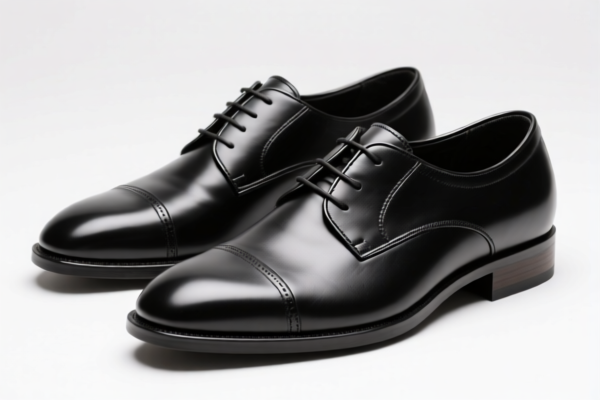
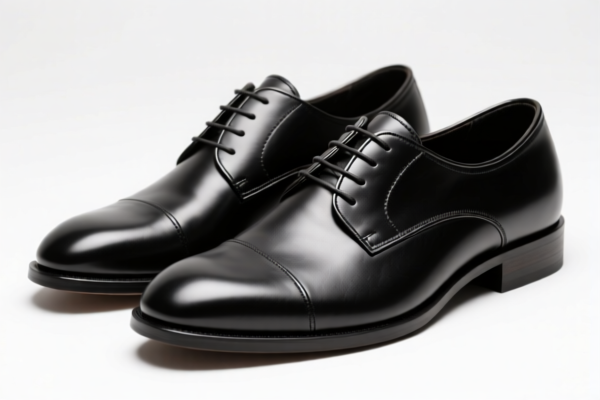


AI Analysis
🌾 Soil Loosening Shoes (Gardening/Work Boots)
🌐 HS Code Reference & Customs Clearance Guide | 2026 Latest Tariff Full Analysis | Professional Clearance Strategy
📌 I. Product Definition & Classification: What Are "Soil Loosening Shoes"?
Soil Loosening Shoes are specialized footwear designed for agricultural, gardening, or industrial work environments. They feature reinforced soles (typically rubber or plastic) with protruding spikes, treads, or cleats to prevent slipping and loosen compacted soil.
In international trade, they are classified under Chapter 64 (Footwear, Leather Articles), specifically as "Other Footwear" due to their specific functional design, which often excludes them from standard casual or safety boot categories if not meeting specific safety standards, or they fall under general "Other Footwear" depending on the upper material.
⚠️ Key Distinction Points:
- Material: Upper is usually Leather, Synthetic Leather, Rubber, or Plastic.
- Sole: Rubber or Plastic with functional spikes/treads.
- Usage: Work/Gardening. NOT Infant Footwear (6405.90.90.60 applies if mistakenly classified as generic, but summary says "Not Infant").
- Classification Logic: They are often grouped under 6403 (Footwear with outer soles of rubber/plastic, uppers of leather/synthetic) or 6405 (Other footwear, often rubber/plastic composition).
📦 II. HS Code Classification Details (2026 Latest Tariff Authority Comparison)
Based on the provided data, there are 5 potential HS Codes for Soil Loosening Shoes. Note that duplicates in the source data are consolidated below for clarity.
| HS Code | Product Description | Summary Rationale | Total Tax |
|---|---|---|---|
6405.90.90.60 |
Other Footwear (Bottoming Category) | Summarized as: "Soil loosening shoes belong to footwear, do not belong to infant shoes, and fit the bottoming classification for other footwear." | 22.5% |
6403.99.90.71 |
Other Footwear (Functional) | Summarized as: "Functional footwear; material is consistent with other footwear under this code." | 20.0% |
6403.99.90.15 |
Work Boots (Leather/Synthetic Upper) | Summarized as: "Used as work boots; outer sole is rubber or plastic; upper is leather or synthetic leather." | 20.0% |
6405.90.90.30 |
Other Footwear (Rubber/Plastic) | Summarized as: "Material is rubber or plastic; form is finished footwear; fits the classification for other footwear." | 22.5% |
🔍 Key Observation:
- 6403 Codes (.71and.15) are generally for footwear with leather/synthetic uppers and rubber/plastic soles. Tax: 20%.
- 6405 Codes (.60and.30) are generally for other footwear (often rubber/plastic uppers or generic "other" categories). Tax: 22.5%.
- Duplicate Entry:6403.99.90.71appears twice in the source data with the same tax detail. It is listed once above.
💰 III. 2026 Latest Tariff Rate Details (Including Additional Taxes & Policy Surcharges)
✅ Applicable Country: USA (US)
✅ Origin: China (CN)
✅ Effective Time: Current regulations apply (based on 122 Clause/Section 301 logic)
🎯 1. 6405.90.90.60 & 6405.90.90.30 —— Other Footwear (Rubber/Plastic or Generic)
| Item | Content |
|---|---|
| Base Tariff Rate | 12.5% (Ad Valorem) |
| Section 301 / "122 Clause" Surcharge | +10% (Specific additional tariff mentioned in data) |
| Other Surcharges | 0.0% |
| Total Tariff Rate | 22.5% |
| Tax Calculation | CIF Value × 22.5% |
| De Minimis Exemption | ❌ No (High tariff rates typically exclude de minimis benefits for China-origin goods in many contexts, though specific value thresholds may vary, the high rate suggests strict application). |
| Legal Basis Path | USITC:6405.90.90.60/30 → Section 122 Tariff: 10% → Base: 12.5% |
📌 Explanation:
- The 12.5% is the standard MFN (Most Favored Nation) base duty for this "Other Footwear" category.
- The +10% is a specific additional tariff (referred to as "122 Clause Tariff" in the source data), likely related to specific trade remedies or administrative orders.
- Total: 22.5%. This is a moderate-to-high tariff compared to basic footwear.
🎯 2. 6403.99.90.71 & 6403.99.90.15 —— Functional/Work Footwear (Leather/Synthetic Upper)
| Item | Content |
|---|---|
| Base Tariff Rate | 10.0% (Ad Valorem) |
| Section 301 / "122 Clause" Surcharge | +10% (Specific additional tariff mentioned in data) |
| Other Surcharges | 0.0% |
| Total Tariff Rate | 20.0% |
| Tax Calculation | CIF Value × 20.0% |
| De Minimis Exemption | ❌ No (Likely subject to similar restrictions as above due to China origin). |
| Legal Basis Path | USITC:6403.99.90.71/15 → Section 122 Tariff: 10% → Base: 10.0% |
📌 Explanation:
- The 10.0% base duty applies to footwear with leather/synthetic uppers and rubber/plastic soles (Chapter 64.03).
- The +10% surcharge is the same "122 Clause" tariff applied here.
- Total: 20.0%. This is 2.5% lower than the 6405 category, making it slightly more cost-effective if the material composition fits.
🛠️ IV. Customs Clearance Practical Advice (Field Pitfall Avoidance Guide)
✅ 1. Required Documentation Checklist (All are essential)
| Document | Must Provide | Description |
|---|---|---|
| ✅ Product Specification Sheet | ✔️ | Must clearly state: Upper Material (Leather/Rubber/Plastic), Sole Material (Rubber/Plastic), and Presence of Spikes/Cleats. |
| ✅ Product Photos | ✔️ | Clear images of the sole (showing tread/spike pattern) and the upper material. |
| ✅ Commercial Invoice | ✔️ | Must accurately describe the item as "Soil Loosening Shoes" or "Gardening Work Boots." Avoid vague terms like "Plastic Shoes." |
| ✅ Packing List | ✔️ | Detail dimensions and weight. |
| ✅ Material Composition Statement | ✔️ | Crucial for distinguishing between 6403 (Leather/Synthetic) and 6405 (Other/Rubber/Plastic). |
✅ 2. Declaration Tips (Key Mantra)
🔥 "Material Determines Code, Sole Defines Function. Don't Mix Leather with Plastic Codes!"
| Situation | Correct Declaration | Wrong Practice |
|---|---|---|
| Upper is Leather/Synthetic | 6403.99.90.71 or 6403.99.90.15 (20% Tax) |
Misdeclaring as 6405 (22.5%) → Overpay 2.5% |
| Upper is Rubber/Plastic | 6405.90.90.30 (22.5% Tax) |
Misdeclaring as 6403 → Underpayment Risk & Penalty |
| Generic "Other" Footwear | 6405.90.90.60 (22.5% Tax) |
Using infant code (6405.90.90.60 summary says "Not Infant") → Rejection |
| Work Boots with Safety Toe | Check for 6403/6405 subcategories | Declaring as "Safety Boots" without proper HS → Delay |
📌 Critical Warning:
- The summary for6405.90.90.60explicitly states: "Not Infant Shoes". Do not use infant codes.
- Ensure the upper material is correctly identified. If the upper is synthetic leather, it may still fall under 6403 depending on specific HTSUS definitions, or 6405 if classified as "other."
✅ 3. Special Cases Handling
| Situation | Handling Advice |
|---|---|
| Mixed Materials | If the upper is a combination (e.g., Leather + Mesh), the principal material usually dictates the heading. Consult a broker. |
| Spikes/Cleats | These do not automatically move the product to a different chapter (e.g., Tools). They remain Footwear (Ch 64). |
| OEM Custom Designs | Provide design sketches to prove functional intent (Soil Loosening) vs. Fashion. |
🌍 V. Global Market Clearance Comparison (2026 Latest)
| Country/Region | Recommended HS Code | Tariff (China Origin) | Certification | Notes |
|---|---|---|---|---|
| 🇺🇸 USA | 6403.99.90.71 / 6405.90.90.30 |
20.0% - 22.5% | N/A | High surcharges apply. |
| 🇨🇳 China (Import) | Varies by material | ~10-20% | CCC (if applicable) | Check latest Chinese HS. |
| 🇪🇺 EU | 6403 / 6405 | ~12-17% | CE (if safety boots) | Lower base tariffs, no Section 301. |
| 🇬🇧 UK | 6403 / 6405 | ~12-17% | UKCA | Post-Brexit rules apply. |
📌 Conclusion:
- USA imposes the 10% "122 Clause" surcharge on top of the base rate, significantly increasing costs.
- 6403 codes are cheaper (20%) than 6405 codes (22.5%).
- If possible, ensure the upper material composition allows for 6403 classification (if leather/synthetic) to save 2.5%.
📌 VI. Common Errors & Pitfall Avoidance (Lessons Learned)
❌ Error 1: Misclassifying as "Infant Footwear"
👉 Consequence: Customs will reject based on summary "Not Infant Shoes," causing delays and fines.
👉 Fix: Clearly state "Adult Work/Gardening Shoes."
❌ Error 2: Confusing "Rubber" vs. "Leather" Upper for 6403/6405
👉 Consequence: Incorrect tax rate (20% vs 22.5%). Underpayment leads to back taxes + penalties.
👉 Fix: Accurately declare material composition.
❌ Error 3: Ignoring the "122 Clause" Surcharge
👉 Consequence: Budgeting errors. If you only account for the 10-12.5% base, you will be short 10% in cash flow.
👉 Fix: Include Total Tax = Base + 10% in cost calculations.
✅ Correct Declaration Example:
"Adult Soil Loosening Work Boots, Outer Sole: Rubber with Cleats, Upper: Synthetic Leather, Model XYZ, For Gardening Use."
🎯 VII. Conclusion: Professional Declaration for Cost Efficiency
🎯 Remember the Mantra:
🔹 "Leather/Synthetic Upper → 6403 (20%). Rubber/Plastic Upper → 6405 (22.5%)."
🔹 "Always Add 10% for the 122 Clause Surcharge."
🔹 "Not Infant Shoes! Clearly state 'Work/Gardening'."
📌 Tips:
- If your Soil Loosening Shoes are originally produced in Vietnam, Mexico, or Thailand, you may qualify for IEEPA exemptions or lower tariffs.
- Recommend applying for an Advance Ruling if the material composition is complex.
📣 Immediate Action:
📞 Contact a professional customs broker + Provide Material Specs + Declare Accurately
🚀 Ensure Smooth Customs Clearance, Efficient Export, and Maximized Profit!
✨ Professional Customs Clearance Starts with Precise Classification!
💼 Every Cent of Your Cost Deserves Precise Calculation!
Customer Reviews
About HS Code Classification
The Harmonized System (HS) is an internationally standardized nomenclature developed by the World Customs Organization (WCO) to classify traded products. Over 200 countries use the HS system as the basis for customs tariffs, trade statistics, and import/export regulations.
Each HS code follows a hierarchical structure:
- Chapter (2 digits) — Broad category of goods (e.g., Chapter 84: Machinery and Mechanical Appliances)
- Heading (4 digits) — More specific grouping within the chapter
- Subheading (6 digits) — Internationally standardized breakdown, used by all WCO member countries
- National subdivisions (8-10 digits) — Country-specific extensions for further classification, such as US HTSUS 10-digit codes
Correct HS code classification is essential for smooth customs clearance, accurate duty payment, and compliance with trade regulations. Misclassification can lead to customs delays, overpayment of duties, or penalties.
When importing from CN to US, the applicable tariff rates may include:
- Most-Favored-Nation (MFN) rate — The standard duty rate applied to WTO members
- General rate — Applied to countries without trade agreements
- Trade remedy duties — Additional tariffs such as Section 301 (anti-dumping), Section 232 (national security), or countervailing duties
The information provided on this page is for reference purposes only. For official classification, please consult with your local customs authority or a licensed customs broker.