Solar Charger
CN → US| HS Code | Tariff Rate | Origin | Destination | Doc |
|---|---|---|---|---|
| 8501710000 | 37.5% | CN | US | Official Doc |
| 8501721000 | 37.5% | CN | US | Official Doc |
| 8504409510 | 35.0% | CN | US | Official Doc |
| 8504409520 | 35.0% | CN | US | Official Doc |
| 8543709860 | 37.6% | CN | US | Official Doc |
| 8543708900 | 17.5% | CN | US | Official Doc |
Product Images
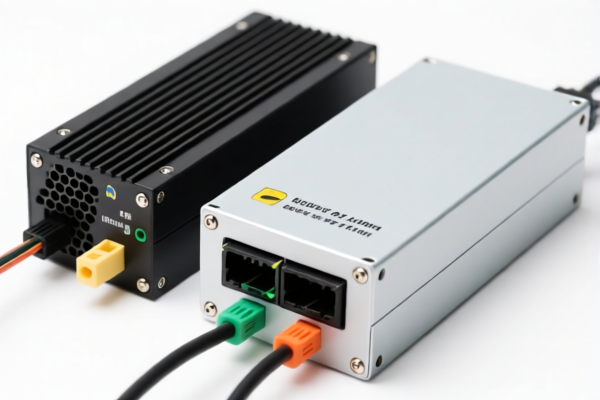
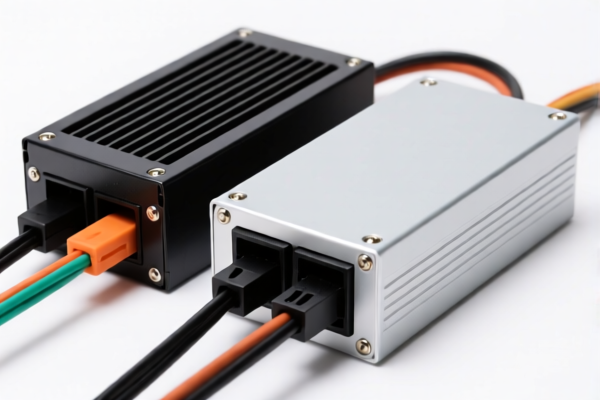
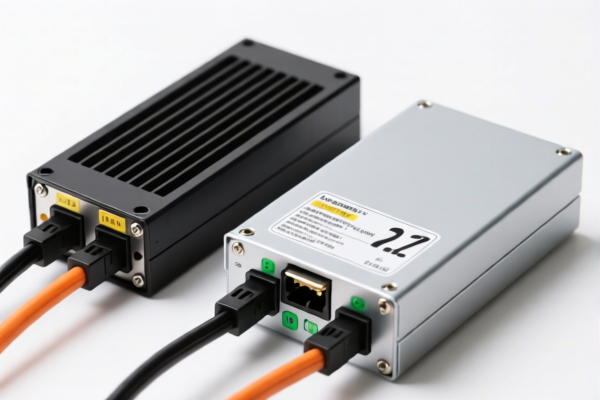
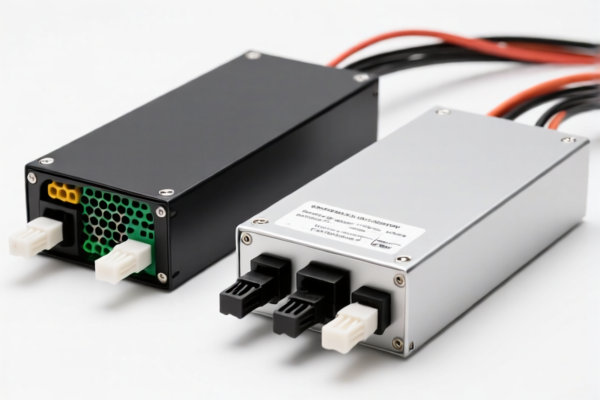
AI Analysis
🌞 Solar Charger (Photovoltaic DC Generators & Power Supplies)
🌐 HS Code Reference & Clearance Guide | 2026 Latest Tariff Analysis | Professional Compliance Strategy
📌 I. Product Definition & Classification: What Exactly is a "Solar Charger"?
In international trade, "Solar Charger" is a generic consumer term, not a precise technical classification. It generally refers to devices that convert sunlight into electricity. For customs purposes, we must distinguish between Photovoltaic (PV) DC Generators (the solar panels themselves) and Power Supply Units/Converters (the internal electronics managing charge, voltage regulation, and output).
Key Distinction: * PV DC Generators (Solar Panels): Devices consisting only of photovoltaic cells/modules. They generate DC electricity directly. * Classification: Chapter 85, Heading 8501. * Static Converters / Power Supplies: Devices that include rectifiers, inverters, or voltage regulators (e.g., a solar controller with USB ports, or a standalone power bank with solar input). * Classification: Chapter 85, Heading 8504 (Transformers/Converters) or 8543 (Other Electrical Machines).
⚠️ Critical Classification Point:
- If the product is just the solar panel (cells + frame + junction box), it falls under 8501.7x.
- If the product is a complete charging unit (panel + controller + battery casing + ports) that functions as a specific apparatus, it may fall under 8543 or 8504, depending on its primary function and power output.
- Do NOT classify a "Solar Power Bank" with integrated batteries as a simple generator; it is often treated as a "Portable Battery Operated Electronic Reader" or "Other Machine" if it has specific data/audio functions, or a generic power supply.
📦 II. HS Code Classification Details (2026 Latest Tariff Alignment)
Based on the provided dataset, here are the precise HS Codes and their corresponding tax implications for Solar Chargers.
| HS Code | Product Description | Applicable Scenario | Key Technical Parameter |
|---|---|---|---|
8501.71.00.00 |
Electric Motors and Generators: Photovoltaic DC Generators: Of an output not exceeding 50 W | Small portable solar panels, camping lanterns with integrated small panels | ≤ 50 Watts |
8501.72.10.00 |
Electric Motors and Generators: Photovoltaic DC Generators: Of an output exceeding 50 W: Of an output not exceeding 750 W | Medium-sized portable solar chargers, rooftop mini-systems | > 50 W and ≤ 750 W |
8543.70.98.60 |
Electrical Machines...: Other Machines and Apparatus...: Other | Generic solar controllers, hybrid inverters, or complex solar charging hubs that don't fit specific generator definitions | Complex apparatus |
8543.70.89.00 |
Electrical Machines...: Portable battery operated electronic readers... | Specific Case: Solar chargers with integrated e-readers, audio players, or digital displays for text/audio files | Specific function > Power |
8504.40.95.10 |
Electrical Transformers...: Static Converters...: Power supplies: With a power output not exceeding 50 W | Simple solar power banks, USB solar adapters, low-wattage charging circuits | ≤ 50 W Output |
8504.40.95.20 |
Electrical Transformers...: Static Converters...: Power supplies: With a power output exceeding 50 W but not exceeding 150 W | Higher-wattage solar power stations, RV solar setups, camping power stations | > 50 W and ≤ 150 W |
🔍 重点提醒 (Key Reminders): - Pure Panels vs. Integrated Units: If your product is a standalone solar panel, use 8501.71 or 8501.72.
- Integrated Electronics: If your product has a built-in charge controller, battery, or USB output ports and is marketed as a "Charger" or "Power Bank," it often falls under 8504 (Power Supplies) or 8543 (Other Machines).
- Avoid "Solar Panel" Labeling for Complex Devices: If you label a complex solar power station as "Photovoltaic Generator," customs may reclassify it under 8504 with higher taxes (27.6%).
💰 III. 2026 Latest Tariff Rate Breakdown (Including Surtaxes)
✅ Applicable Country: United States (US)
✅ Origin: China (CN)
✅ Effective Time: Current rates apply (Note: Rates vary by specific HTS subheadings and footnote applications)
🎯 1. 8501.71.00.00 & 8501.72.10.00 —— Photovoltaic DC Generators (Solar Panels)
These codes cover the actual solar panels.
| Item | Detail |
|---|---|
| Base Tariff | 0.0% (ad valorem) |
| Section 301 Surtax | 0.0% (Specific footnote applies: Solar PV modules often have exemptions or lower rates under specific conditions, but check latest IEEPA updates) |
| Total Tax Rate | 0.0% |
| Tax Calculation | CIF Value × 0% = $0 |
| De Minimis Eligibility | ✅ Yes (Under $800) |
| Legal Path | HTSUS:8501.71/72 → USITC Duty Free Status |
📌 Explanation:
- Solar photovoltaic generators generally enjoy 0% base duty.
- Crucial Check: While the base is 0%, ensure the product is a pure "Photovoltaic DC Generator." If it includes batteries or complex electronics not part of the panel assembly, it may be reclassified.
- No Surcharge: According to the provided data, these specific codes have 0% surtax. This makes them highly competitive for import.
🎯 2. 8543.70.98.60 —— Other Electrical Machines (Complex Solar Chargers)
| Item | Detail |
|---|---|
| Base Tariff | 2.6% |
| Section 301 Surtax | +25.0% |
| Total Tax Rate | 27.6% |
| Tax Calculation | CIF Value × 27.6% |
| De Minimis Eligibility | ❌ No (Likely subject to high scrutiny) |
| Legal Path | HTSUS:8543.70 → USITC:8543.70.98.60 → FOOTNOTE:301 |
📌 Warning:
- This code carries a 27.6% total tax.
- This typically applies to solar charge controllers, inverters, or complex solar hubs that are not simple generators.
- Risk: Misclassifying a complex charger as a simple generator (8501) to avoid tax will lead to penalties.
🎯 3. 8543.70.89.00 —— Portable Battery Operated Electronic Readers (Special Case)
| Item | Detail |
|---|---|
| Base Tariff | 0.0% |
| Section 301 Surtax | +7.5% |
| Total Tax Rate | 7.5% |
| Tax Calculation | CIF Value × 7.5% |
| De Minimis Eligibility | ❌ No (7.5% surtax often blocks de minimis or requires entry) |
| Legal Path | HTSUS:8543.70 → USITC:8543.70.89.00 |
📌 Context:
- Only applies if the solar charger is primarily an electronic reader (e.g., a solar-powered e-reader device with charging capability).
- For standard power banks, this is likely incorrect.
🎯 4. 8504.40.95.10 & 8504.40.95.20 —— Power Supplies (Solar Power Banks/Adapters)
These codes cover devices that convert/manage power (static converters).
| Item | Detail |
|---|---|
| Base Tariff | 0.0% |
| Section 301 Surtax | +25.0% |
| Total Tax Rate | 25.0% |
| Tax Calculation | CIF Value × 25.0% |
| De Minimis Eligibility | ❌ No |
| Legal Path | HTSUS:8504.40 → USITC:8504.40.95 → FOOTNOTE:301 |
📌 Application:
- Applies to solar power banks, USB solar chargers, and voltage regulators with power output > 0 W.
- Low-Wattage (≤50W):8504.40.95.10
- Mid-Wattage (50-150W):8504.40.95.20
- Both carry a 25% surtax. This is a significant cost factor for consumer solar accessories.
🛠️ IV. Clearance Practical Advice (实战避坑指南)
✅ 1. Required Documentation Checklist
| Document | Mandatory? | Notes |
|---|---|---|
| ✅ Product Specification Sheet | ✔️ | Must clearly state: "Photovoltaic DC Generator" OR "Static Converter/Power Supply" |
| ✅ Wattage Output (Pmax) | ✔️ | Critical for distinguishing between 8501.71 (≤50W) and 8501.72 (>50W) |
| ✅ Circuit Diagram (if applicable) | ✔️ | Needed if classifying under 8543 or 8504 to prove it's a "converter" not a "generator" |
| ✅ Product Photos | ✔️ | Show labels, connectors, and whether it includes batteries/control circuits |
| ✅ Commercial Invoice | ✔️ | Accurate description is vital. Avoid vague terms like "Solar Device" |
| ✅ Certificate of Origin | ✔️ | Required for preferential treatment (if applicable) and verifying China origin |
✅ 2. Declaration Tips (Key Strategy)
🔥 "Panel = 8501 (0%), Charger = 8504 (25%), Controller = 8543 (27.6%)"
| Scenario | Correct HS Code | Wrong Classification | Consequence |
|---|---|---|---|
| Standalone Solar Panel | 8501.71.00.00 or 8501.72.10.00 |
8504.40.95.10 (Power Supply) |
Overpay 25% tax unnecessarily |
| Solar Power Bank (USB Output) | 8504.40.95.10 (if ≤50W) |
8501.71.00.00 (Generator) |
Underpay tax, risk of penalty + back taxes |
| Solar Charge Controller | 8543.70.98.60 |
8501.71.00.00 |
Underpay tax, risk of penalty |
| Solar Kit (Panel + Controller) | Declare separately or as complete set | Single vague code | Customs may split and tax components differently |
💡 Pro Tip:
- If you sell complete solar kits (Panel + Controller + Battery), consider declaring the panel and controller separately if possible, to apply the 0% rate to the panel. However, if sold as a single unit, customs may classify the whole kit by its primary function or value.
- Battery-Integrated Devices: If the solar charger has a built-in battery, it may be classified as a "Lithium-ion Battery Powered Device" under 8507 or 8543, potentially changing the tax structure. Check if batteries are included.
✅ 3. Special Cases
| Case | Handling Advice |
|---|---|
| Solar Panels with Integrated LEDs | If LEDs are secondary to PV function, still 8501. If primary, may be 8513 (Portable Lamps). |
| Flexible Solar Chargers | Still 8501 if they are PV generators. Structure does not change classification. |
| Solar Chargers with Bluetooth/App | May be classified under 8543 due to "electronic apparatus" function. High tax (27.6%). |
🌍 V. Global Market Comparison (2026)
| Country/Region | Recommended HS Code | Tariff (China Origin) | Key Certifications | Notes |
|---|---|---|---|---|
| 🇺🇸 USA | 8501.71 (Panel) / 8504.40 (Charger) |
0% (Panel) / 25% (Charger) | UL, FCC, CUL | High tariff on chargers. Panel imports are tax-free. |
| 🇪🇺 EU | 8501.71 / 8504.40 |
0% / 0-4% | CE, RoHS, REACH | No 301-style surtax. Lower costs for chargers. |
| 🇨🇳 China | 8501.71 / 8504.40 |
0-5% | CCC | Domestic market low tax. |
| 🇬🇧 UK | 8501.71 / 8504.40 |
0% / 0-6% | UKCA | Post-Brexit rules apply. |
📌 Conclusion:
- USA is the most challenging market for solar chargers (power supplies) due to the 25% Section 301 surtax.
- Solar Panels (Generators) enjoy 0% tariff in the US, making them very competitive.
- Strategy: If possible, separate the sale of panels from chargers, or source chargers from non-China countries to avoid surtax.
📌 VI. Common Mistakes & Pitfalls (Blood Lessons)
❌ Mistake 1: Classifying a Solar Power Bank as a Solar Panel (8501.71)
👉 Consequence: Customs will reclassify as 8504.40.95.10 (25% tax). You will pay back taxes + penalties.
✅ Fix: Ensure description says "Power Supply" or "Battery Charger" if it has electronics.
❌ Mistake 2: Ignoring Wattage Thresholds
👉 Consequence: Mixing up 8501.71 (≤50W) and 8501.72 (>50W) can lead to audit flags if documentation doesn't match.
✅ Fix: Always provide Pmax (Peak Power) in specs.
❌ Mistake 3: Vague Descriptions like "Solar Device"
👉 Consequence: Customs uses "Best Judgment" and may assign the highest possible tax code (8543.70.98.60 at 27.6%).
✅ Fix: Use precise technical terms: "Photovoltaic DC Generator" or "Static Converter."
🎯 VII. Conclusion: Professional Declaration for Cost Efficiency
🎯 Remember the Rule:
🔹 "Panels are Generators (0%), Chargers are Converters (25%). Know the difference!"
🔹 "If it has a battery or USB port, it's likely NOT a simple generator."
🔹 "0% vs 25% is a huge gap. Declare correctly to save millions."
📌 Tips:
- For Solar Panels, emphasize "Photovoltaic DC Generator" and provide wattage.
- For Solar Chargers/Power Banks, classify under 8504 and prepare for 25% surtax.
- Consider Advance Ruling from CBP if importing high-value complex solar systems.
📣 Immediate Action:
📞 Consult with a licensed customs broker.
🚀 Provide product photos, spec sheets, and circuit diagrams to determine the correct HS Code.
💡 Accurate classification saves money and avoids delays!
✨ Professional Clearance, Precise Classification, Maximum Profit!
💼 Your Solar Business Deserves the Right Tariff Code!
Customer Reviews
About HS Code Classification
The Harmonized System (HS) is an internationally standardized nomenclature developed by the World Customs Organization (WCO) to classify traded products. Over 200 countries use the HS system as the basis for customs tariffs, trade statistics, and import/export regulations.
Each HS code follows a hierarchical structure:
- Chapter (2 digits) — Broad category of goods (e.g., Chapter 84: Machinery and Mechanical Appliances)
- Heading (4 digits) — More specific grouping within the chapter
- Subheading (6 digits) — Internationally standardized breakdown, used by all WCO member countries
- National subdivisions (8-10 digits) — Country-specific extensions for further classification, such as US HTSUS 10-digit codes
Correct HS code classification is essential for smooth customs clearance, accurate duty payment, and compliance with trade regulations. Misclassification can lead to customs delays, overpayment of duties, or penalties.
When importing from CN to US, the applicable tariff rates may include:
- Most-Favored-Nation (MFN) rate — The standard duty rate applied to WTO members
- General rate — Applied to countries without trade agreements
- Trade remedy duties — Additional tariffs such as Section 301 (anti-dumping), Section 232 (national security), or countervailing duties
The information provided on this page is for reference purposes only. For official classification, please consult with your local customs authority or a licensed customs broker.