Solar Controller
CN → US| HS Code | Tariff Rate | Origin | Destination | Doc |
|---|---|---|---|---|
| 8537109150 | 37.7% | CN | US | Official Doc |
| 8504404000 | 35.0% | CN | US | Official Doc |
| 8504407007 | 35.0% | CN | US | Official Doc |
| 8543709860 | 37.6% | CN | US | Official Doc |
| 8543706000 | 35.0% | CN | US | Official Doc |
| 8537109170 | 37.7% | CN | US | Official Doc |
Product Images
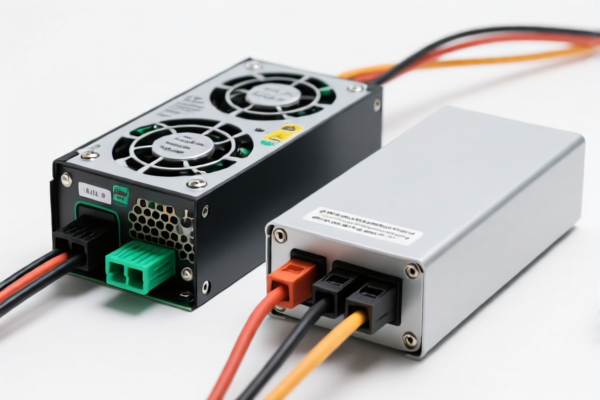
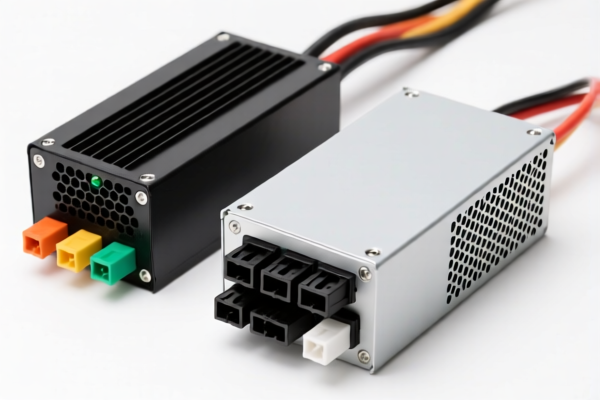
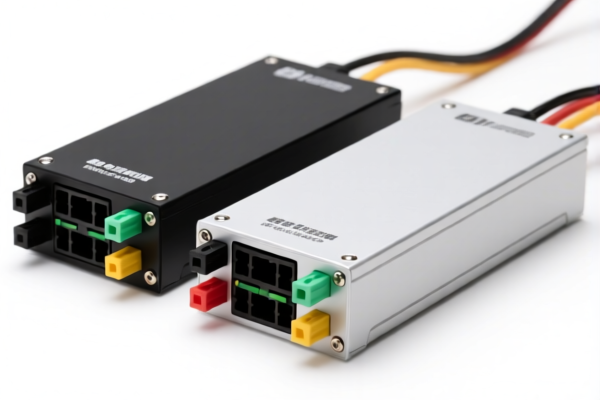
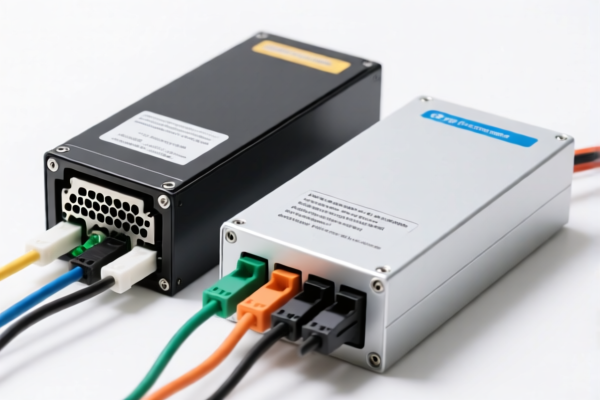
AI Analysis
🔋 Solar Controller (Solar Charge Controller)
🌐 HS Code Reference & Customs Clearance Guide | 2026 Latest Tariff Analysis | Professional Clearance Strategy
📌 I. Product Definition & Classification: What Exactly is a "Solar Controller"?
A Solar Charge Controller is the brain of a solar power system, regulating voltage and current from solar panels to batteries. In international trade, its classification depends heavily on its functional logic: does it act as a power distribution board, a static converter (power supply), or an independent electronic device?
⚠️ Critical Distinction:
- If it functions primarily as a control/distribution panel for electrical energy → Group 8537
- If it functions primarily as a static converter/power supply (AC/DC or DC/DC conversion) → Group 8504
- If it is deemed an independent electronic apparatus not fitting other specific categories → Group 8543
📦 II. HS Code Classification Details (2026 Latest Tariff Authority Comparison)
Based on the provided data, here are the three possible classifications for Solar Controllers:
| HS Code | Product Description (Summary) | Functional Logic | Applicable Scenario |
|---|---|---|---|
8537.10.91.70 |
Power Control Equipment | Voltage control/distribution board; composed of electronic components + metal/plastic housing. | Controllers acting as main distribution/control panels in solar arrays. |
8537.10.91.50 |
Voltage Control/Distribution Device | Functionally consistent with panels and distribution devices used for controlling or distributing electrical energy. | General-purpose solar controllers managing energy flow. |
8504.40.40.00 |
Static Converter | Static converter category; functionally used for motor/device speed or energy conversion control. | Controllers performing significant DC-DC conversion or speed/energy regulation. |
8504.40.70.07 |
Static Converter (Power Supply) | Static converter used for controlling and converting electrical energy; fits power supply/converter usage. | Dedicated power conversion controllers. |
8543.70.98.60 |
Independent Electronic Apparatus | Electronic device with independent functional properties; falls under "machinery and apparatus (other)". | Controllers that don't fit standard power/control definitions, treated as general electrical appliances. |
🔍 Key Insight:
-8537codes are generally for control/distribution functions.
-8504codes are for conversion functions (power supplies/converters).
-8543is a residual category for independent electronic devices.
💰 III. 2026 Latest Tariff Rate Breakdown (Including Surtaxes & Policy Add-ons)
✅ Applicable Country: USA (US)
✅ Origin: China (CN)
✅ Effective Time: Includes imports subject to ongoing trade measures
🎯 1. Classification: 8537.10.91.70 & 8537.10.91.50 (Control/Distribution Panels)
These two HS codes share the same tariff structure.
| Item | Detail |
|---|---|
| Base Tariff | 2.7% (Ad Valorem) |
| Section 301 Surtax | +25.0% (Trade War Tariff) |
| Section 122 Surtax | +10.0% (Specific Section 122 Tariff) |
| Total Effective Rate | 37.7% |
| Tax Calculation | CIF Value × 37.7% |
| De Minimis Exemption? | ❌ NO (Cannot use $800 de minimis for this valuation if flagged) |
| Legal Basis Path | Base Rate → Section 301 (Footnote 9903.88.01) → Section 122 |
📌 Explanation:
- These controllers are viewed as electrical distribution/control equipment.
- The 37.7% total rate is high, driven by the 25% Section 301 tariff and an additional 10% under Section 122.
- Note: Section 122 tariffs (10%) are applied on top of the base and Section 301 rates in this specific dataset.
🎯 2. Classification: 8504.40.40.00 & 8504.40.70.07 (Static Converters)
These two HS codes share the same tariff structure but are generally lower than the 8537 codes.
| Item | Detail |
|---|---|
| Base Tariff | 0.0% (Ad Valorem) |
| Section 301 Surtax | +25.0% (Trade War Tariff) |
| Section 122 Surtax | +10.0% (Specific Section 122 Tariff) |
| Total Effective Rate | 35.0% |
| Tax Calculation | CIF Value × 35.0% |
| De Minimis Exemption? | ❌ NO |
| Legal Basis Path | Base Rate → Section 301 → Section 122 |
📌 Explanation:
- Classifying as a Static Converter saves 2.7% in base duty compared to the Control Panel classification.
- However, the 301 (25%) and 122 (10%) surtaxes still apply, resulting in a 35.0% total rate.
- Advantage: $2.70 per $100 value saved compared to8537codes.
🎯 3. Classification: 8543.70.98.60 (Independent Electronic Apparatus)
| Item | Detail |
|---|---|
| Base Tariff | 2.6% (Ad Valorem) |
| Section 301 Surtax | +25.0% (Trade War Tariff) |
| Section 122 Surtax | +10.0% (Specific Section 122 Tariff) |
| Total Effective Rate | 37.6% |
| Tax Calculation | CIF Value × 37.6% |
| De Minimis Exemption? | ❌ NO |
| Legal Basis Path | Base Rate → Section 301 → Section 122 |
📌 Explanation:
- This is a residual category.
- The total rate (37.6%) is slightly lower than the8537codes (37.7%) but higher than the8504codes (35.0%).
- Risk: Customs may reclassify this if they deem it to have a clearer function under 8537 or 8504.
🛠️ IV. Customs Clearance Practical Advice (Real-World Pitfall Guide)
✅ 1. Documentation Checklist (Non-Negotiable)
| Document | Must Provide | Purpose |
|---|---|---|
| Product Datasheet | ✔️ | Shows input/output voltage, current, and functional description (Control vs. Conversion). |
| Circuit Diagram | ✔️ | Critical to prove if it’s a converter (8504) or controller (8537). |
| Product Photos | ✔️ | Clear views of labels, terminals, and internal components (if possible). |
| Commercial Invoice | ✔️ | Must specify "Solar Charge Controller" and include HS Code. |
| Packing List | ✔️ | Itemized list of components. |
| Origin Certificate | ✔️ | To confirm China origin (subject to surtaxes). |
✅ 2. Declaration Strategy (Key Mnemonics)
🔥 "Function Dictates Code, Base Rate Matters!"
| Scenario | Recommended HS Code | Total Tax Rate | Why? |
|---|---|---|---|
| Pure Power Conversion (DC-DC, AC-DC) | 8504.40.40.00 or 8504.40.70.07 |
35.0% | Lowest base rate (0%). Proven converter function. |
| Main Control Panel (Distribution + Control) | 8537.10.91.50 or 8537.10.91.70 |
37.7% | Higher base rate (2.7%). Used for complex distribution systems. |
| General Electronic Device (Unclear function) | 8543.70.98.60 |
37.6% | Residual category. Avoid if possible due to reclassification risk. |
📌 Pro Tip:
- If your solar controller is primarily a MPPT Charge Controller that converts solar voltage to battery voltage, argue for8504(Converter) to save 2.7% on the base duty.
- If it is a combiner box with control logic, argue for8537(Control Panel).
🌍 V. Global Market Comparison (2026 Latest)
| Country/Region | Recommended HS Code | Base Tariff | Surtaxes (China) | Total Rate | Notes |
|---|---|---|---|---|---|
| 🇺🇸 USA | 8504.40.40.00 |
0.0% | +35% (301+122) | 35.0% | Best Option for Converters |
| 🇺🇸 USA | 8537.10.91.50 |
2.7% | +35% (301+122) | 37.7% | Higher cost, risk of audit |
| 🇨🇳 China | 8504.40.40.00 |
0.0% | 0% | 0% | No extra surtaxes for domestic trade |
| 🇪🇺 EU | 8504.40.40.00 |
~0-4% | 0% | Low | No Section 301/122 equivalents |
📌 Conclusion:
- USA Market: High tariffs are unavoidable due to Section 301.
- Strategy: Argue for8504.40(Static Converter) to minimize the base duty component, reducing the overall tax burden by 2.7%.
📌 VI. Common Errors & Pitfall Guide (Lessons Learned)
❌ Error 1: Classifying as 8504 (Converter) when the device is primarily a Distribution Panel.
👉 Consequence: Customs may reclassify to 8537, charging 37.7% instead of 35.0%, plus penalties for misdeclaration.
❌ Error 2: Using 8543 (General Electronic) as a default.
👉 Consequence: Higher risk of audit. Customs prefers specific functional classifications (8537 or 8504).
❌ Error 3: Ignoring Section 122 Tariff.
👉 Consequence: If the 10% surtax is not accounted for, the importer will face unexpected costs and potential holds.
✅ Correct Practice:
"Solar Charge Controller, MPPT Type, DC-DC Conversion, Model XYZ, CE/FCC Certified"
HS Code:8504.40.40.00(Argue for converter function to lower base rate).
🎯 VII. Conclusion: Professional Declaration, Cost Optimization!
🎯 Remember the Golden Rule:
🔹 "Converters Pay Less Base Duty (0% vs 2.7%)"
🔹 "Total Tax is High (~35-38%), but every point counts!"
🔹 "Document Function Clearly to Avoid Re-classification!"
📌 Tip:
If your product is shipped from Vietnam, Thailand, or Malaysia, you may qualify for IEEPA exemptions or lower tariffs. Ensure Country of Origin is correctly declared based on substantial transformation.
📣 Immediate Action:
📞 Consult a licensed customs broker.
📤 Provide circuit diagrams to support 8504 (Converter) classification.
🚀 Optimize your supply chain to absorb or mitigate the 35%+ tariff burden.
✨ Professional clearance starts with accurate classification!
💼 Every cent saved is profit gained!
Customer Reviews
About HS Code Classification
The Harmonized System (HS) is an internationally standardized nomenclature developed by the World Customs Organization (WCO) to classify traded products. Over 200 countries use the HS system as the basis for customs tariffs, trade statistics, and import/export regulations.
Each HS code follows a hierarchical structure:
- Chapter (2 digits) — Broad category of goods (e.g., Chapter 84: Machinery and Mechanical Appliances)
- Heading (4 digits) — More specific grouping within the chapter
- Subheading (6 digits) — Internationally standardized breakdown, used by all WCO member countries
- National subdivisions (8-10 digits) — Country-specific extensions for further classification, such as US HTSUS 10-digit codes
Correct HS code classification is essential for smooth customs clearance, accurate duty payment, and compliance with trade regulations. Misclassification can lead to customs delays, overpayment of duties, or penalties.
When importing from CN to US, the applicable tariff rates may include:
- Most-Favored-Nation (MFN) rate — The standard duty rate applied to WTO members
- General rate — Applied to countries without trade agreements
- Trade remedy duties — Additional tariffs such as Section 301 (anti-dumping), Section 232 (national security), or countervailing duties
The information provided on this page is for reference purposes only. For official classification, please consult with your local customs authority or a licensed customs broker.