Solar Panel
CN → US| HS Code | Tariff Rate | Origin | Destination | Doc |
|---|---|---|---|---|
| 8541430080 | 60.0% | CN | US | Official Doc |
| 8501729000 | 37.0% | CN | US | Official Doc |
| 8541430010 | 60.0% | CN | US | Official Doc |
Product Images

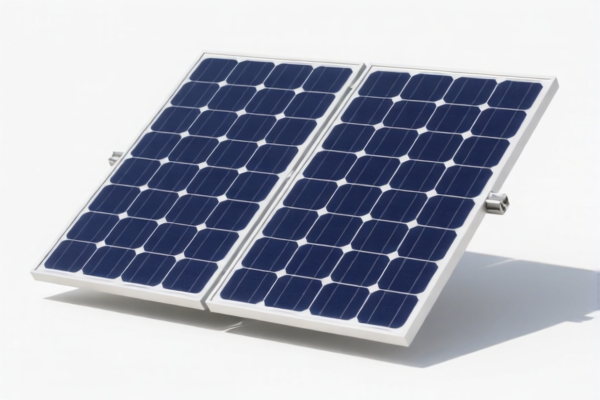
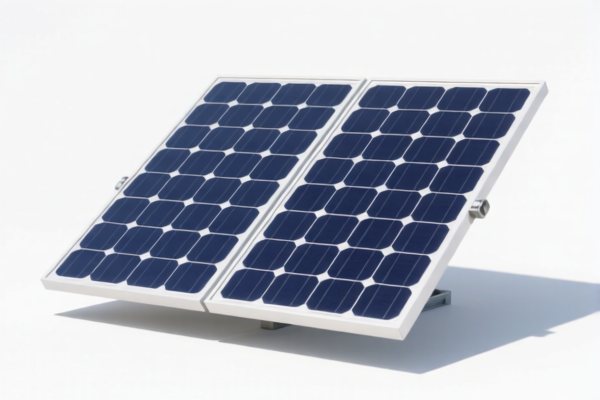
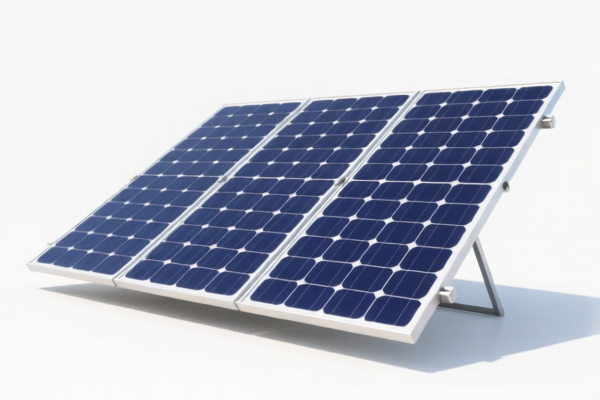
AI Analysis
☀️ Solar Panels (Photovoltaic Modules & Panels)
🌐 HS Code Reference & Customs Clearance Guide | 2026 Latest Tariff Analysis | Professional Strategy
📌 Part I: Product Definition & Classification: Do You Really Know "Solar Panels"?
Solar Panels are the core energy harvesting units in photovoltaic systems, converting sunlight directly into electricity. In international trade, they are strictly classified based on material composition and functional output:
Crystalline Silicon Modules (8541.43.00.10): Core material is crystalline silicon (monocrystalline or polycrystalline), assembled into a panel form.
Non-Crystalline (Thin-Film) Modules (8541.43.00.80): Core material is amorphous silicon or other semiconductors, assembled into a panel form.
DC Generators (Photovoltaic Converters) (8501.72.90.00): Defined by function as "photovoltaic DC generators," focusing on power output and specific usage logic.
⚠️ Key Differentiation Points:
- Material is King: If the core is Crystalline Silicon, it falls under 8541.43.00.10 (0% Base + 60% Total).
- Thin-Film Distinction: If the core is Amorphous Silicon or other semiconductors, it falls under 8541.43.00.80 (0% Base + 60% Total).
- Functional Exception: If classified strictly as a Photovoltaic DC Generator based on output/power logic (rare for standard panels but possible for integrated converter units), it falls under 8501.72.90.00 (2% Base + 37% Total).
📦 Part II: HS Code Classification Details (2026 Latest Tariff Authority)
| HS Code | Product Description | Core Material / Logic | Total Tax Rate |
|---|---|---|---|
8541.43.00.10 |
Solar Panel (Crystalline Silicon) | Crystal Silicon core; assembled panel | 60.0% |
8541.43.00.80 |
Solar Panel (Amorphous/Other) | Amorphous Silicon or other semiconductor core; assembled panel | 60.0% |
8501.72.90.00 |
Photovoltaic DC Generator | Function: PV Power Generation; classified by output/power logic | 37.0% |
🔍 Critical Reminder:
-8541.43.00.10vs.8541.43.00.80: The distinction is purely material-based (Crystal vs. Non-Crystal/Amorphous). Both carry the same 60% total tax.
-8501.72.90.00: This is a functional classification. If customs determines the item is best described as a "DC Generator" rather than a "Module," the rate drops to 37%, but this requires strong justification regarding output specifications.
- Assembly Status: All entries in the reference data specify "assembled in panel form". Loose cells or un-assembled wafers do not fit these codes.
💰 Part III: 2026 Latest Tariff Rate Breakdown (Detailed Tax Clauses)
✅ Applicable Jurisdiction: United States (US)
✅ Origin: China (CN)
✅ Effective Date: Current (2026 Tariff Regime)
🎯 1. 8541.43.00.10 & 8541.43.00.80 —— Solar Panels (High Tax Bracket)
Both crystalline and thin-film solar panels face a unified high-tax structure due to the "Section 122" and "Section 301" (Added Tariff) rules.
| Item | Content |
|---|---|
| Base Tariff | 0.0% (Free entry for base classification) |
| Added Tariff (Section 301) | +50.0% (USITC 301 Action on Chinese Goods) |
| Section 122 Tariff | +10.0% (Specific Section 122 provisions on solar products) |
| Total Tax Rate | 60.0% |
| Tax Calculation | CIF Value × 60% |
| De Minimis Exemption | ❌ NO (Strictly denied for solar panels) |
| Legal Path | Section 301 (50%) + Section 122 (10%) |
📌 Interpretation:
- Even though the Base Tariff is 0%, the 60% total is the reality.
- The 50% is the heavy "Added Tariff" imposed on Chinese solar components.
- The 10% is the specific Section 122 tariff targeting solar imports.
- Result: These are extremely high-cost imports. Profit margins are often wiped out unless hedged against currency or volume.
🎯 2. 8501.72.90.00 —— Photovoltaic DC Generator (Lower Tax Bracket)
This classification applies if the product is argued as a "Generator" based on output power and specific usage logic.
| Item | Content |
|---|---|
| Base Tariff | 2.0% |
| Added Tariff (Section 301) | +25.0% |
| Section 122 Tariff | +10.0% |
| Total Tax Rate | 37.0% |
| Tax Calculation | CIF Value × 37% |
| De Minimis Exemption | ❌ NO |
| Legal Path | Section 301 (25%) + Section 122 (10%) |
📌 Interpretation:
- This is the only route to a lower tax rate (37% vs 60%).
- Risk: Misclassification here is risky. Customs will demand proof of "DC Generator" functionality (e.g., built-in inversion, specific power output specs) rather than just "solar panel" characteristics.
- Savings: A 23% difference (60% - 37%) on the CIF value represents significant savings on large shipments.
🛠️ Part IV: Customs Clearance Practical Advice (Pitfall Avoidance)
✅ 1. Material Documentation Checklist (Non-negotiable)
| Document | Required? | Why? |
|---|---|---|
| Product Data Sheet | ✅ YES | Must explicitly state: "Crystal Silicon" or "Amorphous Silicon". |
| BOM (Bill of Materials) | ✅ YES | Proof of core semiconductor material composition. |
| Assembly Diagram | ✅ YES | Shows "assembled panel form" to exclude loose cells. |
| Function Test Report | ⚠️ Optional | If claiming 8501.72.90.00, proof of "DC Generator" output is vital. |
| Commercial Invoice | ✅ YES | Must match the HS Code description exactly. |
| Origin Certificate | ✅ YES | To verify China origin (triggering the taxes). |
✅ 2. Declaration Strategy (Key Mantras)
🔥 "Material First, Function Second, Avoid Mislabeling!"
| Scenario | Correct Declaration | Wrong Action | Consequence |
|---|---|---|---|
| Standard Crystalline Panel | 8541.43.00.10 + "Crystal Silicon" |
Claim 8501.72.90.00 (Generator) |
Penalty + 60% Tax (if caught) |
| Thin-Film Panel | 8541.43.00.80 + "Amorphous Silicon" |
Claim 8541.43.00.10 |
Delay for Verification |
| Integrated DC Unit | 8501.72.90.00 + "DC Generator" |
Claim 8541.43.00.xx |
Lost Savings (37% vs 60%) |
| Loose Cells (Not Assembled) | Do not use provided codes | Forced use of Panel Codes | Rejection/Return |
✅ 3. Special Handling Tips
| Situation | Action Plan |
|---|---|
| OEM Panels | Provide original design specs. If material is Crystal, stick to 8541.43.00.10. |
| "Generator" Claim | Must prove the product includes the output regulation and conversion logic to fit 8501.72.90.00. Pure panels cannot claim this. |
| High Volume Shipments | Pre-clearance is mandatory due to the 60% tax. Delayed clearance = demurrage costs. |
| Origin Evasion | Attempting to hide China origin will lead to severe penalties under Section 122 and 301. |
🌍 Part V: Market Comparison & Cost Impact (2026)
| Market | Recommended HS Code | Total Tax | Status |
|---|---|---|---|
| USA (From China) | 8541.43.00.10 / .80 |
60.0% | High Risk / High Cost |
| USA (From China) | 8501.72.90.00 |
37.0% | Moderate Risk / Savings |
| EU (From China) | Various | Varies | Not covered in this data |
| Domestic (USA) | N/A | 0% | If manufactured domestically |
📌 Conclusion:
- USA is the only major market imposing Section 122 + Section 301 taxes on Chinese solar panels.
-8541.43codes carry the brutal 60% total tax.
-8501.72offers a 37% alternative but requires strict functional definition.
📌 Part VI: Common Errors & "Blood & Tears" Lessons
❌ Error 1: Claiming all solar panels are 8501.72.90.00 to avoid the 60% tax.
👉 Result: Customs audits find the core is Silicon; Reclassifies to 8541; Back-taxes 23% difference + Penalties.
❌ Error 2: Using "Solar Module" generically without specifying "Crystal" vs. "Amorphous".
👉 Result: Customs holds shipment for Material Verification; Storage fees accumulate.
❌ Error 3: Failing to separate "Assembled Panels" from "Loose Cells".
👉 Result: Loose cells cannot use these codes; Shipment Rejected for incorrect classification.
✅ Correct Approach:
"Solar Photovoltaic Panel, 400W, Crystalline Silicon (Poly/Mono), Assembled, Model XYZ."
OR
"Solar Photovoltaic DC Generator, 500W Output, Integrated Converter, Model ABC."
🎯 Part VII: Conclusion: Precision Matters!
🎯 Remember the Mantra:
🔹 "Crystal Silicon = 60% Tax" (
8541.43.00.10)
🔹 "Thin Film = 60% Tax" (8541.43.00.80)
🔹 "DC Generator Logic = 37% Tax" (8501.72.90.00)
🔹 "Base Tariff is 0% or 2%, but Total Tax is King!"
📌 Pro Tip:
If your product can technically be argued as a "Photovoltaic DC Generator" (with specific power output features), prioritize
8501.72.90.00to save 23% in taxes.
However, if it is a standard panel, accept the 60% and factor it into your pricing immediately.
📣 Immediate Action:
📞 Contact your Customs Broker TODAY to verify the Core Material.
📄 Prepare Material Safety Data Sheets (MSDS) and Assembly Diagrams.
🚀 Avoid surprises at the border!
✨ Professional Customs Clearance starts with precise Classification!
💼 Every 1% of tax savings is your profit margin!
Customer Reviews
About HS Code Classification
The Harmonized System (HS) is an internationally standardized nomenclature developed by the World Customs Organization (WCO) to classify traded products. Over 200 countries use the HS system as the basis for customs tariffs, trade statistics, and import/export regulations.
Each HS code follows a hierarchical structure:
- Chapter (2 digits) — Broad category of goods (e.g., Chapter 84: Machinery and Mechanical Appliances)
- Heading (4 digits) — More specific grouping within the chapter
- Subheading (6 digits) — Internationally standardized breakdown, used by all WCO member countries
- National subdivisions (8-10 digits) — Country-specific extensions for further classification, such as US HTSUS 10-digit codes
Correct HS code classification is essential for smooth customs clearance, accurate duty payment, and compliance with trade regulations. Misclassification can lead to customs delays, overpayment of duties, or penalties.
When importing from CN to US, the applicable tariff rates may include:
- Most-Favored-Nation (MFN) rate — The standard duty rate applied to WTO members
- General rate — Applied to countries without trade agreements
- Trade remedy duties — Additional tariffs such as Section 301 (anti-dumping), Section 232 (national security), or countervailing duties
The information provided on this page is for reference purposes only. For official classification, please consult with your local customs authority or a licensed customs broker.