Solar Panels
CN → US| HS Code | Tariff Rate | Origin | Destination | Doc |
|---|---|---|---|---|
| 8541430080 | 60.0% | CN | US | Official Doc |
| 8501729000 | 37.0% | CN | US | Official Doc |
| 8541430010 | 60.0% | CN | US | Official Doc |
Product Images
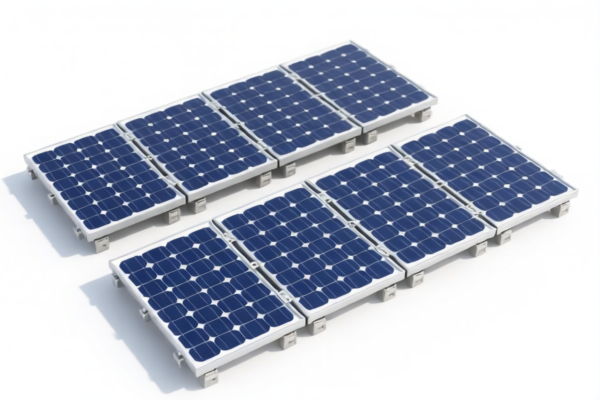
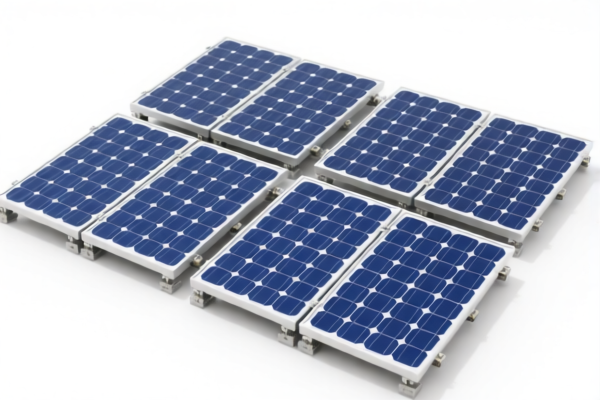
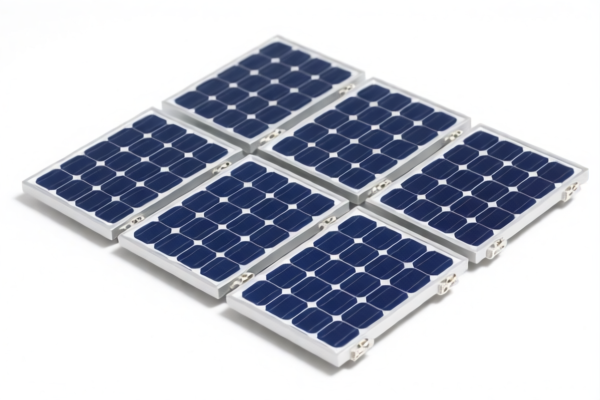

AI Analysis
☀️ Solar Panels (Photovoltaic Modules)
🌐 HS Code Reference & Customs Clearance Guide | 2026 Latest Tariff Analysis | Professional Strategy for US Imports
📌 Part 1: Product Definition & Classification Logic
Solar Panels, also known as Photovoltaic (PV) Modules, are devices that convert sunlight into electricity. In international trade, they are strictly categorized based on their core semiconductor material and structural form. Misclassification here can lead to massive tariff discrepancies.
Two Main Categories:
-
Crystalline Silicon Modules (
8541.43.00.10):- Material: Mono-crystalline or Poly-crystalline Silicon.
- Structure: Assembled panels containing interconnected cells.
- Logic: Classified under "Valve-type semiconductor devices" because the silicon acts as the primary rectifying component.
-
Thin-Film/Non-Crystalline Modules (
8541.43.00.80):- Material: Amorphous silicon (a-Si), Cadmium Telluride (CdTe), or other non-crystalline semiconductors.
- Structure: Assembled panels.
- Logic: Also classified under "Valve-type semiconductor devices," but distinct from crystalline silicon due to material composition.
⚠️ Critical Distinction Note:
While some might argue that solar panels are "generators" and should go under 8501.72.90.00 (Photovoltaic DC Generators), US Customs and Border Protection (CBP) often prefers the 8541 heading for finished modules because they are fundamentally semiconductor devices. However, if the product is strictly defined as a "photovoltaic generator" with specific output characteristics not fitting standard module definitions, 8501 may be considered. The data provided highlights this conflict.
📦 Part 2: HS Code Classification Details (Based on Provided Data)
The following HS Codes and tax breakdowns are derived strictly from the provided dataset.
| HS Code | Product Description | Material/Structure | Key Classification Logic |
|---|---|---|---|
8541.43.00.10 |
Crystalline Silicon Solar Panels | Crystalline Silicon (Mono/Poly) | Core material is crystalline silicon; assembled panel form. Fits "Valve-type semiconductor devices." |
8541.43.00.80 |
Thin-Film/Amorphous Solar Panels | Amorphous Silicon or Other Semiconductors | Core material is non-crystalline (e.g., a-Si); assembled panel form. Fits "Other semiconductor devices." |
8501.72.90.00 |
Photovoltaic DC Generators | Any PV Material | Functional classification: Devices designed for photovoltaic power generation. Fits "Output power and use logic." |
🔍 Key Insight:
- 8541 Codes focus on the material science aspect (Semiconductors).
- 8501 Code focuses on the functional aspect (Electric Generators).
- Tax Implication: The 8541 codes attract significantly higher duties due to specific trade remedy clauses (Section 301/122) compared to the functional generator code, although all are heavily taxed for US imports from China.
💰 Part 3: 2026 Latest Tariff Rate Breakdown
✅ Applicable Country: United States (US)
✅ Origin: China (CN)
✅ Effective Time: Ongoing (Post-2024 Trade Measures)
🎯 1. 8541.43.00.10 — Crystalline Silicon Solar Modules
| Item | Detail |
|---|---|
| Base Tariff | 0.0% |
| Section 301 Surcharge | 50.0% (Additional duty on Chinese goods) |
| Section 122 Tariff | 10.0% (Specific to certain solar components/modules) |
| Total Effective Rate | 60.0% |
| Calculation Basis | CIF Value × 60% |
| De Minimis Exemption | ❌ Not Applicable (High tariffs block low-value shipment exemptions) |
📌 Explanation:
- The 0% base rate reflects the standard MFN (Most Favored Nation) rate for semiconductor devices.
- The 50% Section 301 is the primary driver of cost, imposed under US Trade Law to counter unfair trade practices.
- The 10% Section 122 (or similar solar-specific anti-dumping/countervailing duties) adds further burden.
- Total 60% is a massive barrier. Many importers struggle with this unless they have specific exemptions or are importing from non-China origins (e.g., Vietnam, Malaysia, subject to separate rules).
🎯 2. 8541.43.00.80 — Thin-Film / Amorphous Silicon Modules
| Item | Detail |
|---|---|
| Base Tariff | 0.0% |
| Section 301 Surcharge | 50.0% |
| Section 122 Tariff | 10.0% |
| Total Effective Rate | 60.0% |
| Calculation Basis | CIF Value × 60% |
| De Minimis Exemption | ❌ Not Applicable |
📌 Explanation:
- Despite being "different" material (thin-film vs. crystalline), the tax structure is identical to crystalline modules in this dataset.
- This indicates that US trade policy targets all silicon-based solar modules from China uniformly, regardless of crystalline structure.
🎯 3. 8501.72.90.00 — Photovoltaic DC Generators
| Item | Detail |
|---|---|
| Base Tariff | 2.0% |
| Section 301 Surcharge | 25.0% |
| Section 122 Tariff | 10.0% |
| Total Effective Rate | 37.0% |
| Calculation Basis | CIF Value × 37% |
| De Minimis Exemption | ❌ Not Applicable (Likely blocked by specific product exclusions) |
📌 Explanation:
- This code offers a significant tax advantage (37% vs. 60%).
- The lower base rate (2% vs. 0%) is offset by a lower Section 301 rate (25% vs. 50%).
- Strategic Note: If your product can be legally classified as a "Generator" rather than a "Semiconductor Device," you could save 23% in duties. However, this requires strong technical justification to CBP.
🛠️ Part 4: Customs Clearance Practical Advice
✅ 1. Documentation Checklist (Mandatory)
| Document | Required? | Purpose |
|---|---|---|
| Product Specification Sheet | ✅ | Must detail: Material (Crystalline vs. Thin-Film), Efficiency, Dimensions, Weight, Output Power (Watts). |
| Technical Diagrams | ✅ | To prove semiconductor structure (supports 8541) or generator functionality (supports 8501). |
| Commercial Invoice | ✅ | Must clearly state "Solar Panel" or "Photovoltaic Module." Avoid vague terms like "Solar Part." |
| Certificate of Origin | ✅ | Crucial for determining Section 301 applicability. If origin is not China, duties may differ. |
| USITC Exclusion List Check | ✅ | Verify if your specific HTS code and manufacturer are on the exclusion list for Section 301/122 duties. |
✅ 2. Declaration Strategy & Pitfalls
| Scenario | Recommended HS Code | Risk of Misclassification |
|---|---|---|
| Standard Rooftop Panel | 8541.43.00.10 |
Low. CBP typically views panels as semiconductor devices. |
| Flexible/Thin-Film Roll | 8541.43.00.80 |
Medium. Must prove amorphous/non-crystalline material. |
| Complete PV System with Inverter | 8501.72.90.00 (Panel) + 8504.40.90.00 (Inverter) |
High. Do not try to bundle the inverter into the panel HS code. |
| Solar Panel with Integrated Battery | 8501.72.90.00? |
Very High. Complex classification. Risk of audit. Seek Advance Ruling. |
🔥 Key Tip:
"Material Defines the Code, Function Defines the Tax."
- If you declare as8501, CBP will demand proof that it's a "generator" first and foremost.
- If you declare as8541, CBP will check the semiconductor material.
- Do not use "Solar Panel" as the only description. Use: "Monocrystalline Silicon Photovoltaic Module, Model XYZ, 400W, Assembled"
✅ 3. Special Cases & Mitigation
| Situation | Advice |
|---|---|
| Origin is Not China | If panels are made in Vietnam, Thailand, Malaysia, or Cambodia, Section 301 (50% or 25%) does NOT apply. Only Section 122 (10%) may apply. Check Anti-Circumvention Rules! |
| Small Scale/DIY Kits | Even small panels are subject to duties. De Minimis ($800) does not apply to goods subject to Section 301/122 duties if the value exceeds thresholds or specific exclusions are revoked. |
| Hybrid Modules | If the panel includes a built-in micro-inverter, classify the panel as 8541 and the inverter separately. Do not merge. |
🌍 Part 5: Market Comparison (2026)
| Region | HS Code Approach | Estimated Total Duty (China Origin) | Notes |
|---|---|---|---|
| 🇺🇸 USA | 8541.43.00.10/80 |
60% | Heavy Section 301 + Section 122. |
| 🇺🇸 USA | 8501.72.90.00 |
37% | Lower if functional classification is accepted. |
| 🇨🇳 China | 8541.43.00.10 |
0% | Export from China has no duty (usually). |
| 🇪🇺 EU | 8541.43.00 |
0% | No standard duty, but Anti-Dumping Duties may apply (up to 29%+) depending on country. |
| 🇮🇳 India | 8541.43.00 |
20%+ | Basic Customs Duty + SWS + Anti-Dumping. Very high. |
📌 Part 6: Common Mistakes & Blood & Tears Lessons
❌ Mistake 1: Assuming all "Solar Products" have the same tax.
👉 Result: Classifying thin-film as crystalline, or generator as panel. Overpayment or Audit Risk.
❌ Mistake 2: Ignoring Section 122 Tariffs.
👉 Result: Even if Section 301 is excluded, the 10% Section 122 duty still applies. Unbudgeted cost.
❌ Mistake 3: Using "Solar Kit" as a generic HS Code.
👉 Result: CBP will force you to classify components individually. If any component is high-tariff, the whole shipment faces scrutiny.
❌ Mistake 4: Failing to verify Country of Origin.
👉 Result: A panel made in China but shipped from Vietnam is still Chinese Origin for trade remedy purposes. Full 60% duty applies.
✅ Correct Approach:
"Photovoltaic Module, Monocrystalline Silicon, 450W, Assembled, Model XYZ. Origin: China."
HS Code:8541.43.00.10
Duty: 60% (Calculated accurately)
🎯 Part 7: Conclusion & Strategic Recommendations
🎯 Key Takeaway:
Solar Panels from China are heavily taxed in the US (37%-60%).
- Crystalline (8541.43.00.10) and Thin-Film (8541.43.00.80) face 60% duty.
- Generator Classification (8501.72.90.00) faces 37% duty, but is harder to justify.
📌 Action Plan:
1. Verify Origin: Ensure your supply chain is not vulnerable to US Anti-Circumvention Investigations (Vietnam, Malaysia, etc.).
2. Seek Exclusions: Check if your specific manufacturer and HS Code are on the USITC Exclusion List for Section 301.
3. Pre-Arrival Ruling: For high-value shipments, request a Binding Ruling from CBP to confirm the HS Code (8541 vs. 8501) to avoid clearance delays.
4. Cost Modeling: Factor in 60% duty for crystalline panels. If 60% is too high, explore markets with lower barriers (EU, Asia) or non-China origins.
✨ Professional Clearance Starts with Precise Classification!
💼 Your Bottom Line Depends on Your HS Code!
📞 Contact a licensed customs broker today to review your specific product datasheet.
Customer Reviews
About HS Code Classification
The Harmonized System (HS) is an internationally standardized nomenclature developed by the World Customs Organization (WCO) to classify traded products. Over 200 countries use the HS system as the basis for customs tariffs, trade statistics, and import/export regulations.
Each HS code follows a hierarchical structure:
- Chapter (2 digits) — Broad category of goods (e.g., Chapter 84: Machinery and Mechanical Appliances)
- Heading (4 digits) — More specific grouping within the chapter
- Subheading (6 digits) — Internationally standardized breakdown, used by all WCO member countries
- National subdivisions (8-10 digits) — Country-specific extensions for further classification, such as US HTSUS 10-digit codes
Correct HS code classification is essential for smooth customs clearance, accurate duty payment, and compliance with trade regulations. Misclassification can lead to customs delays, overpayment of duties, or penalties.
When importing from CN to US, the applicable tariff rates may include:
- Most-Favored-Nation (MFN) rate — The standard duty rate applied to WTO members
- General rate — Applied to countries without trade agreements
- Trade remedy duties — Additional tariffs such as Section 301 (anti-dumping), Section 232 (national security), or countervailing duties
The information provided on this page is for reference purposes only. For official classification, please consult with your local customs authority or a licensed customs broker.