Solar Power Supply
CN → US| HS Code | Tariff Rate | Origin | Destination | Doc |
|---|---|---|---|---|
| 8504409540 | 35.0% | CN | US | Official Doc |
| 8501721000 | 37.5% | CN | US | Official Doc |
| 8504407007 | 35.0% | CN | US | Official Doc |
| 8501729000 | 37.0% | CN | US | Official Doc |
| 8501722000 | 37.0% | CN | US | Official Doc |
Product Images
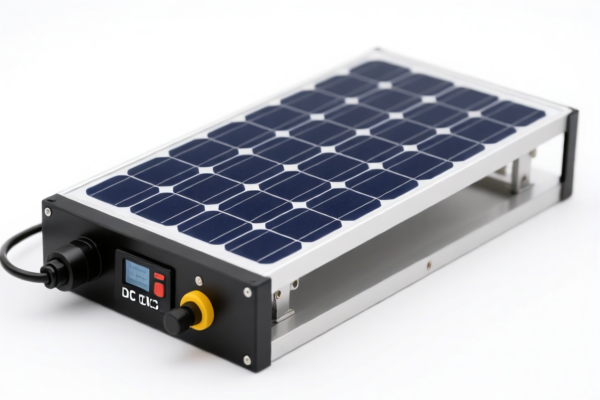
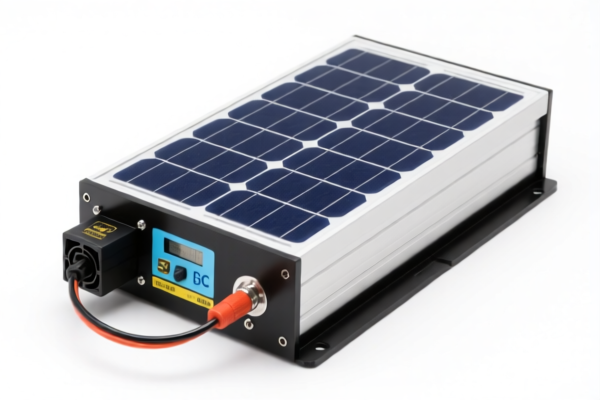
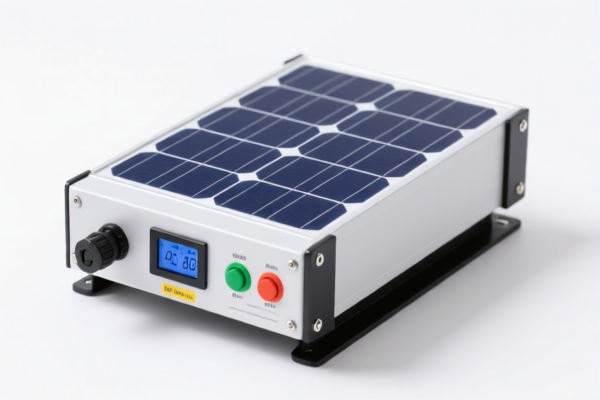
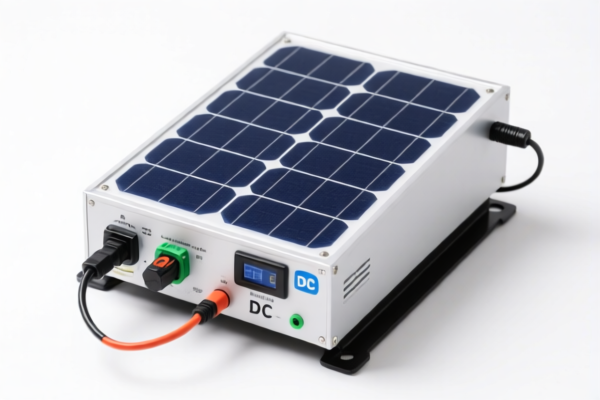
AI Analysis
⚡ Solar Power Supply (Solar Energy Conversion Systems)
🌐 HS Code Reference & Customs Clearance Guide | 2026 Latest Tariff Analysis | Professional Strategy
📌 Part 1: Product Definition & Classification: Do You Really Understand "Solar Power Supplies"?
A "Solar Power Supply" is not a single standardized commodity. In international trade, its classification depends heavily on its functional principle and internal components. It generally falls into two distinct categories:
- Photovoltaic DC Generators (Solar Panels/Modules): Devices that generate direct current (DC) from sunlight. The core function is energy conversion (light to electricity).
- Static Converters (Inverters/Charge Controllers): Devices that convert energy (e.g., DC to AC, or DC to regulated DC). The core function is voltage/current transformation and management.
⚠️ Key Distinction Point:
- If the product’s primary role is generating electricity from solar rays → It is a Generator (HS 8501).
- If the product’s primary role is converting/transmitting power (e.g., inverter, power bank, stabilizer) → It is a Static Converter (HS 8504).
📦 Part 2: HS Code Classification Details (2026 Latest Tariff Authority Comparison)
Based on the provided data, here are the five potential classifications. Note the significant tax differences based on whether the item is viewed as a Generator or a Converter.
| HS Code | Product Description | Summary from Data | Applicable Scenario | Total Tax Rate |
|---|---|---|---|---|
8504.40.95.40 |
Static Converter, Other | Belongs to power supplies; function is energy conversion/output. No material/power conflict. | General power supplies, non-inverter specific DC-DC converters. | 35.0% |
8501.72.10.00 |
Other DC Generators, Output ≤ 75 kVA | "Solar" corresponds to PV use; fits the functional attribute of PV DC generators. | Small-scale solar generators (<75kVA output). | 37.5% |
8504.40.70.07 |
Static Converter, For Power Supply Use | Belongs to power supplies; fits the definition of static converters for power supply purposes. | Dedicated solar charge controllers, grid-tie inverters (classified as converters). | 35.0% |
8501.72.90.00 |
Other DC Generators, Output ≤ 375 kVA | PV energy conversion equipment; core components include PV DC generators. | Large-scale solar generator arrays (>75kVA but ≤375kVA). | 37.0% |
8501.72.20.00 |
Other DC Generators, Output ≤ 75 kVA | PV energy conversion equipment; form factor is DC generator category. | Another classification path for small solar generators. | 37.0% |
🔍 Critical Reminder:
- "Static Converters" (8504) generally carry a 0% base tariff but are subject to heavy additional taxes.
- "DC Generators" (8501) generally carry a 2.0%~2.5% base tariff but are also subject to heavy additional taxes.
- Do not confuse a "Solar Panel" (Generator) with a "Solar Inverter/Controller" (Converter). Misclassification leads to severe penalties.
💰 Part 3: 2026 Latest Tariff Rate Breakdown (Including Additional Taxes)
✅ Applicable Country: United States (US)
✅ Origin: China (CN)
✅ Effective Date: Post-November 10, 2025 (including subsequent imports)
🎯 1. Classification as Static Converter (8504.40.95.40 / 8504.40.70.07)
These codes are classified under Section XVI, Chapter 85, Position 8504.
| Item | Content |
|---|---|
| Base Tariff | 0.0% (ad valorem) |
| Section 301 Additional Tariff | +25.0% (From USITC Footnote 9903.88.01 / US Trade Law Section 301) |
| IEEPA Additional Tariff | +10.0% (Against Chinese/HK products, effective from Nov 10, 2025) |
| Total Tax Rate | 35.0% |
| Tax Calculation | CIF Value × 35% |
| De Minimis Exemption | ❌ Not Eligible (deny_de_minimis) |
| Legal Authority Path | IEEPA:9903.01.25 → USITC:8504.40.95.40 / 8504.40.70.07 → FOOTNOTE:301 |
📌 Explanation:
- Although the base tariff is 0%, the 35% total is a hard cost.
- The 25% is the standard Section 301 tariff on Chinese electronics/power equipment.
- The 10% is the new IEEPA levy added in late 2025.
🎯 2. Classification as DC Generator (8501.72.10.00, 8501.72.20.00, 8501.72.90.00)
These codes fall under Position 8501 (Electric generators).
| HS Code | Base Tariff | 301 Tariff | IEEPA Tariff | Total Tax Rate |
|---|---|---|---|---|
8501.72.10.00 |
2.5% | +25.0% | +10.0% | 37.5% |
8501.72.20.00 |
2.0% | +25.0% | +10.0% | 37.0% |
8501.72.90.00 |
2.0% | +25.0% | +10.0% | 37.0% |
📌 Note:
- Generators have a slightly higher total tax rate (37.0%–37.5%) compared to Converters (35.0%).
- The difference comes from the Base Tariff: Generators start at 2.0–2.5%, while Converters start at 0%.
- De Minimis Exemption: ❌ Not Eligible for these HS codes under current Chinese origin rules.
🛠️ Part 4: Customs Clearance Practical Advice (Combat Pitfalls Guide)
✅ 1. Preparation Checklist (Non-negotiable)
| Document | Required? | Explanation |
|---|---|---|
| ✅ Product Specifications Sheet | ✔️ | Must clearly state: Input (Solar), Output (DC/AC), Power (kW/kVA), Type (Generator vs Converter). |
| ✅ Circuit Diagram/Block Diagram | ✔️ | Crucial. Must show if the device generates power (PV cells) or converts it (Inverter circuitry). |
| ✅ Product Photos (with Nameplate) | ✔️ | Clear view of model number, input/output ports, and rating label. |
| ✅ Third-party Test Reports | ✔️ | UL, CE, IEC 62109 (for inverters/generators), FCC (if electronic). |
| ✅ Commercial Invoice | ✔️ | Description must be precise: "Solar DC Generator" OR "Solar Power Inverter." Do NOT use vague terms like "Solar Box." |
| ✅ Certificate of Origin (CO) | ✔️ | Essential for proving Chinese origin and applying correct IEEPA/301 rates. |
| ✅ Packing List | ✔️ | Itemize if shipped as "Complete Set" (Panel + Controller) vs. "Parts." |
✅ 2. Declaration Strategy (Key Mantra)
🔥 “Generator is Generation, Converter is Transformation; Name Accurate, Tax Reduced!”
| Scenario | Correct HS Code | Wrong Practice | Consequence |
|---|---|---|---|
| Solar Panel/Module (Generates DC) | 8501.72.xxxx |
Misdeclare as "Converter" | ❌ Penalty + Back Tax (Classified as 37.5%) |
| Solar Inverter/Charge Controller | 8504.40.xxxx |
Misdeclare as "Generator" | ⚠️ Higher Risk Audit (Usually 35%, but audit risk high) |
| Kit (Panel + Controller) | Single HS Code (Dominant Function) | Split Declaration | ❌ Complex Audit + Potential Demurrage |
| Portable Solar Power Station (Battery+Inverter) | 8504.40.xxxx or 8703/8507 (Complex) |
Simple "Solar Supply" | ❌ Misclassification (May be deemed 8504) |
💡 Pro Tip:
- If the product includes a battery, it might be classified under 8507 (Accumulators) or 8703 (Vehicles) depending on integration. However, based on the provided data, we focus on 8501/8504.
- "Solar Power Supply" is too vague. Always specify: "Solar PV Generator" or "Solar Inverter."
✅ 3. Special Cases Handling
| Situation | Handling Advice |
|---|---|
| Hybrid Systems (Panel + Inverter Integrated) | If the inverter is integral to the panel mount, argue for Generator (8501) if the panel is dominant, or Converter (8504) if the control electronics are the primary value. Check component cost ratio. |
| OEM Custom Solar Controllers | Provide the original design blueprint to prove it is a "Static Converter" (8504) and not a generative device. |
| High Power (>75 kVA) Industrial Systems | Use 8501.72.90.00 (37.0%). Ensure output rating is clearly stated on the invoice. |
| Export to US from China | Budget 35%–37.5% tax. No de minimis exemption. Factor this into FOB pricing. |
🌍 Part 5: Global Market Comparison (2026 Latest)
| Country/Region | Recommended HS Code | Tariff (China Origin) | Key Certifications | Notes |
|---|---|---|---|---|
| 🇺🇸 USA | 8504.40.xxxx or 8501.72.xxxx |
35% – 37.5% | UL, FCC, DOE | High Barrier. IEEPA 10% + 301 25% applies. |
| 🇨🇳 China | 8504.40.xxxx or 8501.72.xxxx |
0% – 2.5% | CCC, CQC | Domestic sales have low tariffs. |
| 🇪🇺 EU | 8504.40.xxxx or 8501.72.xxxx |
0% | CE, IEC | No additional "301-style" tariffs. |
| 🇦🇺 Australia | 8504.40.xxxx or 8501.72.xxxx |
5% | SAA, RCM | No IEEPA/301 impact. |
| 🇯🇵 Japan | 8504.40.xxxx or 8501.72.xxxx |
0% – 2% | PSE, JIS | Moderate compliance costs. |
📌 Conclusion:
- The USA is the most expensive market due to the 35–37.5% blended tariff.
- EU, Australia, and Japan are significantly cheaper (<5% total).
- For US exports, consider supply chain diversification (e.g., assemble in Vietnam/Mexico) to seek IEEPA exemptions, though 301 tariffs may still apply depending on origin rules.
📌 Part 6: Common Mistakes & Pitfalls (Lessons Learned)
❌ Mistake 1: Labeling a "Solar Inverter" as "Solar Panel"
👉 Result: Wrong HS Code. Inverters are converters (35%), Panels are generators (37.5%). While the rate is similar, the compliance requirements differ (UL 1741 for inverters vs. IEC 61215 for panels). Wrong documentation leads to detention.
❌ Mistake 2: Ignoring the "122 Clause" / IEEPA 10%
👉 Result: Under-paying 10% tax. Since Nov 2025, this is mandatory. CBP will audit and levy interest + penalties.
❌ Mistake 3: Using "Power Bank" for Solar Generators
👉 Result: Misclassification. If it has PV input circuitry, it’s not a standard battery charger. It’s a Static Converter or Generator.
✅ Correct Declaration Example:
"Solar Power Inverter, Pure Sine Wave, 5000W, 12V DC Input, 120V AC Output, Model XYZ, UL 1741 Certified." → HS: 8504.40.70.07
🎯 Part 7: Conclusion: Precision Saves Money!
🎯 Remember the Mantra:
🔹 "Generators are Generated (8501), Converters are Transformed (8504)."
🔹 "Base is Low (0-2.5%), But Add 35% Total for US."
🔹 "Name it Right, Pass it Light, Name it Wrong, Pay it Strong!"
📌 Pro Tip:
If your product contains batteries (Lithium-Ion), additional hazardous material regulations (IMDG, UN38.3) apply. Ensure your Safety Data Sheet (SDS) is ready.
📣 Immediate Action:
📞 Contact your Customs Broker with the Circuit Diagram and Specification Sheet.
📝 Apply for an Advance Ruling from CBP if your product is complex (Hybrid System).
🚀 Secure your profit margin by factoring in 35–37.5% tariffs for US shipments.
✨ Professional Clearance Starts with Accurate Classification!
💼 Every cent of tax saved is a cent of profit kept!
Customer Reviews
About HS Code Classification
The Harmonized System (HS) is an internationally standardized nomenclature developed by the World Customs Organization (WCO) to classify traded products. Over 200 countries use the HS system as the basis for customs tariffs, trade statistics, and import/export regulations.
Each HS code follows a hierarchical structure:
- Chapter (2 digits) — Broad category of goods (e.g., Chapter 84: Machinery and Mechanical Appliances)
- Heading (4 digits) — More specific grouping within the chapter
- Subheading (6 digits) — Internationally standardized breakdown, used by all WCO member countries
- National subdivisions (8-10 digits) — Country-specific extensions for further classification, such as US HTSUS 10-digit codes
Correct HS code classification is essential for smooth customs clearance, accurate duty payment, and compliance with trade regulations. Misclassification can lead to customs delays, overpayment of duties, or penalties.
When importing from CN to US, the applicable tariff rates may include:
- Most-Favored-Nation (MFN) rate — The standard duty rate applied to WTO members
- General rate — Applied to countries without trade agreements
- Trade remedy duties — Additional tariffs such as Section 301 (anti-dumping), Section 232 (national security), or countervailing duties
The information provided on this page is for reference purposes only. For official classification, please consult with your local customs authority or a licensed customs broker.