Solar Water Pump
CN → US| HS Code | Tariff Rate | Origin | Destination | Doc |
|---|---|---|---|---|
| 8413810030 | 35.0% | CN | US | Official Doc |
| 8413702090 | 35.0% | CN | US | Official Doc |
| 8501722000 | 37.0% | CN | US | Official Doc |
| 8413702090 | 35.0% | CN | US | Official Doc |
| 8413810040 | 35.0% | CN | US | Official Doc |
Product Images
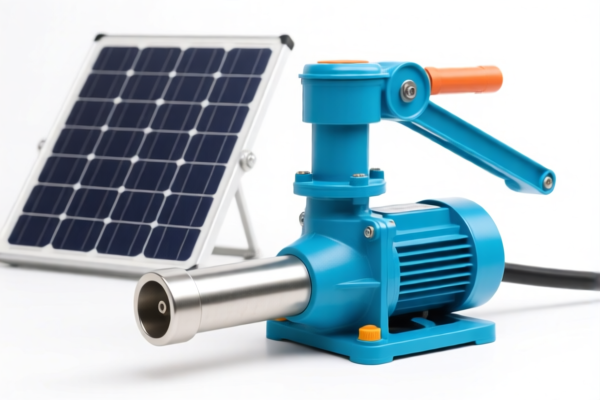
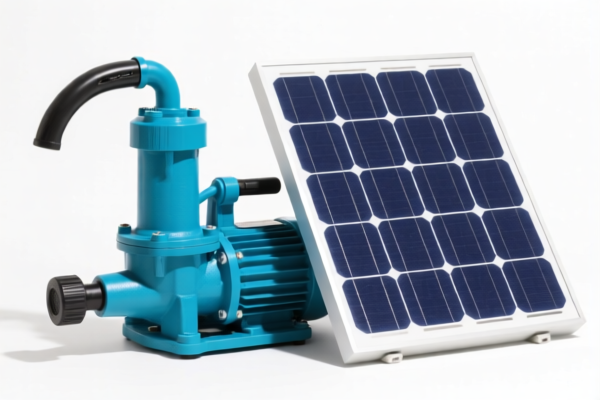
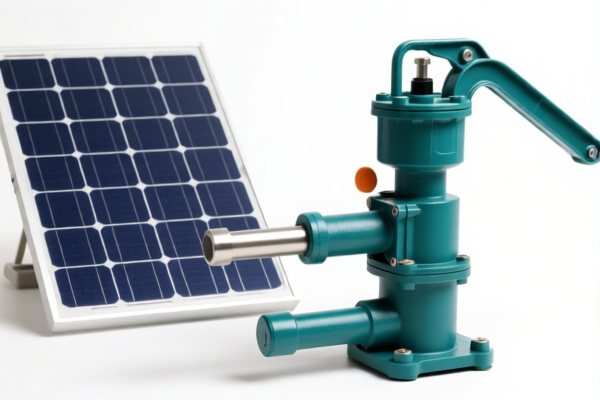
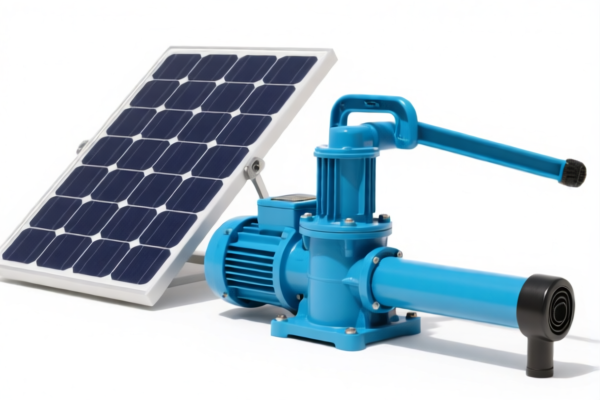
AI Analysis
💧 Solar Water Pump (光伏水泵系统)
🌐 HS Code Reference & Customs Clearance Guide | 2026 Latest Tariff Analysis | Professional Clearance Strategy
📌 I. Product Definition & Classification: What Exactly Is a "Solar Water Pump"?
A Solar Water Pump is not a single standardized commodity but a system that can be classified differently depending on its primary function and technical composition. In international trade, it is generally viewed through two lenses:
- As a Pump System: The primary function is lifting liquid (water). It includes the pump mechanism, motor, and controller, designed for self-contained water supply systems.
- As a Generator/Driver: It includes the photovoltaic (PV) panel that converts sunlight into DC electricity to drive the pump.
⚠️ Key Classification Distinction:
- If the focus is on the mechanical act of pumping water (even if solar-powered), it falls under Chapter 84 (Machinery).
- If the focus is on the generation of electricity from sunlight, it may fall under Chapter 85 (Electrical Machinery).
- Critical Note: Misclassification here leads to significant tariff discrepancies (35% vs. 37%) and potential customs delays.
📦 II. HS Code Classification Details (2026 Latest Tariff Authority Comparison)
| HS Code | Product Description | Applicability Scenario | Key Characteristic |
|---|---|---|---|
| 8413.81.00.30 | Liquid lifters/pumps for self-contained water systems | Solar-powered water pumps where the pump unit is the primary asset | ✅ Classified as a Pump for specific water systems |
| 8413.70.20.90 | Other centrifugal pumps | Solar water pumps that fit the description of "other centrifugal pumps" (fallback category) | ✅ Classified as a generic Centrifugal Pump |
| 8501.72.20.00 | Photovoltaic DC generators | Solar pumps where the PV generation unit is the dominant feature (converting light to electricity) | ✅ Classified as a Generator |
| 8413.70.20.90 | Other liquid pumps (fallback) | Pumps that do not fit specific sub-categories, falling to the "other" bucket | ✅ Classified as a Generic Liquid Pump |
| 8413.81.00.40 | Other pumps for liquid lifting | Pumps defined by their "other" lifting function under heading 8413 | ✅ Classified as a Specific Liquid Pump |
🔍 Critical Reminder:
- 8413 codes are generally for the pumping mechanism.
- 8501 is for the power generation mechanism.
- Most standard "Solar Water Pump" kits (Panel + Pump + Controller) are often declared under 8413 if the pump is the main value driver, but strict customs scrutiny applies to the primary function.
💰 III. 2026 Latest Tariff Rate Breakdown (Including Surcharges & Policy Add-ons)
✅ Applicable Country: United States (US)
✅ Country of Origin: China (CN)
✅ Effective Time: Ongoing (Subject to Trade Wars & IEEPA)
🎯 1. 8413.81.00.30 & 8413.81.00.40 —— Specific Water Pumps
| Item | Content |
|---|---|
| Base Tariff | 0.0% (ad valorem) |
| Section 301 Surcharge | +25.0% (USITC Footnote 9903.88.01 related) |
| Section 122 Tariff | +10.0% (Specific statutory add-on) |
| IEEPA Surcharge | 0.0% (Note: Data does not list IEEPA for these specific 8413 codes in this dataset, only 35% total) |
| Total Tariff | 35.0% |
| Tax Calculation | CIF Value × 35% |
| De Minimis Exemption | ❌ Not Available (Standard trade rules apply) |
| Legal Basis Path | USITC:8413.81.00.30/40 → Section 301: 25% → Section 122: 10% |
📌 Explanation:
- The base tariff is 0%, which is attractive.
- However, the Section 301 (25%) and Section 122 (10%) surcharges bring the total to 35%.
- This is a moderate-high tariff, common for mechanical imports from China.
🎯 2. 8413.70.20.90 —— Other Centrifugal / Liquid Pumps (Fallback)
| Item | Content |
|---|---|
| Base Tariff | 0.0% (ad valorem) |
| Section 301 Surcharge | +25.0% |
| Section 122 Tariff | +10.0% |
| Total Tariff | 35.0% |
| Tax Calculation | CIF Value × 35% |
| De Minimis Exemption | ❌ Not Available |
| Legal Basis Path | USITC:8413.70.20.90 → Section 301: 25% → Section 122: 10% |
📌 Note:
- This code is a "catch-all" for pumps that don’t fit the specific "self-contained water system" description.
- The tariff burden is identical (35%) to the specific pump codes.
- Risk: If customs determines your pump is not a centrifugal type, you might face reclassification penalties.
🎯 3. 8501.72.20.00 —— Photovoltaic DC Generators
| Item | Content |
|---|---|
| Base Tariff | 2.0% (ad valorem) |
| Section 301 Surcharge | +25.0% |
| Section 122 Tariff | +10.0% |
| Total Tariff | 37.0% |
| Tax Calculation | CIF Value × 37% |
| De Minimis Exemption | ❌ Not Available |
| Legal Basis Path | USITC:8501.72.20.00 → Section 301: 25% → Section 122: 10% |
📌 Warning:
- This is the most expensive classification at 37%.
- Why? Because it has a 2% base tariff instead of 0%.
- This applies only if the product is primarily declared as a Generator (PV Panel) rather than a Pump.
- Strategy: Unless the PV panel is sold separately or is the sole component, avoid this code for a complete pump system to save the 2% base + associated surcharge calculations.
🛠️ IV. Customs Clearance Practical Advice (Pitfall Avoidance Guide)
✅ 1. Preparation Checklist (Non-Negotiable)
| Document | Required? | Description |
|---|---|---|
| ✅ Product Specification Sheet | ✔️ | Must detail: Flow rate, head height, voltage, power, material of pump body. |
| ✅ System Diagram | ✔️ | Shows integration of PV panel, controller, and pump. Proves it's a "system." |
| ✅ Product Photos | ✔️ | Clear shots of nameplate, model number, and connections. |
| ✅ Commercial Invoice | ✔️ | Must explicitly state: "Solar Water Pump, Model XYZ, Origin China." |
| ✅ Bill of Lading / Air Waybill | ✔️ | Standard shipping docs. |
| ✅ Origin Certificate | ✔️ | Form A or specific China origin cert to prove CN origin (subject to surcharges). |
✅ 2. Declaration Strategy (Critical Tips)
🔥 "Pump First, Panel Second: Define Function, Not Just Components!"
| Scenario | Correct HS Code | Incorrect HS Code | Consequence |
|---|---|---|---|
| Complete Solar Pump Kit (Panel + Pump + Controller) | 8413.81.00.30 or 8413.70.20.90 | 8501.72.20.00 |
Pay 35% instead of 37%. Saves money and aligns with primary function (water lifting). |
| Pump Only (No Panel, just DC motor) | 8413.70.20.90 | 8501.72.20.00 |
Avoid 37% tariff. |
| PV Panel Only (Sold separately) | 8541.43.00.00 (Not in data) | 8413... |
Different category. If mixed in one shipment, ensure proper separation or unified declaration if allowed. |
| Municipal Water Pump (Grid-powered) | 8413... | 8501... |
N/A |
📌 Key Insight:
- Do not declare a Solar Water Pump as a "Generator" (8501) unless you are importing only the PV panels.
- Declare as "Pump" (8413) because the utility is water lifting, not electricity generation.
- Use8413.81.00.30if your pump is specifically marketed for "self-contained water systems" (agricultural, residential well pumps). This is the most specific and defensible code.
✅ 3. Special Handling
| Situation | Handling Advice |
|---|---|
| Hybrid Systems (Solar + Grid Backup) | Declare as Pump (8413) if solar is the primary driver. Provide explanation of dual-power capability. |
| Industrial vs. Domestic | Ensure the "summary" in your invoice matches the HS code description (e.g., "for agricultural irrigation" vs. "for household water supply"). |
| Customs Inspection | Be ready to prove the pump's mechanical function. Customs may ask for flow rate charts. |
🌍 V. Global Market Comparison (2026 Snapshot)
| Country/Region | Recommended HS Code | Tariff Rate (China Origin) | Notes |
|---|---|---|---|
| 🇺🇸 USA | 8413.81.00.30 |
35% | High due to Section 301 & 122. |
| 🇨🇳 China | 8413.81.00.30 |
Low (Import Duty) | Re-imports or domestic sales vary. |
| 🇪🇺 EU | 8413.70 |
0% - 2.7% | No Section 301 equivalent. |
| 🇬🇧 UK | 8413.70 |
0% - 4.5% | Post-Brexit tariffs may apply. |
📌 Conclusion:
- USA is the most expensive market for Solar Water Pumps from China due to layered tariffs.
- 35% is the standard burden for the pump component.
- Supply Chain Strategy: Consider sourcing components from non-China origins (e.g., Vietnam, Thailand) to mitigate 301/122 tariffs if feasible.
📌 VI. Common Mistakes & Pitfall Guide (Lessons Learned)
❌ Mistake 1: Declaring the entire kit as "PV Generator" (8501.72.20.00)
👉 Consequence: Higher tariff (37% vs 35%) and potential misclassification review because the primary purpose is water lifting, not power generation.
❌ Mistake 2: Using vague descriptions like "Water Device"
👉 Consequence: Customs will classify under the worst-case scenario or demand detailed inspection, causing delays.
❌ Mistake 3: Ignoring Section 122 Tariff
👉 Consequence: Underpayment by 10%. Back taxes + penalties upon audit.
❌ Mistake 4: Splitting Pump and Panel into two separate HS codes incorrectly
👉 Consequence: If shipped together as one kit, they are often treated as a set. Misdeclaration leads to audit risk.
✅ Correct Practice:
"Solar Water Pump, 120W DC, for Agricultural Irrigation, Model SP-120, Complete Kit with Controller."
HS Code:8413.81.00.30
Reason: Primary function is liquid lifting for self-contained systems.
🎯 VII. Conclusion: Professional Declaration, Cost Efficiency!
🎯 Remember the Mantra:
🔹 "Function is King: Pump is Pump, Panel is Panel!"
🔹 "35% is the Baseline for Pumps: 301 + 122."
🔹 "Avoid 8501 for Pumps: Save 2% Base + Risk."
📌 Pro Tip:
If your Solar Water Pump includes advanced controllers or smart monitoring, ensure these are integrated into the pump assembly. If they are sold separately, they might fall under different codes (e.g., 8537 for control panels). Keep the kit unified to maintain the 8413 classification if possible.
📣 Immediate Action:
📞 Contact your freight forwarder with the exact specs.
🚀 Apply for a Pre-Ruling if importing large volumes.
💼 Calculate Landed Cost: Include 35% tariff in your pricing model for US imports.
✨ Professional Clearance Starts with Accurate Classification!
💼 Every Percentage Point Counts in Global Trade!
Customer Reviews
About HS Code Classification
The Harmonized System (HS) is an internationally standardized nomenclature developed by the World Customs Organization (WCO) to classify traded products. Over 200 countries use the HS system as the basis for customs tariffs, trade statistics, and import/export regulations.
Each HS code follows a hierarchical structure:
- Chapter (2 digits) — Broad category of goods (e.g., Chapter 84: Machinery and Mechanical Appliances)
- Heading (4 digits) — More specific grouping within the chapter
- Subheading (6 digits) — Internationally standardized breakdown, used by all WCO member countries
- National subdivisions (8-10 digits) — Country-specific extensions for further classification, such as US HTSUS 10-digit codes
Correct HS code classification is essential for smooth customs clearance, accurate duty payment, and compliance with trade regulations. Misclassification can lead to customs delays, overpayment of duties, or penalties.
When importing from CN to US, the applicable tariff rates may include:
- Most-Favored-Nation (MFN) rate — The standard duty rate applied to WTO members
- General rate — Applied to countries without trade agreements
- Trade remedy duties — Additional tariffs such as Section 301 (anti-dumping), Section 232 (national security), or countervailing duties
The information provided on this page is for reference purposes only. For official classification, please consult with your local customs authority or a licensed customs broker.