Soldering Flux
CN → US| HS Code | Tariff Rate | Origin | Destination | Doc |
|---|---|---|---|---|
| 3810901000 | 41.5% | CN | US | Official Doc |
| 3810100000 | 40.0% | CN | US | Official Doc |
| 3811190000 | 41.5% | CN | US | Official Doc |
| 3824997000 | 35.0% | CN | US | Official Doc |
Product Images
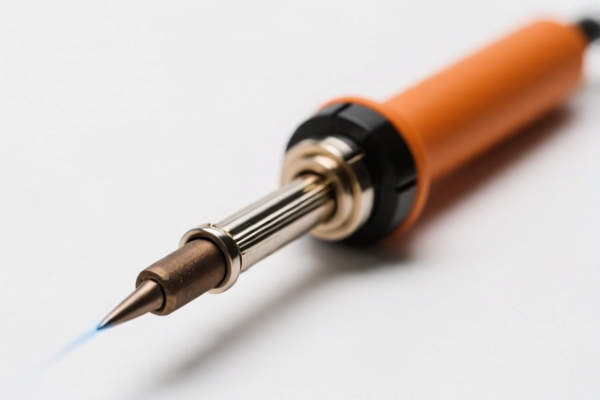
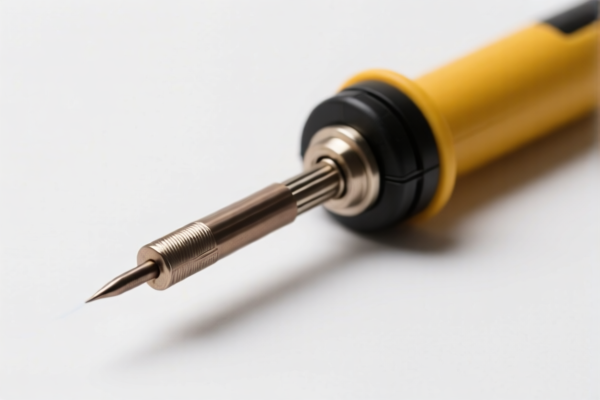
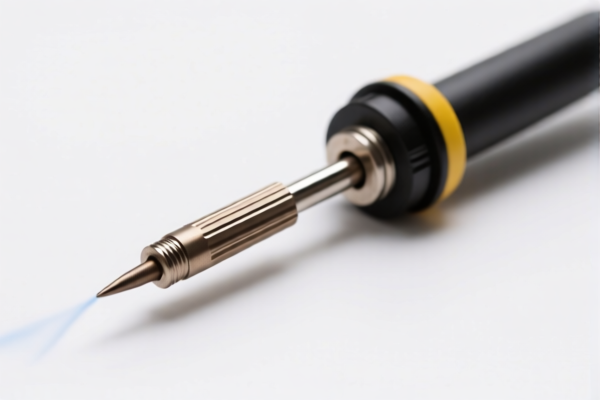
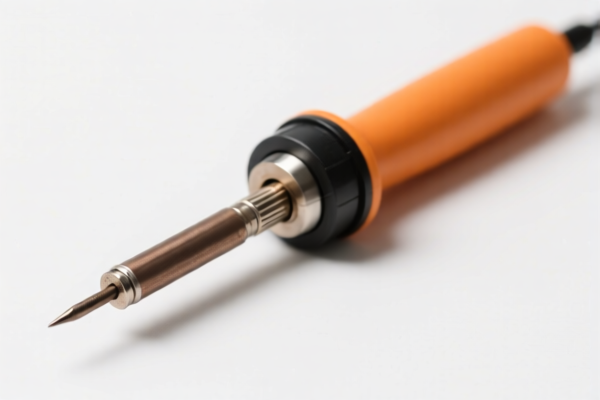
AI Analysis
🌐 Soldering Flux (焊接助焊剂) | 2026 US Customs Classification & Tax Strategy
📌 One Product, Five HS Codes: Which One Fits Your Flux?
Soldering flux is not a "one-size-fits-all" commodity. In US Customs classification, its HS Code depends entirely on its chemical composition, functional role, and physical form (liquid, paste, solid). Misclassification here leads to 41.5% tariffs instead of potential savings.
Below is the precise breakdown based on the 2026 US HTSUS data.
📦 1. HS Code Classification Matrix (2026 Latest Data)
| HS Code | Product Summary & Logic | Total Tax Rate | Tax Breakdown |
|---|---|---|---|
| 3810.90.10.00 | Welding Flux (General Chemical Prep) Used for metal surface preparation prior to welding. Classified as a "Preparation for Welding." 👉 Logic: Specific heading for welding preparations under Ch. 38. |
41.5% | Base: 6.5% Add-on (Sec 301): 25.0% 122 Clause: 10.0% |
| 3811.90.00.00 | Flux Additive for Mineral Oils Flux formulated as an additive for mineral oils or similar liquids. 👉 Logic: Classified as an additive for lubricants/oils rather than a primary welding prep. |
41.5% | Base: 6.5% Add-on (Sec 301): 25.0% 122 Clause: 10.0% |
| 3810.10.00.00 | Welding Flux (Standard Prep) Standard auxiliary materials for metal surface treatment and welding. 👉 Logic: Primary classification for "Preparations for Use with Welding Brazing or Soldering." Lowest Base Rate. |
40.0% | Base: 5.0% Add-on (Sec 301): 25.0% 122 Clause: 10.0% |
| 3811.19.00.00 | Chemical Additive (Miscellaneous) Modifying liquids with chemical additives, not primarily for oil/lubrication. 👉 Logic: Treated as a general chemical additive product. |
41.5% | Base: 6.5% Add-on (Sec 301): 25.0% 122 Clause: 10.0% |
| 3824.99.93.97 | Silver Solder Flux Specifically for silver brazing/soldering; defined as other chemical industrial products. 👉 Logic: If the flux is specialized for silver alloys and doesn't fit 3810/3811 strictly, it falls under "Other Chemical Products." |
40.0% | Base: 5.0% Add-on (Sec 301): 25.0% 122 Clause: 10.0% |
💰 2. Tariff Structure Deep Dive (China Origin → USA)
✅ Applicable Country: United States (US)
✅ Origin: China (CN)
✅ Effective Date: 2025/2026 Cycle
All HS Codes above incur the same 30% Add-on Tariffs due to US Trade Policy. Here is the exact calculation:
🎯 The 3-Part Tax Formula
| Component | Rate | Legal Basis | Description |
|---|---|---|---|
| 1. Base Duty | 5.0% - 6.5% | HTSUS Standard | Depends on whether the flux is classified under 3810 (Welding Prep) or 3811/3811.19 (Additives).• 3810.10 & 3824.99: 5.0%• 3810.90 & 3811.19/90: 6.5% |
| 2. Section 301 Tariff | +25.0% | USITC Footnote 9903.88 | "Additional Ad Valorem Duty" for goods from China. Applies to ALL HS Codes listed. |
| 3. Section 122 Tariff | +10.0% | IEEPA / Trade Policy | "122 Clause" tariff for specific chemical/welding products from China. Applies to ALL HS Codes listed. |
| TOTAL RATE | 40.0% - 41.5% |
📌 Key Insight:
- Savings Opportunity: By classifying correctly under 3810.10.00.00 or 3824.99.93.97, you save 1.5% compared to misclassifying under3810.90or3811.19.
- No De Minimis Exemption: These goods are NOT eligible for Section 321 (de minimis) exemption. All 40%+ tax applies from the first unit.
🛠️ 3. Customs Clearance Strategy & Risk Mitigation
✅ 1. Document Preparation Checklist
| Document | Required? | Critical Detail |
|---|---|---|
| Technical Data Sheet (TDS) | ✅ MUST | Must clearly state: "Used for [Type] Soldering/Welding," chemical composition, and whether it contains mineral oil additives. |
| MSDS (Safety Data Sheet) | ✅ MUST | Confirms hazardous material status (flammable/corrosive). Required for IATA/IMDG shipping compliance. |
| Commercial Invoice | ✅ MUST | Product Name: Do NOT just write "Flux." WRONG: "Soldering Flux" RIGHT: "Chemical Preparation for Welding, HS 3810.10" RIGHT: "Additive for Mineral Oils, HS 3811.90" |
| Certificate of Origin | ✅ RECOMMENDED | Proves China origin (triggers 301+122 tariffs). If re-exported from a third country with substantial transformation, this might change (consult lawyer). |
| Packaging Label | ✅ MUST | Must include UN Number (if hazardous), Net Weight, and Manufacturer Address. |
✅ 2. Classification Decision Tree (Avoiding Pitfalls)
🔥 Rule of Thumb:
"If it's for Welding/Brazing → Try 3810. If it's an Oil Additive → 3811. If it's Silver-Specific → Check 3824."
| Your Product Scenario | Recommended HS Code | Why? |
|---|---|---|
| Standard Soldering Flux (Rosin, No-Clean, Water-Soluble) for electronics or metal welding | 3810.10.00.00 | Best "Base Rate" (5.0%). Clearly defined as "Preparation for Welding." |
| High-Grade Welding Flux (Not specifically for silver, general metal prep) | 3810.90.10.00 | Still under "Welding Preparation," but slightly higher base rate (6.5%). |
| Flux Paste containing Mineral Oils (Used as a lubricant additive during welding) | 3811.90.00.00 | If the primary function is oil modification, not just metal cleaning. |
| Silver Solder Flux (Specifically for silver brazing alloys) | 3824.99.93.97 | Specialized chemical product. Often lower base rate (5.0%) if it doesn't fit 3810 perfectly. |
| Liquid Flux with Chemical Additives (Not primarily for welding/lubrication) | 3811.19.00.00 | "Other" chemical additives. Highest base rate (6.5%). |
✅ 3. Common Declaration Errors (And How to Fix Them)
❌ Error 1: Declaring as "Solder" (8511.90)
👉 Result: Wrong classification. Solder is the metal filler; Flux is the chemical prep.
👉 Fix: Separate line items: Solder (8511) + Flux (3810/3811/3824).
❌ Error 2: Using "Chemical Mixture" (3824.99) for all fluxes
👉 Result: Misses the specific "Welding Preparation" heading (3810), which may have lower base duties.
👉 Fix: Use 3810 if it's explicitly for welding/brazing.
❌ Error 3: Omitting "Mineral Oil" content in description
👉 Result: If flux contains mineral oil and is declared as 3810, CBP may reclassify to 3811 (Additive) → Higher Base Rate.
👉 Fix: Be transparent. If it contains >20% mineral oil, consider 3811.90.
🌍 4. Global Market Comparison (2026)
| Market | Typical HS Code | Base Duty | US Add-ons | Total Est. |
|---|---|---|---|---|
| 🇺🇸 USA | 3810.10 / 3811.90 | 5.0% - 6.5% | +35% (301+122) | 40% - 41.5% |
| 🇨🇳 China | 3810.10 | 5.0% | 0% | 5.0% |
| 🇪🇺 EU | 3810.10 | 6.0% | 0% | 6.0% |
| 🇯🇵 Japan | 3810.10 | 3.0% | 0% | 3.0% |
| 🇻🇳 Vietnam | 3810.10 | 0% (if local) | 0% | 0% |
📌 Strategic Takeaway:
The US market is the most expensive due to Section 301 and 122 tariffs.
- If shipping to US: Optimize for 3810.10.00.00 (5% base) to save $1.50 per $100 vs. other codes.
- If shipping to EU/JP: Focus on accurate chemical description to avoid reclassification penalties, but taxes are low.
📌 5. Final Clearance Checklist
- 🔍 Verify Composition: Does it contain mineral oil? → If yes, lean towards 3811.
- 🔍 Verify Application: Is it for silver soldering? → Check 3824.99.
- 🔍 Default Choice: If standard welding flux → 3810.10.00.00.
- 📄 Invoice Wording:
"Welding Flux, Chemical Preparation for Metal Surface Treatment, HS Code 3810.10.00.00"
- 💰 Tax Budgeting: Plan for 40-41.5% landed cost. No de minimis relief.
🎯 Conclusion: Precision Saves Dollars
🔹 "Flux is not just 'Flux' – it's a chemical classification puzzle."
🔹 "3810.10.00.00 is your golden ticket for lowest base duty (5%)."
🔹 "Never under-declare: CBP audits flux shipments frequently for Section 301 evasion."
📣 Immediate Action:
📞 Consult your customs broker with your Technical Data Sheet (TDS) to confirm if your flux fits 3810.10 (Welding Prep) or 3811.90 (Oil Additive).
🚀 Optimize your invoice description to match the chosen HS Code exactly.
💼 Budget for 40%+ taxes – do not leave your profit margin vulnerable to misclassification fines!
✨ Accurate Classification = Predictable Costs
💼 Every Percentage Point Matters in the Age of Trade Tariffs!
Customer Reviews
About HS Code Classification
The Harmonized System (HS) is an internationally standardized nomenclature developed by the World Customs Organization (WCO) to classify traded products. Over 200 countries use the HS system as the basis for customs tariffs, trade statistics, and import/export regulations.
Each HS code follows a hierarchical structure:
- Chapter (2 digits) — Broad category of goods (e.g., Chapter 84: Machinery and Mechanical Appliances)
- Heading (4 digits) — More specific grouping within the chapter
- Subheading (6 digits) — Internationally standardized breakdown, used by all WCO member countries
- National subdivisions (8-10 digits) — Country-specific extensions for further classification, such as US HTSUS 10-digit codes
Correct HS code classification is essential for smooth customs clearance, accurate duty payment, and compliance with trade regulations. Misclassification can lead to customs delays, overpayment of duties, or penalties.
When importing from CN to US, the applicable tariff rates may include:
- Most-Favored-Nation (MFN) rate — The standard duty rate applied to WTO members
- General rate — Applied to countries without trade agreements
- Trade remedy duties — Additional tariffs such as Section 301 (anti-dumping), Section 232 (national security), or countervailing duties
The information provided on this page is for reference purposes only. For official classification, please consult with your local customs authority or a licensed customs broker.