Soldering Paste Flux
CN → US| HS Code | Tariff Rate | Origin | Destination | Doc |
|---|---|---|---|---|
| 3810901000 | 41.5% | CN | US | Official Doc |
| 3811900000 | 41.5% | CN | US | Official Doc |
| 3810100000 | 40.0% | CN | US | Official Doc |
| 3811190000 | 41.5% | CN | US | Official Doc |
| 8311900000 | 35.0% | CN | US | Official Doc |
Product Images
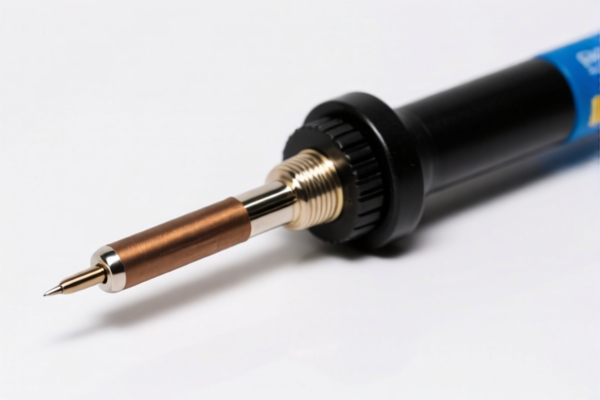
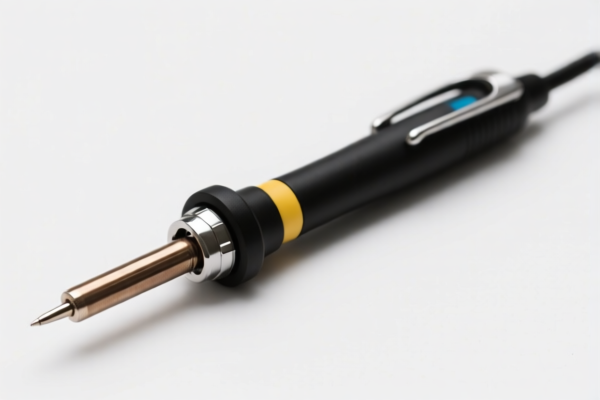
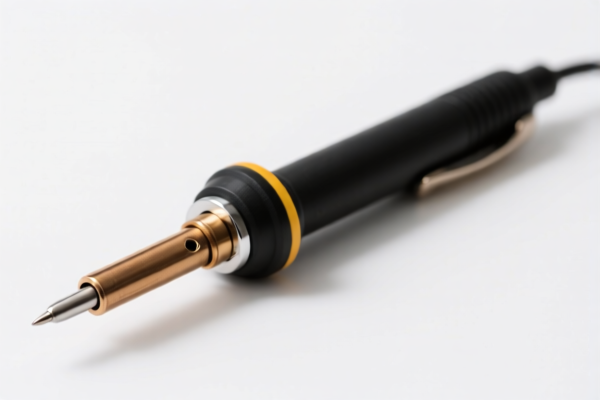
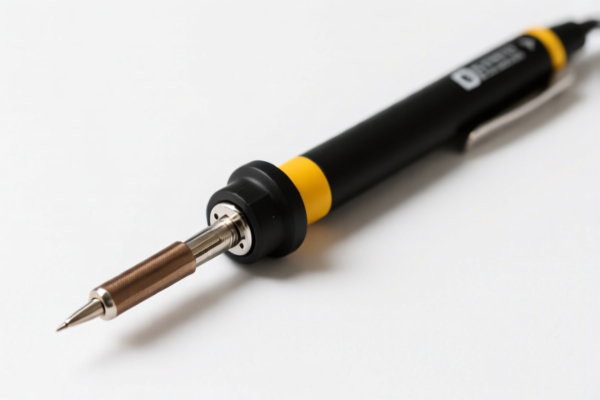
AI Analysis
🔥 Soldering Paste Flux & Metal Welding Aids
🌐 HS Code Reference & Customs Clearance Guide | 2026 Latest Tariff Analysis | Professional Level Strategy
📌 I. Product Definition & Classification: Do You Really Understand "Soldering Paste Flux"?
Soldering paste flux and related metal joining agents are the "blood" of electronic assembly and industrial welding. In international trade, they are not a single homogeneous product but are classified based on their chemical composition, functional mechanism, and carrier medium.
Core Distinction: 1. Chemical Preparations (Fluxes): Primarily composed of acids, bases, or salts designed to remove oxides and lower melting points. These usually fall under Chapter 38 (Miscellaneous Chemical Products). 2. Welding Materials (Wire/Gas/Gun): If the product is a physical welding consumable like a solid rod or gas, it might fall elsewhere. However, "Paste" implies a chemical formulation, keeping it in Chapter 38. 3. Metal Alloys (Welding Rods/Wires): If the product is purely metal alloy (e.g., bare welding wire without flux core), it falls under Chapter 83 (Base Metal Articles). Note: The data provided includes a "Metal Welding Paste" entry under 8311, which suggests a specific classification logic for paste-like metal alloys or specialized coatings.
⚠️ Key Differentiator:
- Is it a chemical mixture (acid/salt/resin based)? → Look at 3808–3824 (Specifically 3810).
- Is it an additive for fuels/lubricants? → Look at 3811.
- Is it a solid metal alloy in paste/coated form for welding? → Look at 8311.
📦 II. HS Code Classification Details (2026 Latest Tariff Authority Alignment)
Based on the provided data, here are the precise classifications for Soldering Flux and related welding aids.
| HS Code | Product Description | Application Scenario | Classification Logic |
|---|---|---|---|
3810.10.00.00 |
Preparations for Surface Treatment of Metals | Metal surface pretreatment, flux for soldering/brazing. | Primary Match: Specifically for metal surface preparation (deoxidation/cleaning). |
3810.90.10.00 |
Other Preparations for Welding/Brazing/Hardfacing | General purpose fluxes, rosin-based fluxes, chemical welding aids. | General Match: If it doesn't fit the specific "Surface Treatment" subheading, it falls under "Other" welding preparations. |
3811.19.00.00 |
Anti-Knock Preparations & Additives for Mineral Oils | Fluxes formulated as additives for liquid fuels or lubricants (Less common for standard soldering, but possible for specialized industrial pastes). | Specific Match: If the flux is classified as a "preparation for mineral oils" or liquid additives. |
3811.90.00.00 |
Other Preparations for Mineral Oils/Lubricants | Additive components for lubricants used in welding machinery or as carrier fluids. | Alternative Match: Chemical additives where the primary function is lubrication or fuel treatment, with secondary welding benefits. |
8311.90.00.00 |
Metal Soldering Paste (Metallic Form) | Paste composed of metal powder/alloy for cold welding or specialized metal joining. | Metallic Match: If the paste is primarily a metal alloy (e.g., silver paste, copper paste) rather than a chemical chemical flux. |
🔍 Crucial Insight:
- Most standard soldering fluxes (rosin, water-soluble, no-clean) fall under 3810.10.00.00 or 3810.90.10.00.
- 3810.10.00.00 is often preferred if the product is explicitly defined as a "surface treatment preparation."
- 8311.90.00.00 is only for metallic pastes (like conductive silver paste or brazing paste containing >50% metal). Do not misclassify chemical flux here.
💰 III. 2026 Latest Tariff Rate Details (Including Surtaxes & Policy Add-ons)
✅ Applicable Country: United States (US)
✅ Country of Origin: China (CN)
✅ Effective Date: November 10, 2025 (and subsequent imports)
🎯 1. 3810.10.00.00 — Preparations for Surface Treatment of Metals
| Item | Content |
|---|---|
| Base Duty Rate | 5.0% (ad valorem) |
| USITC Surtax | +25.0% (Section 301 Duties) |
| IEEPA Surtax | +10.0% (China/HK specific, effective Nov 10, 2025) |
| Total Duty Rate | 40.0% |
| Tax Calculation | CIF Value × 40% |
| De Minimis Eligibility | ❌ No (deny_de_minimis) |
| Legal Basis Path | USITC:3810.10.00.00 → FOOTNOTE:301 → IEEPA:9903.01.25 |
📌 Explanation:
- Base Rate (5%): Standard MFN rate for Chapter 38 surface treatment preparations. - Section 301 (25%): Applied to most Chinese chemical products. - IEEPA (10%): New additional surcharge for Chinese goods. - Total: 40%. This is a high-cost category. Accurate declaration is critical to avoid overpayment or customs delays.
🎯 2. 3810.90.10.00 — Other Welding/Brazing Preparations
| Item | Content |
|---|---|
| Base Duty Rate | 6.5% (ad valorem) |
| USITC Surtax | +25.0% (Section 301 Duties) |
| IEEPA Surtax | +10.0% (China/HK specific) |
| Total Duty Rate | 41.5% |
| Tax Calculation | CIF Value × 41.5% |
| De Minimis Eligibility | ❌ No (deny_de_minimis) |
| Legal Basis Path | USITC:3810.90.10.00 → FOOTNOTE:301 → IEEPA:9903.01.25 |
📌 Explanation:
- This is the "fallback" category for welding fluxes not covered under 3810.10. - The 0.5% higher base rate compared to 3810.10 makes 3810.10.00.00 slightly more economical if the product qualifies.
🎯 3. 3811.19.00.00 & 3811.90.00.00 — Oil Additives
| Item | Content |
|---|---|
| Base Duty Rate | 6.5% |
| USITC Surtax | +25.0% |
| IEEPA Surtax | +10.0% |
| Total Duty Rate | 41.5% |
| De Minimis Eligibility | ❌ No |
📌 Note: Only use these if the flux is chemically classified as an oil additive. For standard soldering, this is incorrect and risks customs penalties for misclassification.
🎯 4. 8311.90.00.00 — Metal Soldering Paste
| Item | Content |
|---|---|
| Base Duty Rate | 0.0% |
| USITC Surtax | +25.0% |
| IEEPA Surtax | +10.0% |
| Total Duty Rate | 35.0% |
| De Minimis Eligibility | ❌ No |
| Legal Basis Path | USITC:8311.90.00.00 → FOOTNOTE:301 → IEEPA:9903.01.25 |
📌 Critical Warning:
- This 35% rate is the lowest among the options.
- BUT: You can ONLY use this if the product is a metal alloy paste (e.g., silver brazing paste, conductive metal paste).
- If you ship standard chemical rosin flux and declare it as 8311, Customs will likely reclassify it, issue a penalty, and charge you 40–41.5% + fines.
- Use only for true metallic welding pastes.
🛠️ IV. Customs Clearance Practical Advice (Battle-Tested Pitfall Guide)
✅ 1. Required Document Checklist (None Can Be Missing)
| Document | Mandatory? | Description |
|---|---|---|
| ✅ Material Safety Data Sheet (MSDS) | ✔️ | CRITICAL. Must list chemical components, pH, and flash point. |
| ✅ Formula Composition | ✔️ | Detailed % of acids, bases, solvents, and resins. |
| ✅ Product Photos (Label & Bulk) | ✔️ | Show hazard symbols (Corrosive, Flammable). |
| ✅ Statement of No Metal Content | ❗ (If using 3810) | If declaring 3810, prove it's NOT 8311. |
| ✅ Statement of Metal Content | ❗ (If using 8311) | If declaring 8311, prove it IS a metal alloy paste. |
| ✅ Commercial Invoice | ✔️ | Clear description: "Chemical Flux for Soldering" or "Metal Brazing Paste." |
✅ 2. Declaration Strategy (Key Mantra)
🔥 “Chemical Flux is 3810, Metal Paste is 8311. Wrong Code = Fine!”
| Scenario | Correct HS Code | Incorrect Practice | Consequence |
|---|---|---|---|
| Standard Rosin/Water-Soluble Flux | 3810.10.00.00 (Preferred) |
8311.90.00.00 |
❌ Penalty for Misclassification. 0% base rate denied, retroactive 40% + fine. |
| Specialty Chemical Welding Aid | 3810.90.10.00 |
3810.10.00.00 |
Minor risk. Customs may accept, but 3810.90 is safer if not strictly "surface prep." |
| Silver/Copper Conductive Paste | 8311.90.00.00 |
3810.10.00.00 |
❌ Overpayment. You pay 40% instead of 35%. |
| Flux Coated Welding Wire | 3810 or 8311 |
8512 (Electrical parts) |
❌ Wrong Chapter. Wire is 8512, but flux coating may affect classification. Consult expert. |
✅ 3. Special Cases Handling
| Case | Handling Advice |
|---|---|
| Water-Soluble Flux | Often contains acids/salts. Clearly label as "Chemical Preparation." Avoid terms like "Metal Paste." |
| Rosin-Based Flux | Classified as Chemical. Use 3810.10.00.00 if it functions as surface treatment. |
| Conductive Silver Paste | Must use 8311.90.00.00. Provide MSDS showing high metal content (>50%). |
| Hot Melt Flux | If it's a solid adhesive that becomes flux when heated, check if it's an adhesive (3506) or flux (3810). Usually 3810 if primary function is welding aid. |
🌍 V. Global Market Clearance Comparison (2026 Latest)
| Country/Region | Recommended HS Code | Duty Rate (China Origin) | Certification | Notes |
|---|---|---|---|---|
| 🇺🇸 USA | 3810.10.00.00 |
40.0% (Total) | None specific | High tariff due to 301 + IEEPA. |
| 🇪🇺 EU | 3810.10.00.00 |
5.0% (General) | REACH + CLP | No major surtaxes. REACH registration mandatory. |
| 🇨🇳 China | 3810.10.00.00 |
5.0% (Import) | None | Domestic production often cheaper. |
| 🇯🇵 Japan | 3810.10.00.00 |
6.0% | JIS Standard | Voluntary certification common. |
📌 Conclusion:
- USA is the most expensive market for soldering flux due to layered tariffs.
- EU/Asia have stable, low rates. Focus on REACH compliance for EU exports.
📌 VI. Common Mistakes & Pitfall Guide (Blood Lessons)
❌ Mistake 1: Calling all fluxes "Soldering Paste" and declaring as 8311 to get 0% base duty.
👉 Consequence: Customs demands proof of metal content. If it's chemical, you get 40% retroactively + penalty.
❌ Mistake 2: Not providing MSDS.
👉 Consequence: Seizure or Return. Chemical imports without MSDS are blocked at US ports.
❌ Mistake 3: Using "Adhesive" (3506) for Flux.
👉 Consequence: Wrong classification. Flux is for cleaning/oxidation removal, not bonding. Use 3810.
❌ Mistake 4: Ignoring IEEPA 10% Surcharge.
👉 Consequence: Budgeting error. Total cost is 40-41.5%, not just 25%.
✅ Correct Action:
For standard flux: HS 3810.10.00.00, Description: "Chemical Flux for Soldering, Rosin-Based, Non-Conductive."
For metal paste: HS 8311.90.00.00, Description: "Silver Alloy Brazing Paste, Metallic Conductive."
🎯 VII. Conclusion: Professional Declaration, Cost Optimization!
🎯 Remember the Mantra:
🔹 "Chemical is 3810 (40%), Metal is 8311 (35%). Check MSDS first!"
🔹 "No MSDS, No Entry. Wrong Code, Huge Fine."
📌 Pro Tip:
If you are exporting to the US, ensure your MSDS is EPA-compliant and clearly states the chemical nature. For EU, ensure REACH registration is valid.
Consider Advance Rulings from US Customs if your product is borderline between 3810 and 8311 to avoid future disputes.
📣 Immediate Action:
📞 Verify Product Composition → Determine Chemical vs. Metallic → Choose HS Code → Prepare MSDS → Clear Customs Smoothly!
✨ Professional Clearance Starts with Accurate Classification!
💼 Your Every Cent Should Be Precisely Calculated!
Customer Reviews
About HS Code Classification
The Harmonized System (HS) is an internationally standardized nomenclature developed by the World Customs Organization (WCO) to classify traded products. Over 200 countries use the HS system as the basis for customs tariffs, trade statistics, and import/export regulations.
Each HS code follows a hierarchical structure:
- Chapter (2 digits) — Broad category of goods (e.g., Chapter 84: Machinery and Mechanical Appliances)
- Heading (4 digits) — More specific grouping within the chapter
- Subheading (6 digits) — Internationally standardized breakdown, used by all WCO member countries
- National subdivisions (8-10 digits) — Country-specific extensions for further classification, such as US HTSUS 10-digit codes
Correct HS code classification is essential for smooth customs clearance, accurate duty payment, and compliance with trade regulations. Misclassification can lead to customs delays, overpayment of duties, or penalties.
When importing from CN to US, the applicable tariff rates may include:
- Most-Favored-Nation (MFN) rate — The standard duty rate applied to WTO members
- General rate — Applied to countries without trade agreements
- Trade remedy duties — Additional tariffs such as Section 301 (anti-dumping), Section 232 (national security), or countervailing duties
The information provided on this page is for reference purposes only. For official classification, please consult with your local customs authority or a licensed customs broker.