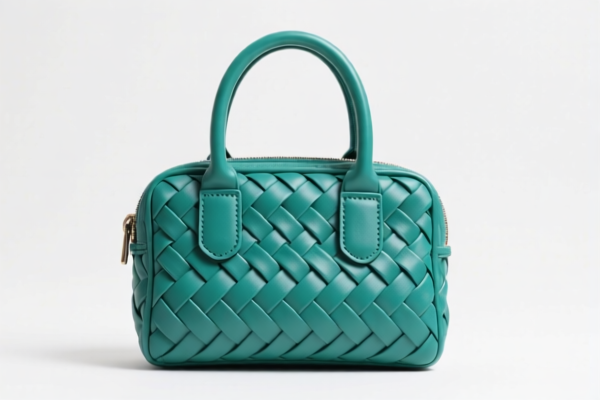
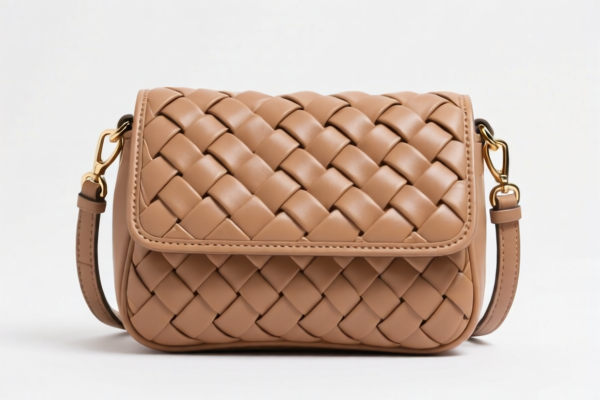
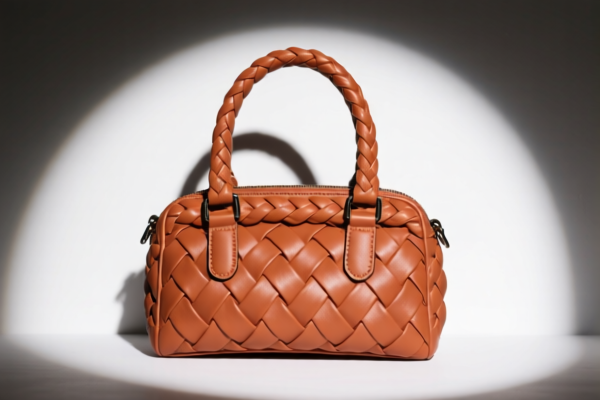
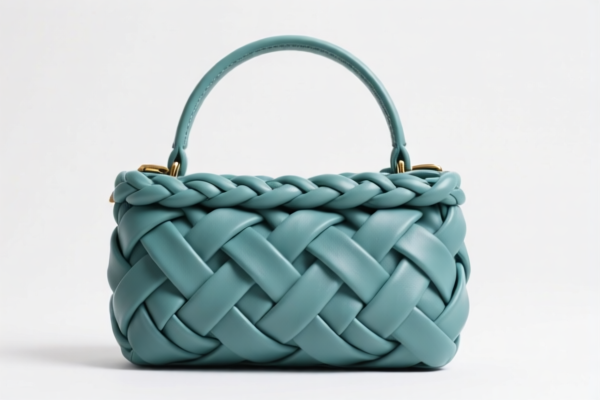
Solid Color Braided Handbag
CN → US| HS Code | Tariff Rate | Origin | Destination | Doc |
|---|---|---|---|---|
| 4202224020 | 42.4% | CN | US | Official Doc |
| 4202228980 | 52.6% | CN | US | Official Doc |
| 4602192920 | 40.3% | CN | US | Official Doc |
| 6305200000 | 23.7% | CN | US | Official Doc |
| 6305900000 | 23.7% | CN | US | Official Doc |
Product Images
AI Analysis
👜 Solid Color Braided Handbag: The Ultimate HS Code & Customs Clearance Guide
🌐 HS Code Reference & Customs Strategy | 2026 Latest Tariff Analysis | Professional Clearance Protocol
📌 I. Product Definition & Classification: Decoding the "Braided" Handbag
A "Solid Color Braided Handbag" is a versatile accessory that sits at the intersection of fashion, material science, and trade law. In international trade, its classification is not determined by its shape (handbag) alone, but by its surface material composition.
The term "Braided" implies a specific manufacturing process, but the HS Code depends entirely on what is being braided: * Textile Fibers (Synthetic or Cotton): Falls under Chapter 42 or 63. * Vegetable Materials (Straw, Rattan, Bamboo, Seaweed): Falls under Chapter 46.
⚠️ Critical Distinction:
- If the bag is made of woven fabric (nylon, polyester, cotton, etc.) → Chapter 42 or 63.
- If the bag is made of woven plant materials (straw, rattan, paper yarn) → Chapter 46.
- Mistake Alert: Do not group straw bags with fabric bags. They have completely different tariff structures.
📦 II. HS Code Classification Matrix (Based on Provided Data)
Based on the data provided, here are the specific HS Codes for Solid Color Braided Handbags, categorized by material type.
| HS Code | Product Description | Material Composition | Tax Profile |
|---|---|---|---|
| 4202.22.40.20 | Braided Handbag, Textile Surface | Outer surface is Textile Material (General/Other) | 42.4% Total |
| 4202.22.89.80 | Braided Handbag, Other Textile Surface | Outer surface is Non-Cotton, Non-Paper Yarn Textile | 52.6% Total |
| 4602.19.29.20 | Braided Handbag, Vegetable Material | Outer surface is Plant Material (Straw, Rattan, etc.) | 40.3% Total |
| 6305.20.00.00 | Textile Bag (Handbag Form) | Material: Cotton | 23.7% Total |
| 6305.90.00.00 | Other Textile Bags (Handbag Form) | Material: Other Textile (General) | 23.7% Total |
🔍 Key Insight:
- Chapter 42 covers bags with an outer surface of textile material.
- Chapter 63 covers other textile articles, including bags made of cotton or other specific textiles not fully covered by Chapter 42 in this specific context.
- Chapter 46 is exclusive to vegetable materials. If your "braided" bag is made of straw or rattan, you must use 4602.19.29.20.
💰 III. 2026 Tariff Rate Breakdown (Detailed Tax Analysis)
✅ Applicable Market: United States (US)
✅ Origin: China (CN)
✅ Effective Date: Current tariffs apply (Subject to Section 301, 122, and IEEPA provisions)
🎯 1. 4202.22.40.20 – Braided Handbag (Textile Surface)
The standard classification for most synthetic or general textile handbags.
| Tax Component | Rate | Legal Basis |
|---|---|---|
| Base Tariff | 7.4% | USHTS General Rate |
| Section 301 Add-on | 25.0% | Trade Policy (Section 301) |
| Section 122 Add-on | 10.0% | Executive Order 14040 (122 Clauses) |
| TOTAL EFFECTIVE RATE | 42.4% | High Risk |
📌 Explanation:
- This is the most common classification for synthetic (polyester/nylon) braided bags.
- The 25% Section 301 tariff is the biggest cost driver.
- The 10% Section 122 tariff adds significant cost, making this category expensive for importers.
🎯 2. 4202.22.89.80 – Braided Handbag (Other Textile Surface)
Used for textiles that are neither cotton nor paper yarn, but fall under "other" textile specifications.
| Tax Component | Rate | Legal Basis |
|---|---|---|
| Base Tariff | 17.6% | USHTS General Rate |
| Section 301 Add-on | 25.0% | Trade Policy (Section 301) |
| Section 122 Add-on | 10.0% | Executive Order 14040 (122 Clauses) |
| TOTAL EFFECTIVE RATE | 52.6% | Extremely High Risk |
📌 Warning:
- This is the most expensive classification in the dataset.
- Only use this if your textile material does not fit the "General Textile" criteria of 4202.22.40.20.
- Strategy: Try to justify classification under 4202.22.40.20 or 6305.xx if possible to save 10.2% in taxes.
🎯 3. 4602.19.29.20 – Braided Handbag (Vegetable Material)
For bags made of straw, rattan, bamboo, or other plant-based braids.
| Tax Component | Rate | Legal Basis |
|---|---|---|
| Base Tariff | 5.3% | USHTS General Rate |
| Section 301 Add-on | 25.0% | Trade Policy (Section 301) |
| Section 122 Add-on | 10.0% | Executive Order 14040 (122 Clauses) |
| TOTAL EFFECTIVE RATE | 40.3% | Moderate-High Risk |
📌 Opportunity:
- Vegetables materials have a lower base rate (5.3%) compared to textiles (7.4%-17.6%).
- Total tax is 40.3%, which is slightly lower than the standard textile handbag (42.4%).
- Verification Required: Customs will strictly inspect the material. If it’s synthetic "straw" (plastic), it must go to Chapter 42. Only real plant materials qualify for Chapter 46.
🎯 4. 6305.20.00.00 & 6305.90.00.00 – Textile Bags (Cotton/Other)
Specifically for bags where the primary function is "bag" rather than "handbag with outer surface of textile" under Chapter 42, or for cotton-specific items.
| Tax Component | Rate | Legal Basis |
|---|---|---|
| Base Tariff | 6.2% | USHTS General Rate |
| Section 301 Add-on | 7.5% | Trade Policy (Section 301) |
| Section 122 Add-on | 10.0% | Executive Order 14040 (122 Clauses) |
| TOTAL EFFECTIVE RATE | 23.7% | Best Value! |
🌟 Strategic Advantage:
- This is the LOWEST TAX CATEGORY in the dataset.
- Why so low? The Section 301 add-on is only 7.5% (not 25%) for these specific subheadings.
- When to Use:
- 6305.20.00.00: If the bag is primarily Cotton and fits the definition of a "textile bag" rather than a fashion handbag under Ch. 42.
- 6305.90.00.00: If it’s another textile material that qualifies under this "Other" category.
- Risk: Customs may argue that fashion handbags should be under Chapter 42. You need strong documentation proving the bag's primary character as a "general textile bag" rather than a "fashion accessory."
🛠️ IV. Customs Clearance & Operational Advice
✅ 1. Material Verification Checklist (Crucial for Accurate Classification)
| Material Type | Correct HS Code | Verification Documents Needed |
|---|---|---|
| Polyester/Nylon Weave | 4202.22.40.20 |
Material Composition Certificate, Swatch Test |
| Special Textile (Non-Cotton) | 4202.22.89.80 |
Detailed Material Specs, Fiber Analysis Report |
| Straw/Rattan/Bamboo | 4602.19.29.20 |
Photos of natural weave, Supplier Declaration |
| Cotton Fabric Bag | 6305.20.00.00 |
Cotton Content Label, Washing Tag |
| Other Textile Bag | 6305.90.00.00 |
Fiber Composition Analysis |
⚠️ Danger Zone:
- Misclassifying Plastic Straw (PET) as Natural Straw (Chapter 46) is fraud. Penalties include seizure and fines.
- Misclassifying a Fashion Handbag (Ch. 42) as a General Textile Bag (Ch. 63) to save 19% tax is high-risk. Customs may reject the 7.5% rate and apply the 25% rate retroactively.
✅ 2. Declaration Strategy: How to Justify the Lowest Tax (23.7%)
If your handbag is made of Cotton or Simple Textile, strive for HS Code 6305.
Argumentation for Customs:
1. Primary Function: Emphasize that the bag is a "general use textile bag" rather than a "luxury fashion accessory."
2. Construction: Highlight simple construction, lack of hard lining, or generic design.
3. Documentation:
- Provide a Material Composition Certificate stating >50% Cotton (for 6305.20).
- Include Photos showing the textile nature clearly.
- Use the description: "Cotton Textile Bag, Braided Design, for General Use" instead of "Luxury Braided Handbag."
📌 Note: If Customs insists it is a "Handbag" under Chapter 42, you will fall back to 4202.22.40.20 (42.4%) or 4202.22.89.80 (52.6%). Always have a backup plan.
✅ 3. Documentation Requirements for Clearance
| Document | Purpose | Tip |
|---|---|---|
| Commercial Invoice | Declare Value & HS Code | Clearly state "Braided Handbag" and Material |
| Packing List | Quantity & Weight | Ensure weight matches declaration |
| Material Test Report | Prove Composition | Essential for Ch. 42 vs. Ch. 63 vs. Ch. 46 |
| Photos | Visual Proof | Show close-ups of the braid and lining |
| Supply Chain Proof | Origin Verification | Confirm China origin for accurate Section 301/122 calculation |
🌍 V. Global Market Comparison (Brief Overview)
| Market | Typical Classification | Estimated Total Tax (China Origin) | Notes |
|---|---|---|---|
| 🇺🇸 USA | 4202.22.40.20 / 6305.xx |
23.7% - 52.6% | Heavy Section 301 & 122 tariffs apply |
| 🇨🇳 China | 4202.22 / 6305 |
~8-12% | Lower base tariffs, no Section 301 |
| 🇪🇺 EU | 4202.22 / 4602 |
~12-17% | No Section 301, but VAT applies |
📌 Conclusion:
The USA market is the most challenging due to layered tariffs (Base + 301 + 122).
Strategy: Prioritize HS Code 6305 if materials allow, as it offers the 23.7% rate. If not, 4602 (Vegetable) is the next best at 40.3%. Avoid4202.22.89.80if possible due to the 52.6% burden.
📌 VI. Common Mistakes & Pitfalls
❌ Mistake 1: Calling a straw bag "Textile" to avoid higher scrutiny
👉 Result: Customs detects plastic/natural weave mismatch → Fine + Seizure
❌ Mistake 2: Using 4202.22.89.80 (52.6%) when 4202.22.40.20 (42.4%) is applicable
👉 Result: Overpaying 10.2% unnecessarily.
👉 Fix: Ensure your textile doesn't fall under "Other" exceptions. Most common synthetics fit 40.20.
❌ Mistake 3: Ignoring Section 122 (10%)
👉 Result: Under-declaring duties → Penalties & Interest
👉 Fix: All HS Codes above include the 10% 122 clause. Always include it in cost calculations.
✅ Correct Approach:
"Material: 100% Polyester Braided; Product: Braided Handbag; HS Code: 4202.22.40.20; Total Tax: 42.4% (7.4% Base + 25% Sec 301 + 10% Sec 122)."
🎯 VII. Final Recommendations
- Material Audit: Immediately verify the exact fiber content of your braided handbags.
- Optimize HS Code:
- If Cotton/Textile: Fight for 6305.20.00.00 (23.7%).
- If Synthetic: Use 4202.22.40.20 (42.4%).
- If Straw/Rattan: Use 4602.19.29.20 (40.3%).
- Cost Calculation: Always budget for the Total Effective Rate (including Section 122), not just the base tariff.
- Pre-Ruling: Consider applying for an HS Code Advance Ruling from US CBP to lock in the 23.7% or 40.3% rate, avoiding post-import audits.
📌 Pro Tip:
"Classify by Material, Not by Style!"
A "Braided Handbag" is not a single category. Its tax destiny is written in its fibers. Choose wisely, document thoroughly, and clear customs with confidence!
✨ Professional Clearance, Precision Classification, Maximized Profit!
💼 Your handbag's value depends on its HS Code.
Customer Reviews
About HS Code Classification
The Harmonized System (HS) is an internationally standardized nomenclature developed by the World Customs Organization (WCO) to classify traded products. Over 200 countries use the HS system as the basis for customs tariffs, trade statistics, and import/export regulations.
Each HS code follows a hierarchical structure:
- Chapter (2 digits) — Broad category of goods (e.g., Chapter 84: Machinery and Mechanical Appliances)
- Heading (4 digits) — More specific grouping within the chapter
- Subheading (6 digits) — Internationally standardized breakdown, used by all WCO member countries
- National subdivisions (8-10 digits) — Country-specific extensions for further classification, such as US HTSUS 10-digit codes
Correct HS code classification is essential for smooth customs clearance, accurate duty payment, and compliance with trade regulations. Misclassification can lead to customs delays, overpayment of duties, or penalties.
When importing from CN to US, the applicable tariff rates may include:
- Most-Favored-Nation (MFN) rate — The standard duty rate applied to WTO members
- General rate — Applied to countries without trade agreements
- Trade remedy duties — Additional tariffs such as Section 301 (anti-dumping), Section 232 (national security), or countervailing duties
The information provided on this page is for reference purposes only. For official classification, please consult with your local customs authority or a licensed customs broker.