Solid Color Fabric / Wide Width Fabric
CN → US| HS Code | Tariff Rate | Origin | Destination | Doc |
|---|---|---|---|---|
| 6006219080 | 45.0% | CN | US | Official Doc |
| 6006310080 | 45.0% | CN | US | Official Doc |
| 5208214020 | 45.2% | CN | US | Official Doc |
| 5407522040 | 49.9% | CN | US | Official Doc |
| 5407692010 | 49.9% | CN | US | Official Doc |
Product Images
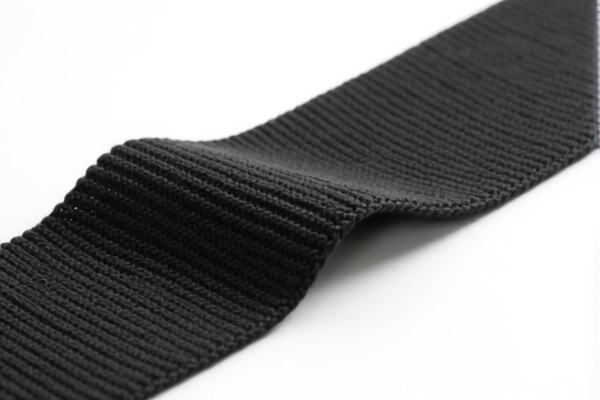
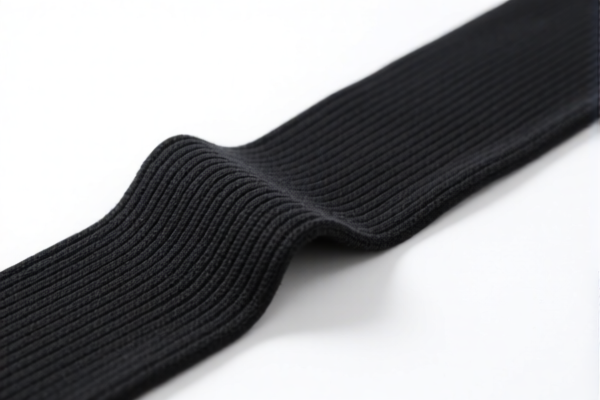
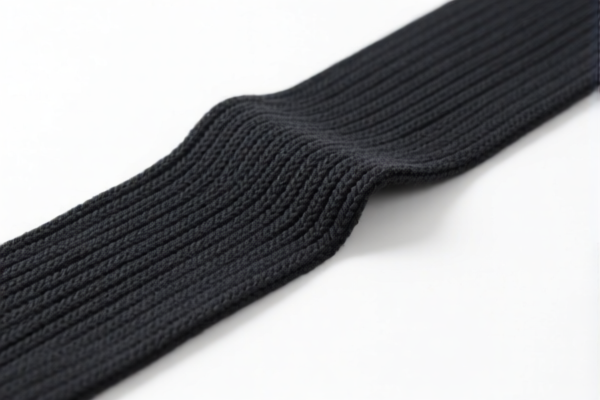
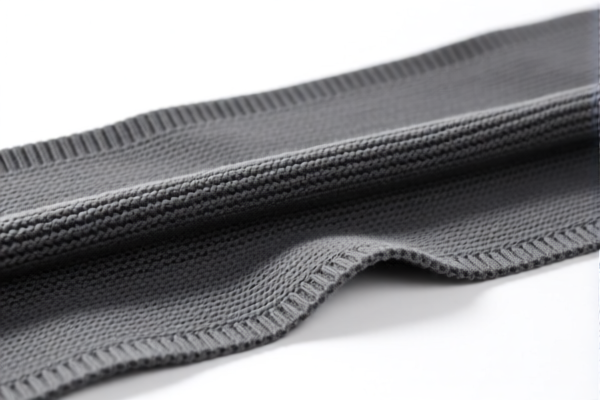
AI Analysis
🧵 Solid Color Fabric / Wide Width Fabric: Comprehensive HS Code Guide & Customs Clearance Strategy
🌐 HS Code Reference & Customs Clearance Guide | 2026 Latest Tariff Analysis | Professional Clearance Strategy
📌 I. Product Definition & Classification: What Exactly Is "Solid Color Fabric"?
Solid color fabric refers to textiles dyed in a single, uniform hue without patterns, prints, or complex weaves. In international trade, these fabrics are primarily used for garment manufacturing (apparel). Depending on the weave structure (Knitted vs. Woven) and fiber composition (Cotton, Polyester, Blends, or Unspecified), they fall under different Harmonized System (HS) codes.
⚠️ Key Distinction:
- Knitted/Hooked Fabrics (Soft, stretchy, jersey-like): Typically fall under Chapter 60.
- Woven Fabrics (Stiffer, structured, shirt/dress material): Typically fall under Chapter 52 (Cotton) or Chapter 54 (Synthetics).
- Material Ambiguity: If the fiber type is not explicitly declared, customs may infer the most common use case or apply "catch-all" provisions.
📦 II. HS Code Classification Details (2026 Latest Tariff Authority Reference)
Based on the provided data, here are the specific HS codes for Solid Color Garment Fabrics, categorized by weave and inferred material.
| HS Code | Product Description | Inferred Material/Structure | Use Case | Total Tax Rate |
|---|---|---|---|---|
6006.21.90.80 |
Solid Color Garment Fabric, Knitted/Hooked, Unspecified Material | Knitted/Hooked; Material not explicitly defined (Catch-all logic) | General apparel, T-shirts, Dresses | 45.0% |
6006.31.00.80 |
Solid Color Garment Fabric, Knitted/Hooked, Unspecified Fiber Type | Knitted; Inferred Synthetic or Natural Fiber based on garment use | General knitwear | 45.0% |
5208.21.40.20 |
Solid Color Fabric, Woven, Inferred Cotton/Poly/Blend | Woven; Inferred Cotton, Polyester, or Blend (Common garment fabric) | Shirts, Pants, Dresses | 45.2% |
5407.52.20.40 |
Solid Color Fabric, Woven, Inferred Polyester/Synthetic | Woven; Inferred Polyester or other Synthetic Fibers | Technical wear, Lining, Outerwear | 49.9% |
5407.69.20.10 |
Solid Color Fabric, Woven, Inferred Synthetic Filament/Fiber | Woven; Inferred Synthetic Filament/Fiber; No Grammage Specified | Lining, Sheer garments, Accessories | 49.9% |
🔍 Important Note:
- Codes starting with60xxare Knitted fabrics.
- Codes starting with52xxor54xxare Woven fabrics.
- If the material is Unspecified, customs often applies the highest reasonable risk rate or uses logical inference based on the product's intended use (garment).
💰 III. 2026 Latest Tariff Rate Details (Including Additional Duties & Policy Add-ons)
✅ Applicable Country: United States (US)
✅ Origin: China (CN)
✅ Effective Date: From November 10, 2025 (Including subsequent imports)
🎯 1. Knitted Fabrics (6006.21.90.80 & 6006.31.00.80)
| Item | Content |
|---|---|
| Base Tariff Rate | 10.0% (ad valorem) |
| Section 301 Additional Tariff | +25.0% (Under USITC Footnote 9903.88.01) |
| Section 122 Additional Tariff | +10.0% (China-specific add-on) |
| Total Tax Rate | 45.0% |
| Tax Calculation | CIF Value × 45% |
| De Minimis Exemption | ❌ Not Eligible (deny_de_minimis) |
| Legal Authority Path | IEEPA:9903.01.25 → IEEPA:9903.01.24 → USITC:6006.21.90.80 → FOOTNOTE:9903.88.01 |
📌 Explanation:
- "Section 301 Additional Tariff 25%": From the "Trade Act of 1974" Section 301 actions against China.
- "Section 122 Additional Tariff 10%": Additional levy targeting Chinese textile imports.
- Total 45%: A very high tariff rate. Must be factored into cost planning.
🎯 2. Woven Cotton/Blend Fabric (5208.21.40.20)
| Item | Content |
|---|---|
| Base Tariff Rate | 10.2% (ad valorem) |
| Section 301 Additional Tariff | +25.0% |
| Section 122 Additional Tariff | +10.0% |
| Total Tax Rate | 45.2% |
| Tax Calculation | CIF Value × 45.2% |
| De Minimis Exemption | ❌ Not Eligible (deny_de_minimis) |
| Legal Authority Path | IEEPA:9903.01.25 → IEEPA:9903.01.24 → USITC:5208.21.40.20 → FOOTNOTE:9903.88.01 |
📌 Explanation:
- Slightly higher base rate (10.2%) due to specific cotton/blend classification.
- Same additional tariffs apply, totaling 45.2%.
🎯 3. Woven Synthetic Fabric (5407.52.20.40 & 5407.69.20.10)
| Item | Content |
|---|---|
| Base Tariff Rate | 14.9% (ad valorem) |
| Section 301 Additional Tariff | +25.0% |
| Section 122 Additional Tariff | +10.0% |
| Total Tax Rate | 49.9% |
| Tax Calculation | CIF Value × 49.9% |
| De Minimis Exemption | ❌ Not Eligible (deny_de_minimis) |
| Legal Authority Path | IEEPA:9903.01.25 → IEEPA:9903.01.24 → USITC:5407.52.20.40 → FOOTNOTE:9903.88.01 |
📌 Explanation:
- Synthetic fibers (Polyester/Nylon) have a higher base tariff (14.9%).
- After additional taxes, the total hits 49.9%, making these among the most expensive textile imports from China to the US.
🛠️ IV. Customs Clearance Practical Advice (Field Pitfall Avoidance Guide)
✅ 1. Documentation Checklist (Mandatory)
| Document | Required | Description |
|---|---|---|
| ✅ Product Specification Sheet | ✔️ | Must include: Weave type (Knit/Woven), Fiber Content (Cotton/Poly/Blend), Weight (GSM), Width. |
| ✅ Commercial Invoice | ✔️ | Must clearly state "Solid Color Fabric for Garments" and specific HS Code. |
| ✅ Packing List | ✔️ | Detail roll length, weight, and dimensions. Avoid vague terms like "Textile." |
| ✅ Fiber Content Declaration | ✔️ | Critical for correct classification under Chapter 52 vs. 54. |
| ✅ Origin Certificate (CO) | ✔️ | If not Chinese origin, can reduce tariff. If Chinese, no relief. |
| ✅ Pre-Shipment Inspection Report | ✔️ | Colorfastness, shrinkage, and quality tests to prove it's "Garment Fabric." |
✅ 2. Declaration Tips (Key Mnemonics)
🔥 “Knit vs. Woven, Specify Fiber, Avoid Guesswork, Lower Risk!”
| Scenario | Correct Declaration | Incorrect Practice |
|---|---|---|
| Knitted Solid Color Fabric | Use 6006.xx.xx.xx |
Misdeclare as Woven → Customs reclassification → Delay/Fine |
| Woven Cotton Fabric | Use 5208.xx.xx.xx |
Misdeclare as Synthetic → Base rate error |
| Woven Polyester Fabric | Use 5407.xx.xx.xx |
Misdeclare as Cotton → Higher scrutiny |
| Unspecified Material | Provide Lab Test Results | Use "Unspecified" → Customs infers highest risk → 49.9% |
✅ 3. Special Situation Handling
| Scenario | Handling Advice |
|---|---|
| OEM Custom Fabric | Provide customer order + design specs to prove end-use (garment). |
| Wide Width Fabric | Declare exact width (e.g., >60 inches). Some codes differentiate by width. |
| Gray Fabric (Undyed) | Different HS Code (Chapter 50/52/54 raw). Do not declare as "Solid Color" if undyed. |
| Small Quantity Samples | Still subject to full tariffs. No de minimis exemption for textiles from China. |
🌍 V. Global Market Clearance Comparison (2026 Latest)
| Country/Region | Recommended HS Code | Tariff (China Origin) | Certification Required | Notes |
|---|---|---|---|---|
| 🇺🇸 USA | Varies (see above) | 45.0% - 49.9% | None typically for raw fabric | Highest additional tariffs globally. |
| 🇨🇳 China | Varies | 0% - 5% | None | Duty-free or low tariff for domestic use. |
| 🇪🇺 EU | Varies | 0% - 12% | REACH Compliance | No Section 301/122 equivalent. |
| 🇦🇺 Australia | Varies | 5% - 10% | None | Moderate tariff, no additional punitive duties. |
| 🇯🇵 Japan | Varies | 0% - 10% | JIS Standards | Low tariff, high quality scrutiny. |
📌 Conclusion:
- The US is the most challenging market for Chinese textile imports due to 45%-50% total tariffs.
- EU and Australia are more favorable in terms of tariff rates, but quality standards (REACH) are strict.
- Cost Planning: If exporting to the US, factor in ~50% additional cost for textile imports from China.
📌 VI. Common Mistakes & Pitfall Guide (Lessons Learned)
❌ Mistake 1: Declaring "Fabric" without specifying Knit or Woven.
👉 Consequence: Customs will classify under the highest duty code or hold for inspection → Delay.
❌ Mistake 2: Misdeclaring Synthetic Fabric as Cotton to lower base rate.
👉 Consequence: Lab test required → If found false, penalties + back taxes.
❌ Mistake 3: Assuming "Small Shipment" avoids tariff.
👉 Consequence: No De Minimis Exemption for Chinese textiles. Full tax applies.
❌ Mistake 4: Using "Textile Material" as description.
👉 Consequence: Too vague → Customs demands detailed documentation → Clearance Delay.
✅ Correct Practice:
"Solid Color Woven Polyester Fabric, 200 GSM, 60 Inch Width, Grey Roll, for Garment Manufacturing, HS Code 5407.52.20.40"
🎯 VII. Conclusion: Professional Declaration, Cost Optimization, Efficiency!
🎯 Remember the Mantra:
🔹 "Specify Knit or Woven, Declare Fiber, Avoid Guessing, Lower Risk!"
🔹 "US Tariff 45-50%, No De Minimis, Plan Costly!"
🔹 "HS Code Determines Duty, Accuracy Saves Money!"
📌 Pro Tip:
- If your fabric is originating from Vietnam, Mexico, Bangladesh, or India, you may qualify for lower or zero tariffs under various trade agreements (e.g., GSP, FTAs).
- Consider Pre-Ruling (Advance Ruling) from US Customs if you have large, consistent shipments to avoid classification disputes.
📣 Immediate Action:
📞 Contact Professional Customs Broker + Provide Product Specs + Apply for HS Code Pre-Ruling
🚀 Let your fabric clear smoothly, reduce costs, and boost profits!
✨ Professional Clearance, Starts with Precise Classification!
💼 Every cent of your cost deserves precise calculation!
Customer Reviews
About HS Code Classification
The Harmonized System (HS) is an internationally standardized nomenclature developed by the World Customs Organization (WCO) to classify traded products. Over 200 countries use the HS system as the basis for customs tariffs, trade statistics, and import/export regulations.
Each HS code follows a hierarchical structure:
- Chapter (2 digits) — Broad category of goods (e.g., Chapter 84: Machinery and Mechanical Appliances)
- Heading (4 digits) — More specific grouping within the chapter
- Subheading (6 digits) — Internationally standardized breakdown, used by all WCO member countries
- National subdivisions (8-10 digits) — Country-specific extensions for further classification, such as US HTSUS 10-digit codes
Correct HS code classification is essential for smooth customs clearance, accurate duty payment, and compliance with trade regulations. Misclassification can lead to customs delays, overpayment of duties, or penalties.
When importing from CN to US, the applicable tariff rates may include:
- Most-Favored-Nation (MFN) rate — The standard duty rate applied to WTO members
- General rate — Applied to countries without trade agreements
- Trade remedy duties — Additional tariffs such as Section 301 (anti-dumping), Section 232 (national security), or countervailing duties
The information provided on this page is for reference purposes only. For official classification, please consult with your local customs authority or a licensed customs broker.